Key Points:
- EMT Co., a joint venture of five firms including Chery and Autobacs Seven, launched a new EV brand called EMTA.
- The brand plans to introduce its first electric mini-vehicle in Japan next year, with three more models coming by 2029.
- The smart EVs will support over-the-air updates to boost driving performance and cruising range post-delivery.
- Design and product concepts will take place in Japan, while initial manufacturing will occur at plants in China.
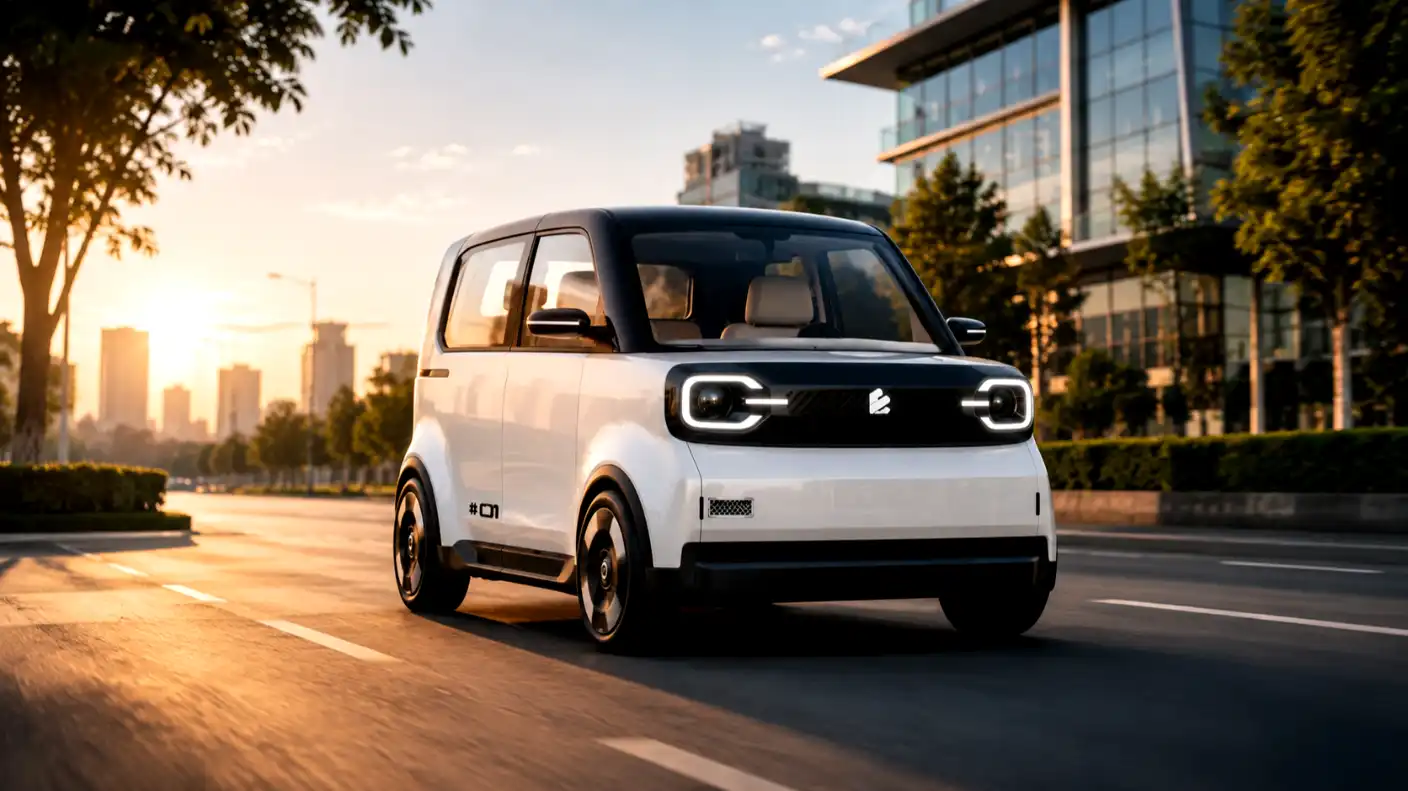
A powerful new cross-border automotive partnership is preparing to shake up Japan’s highly competitive compact electric vehicle market. On Wednesday, May 27, 2026, EMT Company announced the launch of a new dedicated automobile brand, EMTA, with plans to introduce an electric mini-vehicle in the Japanese market next year. Established jointly by five prominent corporate partners, including Chinese automotive giant Chery Automobile Company and major Japanese car parts retailer Autobacs Seven Company, the venture represents a major fusion of Chinese manufacturing scale and Japanese retail expertise.
The launch of the first EMTA model represents only the opening chapter of a much broader, long-term product roadmap. EMT Company revealed plans to introduce three additional electric vehicle models by 2029, expanding its lineup to address diverse urban commuter and commercial logistics needs. By rapidly scaling its portfolio to four distinct models over the next three years, the newly formed brand hopes to capture a significant share of Japan’s rapidly growing appetite for eco-friendly urban transport.
To set itself apart from legacy compact car makers, EMTA will focus heavily on software-defined vehicle (SDV) capabilities. The company plans to equip each vehicle with advanced digital technologies tailored specifically to the model’s unique characteristics. Most notably, the vehicles will support over-the-air (OTA) software updates post-delivery. These cloud-based updates will allow owners to remotely upgrade their car’s driving performance, optimize motor efficiency, and even extend the vehicle’s overall cruising range over time without visiting a physical service center.
This software-first philosophy extends directly to the in-cabin user experience. EMTA vehicles will feature deep integration with drivers’ smartphones, allowing them to customize and control multiple cabin settings remotely. Through a dedicated mobile application, drivers can automatically adjust their seat positions, preset their preferred air-conditioning temperatures, and configure infotainment options before even stepping inside the vehicle. This level of personalized, connected technology has historically remained restricted to luxury vehicles, making its inclusion in a compact mini-vehicle a major market disruptor.
The joint venture will leverage a highly efficient, cross-border division of labor to keep development and manufacturing costs low. EMT Company confirmed that its engineers will make all critical decisions regarding product concepts, safety standards, and design specifications in Japan to ensure the vehicles perfectly match the distinct preferences of Japanese drivers. Once finalized, the company will transfer these design files to manufacturing facilities in China for high-volume, low-cost assembly, exploiting China’s massive electric vehicle supply chain.
Furthermore, EMT Company is actively maintaining flexibility in its long-term manufacturing options. While initial production will take place in China to ensure a fast, cost-effective rollout, the partners are seriously considering assembling future EMTA models directly inside Japan to optimize logistics and bypass potential trade tariffs.
The launch of the EMTA brand comes as the demand for micro-mobility and compact electric vehicles—commonly known as “kei cars” in Japan—reaches record heights. Because Japan features narrow streets, crowded urban centers, and limited residential parking spaces, small cars dominate the national automotive market, representing nearly 40% of all registered passenger vehicles. As gasoline prices remain elevated, local families and metropolitan delivery fleets are increasingly seeking low-cost, zero-emission alternatives to reduce their daily operating expenses.
The joint venture also highlights a growing, highly pragmatic trend of Sino-Japanese corporate alliances in the clean energy transition. By partnering with Chery, one of China’s most successful exporters of electric vehicles, Autobacs Seven gains immediate access to world-class battery technology and motor manufacturing capabilities. In return, Chery leverages Autobacs’ massive retail footprint of over 400 service centers across Japan, solving the critical maintenance and customer support bottleneck that has historically prevented foreign car brands from gaining traction in the insular Japanese market.
As EMT Company prepares to launch its first EMTA electric mini-vehicle next year, the brand represents a compelling fusion of software innovation, manufacturing efficiency, and localized retail support. By prioritizing over-the-air performance updates, smartphone-enabled cabin customization, and a highly agile supply chain, the new player is setting a fresh benchmark for the smart transportation era. If the joint venture can successfully deliver on its ambitious four-model roadmap by 2029, it will prove that cross-border collaboration is the most effective way to drive the next wave of global electric vehicle adoption.