Key Points:
- Chinese Foreign Ministry spokesperson Mao Ning urged the U.S. to maintain the momentum of steady bilateral economic and trade ties.
- The remarks respond to rising tensions over China’s dominant export controls on rare earths and critical technologies.
- The Chinese embassy in Washington reposted preliminary outcomes of recent trade talks, highlighting the Trump-Xi consensus.
- The call for stability comes as the Quad alliance prepares to mobilize $20 billion to counter China’s monopoly over critical minerals.
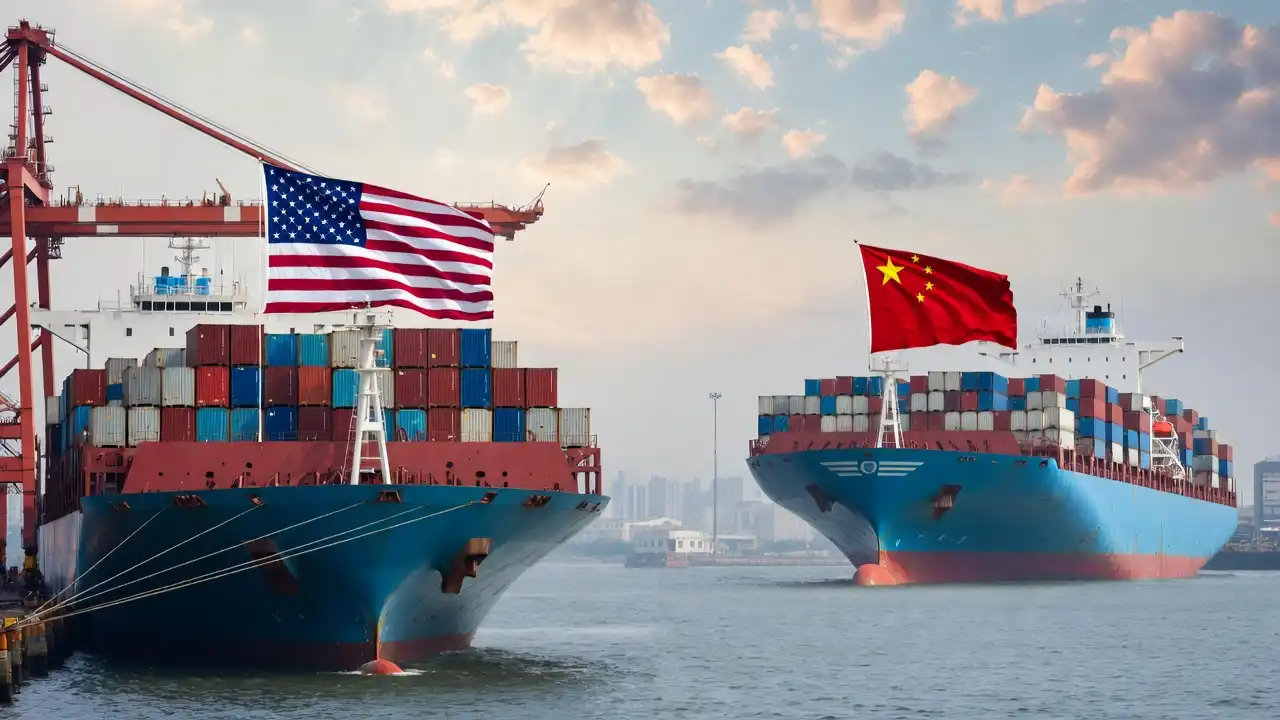
The Chinese government has urged the United States to maintain the momentum of its recently stabilized economic and trade ties, signaling a desire to prevent a full-scale trade war. Speaking at a daily press briefing on Thursday, May 28, 2026, Chinese Foreign Ministry spokesperson Mao Ning addressed the delicate status of bilateral relations. Her remarks directly addressed growing global anxieties over China’s strict export controls on rare earth elements, which are vital for manufacturing advanced semiconductors, electric vehicles, and military defense technologies.
To demonstrate goodwill and emphasize the progress of recent bilateral discussions, Mao Ning noted that the Chinese embassy in Washington has publicly reposted the preliminary outcomes of their economic and trade consultations on social media. This digital outreach highlights the mutual desire to codify the agreements reached during the high-stakes summit in Beijing. Mao Ning added that both Washington and Beijing must jointly and faithfully implement the important consensus reached by the two heads of state during their face-to-face meetings.
The recent diplomatic progress directly implements the political framework agreed by the two heads of state during their face-to-face meetings in Beijing. Under this mid-May 2026 agreement, the two superpowers established a bilateral “Board of Trade” to regulate and split Chinese exports into sensitive tech and non-sensitive categories. To secure this stable footing, Beijing agreed to purchase billions of dollars’ worth of American agricultural products and Boeing aircraft, while establishing a framework for dialogue on artificial intelligence.
However, the primary point of friction between the two nations remains China’s dominant position in the critical minerals market. Currently, China controls approximately 70% of global rare earth extraction and more than 90% of the world’s chemical refining capacity. Over the past year, Beijing has steadily tightened its export controls on these strategic raw materials, including gallium, germanium, and antimony. These restrictions have severely disrupted Western technology supply chains, raising the production costs of advanced military hardware and green-energy infrastructure.
China’s call for trade stability also follows a major counter-offensive by Western allies. Earlier this week, the foreign ministers of the Quadrilateral Security Dialogue—comprising Japan, Australia, India, and the United States—met in New Delhi to finalize their own critical minerals roadmap. The Quad alliance pledged to mobilize up to $20 billion in government and private sector capital to fund alternative mining, processing, and recycling networks outside of China. This massive financial mobilization represents a direct, long-term threat to Beijing’s mineral hegemony.
By urging Washington to honor the Beijing consensus, China is attempting to protect its own high-tech export industries. Under the newly established Board of Trade, the U.S. has agreed to separate “sensitive” technologies from “non-sensitive” everyday consumer goods. If trade tensions re-escalate over rare earths, Washington could easily apply high, retaliatory tariffs on non-sensitive Chinese exports, which currently account for over 30% of China’s overall trade volume. Maintaining a steady relationship allows Beijing to protect its local manufacturing sector while continuing its domestic technology upgrades.
The high-stakes trade dispute comes as global electronics and semiconductor supply chains remain highly vulnerable to geopolitical shocks. The ongoing, war-driven closure of the Strait of Hormuz in the Middle East has already pushed global oil prices past $100 per barrel and inflated shipping costs. If China were to completely cut off its rare earth exports in response to Western actions, the resulting dual shock of high energy prices and component shortages could trigger a severe global recession, forcing central banks to raise interest rates even higher.
As both Washington and Beijing work to implement the consensus reached by Trump and Xi, the future of the global technology sector depends entirely on their regulatory discipline. While the U.S. and its allies will continue to invest billions of dollars in building independent domestic mineral supply chains, these projects will take several years to become commercially viable. In the meantime, both superpowers must walk a delicate diplomatic tightrope. Balancing national security and technological sovereignty with the economic realities of global trade remains the defining challenge for the international order this year.