Key Points:
- A Blue Origin New Glenn rocket exploded during a static hot-fire engine test at Cape Canaveral Space Force Station on May 28, 2026.
- The catastrophic explosion destroyed the 29-story-tall booster and caused significant damage to the pad infrastructure at Launch Complex 36.
- The rocket was being prepared for a June mission to deploy 48 Amazon Project Kuiper broadband satellites, which were not on board during the test.
- Blue Origin founder Jeff Bezos acknowledged the rough day on social media, promising to investigate the root cause, rebuild, and return to flight.
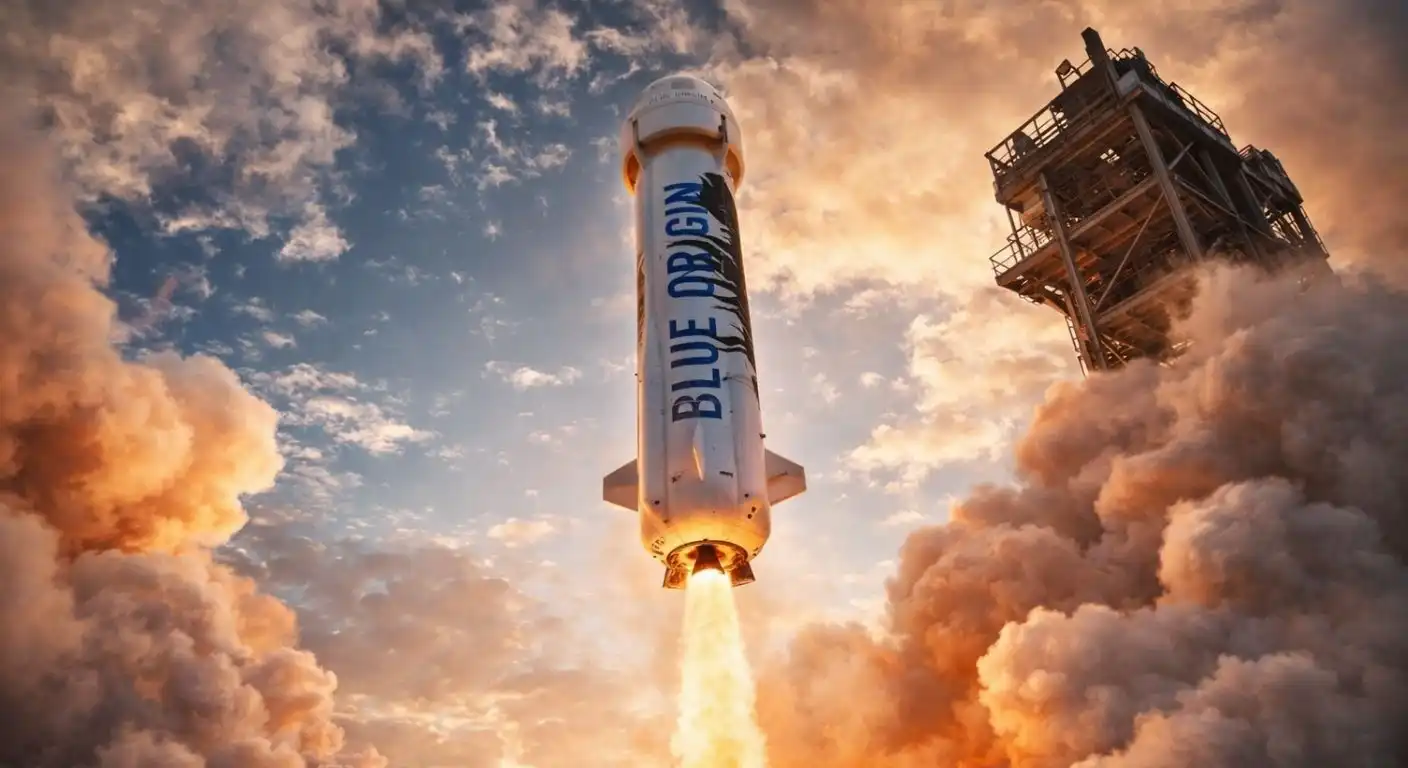
Space exploration remains an incredibly difficult and high-risk endeavor, a reality that Jeff Bezos’ space venture faced dramatically. On Thursday, May 28, 2026, at approximately 9:00 p.m. EDT, Blue Origin’s massive New Glenn rocket suffered a catastrophic explosion during a static hot-fire engine test at Cape Canaveral Space Force Station in Florida. The powerful blast destroyed the first-stage booster and caused significant damage to the ground infrastructure at Space Launch Complex 36. Fortunately, Blue Origin confirmed that all on-site personnel were accounted for, with no injuries reported following the launchpad anomaly.
The static hot-fire test is a routine yet critical pre-flight milestone in which technicians ignite the rocket’s engines while clamps hold the vehicle firmly anchored to the ground. During the test, Blue Origin attempted to fire the booster’s seven proprietary BE-4 first-stage engines. However, moments after ignition, a massive orange fireball erupted at the launchpad, lighting up the night sky and shaking homes in nearby Cape Canaveral and Cocoa Beach. The explosion was powerful enough to completely topple a heavy lightning protection tower on the pad, sending a towering plume of smoke and soot billowing skyward.
The destroyed booster was a central asset in Blue Origin’s upcoming launch manifest. The vehicle was undergoing final preparations for its fourth orbital flight, the NG-4 mission, which the company had planned to launch as early as June. The rocket’s primary objective was to carry 48 of Amazon’s Project Kuiper broadband satellites into low Earth orbit to expand the retailer’s internet constellation. Fortunately, technicians had not yet integrated the satellites onto the rocket, sparing Amazon from losing its multi-million-dollar payload in the launchpad blast.
This catastrophic failure marks a major setback for Blue Origin’s ambition to challenge SpaceX’s dominant grip on the commercial space sector. SpaceX currently controls over 70% of the commercial launch market, leveraging its highly reliable Falcon 9 fleet and the massive development of its Starship megarocket. Blue Origin has spent billions of dollars and nearly a decade developing the 29-story-tall New Glenn rocket to compete directly in this heavy-lift market. The destruction of the launchpad booster and the extensive damage to its only operational launchpad in Florida will likely delay Blue Origin’s flight schedule by several months.
Following the explosion, Blue Origin released a brief statement confirming the anomaly and stating that the company is actively working to gather more details. The Federal Aviation Administration (FAA) will oversee the accident investigation, as is standard practice for commercial rocket failures. Investigators and aerospace engineers will analyze telemetry data to determine whether a hardware failure in the BE-4 engines or a leak in the liquid oxygen and liquefied natural gas propellant systems triggered the ignition blast.
Despite the devastating loss, Blue Origin founder Jeff Bezos remains determined to push forward. Writing on social media, Bezos acknowledged the severity of the incident, describing it as a “very rough day”. However, he emphasized his long-term commitment to the space program, stating that the company will identify the root cause, rebuild as needed, and quickly get back to flying. His optimistic message was echoed by competitor Elon Musk, who responded to footage of the explosion by calling the incident “most unfortunate” and reminding the public that “rockets are hard.”
The launchpad explosion adds to a complicated testing history for the New Glenn rocket. Just last month, on April 19, the rocket’s third flight left its payload—an AST SpaceMobile satellite—in an incorrect orbit after a secondary engine malfunctioned in the upper stage. Although Blue Origin quickly resolved that issue and secured an FAA clearance to return to flight, the destruction of this latest booster is a far more severe blow. The company must now manufacture a new first-stage booster from scratch and rebuild the damaged ground infrastructure before it can hope to launch its next orbital mission.
Ultimately, the New Glenn explosion highlights the extreme engineering challenges of building heavy-lift, reusable rockets. While private space companies are driving a massive, multi-billion-dollar commercial space race, the physical laws of rocket propulsion do not tolerate even the slightest hardware errors. As Blue Origin and the FAA begin their detailed investigation, the launchpad setback will slow down the rollout of Amazon’s Project Kuiper network, reminding the global tech and aerospace industries that the path to the stars is paved with costly, high-risk failures.