

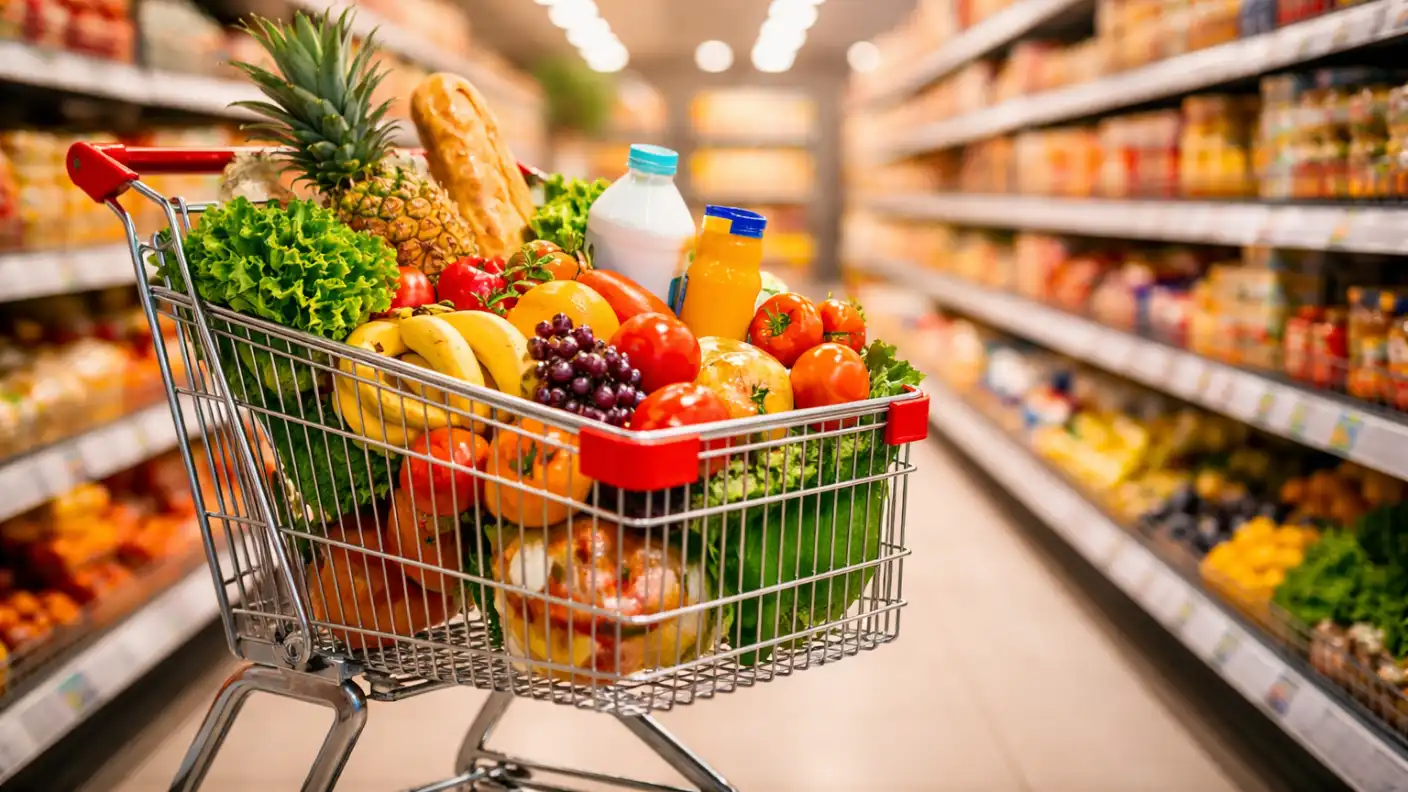
A highly encouraging disinflation trend is sweeping through the United Kingdom’s retail sector. In August 2026, a landmark market research report published by Worldpanel by Numerator revealed that British grocery price inflation fell to 2.1% in the four weeks ending August 9, 2026. This represents a significant decline from the previous month’s report and marks the lowest rate of grocery price growth in nearly two years, providing vital, long-sought relief to millions of British households.
While the cumulative effects of the multi-year cost-of-living crisis continue to weigh heavily on consumer sentiment, the steady, consecutive cooling of food prices is providing a significant economic boost. The steady decline has successfully fanned consumer confidence, allowing a growing portion of the population to rebuild their household savings and adjust their spending budgets. This positive economic shift is arriving at a crucial time, as the country’s newly formed government, led by Prime Minister Andy Burnham, has made tackling the cost-of-living crisis an early, cabinet-level priority.
However, the retail sector remains highly divided. While financially comfortable households are returning to more premium, high-margin product lines, a significant portion of the population continues to struggle, forcing major supermarket chains to deploy record-breaking promotional deals to win and protect their market share. This intense competition has turned the grocery store into a primary battleground for consumer loyalty, reshaping the financial dynamics of the entire retail industry.
Deconstructing the Numbers: Five Consecutive Months of Easing Prices
The latest trade statistics demonstrate that the downward trajectory of food prices is a durable, long-term trend rather than a temporary, seasonal anomaly.
The Transition to Two Point One Percent Inflation
The drop in grocery price inflation to 2.1% represents the fifth consecutive month of easing prices on supermarket shelves. The rate stood at 3.0% two months ago, before slipping to 2.6% in the previous month’s report, and finally landing at 2.1% in early August. This steady deceleration is a major victory for the retail sector, proving that the severe supply chain shocks, labor shortages, and high energy costs that fanned double-digit inflation in previous years have been successfully resolved.
This price stabilization is particularly noticeable when compared to the peak of the inflation crisis in March 2023, when food prices skyrocketed at a historic rate of 19.1%—the highest rate of increase since 1977. By bringing the inflation rate back down close to the Bank of England’s official 2% target, retailers have successfully restored a level of pricing predictability that allows consumers to plan their weekly shopping budgets with absolute confidence.
Take-Home Grocery Sales Slow to Normal Post-Summer Levels
While price inflation cooled, the growth rate of take-home grocery sales also recorded a steady, healthy normalization. Over the four weeks ending August 9, 2026, take-home sales growth at British grocers slowed to 2.5% in value terms, compared to the 3.8% and 4.0% growth rates recorded earlier in the summer.
This minor deceleration was entirely expected by retail analysts, who noted that the massive, summer-long consumer spending boom fanned by major sporting events, including the Euro 2024 soccer championship and the Paris Olympics, has begun to wind down.
During the peak of these events, consumers spent record sums on wine, beer, and barbecue foods.
As the sporting calendar returns to normal, shoppers have settled back into their predictable, daily routine habits, spending an average of £410 on groceries over the four-week period—representing a decrease of £14.24 compared to the previous, high-volume trading period.
The Consumer Divide: Highest Financial Confidence Since Twenty-One vs. Active Struggles
Despite the positive disinflation trend, the British retail market remains divided into two distinct, highly divergent customer segments, forcing manufacturers and supermarket chains to design highly customized product and marketing strategies.
Reaching the Highest Level of Financial Comfort in Five Years
For a growing portion of the population, the consecutive months of falling inflation have successfully translated into a significant increase in disposable income and financial confidence.
The survey data revealed that approximately 39% of British households now describe themselves as “financially comfortable.”
This represents a major psychological milestone, marking the highest level of consumer financial confidence recorded in the United Kingdom since November 2021.
These financially comfortable households, having successfully survived the worst of the cost-of-living crisis, are once again looking to treat themselves at home.
They are driving a massive resurgence in premium own-label sales, which rose by 11.1% year-on-year for the first time since March, as families choose to swap expensive restaurant meals for high-quality, gourmet ingredients prepared in their own kitchens.
The Struggling Twenty Percent and the Battle of the Budget
In sharp contrast to this growing optimism, a significant and highly vulnerable segment of the population continues to face severe, daily financial distress.
The survey showed that exactly 20% of UK households report that they are still actively struggling to make ends meet.
For these struggling families, the cumulative impact of three years of high food and energy prices has completely depleted their financial reserves.
To manage their tight budgets, 30% of these households are actively prioritizing essential groceries and weekly shopping bills over discretionary summer spending, such as international travel, holidays, and leisure activities.
This financial disparity means that while high-end, premium brands are enjoying a successful recovery, value-focused private labels and discount retail chains remain absolutely essential for a fifth of the population, forcing supermarkets to maintain their low-cost, budget product lines to protect these vulnerable consumers.
The Promotional War: Retailers Deploy Record Deals to Win Market Share
Faced with a highly divided customer base, the United Kingdom’s major supermarket chains—including market leader Tesco, number-two Sainsbury’s, and German discount giants Aldi and Lidl—are fighting a fierce, high-stakes price war to capture consumer loyalty.
Spending on Deals Reaches a Record Thirty-One Percent
To attract budget-conscious shoppers and prevent them from trading down to cheaper competitors, major retailers have stepped up their promotional efforts significantly.
During the four weeks ending August 9, 2026, consumer spending on deals and promotional offers reached its highest level of the year, with 31.3% of all grocery sales including some kind of discount or deal.
This intense promotional activity has turned the weekly grocery shop into a highly competitive hunt for value.
Supermarkets are utilizing loyalty card apps, digital coupons, and multi-buy discounts to lower the prices of everyday staples.
This high level of discounting has successfully cushioned consumers from the remaining inflation, ensuring that the cost of the weekly shop remains manageable, while forcing retail chains to absorb the financial hit on their own operating margins.
The Resilience of Value Brands and the Sixty-Percent Staple Share
While premium own-label products recorded a strong 11.1% recovery among wealthier shoppers, value own-label lines have remained incredibly resilient among budget-conscious families.
The data showed that British consumers executed over 96 million shopping trips that included at least one value own-label item during the four-week period.
While value-branded products represent a smaller, slowly declining share of the overall grocery market compared to premium alternatives, they remain a vital, non-discretionary anchor for millions of households.
Supermarkets recognize that if they fail to offer affordable, high-quality private labels for basic staples like bread, milk, and eggs, they will quickly lose these high-volume shoppers to discount giants like Aldi and Lidl, who currently control a combined 19.5% share of the national grocery market, forcing the traditional chains to maintain their aggressive, low-price commitments.
Monetary Policy Implications: Why the Bank of England Remains Vigilant
While the steady decline in grocery price inflation is a major victory for consumers and retailers, central bank economists and monetary policymakers are maintaining a highly cautious, watchful posture.
Food as a Private-Sector Proxy for Official CPI
The high-frequency data published by Worldpanel by Numerator is highly valued by the financial community because it provides an invaluable, real-time snapshot of consumer behavior.
However, economists warn that this private-sector survey functions primarily as an early, directional proxy for the official Consumer Price Index (CPI) compiled by the Office for National Statistics.
The ONS’s most recent official data confirmed this supportive, disinflationary trend.
In its latest report, the official food and non-alcoholic beverage inflation rate fell to a near two-year low of 1.7%, down from 2.2% in May, providing solid confirmation that price pressures are easing across the entire retail supply chain.
For the government, this low-inflation print represents a major political success story, helping to fulfill the Prime Minister’s campaign promises to ease the cost-of-living crisis and protect working families.
The Focus on Sticky Services Inflation and Interest-Rate Paths
Despite the positive food data, the Bank of England’s Monetary Policy Committee remains highly cautious, warning that a soft grocery read rarely shifts the central bank’s interest-rate path on its own.
While food represents a highly visible, politically sensitive component of the consumer basket, it is also highly volatile and accounts for a relatively small share of overall consumer spending.
Central bank economists are currently far more concerned about sticky services inflation and strong wage growth, which continue to run well above the official 2% target.
With the wider economy showing signs of stable, tech-driven GDP growth, and large-scale industrial projects requiring over $1 billion in capital investments to construct advanced data center networks, the risk of a fresh inflation spike remains high.
Consequently, the Bank of England is expected to maintain its cautious, restrictive monetary policy, keeping interest rates elevated until services inflation returns sustainably to its target, representing a minor 1.5% margin of error in economic models.
Reforming the Retail Landscape
The latest UK grocery price inflation statistics represent a historic milestone for the national retail sector. By demonstrating that grocery price growth fell to 2.1% in the four weeks ending August 9, 2026, and crossed the lowest rate in nearly two years, the market has proven that the severe, post-pandemic inflationary spiral has been successfully broken.
While the structural divide between financially comfortable households and struggling families continues to present significant operational challenges, the massive expansion of promotional deals and the resilience of private own-labels have successfully cushioned the public from the remaining cost-of-living pressures.
As major supermarket chains continue to wage their aggressive price wars, and the Bank of England maintains its vigilant, data-driven approach to monetary policy, the successful stabilization of food prices will ensure that the country’s retail sector remains a highly competitive, highly efficient force in the global economy, securing a more stable, predictable, and affordable future for consumers across the United Kingdom.






