Key Points:
- The Barcelona Supercomputing Center (BSC-CNS) inaugurated EuroQCS-Spain, its third quantum computer, integrated with MareNostrum 5.
- The €8.5 million ($9.1 million) project introduces a 10-qubit analog system, the first of three planned generations of adiabatic processors.
- Developed by the Spanish startup Qilimanjaro Quantum Tech, the hybrid environment combines classical, digital, and analog quantum computing.
- The system is co-funded by the EuroHPC Joint Undertaking and Spain’s State Secretariat for Digitization and Artificial Intelligence (SEDIA).
Europe has taken a massive step toward establishing its own technological sovereignty in the high-stakes global quantum race. On Thursday, May 28, 2026, the Barcelona Supercomputing Center (BSC-CNS) in Spain officially launched its third quantum computer, named EuroQCS-Spain. The €8.5 million (approximately $9.1 million) facility integrates directly with the world-class MareNostrum 5 supercomputer, establishing one of the first unified, hybrid computing environments. By combining classical supercomputing with both digital and analog quantum systems, the new setup provides European researchers, industries, and public administrations with an unparalleled tool for solving highly complex computational challenges.
The launch represents a major milestone for the European High Performance Computing Joint Undertaking (EuroHPC JU), which co-funded 50% of the acquisition and integration costs. Spain’s State Secretariat for Digitization and Artificial Intelligence (SEDIA) provided the remaining 50% of the capital through the national Recovery, Transformation and Resilience Plan. By securing this funding, the EuroQCS-Spain consortium—led by the BSC-CNS and including the Institute of High Energy Physics (IFAE) in Spain and the International Iberian Nanotechnology Laboratory (INL) in Portugal—has successfully built an independent, European-supplied technology ecosystem.
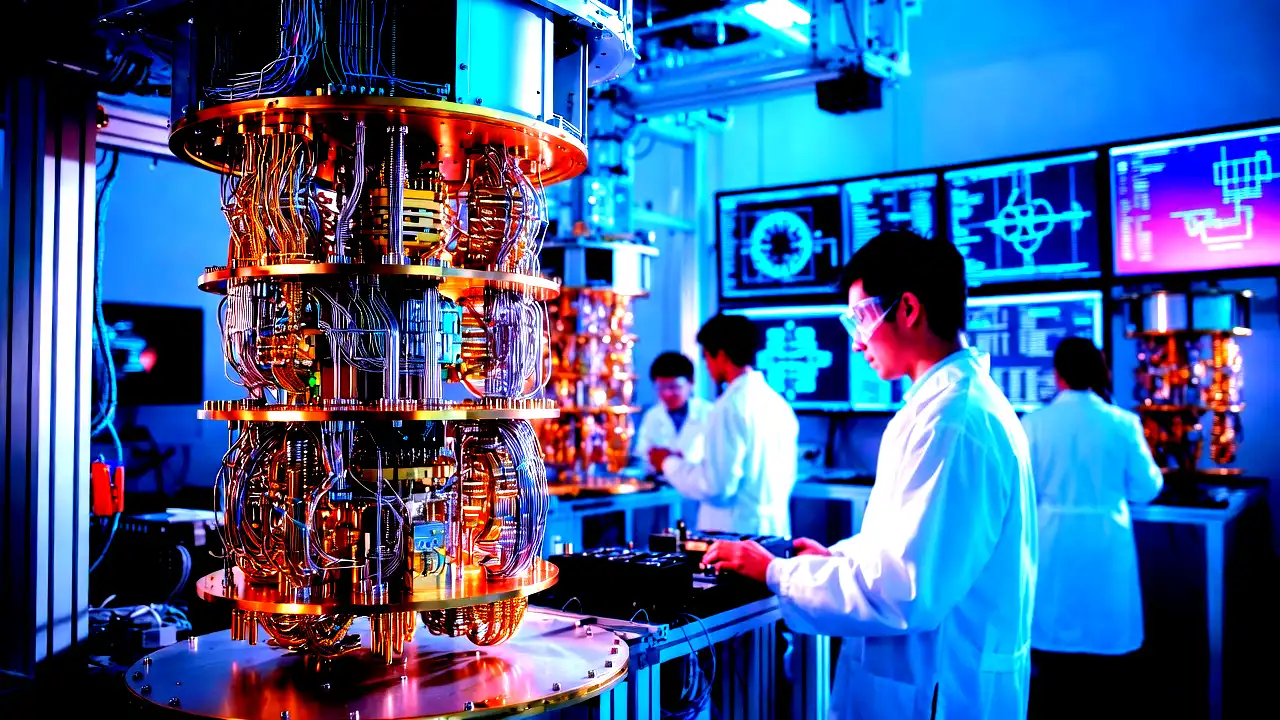
At the heart of the new system is a 10-qubit analog quantum computer developed entirely by the Catalan startup Qilimanjaro Quantum Tech, in partnership with the French systems integrator Do IT Now. Unlike purely digital quantum computers that rely on gate-based logic and require complex, massive fault-tolerant error correction to operate, Qilimanjaro’s analog architecture uses superconducting qubit technology following an adiabatic computing model. This analog design makes the processor inherently error-resilient, allowing researchers to explore practical quantum applications immediately without waiting for decades of error-correction research to mature.
The new analog quantum computer, also known as MareNostrum-Ona, to evoke the mathematical wave function and the Mediterranean Sea, serves as a highly specialized quantum annealer. Quantum annealing is exceptionally effective at solving complex optimization challenges that are completely intractable for classical supercomputers. The system is highly optimized for specific industrial and scientific workloads, including logistics routing, financial risk modeling, energy network management, and molecular simulations for quantum chemistry and materials science.
By pairing these new analog capabilities with the existing digital gate-based quantum system installed at the center in 2025 under the Quantum Spain national program, the Barcelona Supercomputing Center has built a truly unique, tri-hybrid computing facility. BSC Director Mateo Valero emphasized during the launch event that there is no global precedent for a facility of this scale. The center is now one of the few places in the world where analog quantum computing, digital quantum computing, and classical supercomputing operate side by side on a single platform and software environment, providing users with a comprehensive, unified computational toolkit.
To ensure the technology remains highly scalable, Qilimanjaro and Do IT Now will deliver three distinct generations of Adiabatic Quantum Processing Units (AQPUs) over the next two years. The newly inaugurated 10-qubit analog system represents the first generation. The partners plan to deliver subsequent generations featuring 15 qubits in late 2026 and up to 25 qubits in 2027. These planned upgrades will progressively scale up the system’s performance, coherence times, and data qubit capacities, ensuring that European researchers remain at the absolute forefront of quantum innovation.
The successful launch of EuroQCS-Spain also marks a major victory for European strategic autonomy and digital sovereignty. For decades, European tech companies have relied heavily on hardware, processors, and cloud systems operated by U.S. and Chinese giants. By building this quantum computer entirely with Spanish and European technology, the region is proving that it can successfully manufacture its own high-speed chips and software. Minister of Research and Universities Núria Montserrat highlighted the importance of these public policies, stating that local innovation is essential to ensure that Europe does not depend on third countries for its most sensitive digital infrastructure.
As the global quantum technology sector surpasses $100 billion annually, integrating quantum computers into existing supercomputing data centers has become a primary priority for technology leaders worldwide. By launching EuroQCS-Spain and opening up access to the wider European research community via the cloud, the Barcelona Supercomputing Center is turning the promise of quantum computing into a practical, everyday resource. The coming years will prove whether this hybrid, error-resilient analog architecture can successfully accelerate industrial workflows, establishing Catalonia and Spain as premier, self-sufficient hubs for the global digital economy.