Key Points:
- Elon Musk’s SpaceX has revised its upcoming IPO valuation target to at least $1.8 trillion, down from earlier estimates, following consultations with investors.
- The rocket and artificial intelligence firm aims to raise to $75 billion, which would establish the largest stock market debut in history.
- The company generated $18.7 billion in revenue in 2025 but swung to a net loss of $4.94 billion due to aggressive spending on infrastructure and AI.
- Formal investor roadshows are scheduled to begin on June 4, with initial pricing slated for June 11 ahead of its June 12 Nasdaq debut.
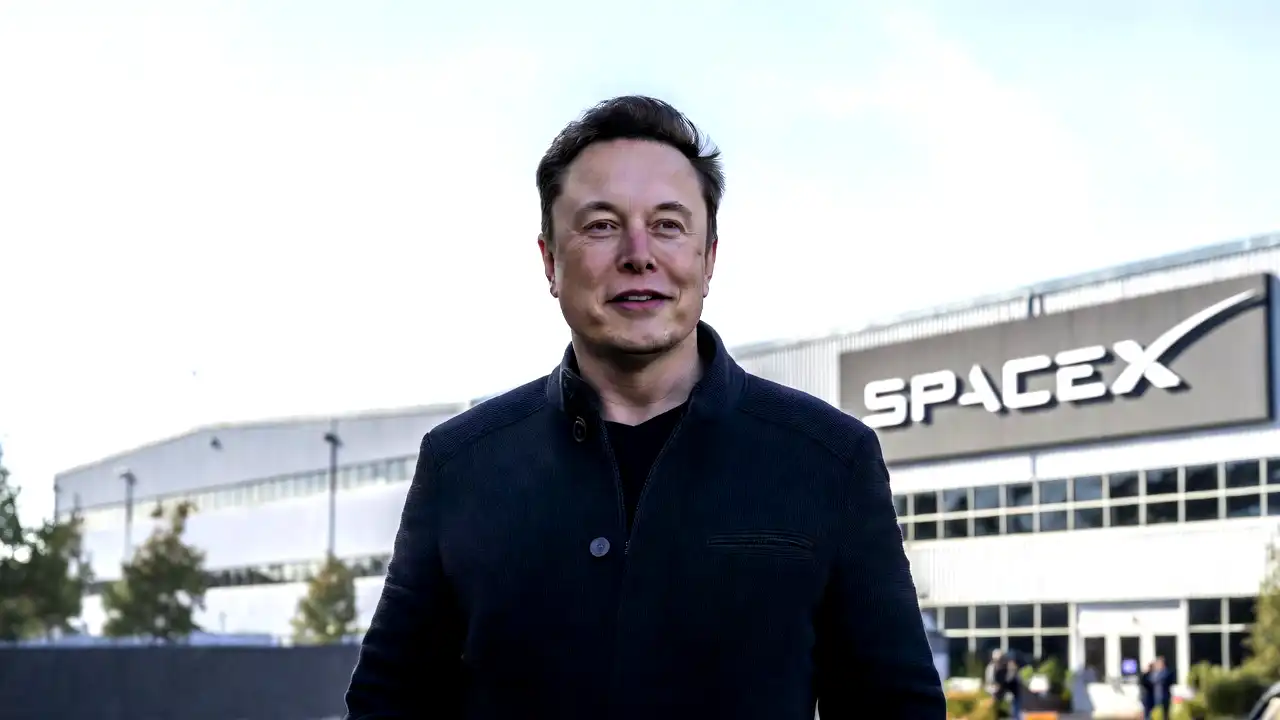
Elon Musk’s rocket and satellite giant, SpaceX, has revised its target valuation to at least $1.8 trillion for its highly anticipated initial public offering (IPO). According to a Bloomberg report published on Thursday, May 28, 2026, the company adjusted its pricing expectations downward after holding intensive consultations with financial advisers and major institutional investors. Although the current target sits below the ambitious $2 trillion valuation that the company floated in April, the upcoming listing still positions SpaceX to shatter global records and execute the largest public debut in corporate history.
The scale of the planned listing remains unprecedented in history. Under the revised framework, the company is seeking to raise $75 billion on Nasdaq under the ticker symbol SPCX. If successful, this multi-billion-dollar capital raise will easily surpass the previous record established by Saudi Aramco during its historic 2019 listing, which raised $29 billion. To secure this enormous capital pool, SpaceX has held discussions with sovereign wealth funds, including Saudi Arabia’s Public Investment Fund, about taking a massive $5 billion anchor stake in the public company.
The S-1 prospectus filed with the U.S. Securities and Exchange Commission (SEC) provides the first-ever detailed look into the company’s financial performance. In fiscal year 2025, SpaceX generated a robust $18.7 billion in total revenue, marking a substantial increase from the $14 billion recorded a year earlier. This strong top-line performance reflects the growing commercial success of its Starlink satellite broadband division, which now provides high-speed internet to millions of active subscribers globally and serves as the company’s primary cash-generating business.
However, the prospectus also revealed that the company’s massive growth has come at a steep financial cost. An aggressive acceleration in capital expenditure primarily drove the massive $4.94 billion net loss in 2025, representing a sharp reversal from the $791 million net profit it recorded in 2024. The increase in spending occurred as the company poured billions of dollars into its space-based data center infrastructure, Starlink global satellite expansion, Starship heavy-lift rocket development, and its February 2026 merger with Elon Musk’s artificial intelligence startup, xAI.
To encourage participation from retail investors—a group that Musk has long sought to engage through his electric vehicle company, Tesla—SpaceX recently completed a 5-for-1 stock split. The company notified its shareholders in mid-May that the fair market value of a single share had been adjusted to approximately $105.32, down from its previous pre-split price of $526.59. By lowering the per-share entry price, the company has made the stock significantly more accessible to everyday traders, which analysts expect will drive an unprecedented wave of demand on the first day of public trading.
Despite retail enthusiasm, institutional investors have raised concerns about the company’s extremely high valuation metrics. At a $1.8 trillion valuation, SpaceX would trade at a price-to-sales ratio of nearly 100, representing a massive premium relative to terrestrial tech giants. For instance, AI pioneer Nvidia currently trades at a price-to-sales ratio of 24. Some analysts have pointed out that while the company’s Starlink and rocket launch divisions are highly successful, investors are essentially paying a massive premium for unproven, highly speculative long-term ventures, such as space-based AI computing and Mars colonization.
The transition of SpaceX into a vertically integrated space, satellite, and AI infrastructure company is the central pillar of its long-term investment thesis. Following the $1.25 trillion merger with xAI, the company has focused heavily on the concept of “orbital data centers.” By deploying thousands of solar-powered computing satellites into low-Earth orbit, the company hopes to bypass the severe energy and cooling constraints that currently limit land-based data centers. However, building out this unproven space-based infrastructure will require years of sustained capital expenditure, resulting in a projected 1.5% compression in the parent firm’s profit margin through 2028.
The formal timeline for the historic listing is moving forward rapidly. According to sources familiar with the matter, SpaceX will launch its official investor roadshow campaign on June 4, where senior executives will pitch the $28.5 trillion total addressable market opportunity directly to Wall Street’s top money managers. If the marketing process goes smoothly, the company plans to set the final IPO price on June 11 and schedule the official listing on the Nasdaq exchange for June 12, 2026. While the trading timeline could still slip by a few days due to market volatility, the company remains firmly on track for its June debut.
Ultimately, the final SpaceX IPO valuation will serve as a critical benchmark for the public markets’ appetite for high-growth, capital-intensive technology. While the reduction from $2 trillion to $1.8 trillion shows a commendable degree of realism, the valuation remains highly ambitious. If Elon Musk can successfully convince investors to buy into his long-term dream of a connected, space-based AI future, the listing will easily secure its place as the most significant financial event of the decade, completely redefining the boundaries of the global tech economy.