Key Points:
- BEYOND Expo 2026 opened in Macao, drawing nearly 800 international exhibitors under the theme “AI: Digital to Physical.”
- iFLYTEK launched ultra-lightweight, 40-gram AI glasses capable of real-time translation across 122 different languages.
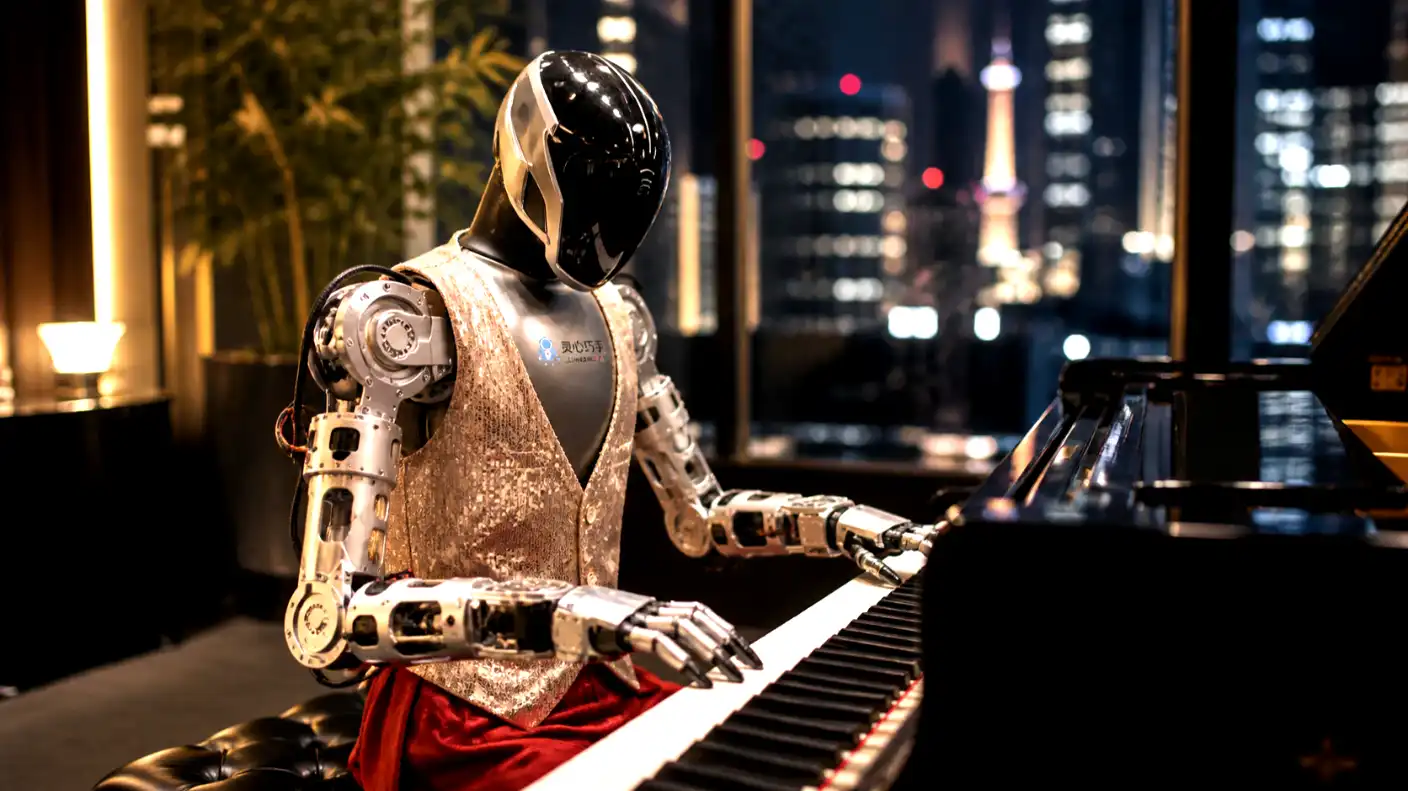
- Shenzhen-based Engine AI showcased a full-sized humanoid robot running at an agile, explosive speed of 3 meters per second.
- The expo hosted several high-profile forums on digital commerce and green buildings to foster regional fintech collaboration.
BEYOND Expo 2026 opened in Macao on Wednesday, May 27, 2026, showcasing how artificial intelligence is rapidly moving from digital systems into physical hardware. The premier technology event, which runs through Saturday, May 30, has drawn nearly 800 international exhibitors and thousands of global visitors. Themed “AI: Digital to Physical,” the expo highlights a major era of industrial integration, where smart devices and advanced robotics are bringing software algorithms into the real world.
Chinese artificial intelligence pioneer iFLYTEK made waves at the event by launching its latest consumer wearable technology: ultra-lightweight AI glasses. Weighing only 40 grams, these smart glasses can perform real-time translation across 122 different languages, instantly displaying the translated text directly onto the lenses. This advanced heads-up display technology allows business professionals and international travelers to conduct fluid, face-to-face negotiations without looking down at their smartphones.
Managing the development of these advanced consumer wearables requires a massive and highly integrated supply chain. Lin Huijie, the general manager of iFLYTEK’s Consumer Wearables Business, explained that smart glasses demand much stronger industrial collaboration than traditional eyewear. Because the product integrates optical waveguides, micro-displays, compact battery systems, and AI processing chips, developers must coordinate closely with diverse hardware manufacturers. He noted that iFLYTEK hopes to partner with global firms to establish standardized interfaces for the smart wearable device industry.
Expo participants who tried on the glasses praised their practical utility. Stephen Wong, an international business consultant, noted that using these real-time translation glasses makes global business negotiations far more convenient, direct, and natural. He added that BEYOND Expo 2026 showcases a much higher level of technological sophistication than in previous years, expressing strong hope of discovering more innovative Chinese hardware companies suitable for overseas expansion through Macao’s unique global gateway.
A short distance away from the wearable tech exhibits, a crowd gathered to watch two humanoid robots perform complex martial arts movements. Developed by Shenzhen-based startup Engine AI, these bipedal machines demonstrate the rapid pace of physical AI and mechanical iteration. Li Yang, the company’s head of marketing, explained that their bipedal, general-purpose humanoid robot is already commercially available and capable of performing complex physical tasks such as running, dancing, and boxing.
Furthermore, Engine AI showcased its full-sized, next-generation humanoid robot, which can run at 3 meters per second. This rapid locomotion combines exceptional agility with explosive force, representing a major engineering breakthrough in robotic balance and actuator technology. By using advanced force-control algorithms and high-density battery packs, these humanoid workers can safely navigate uneven, real-world terrain, paving the way for autonomous labor in manufacturing plants and logistics warehouses.
This rapid development of smart wearables and bipedal robots coincides with a massive influx of capital into the physical AI sector. As global tech giants realize that software models must eventually integrate with physical bodies to automate real-world labor, venture capital is flowing into hardware startups. Analysts project that global investments in physical AI systems—including humanoid robotics and smart vehicles—will exceed $100 billion by 2030, showing a steady annual growth of 15% or more.
The Macao Technology General Association, which hosts the BEYOND Expo, has successfully positioned the city as a critical, neutral hub for international technology exchange. Alongside the main exhibition floor, the expo hosted several high-profile forums and summits focusing on green buildings, carbon neutrality, and digital commerce. By bringing together tech executives, policymakers, and academics from across the Asia-Pacific region, the association is ensuring that Macao plays a defining role in shaping the global digital economy.
As BEYOND Expo 2026 draws to a close, the clear takeaway is that artificial intelligence has successfully broken out of its digital cage. By transforming from abstract code into physical, wearable translation glasses and agile humanoid robots, the technology is directly redefining human-machine collaboration. If global developers can successfully maintain this rapid pace of physical integration, they will unlock unprecedented economic value, proving that the future of technology lies in bridging the gap between the virtual and physical worlds.