United States equity markets staged a powerful, high-volume rally as record-breaking quarterly financial results from technology giants ignited broad-based investor optimism across Wall Street. The technology-heavy Nasdaq Composite index led major benchmarks, surging over 2.0% as mega-cap software and digital advertising powerhouses demonstrated that multi-billion-dollar investments in artificial intelligence are generating immediate, high-margin corporate revenues. The benchmark S&P 500 index climbed 1.4% to break past key technical resistance levels, while the Dow Jones Industrial Average added over 300 points, capping a historic trading session for American financial markets.
The primary catalyst unleashing the Wall Street buying surge was a pair of blowout quarterly financial reports from Microsoft and Meta Platforms. Microsoft added over $200 billion in corporate market capitalization in a single session after reporting a 31% annual revenue surge in its Azure cloud computing division. Hours later, Meta Platforms jumped 8% in post-earnings trading after delivering a 22% top-line revenue increase to $47.5 billion, proving to institutional investors that artificial intelligence is actively accelerating digital ad targeting yields across its 3.2 billion daily active users.
The stellar earnings disclosures effectively silenced Wall Street anxiety regarding Big Tech capital expenditures. Earlier in the week, institutional investors expressed deep concern that massive data center construction budgets were eroding corporate cash flows without delivering proportional software revenues. However, Microsoft and Meta proved that despite spending tens of billions of dollars quarterly on GPUs, liquid cooling, and custom silicon, their core enterprise software and digital advertising cash cows continue to generate massive positive free cash flow.
TechGolly provides a comprehensive financial and market analysis of the stock market rally, evaluating Microsoft and Meta earnings, Azure cloud acceleration, Amazon and Apple preview metrics, semiconductor supply chain rallies, Treasury bond yield dynamics, and strategic portfolio recommendations for long-term equity investors.
Unpacking the Market Rally: Nasdaq and S&P 500 Index Movements
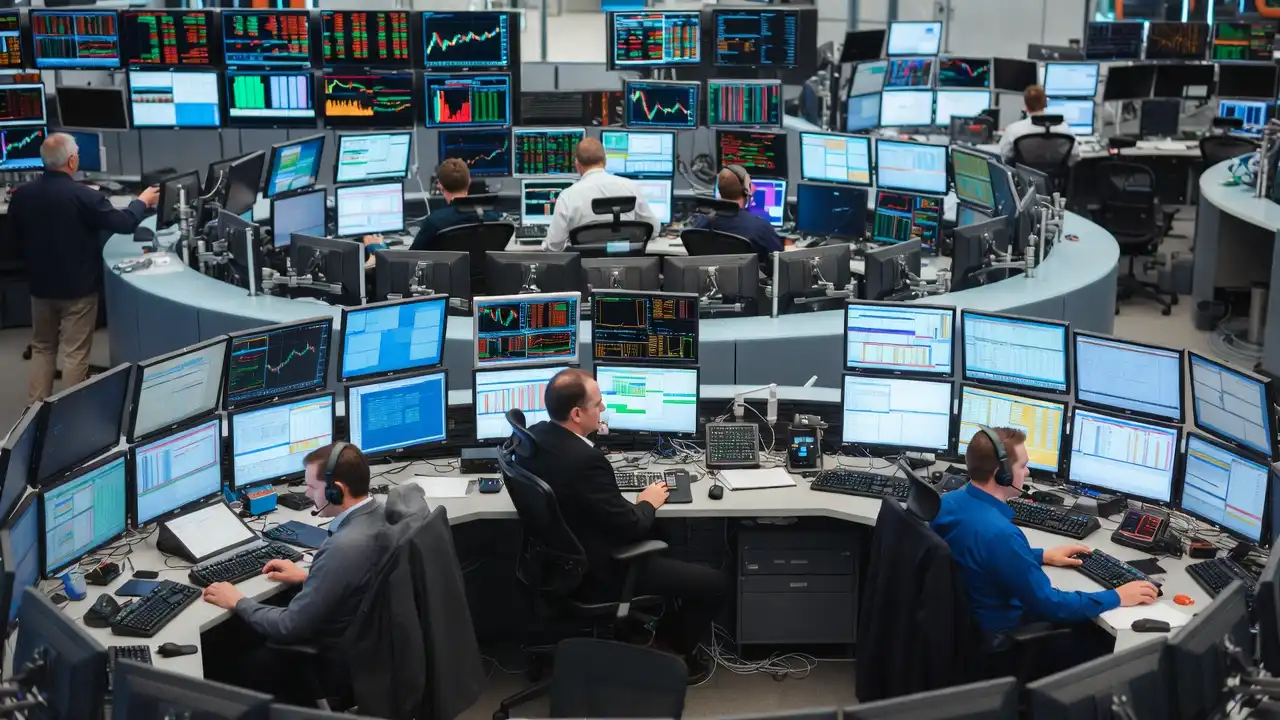
The Thursday trading session across the New York Stock Exchange and the Nasdaq market represented one of the most decisive bullish risk-on rallies of the year. Institutional buying was concentrated heavily in the technology, communication services, and semiconductor sectors, which collectively generated over 65% of the S&P 500’s total daily point gains.
The Nasdaq Composite led major market indexes, surging past 17,800 points as institutional asset managers and retail traders accumulated shares in software platforms, cloud infrastructure providers, and hardware chipmakers. The S&P 500 advanced past 5,550 points, while the Russell 2000 small-cap index recorded a 1.3% gain, confirming that market breadth is broadening beyond mega-cap technology firms into middle-market industrial and regional enterprise stocks.
Financial market strategists emphasize that the velocity of the daily advance was amplified by systematic quantitative trading models and options market dealer positioning. As major stock indexes cleared key technical moving averages, automated Commodity Trading Advisors were forced to execute high-volume short-covering and long-equity purchasing programs, injecting billions of dollars in mechanical buying power into public stock exchanges.
Simultaneously, options market dealers shifted into positive gamma territory, forcing option market makers to buy underlying stocks during intraday price dips. This automated dealer hedging behavior compressed the Cboe Volatility Index (VIX) down toward low 13-point levels, suppressing daily price swings and encouraging risk-averse institutional managers to deploy sidelined cash reserves back into equities.
Microsoft’s Record 200 Billion Dollar Market Cap Addition
The single most influential corporate driver of the daily market rally was Microsoft’s historic valuation jump, which added over $200 billion to $250 billion in market value in a single trading session, pushing its total market capitalization toward $3.4 trillion.
Microsoft’s fourth-quarter fiscal results delivered a masterclass in enterprise cloud execution. Total quarterly revenue reached $74.8 billion (up 15% year-over-year), while diluted earnings per share reached $3.49 (up 18%), outperforming analyst consensus estimates across all operational lines.
The operational highlight was Azure’s 31% cloud revenue growth rate, which beat Wall Street expectations of 29%. Executive management confirmed that artificial intelligence services contributed 8 to 9 percentage points directly to Azure’s top-line growth. Furthermore, Microsoft projected that Azure growth will accelerate further to 31% or 32% in the upcoming quarter, assuring investors that cloud demand remains unsated.
Crucially, Microsoft validated its $19.2 billion quarterly capital expenditure budget by generating $23.2 billion in positive quarterly free cash flow, while expanding its Commercial Remaining Performance Obligations backlog by 20% to $268 billion. The massive $268 billion backlog provides Wall Street with exceptional multi-year revenue visibility, confirming that enterprise clients are locking in multi-year cloud contracts to build AI workloads on Azure.
Meta Platforms Delivers 22 Percent Revenue Surge and AI Advertising Gains
Joining Microsoft in driving Wall Street’s technology rally was social media and digital advertising giant Meta Platforms, which delivered an extraordinary second-quarter financial report that sent its stock surging 8% in extended trading.
Meta reported total quarterly revenue of $47.5 billion, representing a 22% year-over-year increase that handily beat analyst consensus forecasts of $44.8 billion. Quarterly net income scaled to $13.5 billion, reflecting strong operating leverage as digital advertising impression volume expanded by 10% and average price per ad increased by 10% across Facebook, Instagram, and WhatsApp.
The company’s financial performance provided an immediate answer to skeptics who questioned Mark Zuckerberg’s aggressive capital expenditure plans. Meta raised the lower end of its full-year capital expenditure guidance to a range between $37 billion and $40 billion, directing tens of billions of dollars toward building liquid-cooled data center clusters housing hundreds of thousands of Nvidia GPUs.
Zuckerberg reassured institutional investors by demonstrating that artificial intelligence is delivering an immediate return on investment across Meta’s core advertising engine. Advanced AI recommendation algorithms and automated ad-targeting tools are delivering higher ad conversion rates for commercial advertisers, allowing Meta to charge higher ad prices while increasing user engagement across its 3.2 billion daily active users.
Furthermore, Meta’s open-source artificial intelligence strategy is yielding structural competitive advantages. By releasing its Llama 3 foundation models under open-weights licenses, Meta has enabled millions of global developers to build software tools on top of its architecture, creating an open ecosystem that challenges closed proprietary cloud platforms while allowing Meta to integrate cutting-edge open-source software optimizations back into its internal advertising engines.
High-Stakes Previews: Amazon AWS and Apple Intelligence
The explosive post-earnings rallies in Microsoft and Meta set a high-conviction stage for upcoming quarterly financial disclosures from fellow tech titans Amazon and Apple.
Amazon enters its financial report with options market traders pricing in a 6.4% post-earnings stock price swing. Wall Street equity analysts expect Amazon Web Services to report accelerating cloud revenue growth between 31% and 33% year-over-year, supported by a $364 billion contracted order backlog. Investors will closely evaluate whether Amazon’s proprietary custom silicon, specifically its Trainium 2 and Graviton 4 processor lines, can match Azure’s AI monetization momentum.
Simultaneously, Apple is preparing to report its third-quarter fiscal results, with institutional investors tracking iPhone revenue recovery across North America and international markets, alongside consumer adoption metrics for its newly launched Apple Intelligence software suite.
Analyst research notes emphasize that if Amazon and Apple join Microsoft and Meta in delivering strong top-line revenue beats and positive forward guidance, the combined earnings momentum could push the S&P 500 and Nasdaq Composite to fresh historic record highs before the conclusion of the summer reporting season.
Semiconductor Rally: Nvidia, AMD, and Chip Equipment Drivers
The blowout quarterly results from Microsoft and Meta triggered a massive, synchronized rally across semiconductor equities, as Wall Street realized that Big Tech’s multi-billion-dollar GPU procurement schedules remain fully intact.
Semiconductor benchmark indexes advanced over 3.2%, led by hardware market leader Nvidia, which rose 4.5% as investors recognized that Microsoft’s $19.2 billion capex and Meta’s $40 billion capex convert directly into purchase orders for Nvidia’s Blackwell B200 and GB200 NVL72 liquid-cooled server racks. Supply chain channel checks confirm that Nvidia’s Blackwell architecture is fully booked through mid-2027, guaranteeing high capacity utilization for its foundry partners.
Advanced Micro Devices also captured strong analyst buying ahead of its own earnings report, with investors tracking customer adoption for its Instinct MI350P and MI455X artificial intelligence accelerators as cloud providers seek multi-vendor hardware diversification.
Memory chipmakers—including SK Hynix, Micron Technology, and Samsung Electronics—experienced strong buying interest as high-bandwidth memory (HBM3e and HBM4) contract prices surged 40% to 50% quarter-over-quarter. An artificial intelligence server rack requires up to 8 times more high-density DRAM and flash storage than a conventional cloud server, creating an unprecedented price supercycle across global memory markets.
Semiconductor capital equipment manufacturers, including ASML, Applied Materials, Lam Research, and KLA Corporation, rounded out the hardware rally. As global foundry giants like TSMC run their advanced 3-nanometer and 2-nanometer fabrication lines at over 90% capacity utilization to fill AI chip orders, equipment makers are securing multi-billion-dollar tool orders to expand cleanroom capacity in Taiwan, Arizona, and Europe.
Macroeconomic Stability: Treasury Yields, GDP, and Federal Reserve Policy
The technology-led stock market rally occurred against a remarkably stable macroeconomic backdrop, providing equity valuations with a supportive financial environment.
Benchmark 10-year United States Treasury yields held steady near 4.45%, eliminating the threat of a sudden fixed-income sell-off that could compress equity valuation multiples. Stable long-term bond yields allowed the S&P 500 forward price-to-earnings ratio to hold comfortably near 22x to 23x earnings, as double-digit corporate profit growth validated elevated stock prices.
Macroeconomic data releases confirmed that the American economy is maintaining strong fundamental growth. Second-quarter real GDP expanded at a solid 2.8% annualized pace, while weekly initial jobless claims held low at 216,000, proving that corporate America is maintaining a low-layoff operational stance despite high interest rates.
From a monetary policy perspective, financial markets have fully absorbed expectations that the Federal Reserve will maintain its benchmark federal funds rate in the 5.25% to 5.50% range. While sticky core inflation metrics and $100+ Brent crude oil prices prevent central bank officials from executing immediate interest rate cuts, Wall Street equity markets have demonstrated that strong 18% corporate earnings per share growth can easily absorb elevated borrowing costs.
Investors are increasingly viewing high interest rates as a reflection of economic strength rather than a threat to corporate solvency. As long as American businesses continue to expand profit margins through automated software workflows and strong end-customer demand, equity markets can sustain high valuation multiples alongside 4.5% Treasury yields.
Strategic Outlook for Wall Street and Institutional Investors
The successful validation of Big Tech artificial intelligence capital expenditures marks a major structural turning point for Wall Street, establishing a durable foundation for equity markets through the second half of the year.
Looking forward through upcoming trading cycles, institutional asset allocators outline a clear, multi-tiered portfolio strategy:
- First, maintaining high-conviction, core allocations in mega-cap technology hyperscalers and cloud platforms (Microsoft, Amazon, Alphabet, Meta) that hold proprietary customer relationships and generate massive operating cash flows.
- Second, overweighting physical hardware enablers (Nvidia, TSML, SK Hynix, Supermicro, Vertiv) that supply the essential microprocessors, high-bandwidth memory, liquid cooling, and server racks required to build AI data centers.
- Third, deploying capital into physical energy infrastructure enablers (Constellation Energy, Vistra, GE Vernova) that supply the zero-carbon electrical power, high-voltage transformers, and grid equipment needed to energize gigawatt-scale computing clusters.
- Fourth, diversifying into cash-generative cyclical sectors—such as commercial banks returning 8% of market capitalization via dividends and buybacks—to capture broad-based domestic economic expansion.
As artificial intelligence transitions from early software pilot projects into an indispensable industrial utility powering global commerce, the companies that own, operate, and supply the physical and digital infrastructure for artificial intelligence will continue to drive global economic growth and deliver superior capital returns for investors worldwide.
Key Takeaways for Financial Executives, Traders, and Investors
The blowout earnings reports from Microsoft and Meta and the resulting Wall Street rally deliver vital strategic lessons for corporate decision-makers, portfolio managers, and individual investors.
First, artificial intelligence capital expenditure is delivering real, high-margin revenue. Investors should reject bear narratives that claim AI spending is unmonetized, recognizing that cloud providers and digital ad platforms are converting data center investments into multi-billion-dollar commercial contracts.
Second, free cash flow generation is the ultimate valuation filter. Companies that generate strong positive free cash flow alongside high capex can easily absorb infrastructure spending without diluting corporate equity or taking on dangerous debt leverage.
Third, physical hardware enablers possess deep order backlogs. Semiconductor designers, memory producers, liquid cooling specialists, and power grid equipment manufacturers hold multi-year customer commitments that protect corporate earnings from short-term economic fluctuations.
Finally, long-term equity market success requires staying fully invested in high-quality market leaders. By aligning capital allocation with verified corporate earnings growth, strong balance sheets, and transformative technology trends, investors can navigate daily market noise and capture long-term wealth creation in an expanding global economy.