
Artificial Intelligence (AI) has revolutionized various sectors, and healthcare is no exception. The integration of AI in healthcare has witnessed remarkable growth in recent years, offering transformative potential for patient care, diagnostics, drug development, operational efficiency, and overall healthcare management.
Artificial Intelligence in Healthcare Market Analysis
The approximate decision of the Techgolly market research team is the global Artificial Intelligence market size in healthcare was valued at least USD 45 billion in 2026 and continues to be projected to reach up to USD 816.82 billion by 2035. The growth will continue at a compound annual growth rate (CAGR) of 36% to 38% from 2026 to 2035.
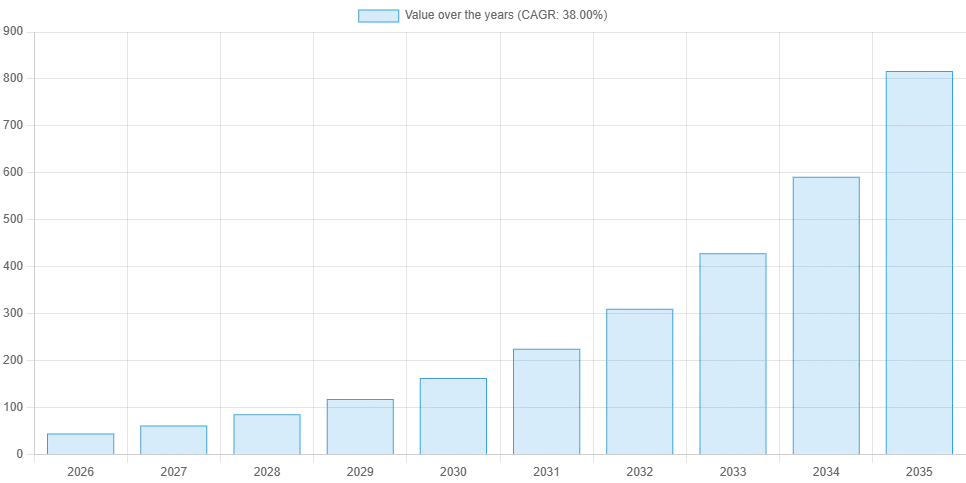
Reasons for Artificial Intelligence Market Growth in Healthcare
As AI continues to demonstrate its value in healthcare, the market is poised for significant expansion, promising a future where AI plays a central role in delivering higher quality, more efficient, and accessible healthcare. The primary reasons driving the growth of the artificial intelligence market in healthcare are discussed below.
Improved Patient Care and Outcomes
AI enhances patient care by providing personalized treatment plans based on individual patient data, leading to better health outcomes. AI-powered tools can assist in predicting disease progression, optimizing medication dosages, and designing tailored care plans.
Efficient Diagnostic Processes
AI-powered diagnostic tools can analyze medical imaging, pathology slides, and other diagnostic data with high accuracy and speed. It aids healthcare professionals in early detection, diagnosis, and treatment planning, potentially saving lives and reducing the time for diagnosis.
Drug Discovery and Development
AI accelerates the drug discovery and development process by analyzing vast amounts of data to identify potential drug candidates, predict drug efficacy, and optimize clinical trial designs; this expedites the development of new drugs and therapies.
Operational Efficiency and Cost Reduction
AI can optimize healthcare operations by automating administrative tasks, managing schedules, and streamlining workflows. It leads to cost savings increased efficiency, and allows healthcare professionals to focus more on patient care.
Remote Monitoring and Telemedicine
AI-enabled remote monitoring devices and telemedicine solutions improve accessibility and quality of care for patients, especially those in remote or underserved areas. AI algorithms can analyze patient data in real time and alert healthcare providers to potential issues.
Data Management and Insights
AI handles vast amounts of healthcare data efficiently, extracting valuable insights for decision-making. Predictive analytics and machine learning algorithms identify patterns, trends, and potential risk factors, aiding in proactive healthcare planning and resource allocation.
Enhanced Medical Imaging Analysis
AI algorithms enhance medical image analysis, aiding radiologists in detecting abnormalities and anomalies more accurately and quickly, which can improve diagnostic accuracy and streamline the interpretation of medical imaging studies.
Natural Language Processing (NLP) for Clinical Documentation
NLP technology translates unstructured clinical notes and narratives into structured, actionable data; this improves clinical documentation, enhances interoperability, and facilitates data sharing and analysis.
Compliance and Regulatory Support
AI can help healthcare organizations adhere to regulatory compliance standards by automating compliance monitoring and reporting. It ensures that healthcare practices meet the necessary legal and ethical requirements.
Public Health and Epidemic Management
AI can assist in monitoring and predicting the spread of infectious diseases, enabling timely responses and containment measures. During epidemics, AI can provide critical insights and aid in resource allocation.
Increased Research Opportunities
AI facilitates large-scale analysis of medical research data, leading to breakthroughs in genomics, clinical trials, and epidemiology. AI-driven research accelerates scientific discoveries and advancements in healthcare.
Pharmaceutical Supply Chain Optimization
AI optimizes the pharmaceutical supply chain by predicting demand, improving inventory management, ensuring the timely delivery of medications, enhancing overall efficiency, and reducing costs.
Key Market Players
The major vendors offering Artificial Intelligence in healthcare are NVIDIA Corporation, Microsoft Corporation, Nuance Communications Inc., Google LLC, IBM Corporation, General Electric Company, Intel Corporation, Amazon.com Inc., Johnson & Johnson Services Inc., Siemens Healthineers, Micron Technology Inc., and DeepMind Technologies Ltd.