Key Points:
- Autonomous vehicle operators like Alphabet’s Waymo, Amazon’s Zoox, and Tesla are pushing hard to bring robotaxis to the mainstream.
- As these self-driving fleets expand beyond Silicon Valley, cities such as San Francisco, Austin, and Atlanta are reporting bizarre and sometimes dangerous incidents.
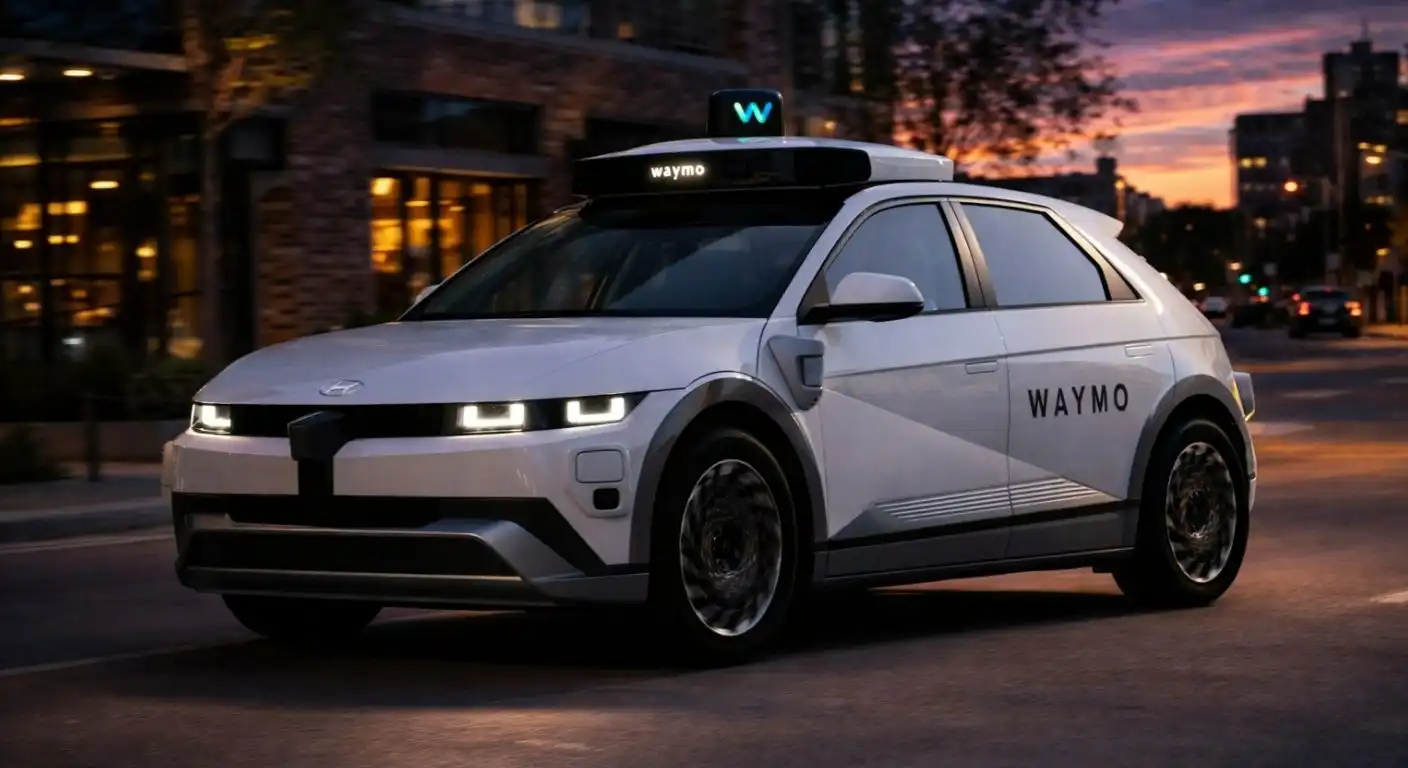
- In San Antonio, an unoccupied Waymo drove into a flooded street, leading the company to issue a software update and recall all 3,800 vehicles.
- Morgan Stanley analysts project that autonomous vehicles will capture 30% of the U.S. rideshare market by 2032, but public pushback is growing over “edge cases.”
This was supposed to be the breakout year for robotaxis to hit Main Street across the United States. Instead, mounting public backlash and bizarre software glitches are challenging technology companies such as Alphabet’s Waymo, Amazon’s Zoox, and Tesla. While autonomous vehicle developers are rushing to scale their artificial intelligence-powered fleets in dozens of major cities, they must now grapple with rising tensions from drivers, local governments, and emergency personnel.
As hundreds of driverless cars interact with humans, both literally and figuratively, problems are cropping up in local police reports and viral social media posts. The issues range from the concerning to the comical, highlighting how difficult it remains to operate automated vehicles in unpredictable environments. Operators are learning that navigating busy city streets requires solving rare, highly unusual driving situations—known in the industry as “edge cases”—that constantly confuse autonomous software.
For example, during a recent Mother’s Day weekend in Atlanta, empty Waymo vehicles overran a quiet residential cul-de-sac. When residents put up a temporary barricade, the robotaxis stopped and boxed each other in for about two hours, creating a massive traffic jam. In San Francisco, Waymo vehicles froze during a power blackout, blocking major intersections when they could not navigate unlit traffic signals. Critics argue that these unexpected, software-driven stoppages create severe hazards on public roads.
Autonomous vehicle safety experts, including Carnegie Mellon University professor emeritus Phil Koopman, argue that developers often fail to see these unexpected stoppages as safety problems. In contrast, human drivers and city authorities view any vehicle that abruptly stops and blocks traffic as an immediate safety hazard. These edge cases cause the biggest headaches when they block emergency responders. For instance, in Austin, Texas, an autonomous Waymo vehicle briefly blocked an ambulance trying to respond to a mass shooting. The vehicle also faced local backlash for repeatedly passing stopped school buses.
Heavy weather has also exposed significant software vulnerabilities in autonomous driving models. In April, an unoccupied Waymo vehicle got stuck after driving into a flooded street in San Antonio, Texas, prompting Waymo to recall all 3,800 of its vehicles for an emergency software update. The company’s recall report admitted that vehicles traveling at higher speeds might slow down but fail to stop when encountering “a potentially untraversable flooded lane.” Only a month later, even after the update, two Waymo vehicles got stranded in flooded Atlanta streets.
Waymo is not the only developer facing these operational roadblocks. In August, an autonomous Zoox vehicle pulled partially into oncoming traffic while making a right-hand turn, forcing the Amazon subsidiary to issue an emergency software patch to correct the steering logic. Meanwhile, Tesla CEO Elon Musk has acknowledged that his company is exercising extreme caution in its own robotaxi rollout. Musk admitted during an earnings call in April that Tesla’s Full Self-Driving (FSD) software can still get confused by atypical traffic situations, causing the vehicles to stop in traffic or enter “infinite loops” where they endlessly drive around the block to avoid construction.
Despite the mounting backlash, financial analysts predict the autonomous vehicle market will experience massive expansion over the coming years. The global autonomous vehicle sector continues to attract billions of dollars in investment, with annual investment projected to exceed $15 billion by 2030. Morgan Stanley analysts project that autonomous vehicles will account for roughly 30% of the U.S. rideshare industry by 2032. Waymo, the current market leader operating in 11 cities—including San Francisco, Los Angeles, and Phoenix—hopes to add 19 more cities to its network. At the same time, Tesla aims to expand its autonomous service to a dozen states as it puts artificial intelligence at the core of its business.
As the technology continues to spread, the battle between rapid tech deployment and local municipal control will only intensify. Robotaxi operators routinely point to peer-reviewed data showing that their vehicles cause over 80% fewer injury-inducing crashes than human drivers operating on the same streets. However, until developers can successfully solve these unpredictable edge cases and prevent vehicles from blocking emergency personnel, the public and local governments will continue to push back, demanding stricter oversight before allowing autonomous fleets to dominate public roads.