Key Points:
- The European Commission is debating a sweeping policy shift to shield local industries from a massive wave of cheap Chinese imports, often dubbed “China Shock 2.0.”
- Brussels is exploring a new “diversification instrument” that would legally force critical-sector companies to source key inputs from at least three different suppliers.
- On May 19, 2026, the European Parliament ratified strict new regulations to screen foreign investments in sensitive sectors like semiconductors, AI, and defense.
- Under the RESourceEU Action Plan, the bloc aims to mobilize €3 billion in funding to cut its strategic dependence on Chinese rare earth materials by up to 50% by 2029.
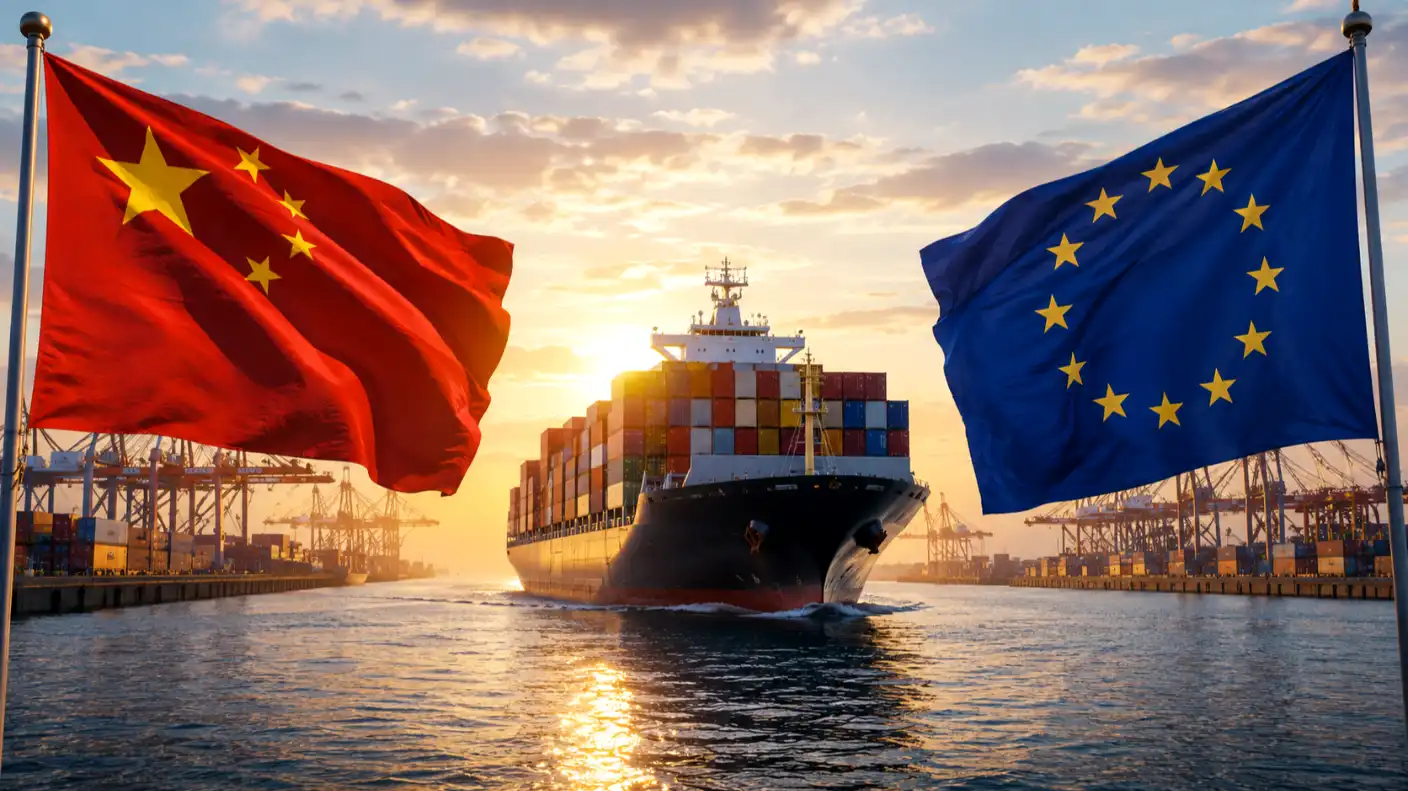
As geopolitical friction intensifies and economic growth slows, European policymakers are preparing for a massive pivot toward protectionism. On June 1, 2026, details emerged of a sweeping European Commission plan to limit Europe’s foreign strategic dependency, particularly on China. Following a series of high-level meetings in Brussels, commissioners are actively debating new trade defense tools to shield domestic manufacturers from what analysts call “China Shock 2.0″—a massive wave of state-subsidized, low-cost Chinese exports flooding Western markets.
The centerpiece of this defensive strategy is an innovative, legally binding tool known in Brussels as either the “overcapacity” or “diversification” instrument. If EU leaders approve the measure, the tool will legally force European companies operating in critical industries—such as machinery, chemicals, metals, and clean technology—to diversify their supply chains. Specifically, the policy would require these firms to secure key industrial inputs from at least three different suppliers located across multiple countries. This rule aims to systematically dismantle the European Union’s dangerous, single-source reliance on Chinese manufacturing giants.
While the diversification rules represent a long-term structural solution, the European Commission is also preparing immediate, emergency trade measures. Rather than relying solely on direct, country-specific tariffs—which can trigger swift retaliatory trade wars and drive up consumer prices—Brussels plans to use general safeguard clauses much more frequently. These tools will allow the EU to impose emergency tariff quotas and import contingents on surging product categories. This approach will target sectors where Chinese overcapacity poses an immediate threat to European factories, such as hybrid automobiles and industrial chemical components.
These trade defenses coincide with a major legislative crackdown on foreign corporate takeovers within Europe’s internal market. On May 19, 2026, the European Parliament ratified highly strict new regulations to screen foreign direct investments in sensitive national sectors. The legislation passed with a massive majority of 508 votes in favor, 64 opposed, and 90 abstentions. Under the new rules, EU member states must coordinate with the European Commission to identify, evaluate, and block foreign investments in critical sectors like defense, semiconductors, artificial intelligence, and financial services.
To permanently reduce European vulnerability to economic coercion, policymakers are fast-tracking a suite of industrial sovereignty laws. Earlier this spring, on March 4, 2026, the European Commission submitted a legislative proposal for the Industrial Acceleration Act, commonly referred to inside Brussels as the “Made in the EU” law. This legislation aims to simplify domestic permitting processes, reduce bureaucratic red tape, and provide flexibility in state aid to help European companies build advanced manufacturing plants within the bloc, thereby reducing the need to outsource critical supply chains.
A primary battleground in Europe’s quest for strategic independence is the securing of critical raw materials, such as lithium, cobalt, and rare earth elements. To break China’s near-monopoly on these critical minerals, the European Commission is accelerating its newly adopted “RESourceEU” Action Plan. First unveiled by European Commission President Ursula von der Leyen, the initiative aims to mobilize €3 billion in EU funding within 12 months to fast-track priority mining, recycling, and processing projects across the continent. The program aims to reduce Europe’s strategic dependence on external raw materials by up to 50% by the year 2029.
Recognizing that Europe cannot mine all of its own critical minerals, the RESourceEU plan relies heavily on building a secure network of global “raw materials alliances.” The EU is actively accelerating strategic supply partnerships with resource-rich, democratic nations, including Australia, Canada, Chile, Kazakhstan, and Ukraine. These partnerships aim to build resilient, alternative supply corridors for the battery and defense sectors, ensuring that European carmakers and defense contractors do not suffer from sudden, politically motivated export bans on crucial rare earth metals.
This emerging economic strategy highlights a distinct transatlantic divergence in how Washington and Brussels handle the rise of Chinese industrial dominance. While the United States relies heavily on unilateral, aggressive tariffs and direct bans targeting specific Chinese companies, Europe’s approach is more collective and rule-bound. Because European manufacturers face significantly higher energy costs—exacerbated by the ongoing Strait of Hormuz shipping crisis—they cannot afford a blunt, destructive trade war. Instead, the EU is focusing on multilateral safeguard quotas and regulatory standards to protect its industries without triggering hyperinflation.
Ultimately, the European Union’s multifaceted plan to limit its foreign strategic dependency represents a profound turning page in its economic history. By merging trade defense with industrial policy through initiatives like the diversification instrument, investment screening, and the RESourceEU package, Brussels is officially ending what many officials call the era of “European naivety.” As European leaders prepare to debate these proposals at the upcoming European Council summit, the continent is embarking on a difficult but necessary journey to stand on its own feet, proving that true sovereignty in the digital age requires control over both raw materials and supply chains.