Key Points:
- European Space Agency (ESA) Director General Josef Aschbacher warned that the recent Blue Origin rocket explosion represents a “huge setback for everyone in the space community.”
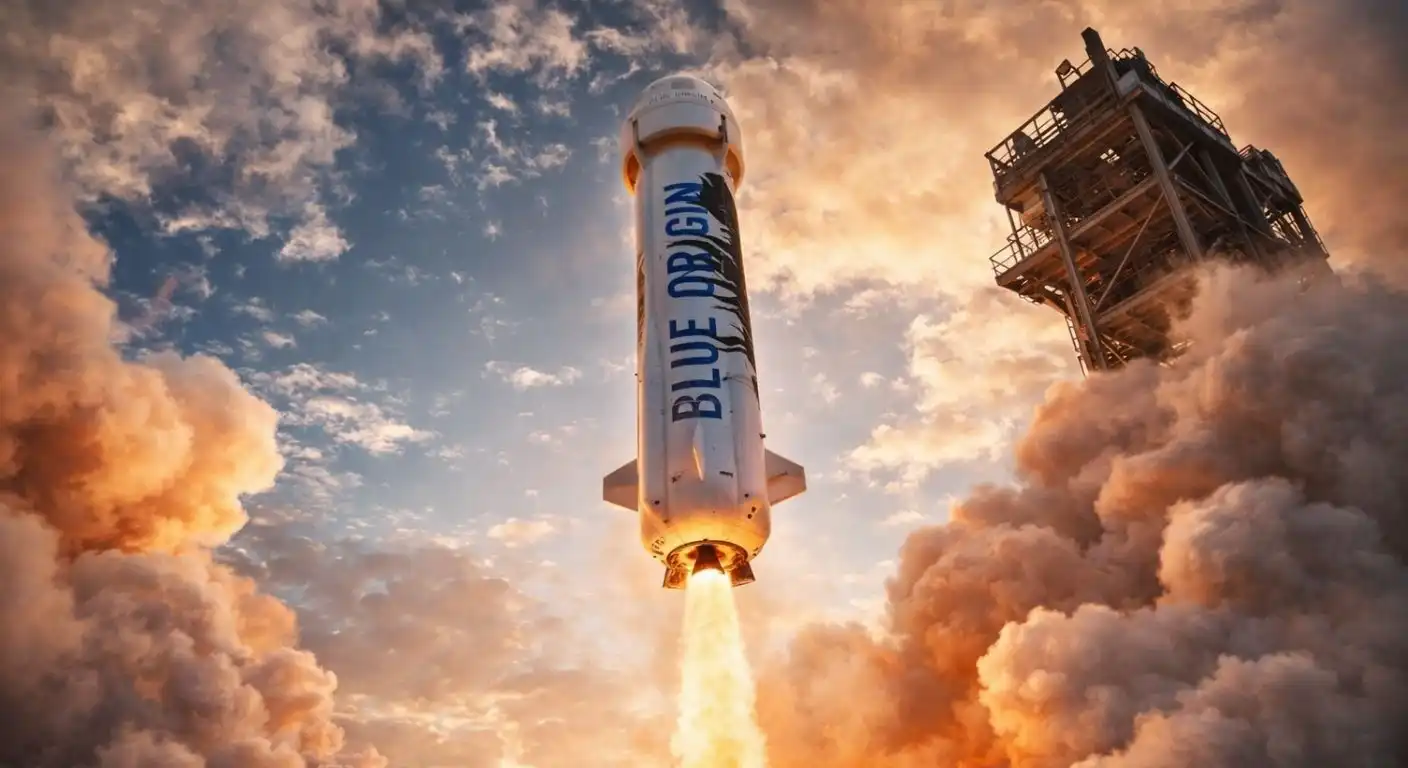
- The heavy-lift New Glenn rocket exploded during a routine static “hotfire” engine test at Cape Canaveral on Thursday night, destroying the booster.
- The disaster severely damaged Launch Complex 36, likely causing months-long delays for commercial clients such as Amazon’s Project Kuiper.
- Aschbacher emphasized that the accident complicates NASA’s tight timeline for the $20 billion Artemis program to land humans on the Moon by 2028.
The global aerospace industry is reeling from a catastrophic launchpad disaster that threatens to delay humanity’s imminent return to the Moon. Speaking in an interview with Euronews on Monday, June 1, 2026, European Space Agency (ESA) Director General Josef Aschbacher issued a sobering assessment of the situation. Aschbacher warned that the spectacular explosion of Blue Origin’s heavy-lift New Glenn rocket last week represents a “huge setback for everyone in the space community.” His comments highlight the deeply interconnected nature of modern space exploration, where a failure by a single private contractor can disrupt the scientific timelines of international space agencies worldwide.
The industrial accident occurred on Thursday night, May 28, 2026, during a routine static “hotfire” engine test at Cape Canaveral Space Force Station in Florida. The uncrewed New Glenn rocket, standing over 320 feet tall, erupted into a massive fireball only seconds after engineers ignited its seven first-stage BE-4 engines. The catastrophic blast destroyed the heavy-lift booster and sent a massive shockwave across the Florida coast. While Blue Origin confirmed that no personnel sustained physical injuries, the physical destruction of the hardware represents a major blow to Jeff Bezos’s space ventures.
Beyond losing a rocket, the explosion caused severe structural damage to Launch Complex 36, which serves as Blue Origin’s only active launchpad for the New Glenn. News helicopters flying over the site after the blast revealed that the fire destroyed the massive erector-gantry, collapsed a lightning tower, and melted critical fuel lines. Repairing a launchpad of this immense scale can cost up to $1 billion and take several months. Because Blue Origin has no secondary launch facilities for this rocket, the accident effectively grounds New Glenn indefinitely, forcing the company to halt all upcoming missions.
This launchpad freeze carries immediate, negative consequences for NASA’s ambitious Artemis program. The U.S. space agency is currently executing a $20 billion plan to build a permanent moon base near the lunar south pole, aiming to land humans on the surface by 2028. NASA had selected Blue Origin to provide a critical heavy-lift launch capability for transporting massive cargo and landing systems. Aschbacher warned that with New Glenn now grounded, NASA’s tight schedule is under immense pressure, forcing officials to reassess whether private partners can deliver their systems in time.
The explosion also scrambles the timelines of major commercial clients who had booked flights on the heavy-lift rocket. Amazon was preparing to use New Glenn for an early June mission to deploy 48 internet satellites into low Earth orbit for its “Leo” broadband constellation, part of Project Kuiper. While these satellites remained safely inside a storage hangar and avoided destruction, the lack of an active launch vehicle means Amazon must delay its orbital broadband plans indefinitely, letting rival SpaceX strengthen its near-monopoly on space-based consumer internet.
The vast operational gap between Blue Origin and its chief rival, SpaceX, became even more apparent just hours after the accident. While Blue Origin’s engineers surveyed the smoking ruins of Launch Complex 36, SpaceX successfully launched a Falcon 9 rocket carrying 29 Starlink satellites into orbit from a nearby pad. This stark contrast in operational tempo highlights how the launchpad disaster further cements Elon Musk’s undisputed dominance in the commercial launch market, leaving governments and commercial clients more dependent than ever on SpaceX to keep their orbital programs active.
Aschbacher’s concern also reflects Europe’s ongoing struggles to maintain sovereign access to space. The European Space Agency is currently navigating its own “launcher crisis” as it transitions to the next-generation Ariane 6 heavy-lift rocket. While the European space community celebrated a successful maiden flight of Ariane 6 in late 2024, the rocket still faces a long ramp-up period before reaching its target of 10 launches annually. Operating under a record-breaking yet tightly constrained €22.1 billion budget approved at the agency’s last ministerial council, ESA has increasingly turned to private U.S. contractors such as SpaceX to launch its critical Earth observation and science satellites.
The New Glenn disaster illustrates the inherent risks of the modern “New Space” model, where government agencies outsource critical infrastructure to private corporate giants. While partnering with tech-funded startups can dramatically reduce development costs, it also introduces unique single-point-of-failure risks. Aschbacher emphasized that when a private launcher suffers an anomaly, the entire international space community feels the ripple effects, as no public agency can easily step in to replace a heavy-lift rocket.
Ultimately, the Blue Origin rocket explosion serves as a stark reminder of the unforgiving physics of space exploration. As federal investigators and company engineers sift through telemetry data to find the root cause of the engine failure, the road to the Moon has suddenly become much steeper. Jeff Bezos’s space ventures face months of intense rebuilding and regulatory scrutiny before New Glenn can safely stand on a launchpad again. Until then, the global space community must adapt to this major setback, proving that even in the modern era of private innovation, reaching the stars remains one of humanity’s most difficult and volatile endeavors.