Key Points:
- China’s youth are increasingly participating in study tours of humanoid robots, transitioning from traditional classrooms to hands-on industrial experiences.
- Major cities like Beijing, Shenzhen, and Hangzhou are launching targeted programs that offer students direct access to advanced robots and production lines.
- The National Development and Reform Commission estimates the country’s embodied intelligence market will expand by 50 percent annually to top 1 trillion yuan ($146.66 billion) by 2035.
- Backed by a November 2025 Ministry of Education mandate, the country aims to establish a comprehensive, nationwide science and technology education ecosystem by 2035.
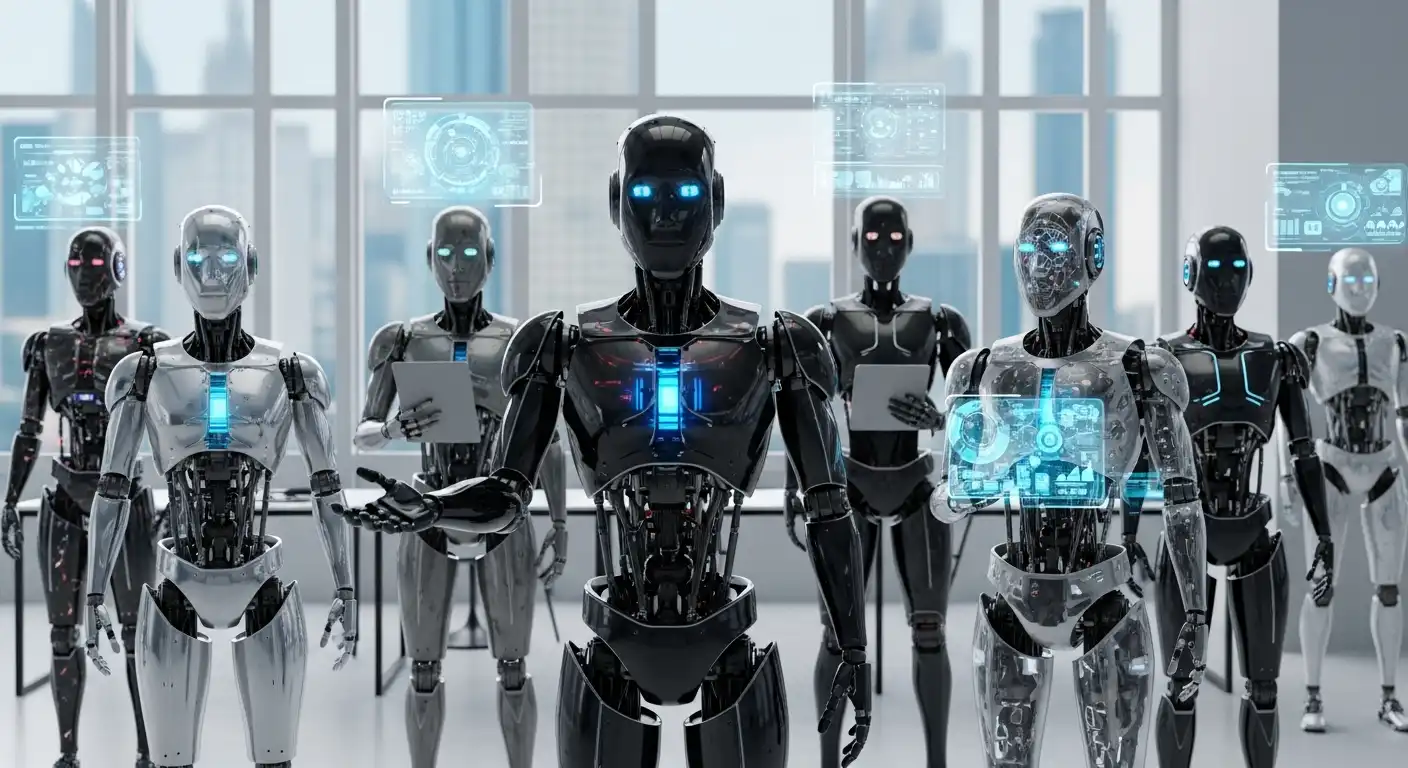
A fast-growing trend is reshaping how the younger generation in China approaches science, technology, engineering, and mathematics (STEM) subjects. Across the country’s major technological hubs, high-tech enterprises and educational platforms are launching study tours of humanoid robots to turn abstract digital concepts into tangible, real-world experiences. Rather than listening to passive lectures inside traditional classrooms, primary and secondary school students are traveling directly to state-of-the-art research laboratories, manufacturing plants, and data centers. This experiential shift aligns with China’s broader national development strategy, transforming young learners from simple consumers of technology into active participants in the country’s booming robotics revolution.
The capital city of Beijing is currently leading this educational movement by opening its most advanced research facilities to the public. On May 16, the Shijingshan District launched a dedicated technology study tour at its Humanoid Robot Data Training Center, seamlessly blending tourism, industrial development, and active learning. Spanning over 10,000 square meters, this facility is the largest data training center of its kind in China, generating more than 6 million standardized data samples annually. During the immersive tours, students step into the role of “apprentice trainers,” actively participating in real-time data collection, motion capture, and hands-on control of advanced humanoid platforms.
Outside of the capital, other prominent tech hubs are integrating robotics into creative, family-friendly settings. In the eastern city of Hangzhou—the capital of Zhejiang Province and the home base of prominent robotics developer Unitree Robotics—a local ocean park has established a unique embodied-robot exploration experience center. The facility blends traditional marine life exhibits with more than 300 advanced robots. Young visitors can operate agile robotic dogs, compete against each other in robot soccer matches, and interact directly with friendly, artificial intelligence-powered companions, proving that complex engineering can successfully merge with mainstream recreation.
Meanwhile, the southern innovation metropolis of Shenzhen is taking students even deeper into the high-tech supply chain. The city’s “Children’s Eyes on Smart Manufacturing” initiative has selected 80 cutting-edge industrial touring sites, allowing students to inspect advanced facilities specializing in semiconductors, artificial intelligence, and physical automation. A pioneering corporate partnership between STEM education platform STEMHUB and Shenzhen-based EngineAI Robotics has recently introduced EngineAI’s advanced SA01 humanoid robot model directly into K-12 classrooms. Through co-developed curriculum pathways, young students can program the humanoid and directly interact with its core physical systems.
This hands-on excitement is also sweeping through retail and scientific hubs like Shanghai, where local science and technology interest groups visited the city’s humanoid robot innovation incubator center in early May. The children completed advanced visual-following challenges, played classic games like “rock-paper-scissors” against highly articulated robotic hands, and watched intelligent quadrupedal dogs sprint across outdoor obstacle courses. For fifth-grade student Zhang Zhenkun, the tour brought television concepts to life. After shaking hands with a Unitree humanoid robot—the identical model that had strutted down the runway at Shanghai Fashion Week just weeks prior—Zhang expressed his immense excitement, stating that the advanced design successfully bridged the gap between everyday life and future science.
These vibrant educational programs are not occurring in isolation; they represent a direct byproduct of China’s rapidly scaling humanoid robotics industry. According to the National Development and Reform Commission (NDRC), the country’s top economic planner, the embodied intelligence sector is currently expanding at a blistering annual rate of over 50 percent. Economists project that the domestic market size for humanoid robots and associated software systems will surpass 1 trillion yuan, which equals approximately 146.66 billion U.S. dollars, by the year 2035. By 2035, the smart robotics sector could account for more than 1.5% of China’s total annual economic output, further cementing its commercial significance. Official industrial surveys showed that by the end of 2025, China already hosted more than 150 independent humanoid robot enterprises, establishing a massive domestic supply chain.
This rapid industrial expansion enjoys powerful backing from the highest levels of government. The Chinese government has elevated embodied intelligence to a formal national strategic priority, implementing policies to accelerate domestic breakthroughs in core motor components, advanced sensors, and general-purpose artificial intelligence algorithms. By encouraging public and private organizations to collaborate, Beijing is working to establish unified industrial standards and reduce the country’s reliance on foreign components. Crucially, policymakers recognize that sustaining this massive technological lead over the long term requires a continuous, highly trained pipeline of local engineering talent.
This urgent talent requirement is driving deep reforms across the national education system. In November 2025, the Ministry of Education, in coordination with six other government departments, issued a landmark notice to strengthen science and technology education in primary and secondary schools. This document represented the first official policy in China to formally introduce tech-centric learning into the basic school system as a core requirement. The mandate clearly states that establishing robust science and technology programs is an indispensable pathway to support the national innovation-driven development strategy and cultivate the next generation of scientific pioneers.
The government’s educational reform plan sets out clear, ambitious deadlines for the coming decade. By 2030, China aims to establish a comprehensive, nationwide science and technology education system with standardized textbooks and qualified teachers. By 2035, a full-fledged science and technology education ecosystem will take shape across all provinces, supported by a robust network of private-sector resources, science museums, and corporate research labs. As the government actively encourages private companies to support schools with project-based, interdisciplinary learning, these humanoid robot study tours are highly positioned to become a permanent, signature offering in the nation’s youth development landscape.