Key Points:
- SK Group Chairman Chey Tae-won announced that subsidiary SK Hynix plans to double its memory chip wafer capacity over the next five years.
- The massive expansion aims to combat an endemic global deficit in high-bandwidth memory (HBM) that Chey warns could persist through 2030.
- The announcement follows a historic milestone last week when SK Hynix’s market valuation surpassed the $1 trillion mark for the first time.
- During his Computex 2026 address in Taipei, Chey expressed hopes that SK Hynix will secure a dominant role as a key memory supplier for Nvidia’s new Vera Rubin system.
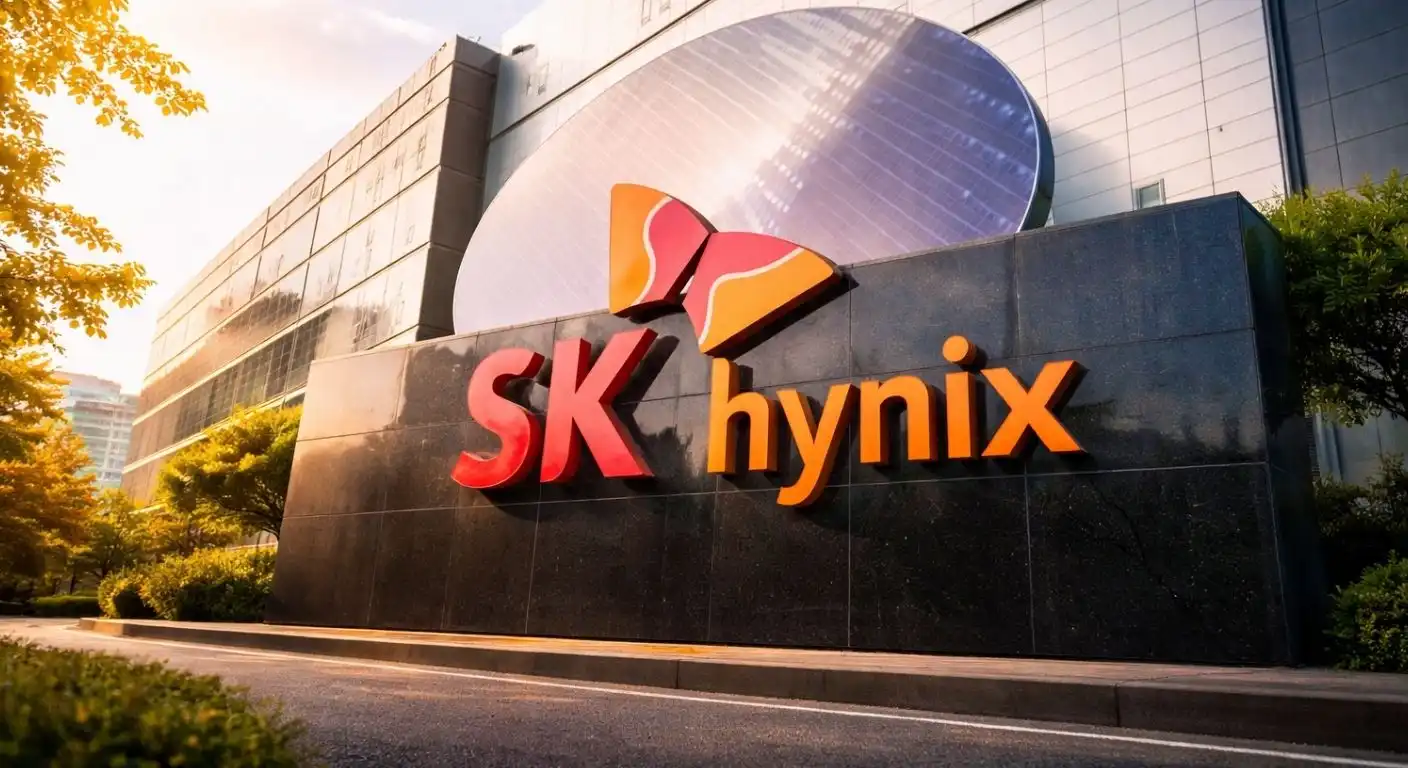
In a major bid to resolve the critical bottleneck threatening the global artificial intelligence boom, South Korean conglomerate SK Group has announced an aggressive, long-term expansion of its semiconductor manufacturing footprint. Speaking to reporters on Tuesday, June 2, 2026, at the Computex technology conference in Taipei, Taiwan, SK Group Chairman Chey Tae-won revealed that the group’s memory chipmaking subsidiary, SK Hynix Inc., plans to double its total memory wafer capacity over the next five years. This massive scaling effort aims to keep pace with the insatiable demand for advanced memory hardware, which has quickly become the most critical bottleneck in the global technology supply chain.
The decision to double the company’s manufacturing capacity directly addresses what Chey describes as an endemic, long-term deficit in storage and memory chips. The SK Group chief reiterated his sobering view that supply-demand imbalances in the memory sector could persist through 2030, reinforcing a macroeconomic warning he first delivered to investors in March. While semiconductor design firms like Nvidia continue to push the boundaries of processing power, these advanced processors remain virtually useless without high-capacity, high-bandwidth memory (HBM) modules to feed them data. This structural deficit has forced the global technology sector to treat memory not as a simple commodity, but as a critical national security asset.
Because expanding high-tech semiconductor fabrication plants requires years of planning and immense capital, analysts expect the current memory shortage to continue through at least 2027. This prolonged supply gap has handed the world’s dominant memory producers—SK Hynix, Samsung Electronics, and Micron Technology—unprecedented pricing power over the world’s largest consumer technology and cloud computing giants. Tech companies can no longer negotiate steep discounts; instead, major hyperscale customers are scrambling to sign multi-quarter and multi-year supply agreements at fixed, high contract prices simply to secure their production pipelines. This favorable environment has turned memory chipmakers into some of the most profitable enterprises on Earth.
The financial rewards of this supply-demand imbalance became highly visible last week, when the market valuations of both SK Hynix and Micron surpassed the historic $1 trillion milestone for the first time. This spectacular valuation surge marks a major milestone for SK Hynix, reflecting the market’s recognition that the company is a primary beneficiary of the ongoing global data center buildout. While the planned expansion represents roughly 1.5% of the total projected capital expenditure in the global chip segment, the firm’s trillion-dollar valuation gives it immense financial leverage to fund these intensive industrial projects.
A primary target for SK Hynix’s expanded capacity is securing a dominant role in Nvidia’s next-generation hardware ecosystem. During his press conference in Taipei, Chey expressed strong hopes that SK Hynix could become a major supplier of high-bandwidth memory for Nvidia’s newly launched “Vera Rubin” supercomputing system. Additionally, the SK Group chairman pointed out that Nvidia’s aggressive push into personal computer AI architecture—including its newly unveiled “RTX Spark” Windows on Arm chip—will require substantial amounts of high-speed memory. This widespread industry adoption of local, on-device AI tools will create a massive secondary wave of memory demand, permanently expanding the market beyond traditional cloud data centers.
Despite the immense market optimism, doubling wafer capacity in the coming half-decade presents truly monumental engineering and logistical hurdles. The production of advanced memory chips relies on an incredibly complex and highly concentrated global supply chain, requiring precision lithography machines from ASML in the Netherlands and highly specialized cleanroom infrastructures. Furthermore, constructing these massive cleanroom facilities requires immense quantities of water and electricity, posing severe challenges for local power grids. Chey acknowledged these difficulties but maintained a highly determined outlook, telling reporters, “We are going to double the whole capacity over the next five years… there are a lot of obstacles and hurdles, but we will get over them and expand.”
The massive expansion of SK Hynix’s manufacturing operations also carries profound implications for South Korea’s national economy, commonly referred to as the “K-economy”. For decades, South Korea’s industrial model relied heavily on traditional manufacturing exports such as automobiles and heavy machinery. However, the explosive rise of the artificial intelligence sector has triggered a massive, lopsided restructuring of the national economy. As high-margin semiconductor and memory exports grow to account for an outsized share of the country’s GDP, policymakers must prevent the K-economy from becoming highly polarized, ensuring that traditional sectors do not suffer from a lack of domestic investment.
The memory industry operates as a highly concentrated, three-way global oligopoly. Together, Samsung Electronics, SK Hynix, and Micron Technology control more than 90% of the global market for dynamic random-access memory (DRAM) and high-bandwidth memory. This tight structure means that when one major player announces a massive, five-year capacity expansion, it immediately alters the competitive dynamics of the entire industry. While some analysts express concern that a simultaneous buildup by all three giants could eventually lead to a supply glut, SK Hynix’s leadership believes that the sheer scale of the global AI transformation will comfortably absorb any new capacity, keeping the long-term outlook highly robust.
Ultimately, SK Hynix’s plan to double its memory wafer capacity over the next five years represents a bold, necessary intervention to stabilize the global technology sector. By leveraging its historic $1 trillion market valuation and moving quickly to address the persistent supply bottleneck, the South Korean chipmaker is establishing itself as an indispensable pillar of the digital era. As the Computex 2026 conference draws to a close, the financial and technology worlds will watch closely to see if Chey’s ambitious expansion can successfully ease the global memory crunch and keep the wheels of artificial intelligence turning smoothly for years to come.