Key Points:
- The European Commission has restricted public funding for solar, wind, and battery storage projects that use inverters from high-risk countries such as China.
- Security officials warn that internet-connected Chinese solar inverters contain unverified communication components that could allow hackers to remotely shut down power grids.
- Switching from dominant Chinese suppliers to European manufacturers is expected to increase total project construction costs by 1.7% to 4.3%.
- China’s Ministry of Commerce strongly opposed the funding ban, calling the security allegations unproven and warning that the decision will harm the EU’s green energy transition.
The European Union has taken a major regulatory step to secure its critical infrastructure, sending shockwaves through the global renewable energy sector. The European Commission recently implemented a strict ban on EU funding for clean energy projects that use solar and battery inverters manufactured in so-called high-risk countries, primarily targeting China. The funding restriction also covers inverters from Russia, Iran, and North Korea, although Chinese companies currently dominate the European market. By cutting off access to billions in public subsidies, Brussels hopes to protect its power grids from potential cyberattacks and foreign state interference.
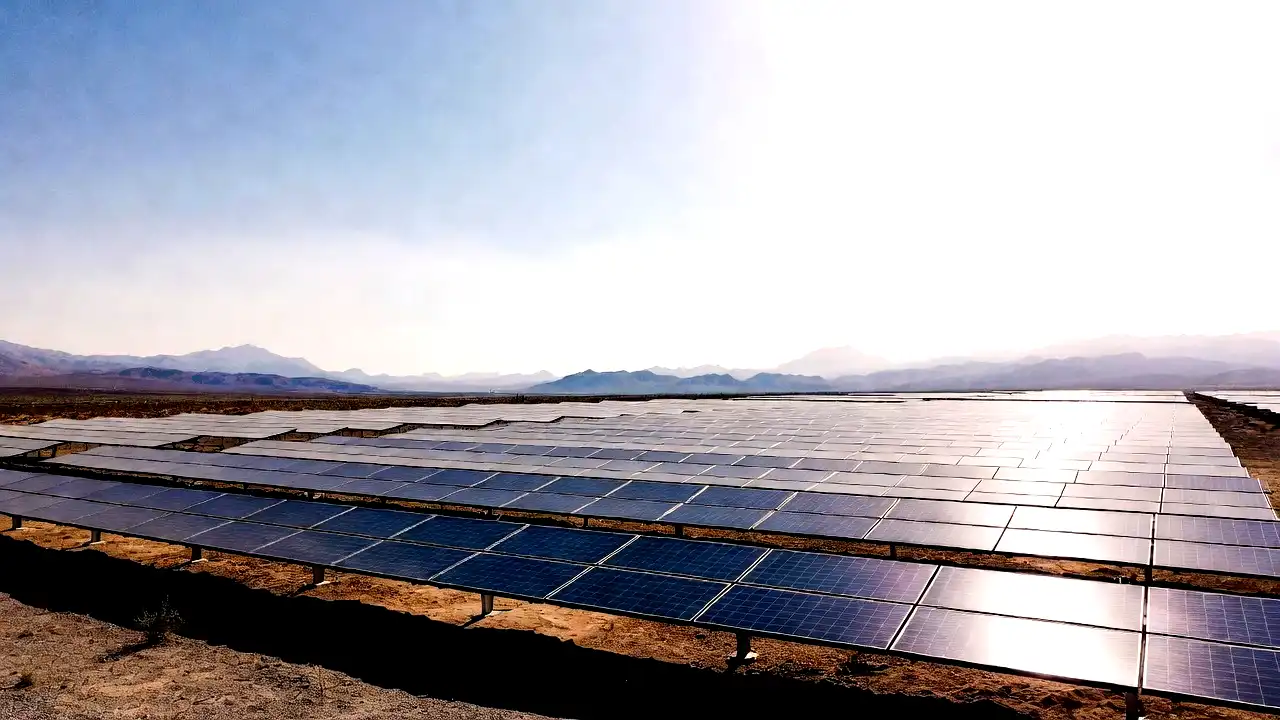
Most energy consumers have never heard of a solar inverter, yet these digital components act as the brains of modern solar systems. An inverter converts the direct current (DC) electricity generated by solar panels into alternating current (AC) power that homes, businesses, and the regional grid require. Without this conversion, solar energy cannot enter the electricity grid. Over the past decade, European developers built up a massive, quiet dependency on Chinese technology, as roughly 70% of all solar inverters currently installed across the EU come from Chinese manufacturers.
This deep reliance on a single nation became a pressing security concern for European policymakers. Because modern inverters connect to the internet for performance monitoring and remote management, they represent a vulnerable digital backdoor to critical energy infrastructure. In 2025, security analysts identified unexplained components in certain Chinese-manufactured inverters that were designed to enable backdoor communications. European Commission spokesperson Siobhan McGarry warned that malicious actors could exploit these backdoors to launch a coordinated, remote shutdown of national electricity networks, potentially causing catastrophic countrywide blackouts.
To counter this grid vulnerability, the Commission’s new directive cuts off public funding and financial support for any renewable projects using high-risk inverters. The policy applies directly to funding provided by the European Investment Bank (EIB), the European Investment Fund (EIF), the European Bank for Reconstruction and Development (EBRD), and various national promotional banks. This sudden restriction affects a massive market, as industry databases track nearly 4,000 European solar projects currently in the pipeline, representing almost $193 billion in planned investment.
The European Commission began implementing the funding ban on May 1, 2026, forcing financial institutions to adapt quickly. Banks and project developers had until May 15 to notify the Commission of all active pipeline projects utilizing Chinese inverters. Under the transition provisions, the Commission will allow grandfathering exemptions only for highly mature projects that can secure approval by November 1, 2026. For projects located outside the EU that connect to the European grid—such as in North Africa and the Western Balkans—developers must phase out high-risk suppliers completely by April 15, 2027.
While the policy aims to build a more secure power grid, it will undoubtedly drive up the cost of the green transition. According to a detailed cost analysis by market consultancy Wood Mackenzie, switching from Chinese-made components to Western alternatives will add between 1.7% and 4.3% to total project construction costs. Although this percentage may seem modest, a 3% price hike on a multi-billion-dollar utility-scale solar farm amounts to millions in additional costs. European manufacturers like Germany’s SMA and Austria’s Fronius stand to gain market share, but they must rapidly scale up production to meet the sudden surge in demand.
Bypassing Chinese suppliers remains a highly difficult challenge for European developers. Chinese brands Huawei Technologies and Sungrow currently stand as the top two solar inverter manufacturers globally, controlling over 55% of the global market. Within Europe, some member states import up to 61% of their total solar hardware from China. In 2024, Huawei alone accounted for roughly 29% of global solar inverter capacity. Completely removing these manufacturing giants from publicly funded European projects will slow construction timelines and make it harder for some developers to secure financing.
The Chinese government reacted with strong anger to the European Commission’s decision, promising to protect the commercial interests of its domestic enterprises. China’s Ministry of Commerce issued a sharp statement denouncing the funding ban as an unfair and discriminatory practice. Beijing argued that Brussels designated China as a high-risk country without presenting any substantive evidence of security breaches, calling the move a deliberate smear campaign. The ministry warned that the policy will destabilize bilateral industrial supply chains and severely undermine the EU’s own ambitious green transition goals.
The funding ban serves as a precursor to even tougher regulatory measures currently working their way through European legislative channels. The European Parliament is debating a revision of the Cybersecurity Act that would establish a formal legal mechanism to permanently ban high-risk suppliers from the EU commercial market, regardless of project funding. Once this legislation becomes law, developers will face a complete ban on importing Chinese inverters, forcing a total decoupling of the European solar supply chain from East Asian manufacturers.
The solar inverter ban highlights a complex dilemma facing Western governments as they try to decarbonize their economies. While cheap Chinese hardware historically allowed Europe to expand its solar capacity at a record pace, dependency on geopolitical rivals creates significant national security vulnerabilities. Over the coming years, European policymakers must find a delicate balance between hitting their ambitious climate targets and ensuring that the digital backdoors of their clean energy grids remain securely locked against foreign interference.