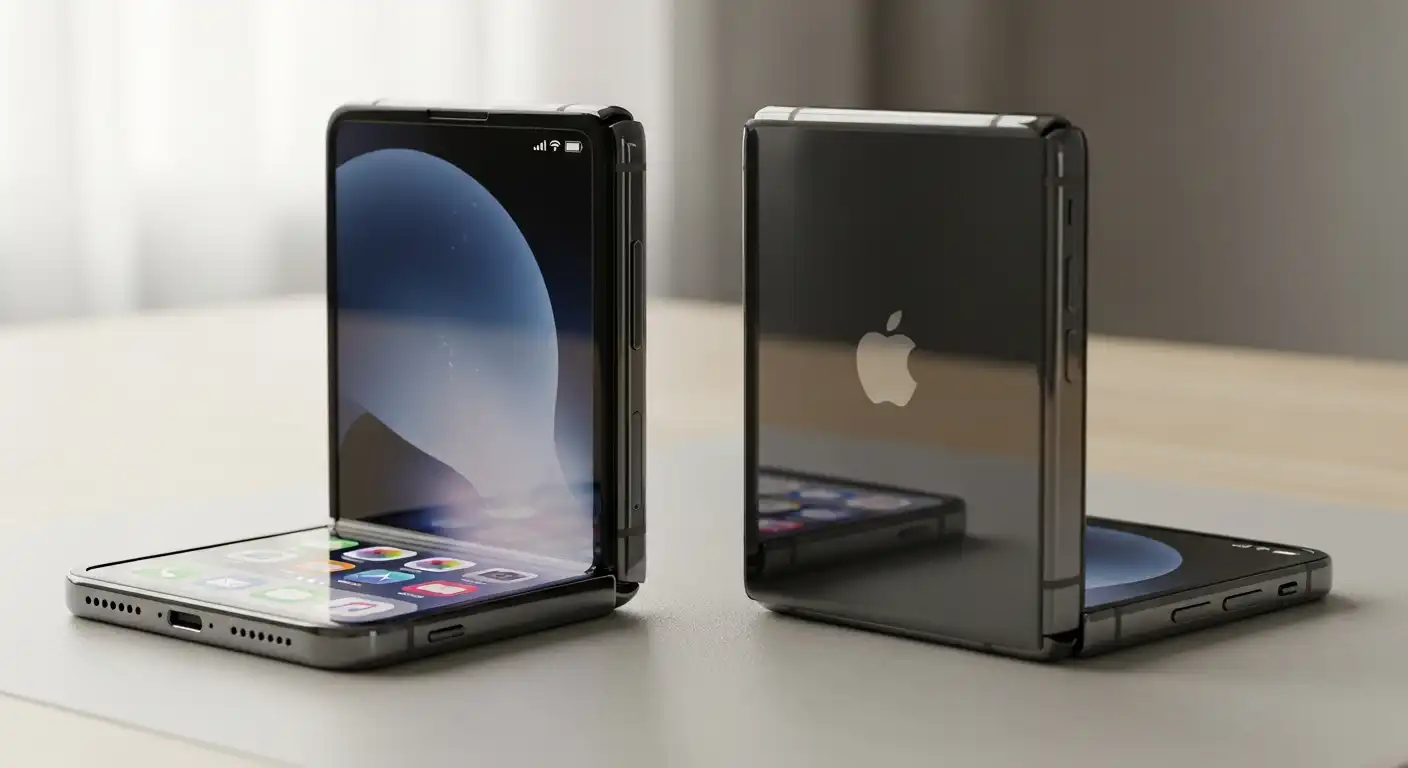
Key Points:
- Nippon Electric Glass is actively positioning its Dinorex ultra-thin glass to secure a spot in Apple’s upcoming foldable iPhone supply chain.
- The ultra-thin glass market represents a massive $15.71 billion global industry that analysts expect to grow 11.34% annually through 2031.
- Nippon Electric Glass’s proprietary cover material has survived over 500,000 folding tests and can bend to a tight radius of just 1.5 millimeters.
- The Japanese glass maker is aggressively restructuring its display business, closing underperforming South Korean lines to focus on high-margin flexible cover glass.
The global smartphone supply chain is entering a high-stakes phase of material testing and supplier negotiations. On Thursday, June 4, 2026, industry sources revealed that Japanese specialty glass manufacturer Nippon Electric Glass (NEG) is aggressively positioning its proprietary Dinorex ultra-thin glass (UTG) to secure a coveted role in Apple’s foldable iPhone supply chain. As Apple accelerates development of its highly anticipated folding flagship—rumored for a late 2026 or 2027 commercial debut—the tech giant is closely evaluating advanced materials that can eliminate the physical display crease, creating a massive opportunity for high-precision Japanese engineers.
For years, the visible, tactile screen crease has remained the single biggest hurdle preventing Apple from entering the foldable device market. While competitor Samsung Display has dominated the foldable screen sector since 2019, Apple has taken a far more cautious approach to preserve its premium brand image. To resolve this persistent design complaint, Apple is evaluating specialized glass panels with variable thickness. By selectively thinning the glass in the central folding zone to a fraction of a millimeter while retaining thicker, rigid margins elsewhere, Apple hopes to make the central hinge crease completely invisible.
Otsu-based Nippon Electric Glass believes its Dinorex UTG has the exact physical properties required to meet Apple’s demanding quality standards. To manufacture the material, NEG blends silicon dioxide with soda ash, alumina, and trace minerals in a furnace heated to 1,500 degrees Celsius, using its proprietary overflow drawing process to ensure perfect surface uniformity. The chemically strengthened glass can safely bend to a radius of just 1.5 millimeters without cracking, providing an extremely tight fold point that allows device makers to produce thinner, more pocketable smartphone chassis.
This high-performance Japanese glass has already proven its structural reliability in multiple commercially available products. Motorola adopted Dinorex UTG for its 2024 razr 50 series and contracted with the company again to supply the 2025 razr 60 lineup. Chinese smartphone titan Honor also selected Dinorex UTG for its ultra-slim Magic V Flip2, where the material successfully survived more than 500,000 rigorous mechanical folding tests. This proven durability under heavy, repetitive physical stress makes NEG a highly attractive secondary sourcing partner for Apple’s high-volume manufacturing needs.
Securing a spot in Apple’s supply chain represents a fierce, multi-billion-dollar battle among a tiny handful of elite global glassmakers. Previous industry reports indicated that Chinese mass-production giant Lens Technology had secured approximately 70% of Apple’s initial ultra-thin glass processing orders, with U.S.-based Corning providing the raw materials. However, Apple typically maintains a multi-supplier strategy to mitigate geopolitical risks and avoid factory bottlenecks. By positioning its highly advanced Dinorex UTG as a premium alternative, NEG aims to capture a significant share of Apple’s secondary glass orders alongside established rivals such as Germany’s Schott and Japan’s AGC.
The financial stakes surrounding these advanced display materials are scaling rapidly. Industry analysts project that the global ultra-thin glass market will grow from $15.71 billion in 2026 to over $26.87 billion by 2031, expanding at a robust compound annual growth rate (CAGR) of 11.34%. While Japan has lost some ground to China and South Korea in assembly and panel fabrication, Japanese firms still control an estimated 20% of the global display glass market. Securing a direct supply deal for a high-volume product like the foldable iPhone would guarantee a highly lucrative, long-term revenue stream for NEG’s materials division.
The push toward high-margin foldable glass aligns with a major corporate restructuring program inside Nippon Electric Glass. Historically, the company relied heavily on commodity-grade LCD glass substrates, leaving its earnings highly exposed to the volatile cyclical swings of the television display market. To protect its cash flows, NEG has aggressively shut down underperforming display glass production lines in South Korea. By reallocating its core engineering talent toward high-margin specialty segments such as foldable cover glass and glass carriers for advanced memory packaging, the company is successfully insulating its profit margins from low-cost commodity competition.
In addition to electronic display materials, NEG is utilizing its unique glass-ceramic engineering expertise to pioneer clean energy technologies. In 2021, the company developed the world’s first oxide solid-state sodium-ion battery. Because these next-generation solid-state batteries rely on glass-ceramic separators rather than flammable liquid lithium electrolytes, they deliver vastly superior thermal safety and stability. Leading institutional analysts, including Nomura Securities, note that NEG’s ongoing expansion into the EV and stationary energy storage supply chains could eventually drive a massive, billion-dollar valuation re-rating for the stock over the next five years.
The ongoing negotiations highlight how critical specialized Japanese material suppliers remain to Silicon Valley tech giants. Even a minor 1.5% change in raw material sourcing yields significant operational savings at Apple’s massive global scale, which often exceeds $1 billion in pre-release research and development. Even as Apple Normalizes its manufacturing footprint to countries like India and Vietnam, the physical components that power its flagship products require advanced Japanese chemical and material processes that are incredibly difficult to replicate. By keeping raw material and logistics costs under tight control and optimizing its manufacturing facilities in Malaysia and Shiga, NEG is proving that it can deliver the scale and precision required by the world’s most demanding tech consumer.
Ultimately, Nippon Electric Glass’s bid to supply the rumored foldable iPhone represents a critical transition in the smartphone industry. As display technology shifts permanently from rigid, flat glass to highly flexible, crease-free materials, specialized glassmakers will dictate the design limitations of future mobile devices. By proving the physical durability of its 1.5 mm bendable glass in real-world testing, NEG is building a highly resilient, tech-driven business model. How successfully the company integrates into Apple’s supply chain over the coming months will shape both its corporate earnings and the physical reality of the next generation of premium mobile electronics.