Key Points:
- South Korea expects its dependence on Middle East liquefied natural gas to fall below 18 percent this year, down from 45 percent in 2022.
- Korea Gas Corporation has secured 700,000 tons of annual liquefied natural gas imports for the next 40 years through its five percent stake in LNG Canada.
- The arrival of the first Canadian shipments in Incheon marks a significant shift in the nation’s energy supply chain away from volatile shipping choke points.
- The state-run energy giant is actively pursuing additional supply contracts in Australia and Mozambique to meet its 35 million-ton annual demand.
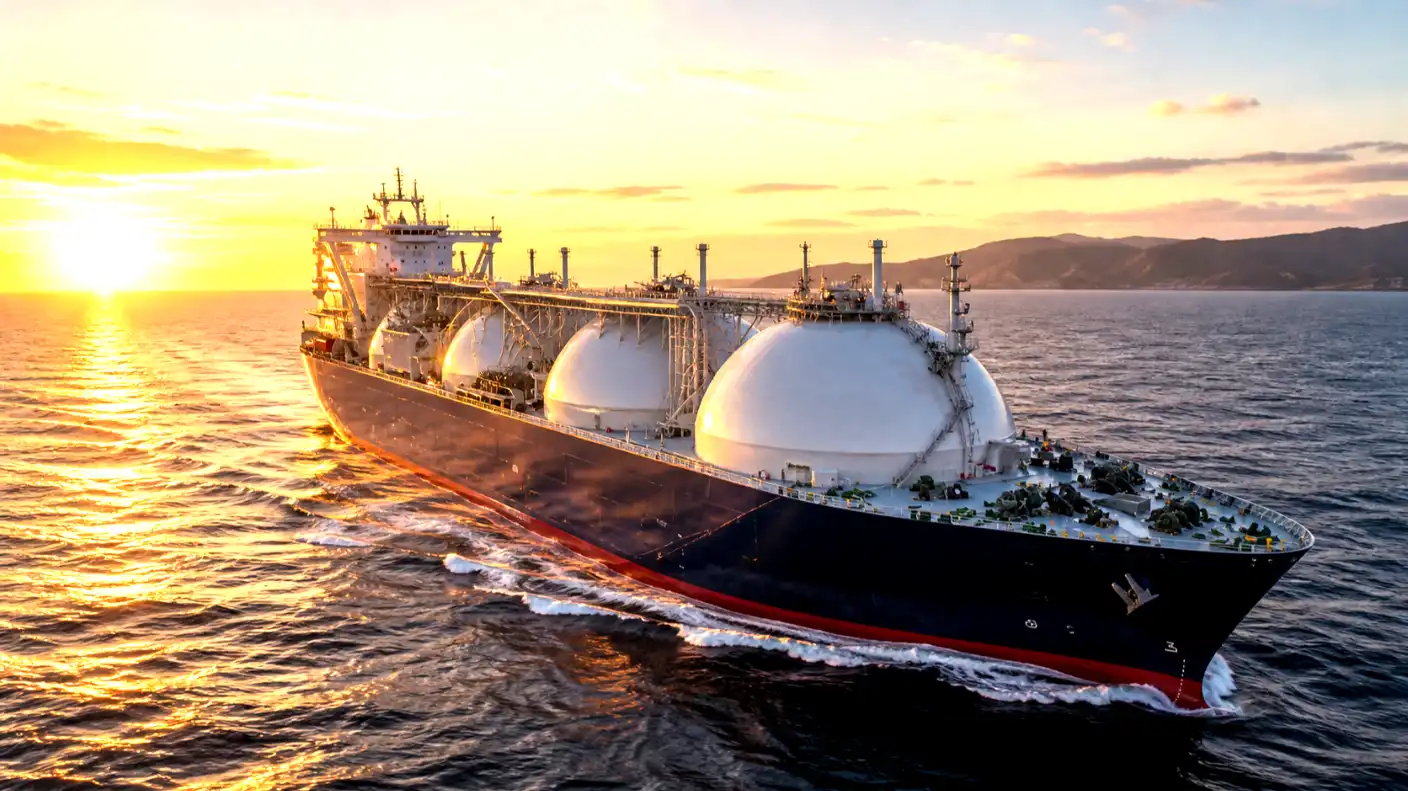
South Korea is taking aggressive steps to shield its industrial economy from global geopolitical shocks by systematically restructuring its energy supply lines. On Thursday, June 4, 2026, the state-run Korea Gas Corporation (KOGAS) celebrated the official arrival of its first liquefied natural gas (LNG) shipments from Canada at the port of Incheon, located just west of Seoul. This landmark delivery represents a vital success for the country’s long-term energy security strategy, proving that the East Asian manufacturing powerhouse can successfully source essential fossil fuels outside of traditional, high-risk trade routes.
Addressing media representatives at the Incheon delivery terminal, KOGAS Chief Executive Officer Choi Yeon-hye emphasized that the Canadian shipments mark a profound paradigm shift in how the nation manages its natural resource imports. Choi declared that the company has established a highly stable, diversified, and sustainable supply chain that relies far less on Middle Eastern oil and gas producers. By expanding its shipping lanes across the Pacific Ocean, South Korea is actively protecting its domestic factories, power grids, and households from sudden price spikes and transport disruptions.
The statistical progress of this energy transition is remarkably steep, showcasing the rapid speed of South Korea’s decoupling strategy. KOGAS expects the country’s overall dependence on the Middle East for its annual LNG requirements to drop below 18 percent by the end of 2026. This projected figure represents a massive decline from 24 percent in 2025 and a near-total restructuring relative to 2022, when Middle Eastern suppliers provided 45 percent of the nation’s total gas imports. This dramatic reduction in exposure helps insulate the local economy from supply shocks during periods of heightened geopolitical tension.
The urgency of this transition remains highly obvious given the ongoing shipping crisis in Western Asia. Persistent military conflicts have left major maritime shipping lanes highly volatile, with naval blockades and drone threats turning the Persian Gulf into a dangerous transit zone. Choi noted with pride that the company’s early diversification efforts have paid off, confirming that not a single South Korean LNG carrier is currently trapped in the highly congested Strait of Hormuz. Bypassing this dangerous choke point entirely allows KOGAS to guarantee an uninterrupted flow of fuel to local utility companies.
The primary engine behind this successful Canadian pipeline is KOGAS’s strategic investment in the massive LNG Canada export project. The state-run corporation currently holds a 5 percent stake in the $40 billion joint venture, which ranks among the largest private energy infrastructure investments in Canadian history. Global energy giant Shell holds the largest share of the project at 40 percent, while other major international partners include China’s PetroChina, Malaysia’s Petronas, and Japan’s Mitsubishi Corporation. This diverse corporate backing has enabled the project to scale up production to serve Asian markets rapidly.
Through this long-term industrial investment, KOGAS has secured a guaranteed annual import volume of 700,000 tons of Canadian LNG over an extended 40-year period. While this allocation covers only a fraction of South Korea’s massive annual LNG demand—which economists estimate at around 35 million tons—it provides a rock-solid, highly predictable baseline of clean energy for the next four decades. KOGAS first began receiving test shipments from the Canadian project through the southern port city of Tongyeong in September 2025, before expanding regular commercial deliveries to Incheon this week.
The financial benefits of this Pacific supply route are highly significant for South Korea’s trade balance. Because the country must import nearly all of its primary energy resources, even a minor 1.5% increase in global fuel import costs can trigger widespread inflation across its export-driven semiconductor, automotive, and steel manufacturing sectors. Sourcing natural gas from politically stable North American partners allows KOGAS to negotiate highly predictable long-term contracts, bypassing the volatile pricing mechanisms of the spot market and keeping domestic industrial operating costs under tight control.
While the Canadian shipments represent a major milestone, KOGAS has no intention of stopping its diversification campaign. The company confirmed that it is actively negotiating further long-term supply contracts with partners in Australia and Mozambique. Australia already serves as a major, highly reliable exporter of raw materials to South Korea. At the same time, Mozambique’s massive, newly developed offshore gas fields represent an incredibly lucrative, high-volume sourcing alternative that can help KOGAS permanently keep its Middle Eastern import share below the twenty percent mark.
This ongoing energy transition also supports South Korea’s broader environmental goals. As the country works to reduce its reliance on coal-fired power plants to meet its carbon neutrality commitments, natural gas serves as the essential transitional fuel. Modern gas-fired power plants release significantly fewer greenhouse gases than coal facilities, allowing the country to maintain its massive industrial output while steadily expanding its domestic solar, wind, and nuclear power networks. Having a highly secure and diversified LNG supply ensures that this environmental transition does not compromise grid reliability.
In the end, the arrival of Canadian LNG in Incheon demonstrates how sovereign nations can successfully adapt to a highly fragmented geopolitical landscape. By choosing proactive, long-term infrastructure investment over short-term spot market speculation, KOGAS has built a highly resilient energy network. As the company continues to expand its Pacific and African supply partnerships over the coming years, South Korea’s successful diversification blueprint will serve as a vital case study for other import-dependent industrial economies seeking to secure their economic survival.