Key Points:
- Asian share markets retreated on Friday as investors locked in recent technology gains and pivoted toward economically sensitive sectors.
- Japan’s Nikkei 225 fell 1.6% amid high-profile chip sell-offs and growing speculation about a Bank of Japan interest rate hike.
- South Korean markets dropped sharply after the labor minister urged major technology companies to share their artificial intelligence profits with subcontractors.
- Global macroeconomic anxieties intensified as a stall-out in US-Iran peace talks and upcoming US nonfarm payrolls data kept investors cautious.
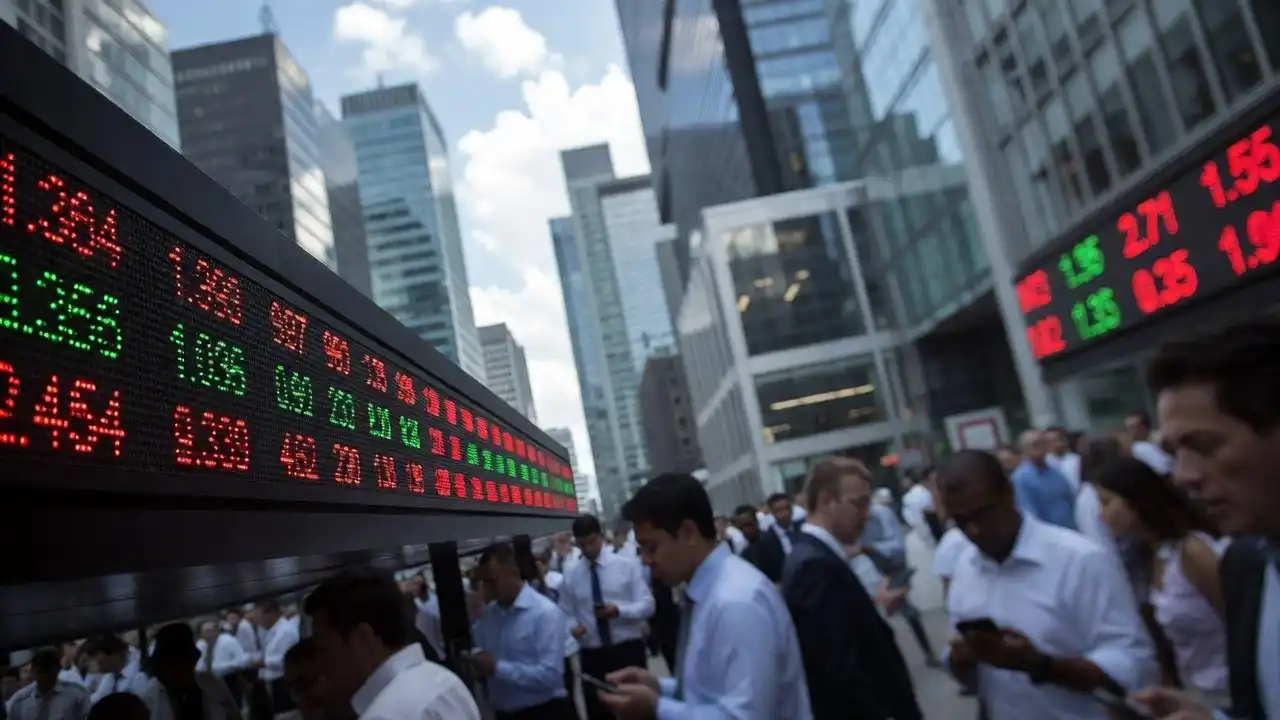
A sudden wave of profit-taking has swept through Asian equity markets, bringing a temporary halt to the recent high-flying technology rally. On Friday, June 5, 2026, stock exchanges across the Asia-Pacific region recorded significant declines as investors locked in recent gains in the semiconductor and artificial intelligence sectors. This defensive trend saw South Korean and Japanese markets bear the brunt of the selling, with capital rotating away from expensive tech growth names into more traditional, economically sensitive value sectors.
The regional slide followed a mixed, highly skittish lead-in from Wall Street overnight, where U.S. investors similarly rotated away from technology megacaps into value plays. This skittish sentiment persisted into Asian hours, with Nasdaq 100 Futures shedding nearly 1% and S&P 500 Futures declining by 0.5%. Global traders remain highly cautious ahead of the upcoming U.S. nonfarm payrolls data for May, which will provide vital clues regarding the health of the world’s largest economy and the Federal Reserve’s next interest rate moves.
Beyond macroeconomics, unresolved geopolitical tensions continue to weigh heavily on investor confidence. Peace talks between the United States and Iran have all but stalled, leading to a renewal of low-intensity military hostilities in the Middle East this week. For energy-dependent Asian economies, particularly Japan and South Korea, any prolonged disruption to regional oil shipping routes translates directly into higher import costs. Analysts warn that this persistent energy risk could easily trigger a 1.5% spike in domestic wholesale prices, complicating central bank efforts to keep inflation under tight control.
Japan’s benchmark Nikkei 225 index underperformed its regional peers, shedding 1.6% by the close of Friday’s session. The selling concentrated heavily in high-profile semiconductor and electronics stocks, which had previously run up to record levels on intense AI optimism. Major chipmaking equipment suppliers and technology players, including SUMCO Corporation, Ibiden Company, and Renesas Electronics, ranked among the index’s worst performers. In contrast, the broader TOPIX index remained flat, supported by defensive gains in industrial and consumer staples stocks.
Japanese stocks faced additional downward pressure from growing speculation that the Bank of Japan (BOJ) will raise its benchmark interest rate later this month. Speculation intensified after BOJ Governor Kazuo Ueda signaled earlier this week that the central bank plans to discuss raising borrowing costs at its June policy meeting actively. Ueda warned that temporary energy price shocks, exacerbated by the ongoing Middle East conflict, risk becoming persistent structural drivers of domestic inflation, forcing the central bank to abandon its loose monetary stance.
The case for a BOJ rate hike received a massive boost on Friday morning with the release of stronger-than-expected national wage data. Government statistics showed that Japan’s real wages increased by 1.9% in April compared to the same month last year. Average nominal wages, or total cash earnings, rose by 3.5% year-on-year, easily beating Wall Street expectations of 3.1%. This print represents the fastest wage expansion since December 2024. It marks the first time in over 34 years that Japanese wage growth has exceeded 3% for three consecutive months, giving the central bank significant headroom to raise rates.
Across the East Sea, South Korea’s benchmark KOSPI index suffered an even sharper decline, plunging by more than 3.8% on Friday. While South Korean chip giants like Samsung Electronics and SK Hynix faced broader tech-sector profit-taking, local investors were also severely spooked by a highly controversial statement from Employment and Labor Minister Kim Young-Hoon. In an interview with Reuters, Kim argued that the country’s multi-billion-dollar technology giants should socially redistribute their massive artificial intelligence profits to suppliers, subcontractors, and ordinary workers, rather than keeping the windfalls entirely for shareholders.
This government push for profit-sharing occurs immediately after Labor Minister Kim helped broker a dramatic, last-minute pay deal between Samsung management and its largest union. The mediated agreement successfully averted what would have been the most significant work stoppage in Samsung’s history, delivering bumper payouts to the company’s memory chip workers. However, the subsequent government calls to share these corporate profits with subcontractors have raised intense alarm among international investors, raising fears that state intervention could compromise the financial autonomy of South Korea’s most valuable tech firms.
Broader Asian markets also finished the week on a weaker note, though the losses were more contained in Greater China. Hong Kong’s Hang Seng index fell 0.8%, dragged down by a parallel slide in its heavyweight tech constituents, while China’s Shanghai Shenzhen CSI 300 and Shanghai Composite indexes kept to a highly restricted trading range. Down under, Australia’s S&P/ASX 200 index shed 0.6% on broad mining and banking weakness, while Singapore’s Straits Times index slipped by 0.1%. Meanwhile, India’s Nifty 50 Futures pointed to a flat open ahead of a highly anticipated interest rate decision by the Reserve Bank of India.
Ultimately, the broad retreat across Asian stock markets highlights a critical transition phase for global technology portfolios. After pushing semiconductor and artificial intelligence valuations to historic highs, investors are beginning to demand tangible, near-term earnings execution rather than relying on long-term growth promises. As central banks from Tokyo to Washington prepare to adjust their interest rate policies over the coming weeks, global capital will likely continue to rotate out of high-risk technology sectors into more resilient, economically sensitive value assets, paving the way for a more balanced global financial market.