Key Points:
- The eastern corridor of the China-Europe freight train network has officially completed more than 3,000 rail trips so far this year.
- Comprising three strategic land ports—Manzhouli, Suifenhe, and Tongjiang—the northern trade axis continues to record rapid cargo growth.
- Operating routes along the corridor have expanded to 27, linking more than 60 Chinese industrial cities to 14 European nations.
- Persistent maritime security crises in the Red Sea and the Strait of Hormuz are driving international shippers to adopt overland rail freight.
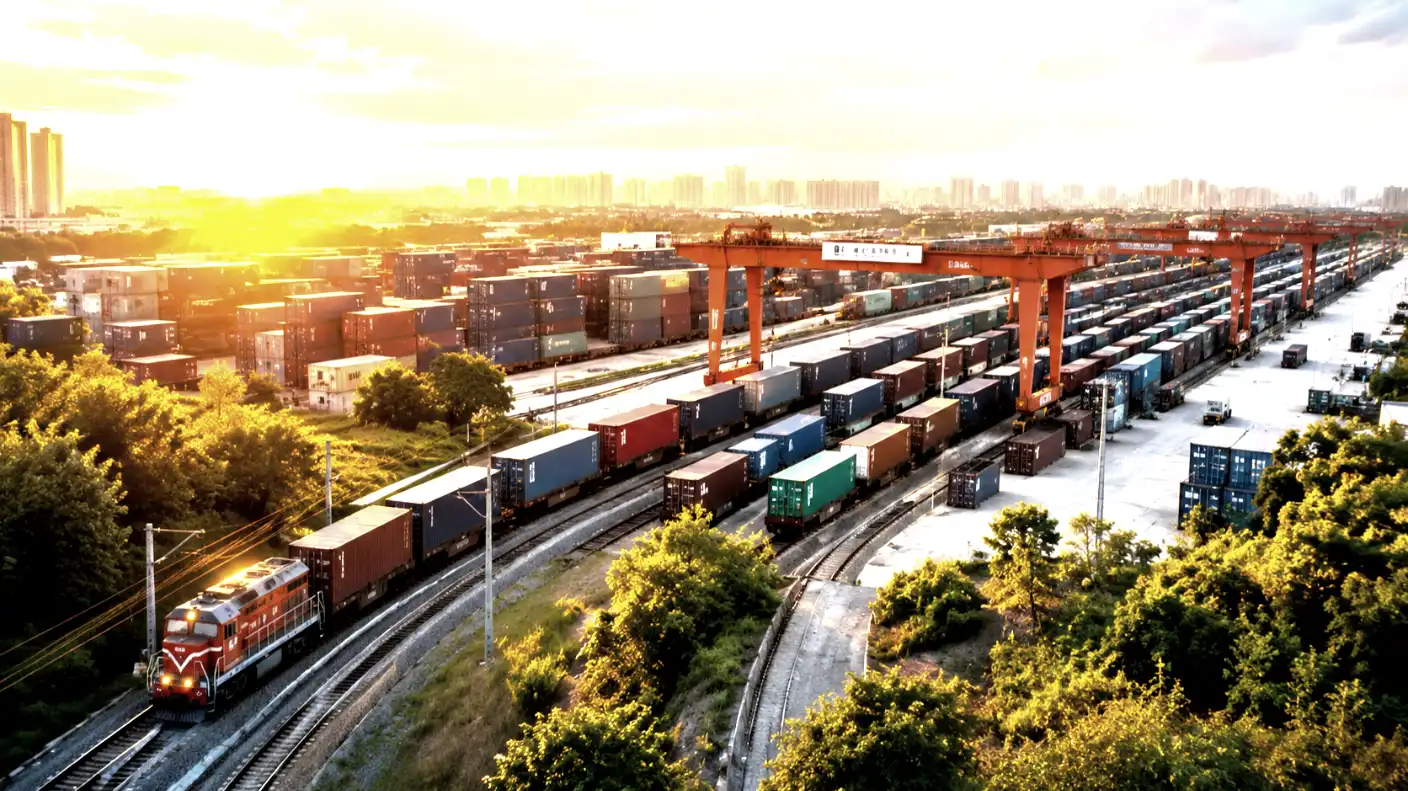
Overland Eurasian logistics has reached a major milestone as shipping disruptions at sea continue to push trade toward transcontinental rail lines. On Saturday, June 6, 2026, railway authorities in Harbin announced that the eastern corridor of the China-Europe freight train network has officially surpassed 3,000 train trips so far this year. Acting as a critical “steel camel” caravan, this northern cargo network has successfully absorbed a massive influx of international shipping traffic. As geopolitical tensions continue to disrupt standard ocean trade routes, this reliable overland corridor provides global manufacturers with a highly secure and fast alternative for moving essential commodities.
The highly successful eastern corridor consists of three primary strategic railway ports in northern and northeastern China: Manzhouli, Suifenhe, and Tongjiang. Manzhouli, located in the Inner Mongolia Autonomous Region, is China’s largest land port, while Suifenhe and Tongjiang are on the Russian border in Heilongjiang Province. To accommodate the rapid surge in trade, the government has invested heavily in expanding these three gateways, adding high-capacity container gantry cranes and constructing advanced, multi-gauge transshipment yards. These upgrades allow port authorities to transfer thousands of shipping containers quickly between different railway gauges, avoiding costly bottlenecks.
This infrastructure buildout has successfully supported a massive expansion of the corridor’s geographic reach. Currently, the number of active operating routes on the eastern corridor has expanded to 27. These dedicated lines successfully link more than 60 industrial cities in China—including major manufacturing hubs like Changsha, Zhengzhou, Chengdu, and Suzhou—to 14 European countries, including Poland, Germany, and the Netherlands. This vast, interconnected network ensures that European consumers can secure high-quality electronics, auto parts, and consumer goods directly from Chinese factories in a fraction of the time required for ocean shipping.
The dramatic expansion of overland rail freight occurs against a highly volatile international maritime backdrop. Ongoing military conflicts in the Middle East and the effective closure of the strategic Strait of Hormuz have forced global ocean carriers to bypass the traditional Suez Canal route. Rerouting massive container ships around the southern tip of Africa adds up to 14 days of travel time and raises fuel expenditures. These disruptions have driven international container shipping rates to historic highs. Consequently, global distributors are actively shifting their high-value cargo to rail corridors, which can deliver freight from eastern China to central Europe in just 14 to 18 days.
As the network scales up, the variety of goods traveling along the eastern corridor has diversified significantly. While westbound trains primarily transport high-value electronics, aviation parts, light textiles, and general merchandise, eastbound return trains are carrying increasingly diverse cargoes back to Chinese markets. In 2025 and early 2026, return trains successfully transported massive shipments of European grains, agricultural products, automotive tires, and non-genetically modified rapeseed oil. Achieving a healthy balance between westbound and eastbound cargo is essential for rail operators, as it ensures that expensive container cars do not run empty on their return journeys.
To maximize the throughput of this overland shipping corridor, Chinese customs, border inspection, and railway departments are collaborating closely to eliminate administrative friction. In recent months, port authorities have successfully slashed customs clearance times by nearly 10 percent through the deployment of a unified, digital railway data platform. This smart port technology allows logistics companies to submit manifest data electronically before the train actually arrives at the border. By ensuring zero-delay inspections, the digital platform has reduced the standard handling time for imported cargo from 48 hours to just 18 hours.
The rapid development of this overland cargo network aligns perfectly with the strategic objectives of China’s newly launched 15th Five-Year Plan, which spans from 2026 to 2030. The national economic blueprint explicitly calls for an orderly expansion of cross-border transport capacity to stabilize and diversify the country’s trade corridors. Economists project that the long-term integration of northeastern Chinese industrial zones with resource-rich Central Asian and European markets will drive massive trade flows, with cross-border cargo volume via northern ports projected to grow from 40 million tons to over 70 million tons annually by 2030.
Securing these overland trade lanes represents a vital defense against global inflation pressures. Geopolitical and maritime shipping crises can easily trigger massive price spikes in global commodity markets, hurting consumer purchasing power. Even a minor 1.5% increase in global logistics costs can raise retail prices across European economies. By offering a highly stable, predictable pricing structure and avoiding volatile ocean shipping tariffs, the China-Europe freight train network helps stabilize import costs, protecting both manufacturing margins and consumer budgets.
This massive logistical shift has also attracted substantial, multi-billion-dollar investments from international logistics providers and manufacturing giants. Private and state-backed enterprises are collectively investing over $12 billion to build advanced logistics parks, cold-chain warehouses, and inland ports along the Belt and Road routes. Securing these capital-intensive facilities is critical, as it enables companies to store and distribute perishable goods, industrial machinery, and high-value electronics across the Eurasian continent, reducing their reliance on traditional, highly volatile maritime routes.
Ultimately, the eastern corridor’s milestone of surpassing 3,000 train trips so far in 2026 proves that the land-based trade network has successfully transitioned into a highly mature, indispensable axis of global commerce. By offering an environmentally friendly, fast, and highly secure route that bypasses dangerous maritime choke points, the trans-Eurasian rail system is rewriting the rules of global logistics. As railway operators continue to digitize customs clearance and expand their physical capacities over the coming years, this resilient overland corridor will remain a vital engine of economic stability and high-level trade cooperation between East Asia and Europe.