

A massive diplomatic and economic collision is unfolding in Washington. Top South Korean trade officials are arriving in the United States capital for high-stakes, eleventh-hour negotiations. Their primary mission involves shielding the South Korean export economy from a looming, highly disruptive trade policy decision. The White House is preparing to announce the results of a comprehensive trade investigation under Section 301 of the Trade Act. This impending decision threatens to impose steep, sweeping tariffs on major Asian manufacturing hubs, raising alarms across the global technology and automotive sectors.
South Korean Industry Minister Kim Jung-kwan and Trade Minister Yeo Han-koo are leading the delegation. They plan to meet directly with senior American officials, including the Secretary of Commerce and the United States Trade Representative. The stakes are extraordinarily high. South Korea operates as a critical supplier of advanced memory chips, electric vehicle batteries, and industrial components to the American market. A heavy tariff designation could severely disrupt these supply chains, driving up costs for American manufacturers and crippling South Korean export revenues.
The visiting delegation hopes to use a monumental $350 billion strategic investment package as their primary bargaining chip. By offering massive capital injections into American shipbuilding, semiconductor, and energy infrastructure, Seoul aims to secure favorable tariff exemptions. However, recent regulatory disputes involving American businesses operating in South Korea threaten to sour the negotiations. As both nations attempt to balance domestic industrial protectionism with international allied cooperation, the outcome of these meetings will fundamentally dictate the cost of technology and manufacturing for the next several years.
The Section 301 Trade Threat: Why Seoul is on High Alert
The foundation of this sudden diplomatic scramble lies in an aggressive shift in American trade policy. Earlier in the year, the federal government initiated a broad investigation under Section 301 of the Trade Act of 1974. The investigation focused heavily on global supply chains, probing major trading partners for evidence of structural overcapacity and the use of forced labor in manufacturing processes.
For decades, the United States used Section 301 as its primary weapon to combat unfair foreign trade practices. The current administration recently revived this tool after federal courts struck down previous attempts to impose reciprocal global tariffs using emergency economic powers. Forced to find a new legal avenue to protect domestic industries, the administration directed the Office of the United States Trade Representative to evaluate dozens of foreign economies. The findings of this probe are expected to drop imminently, and South Korea finds itself caught in the regulatory crossfire.
Navigating the Twelve-Point-Five Percent Tariff Proposal
During the preliminary stages of the Section 301 probe, trade officials floated a proposal that sent shockwaves through the corporate boardrooms of Seoul. The proposal suggested applying a new 12.5 percent tariff on imports from over 60 economies flagged for forced labor and overproduction risks. Crucially, the draft framework lumped South Korea into the same high-risk category as regional rivals like China.
South Korean diplomats immediately protested this classification. Trade representatives argued that slapping a 12.5 percent penalty on South Korean goods represents an unjustified and punitive measure. They highlighted the nation’s stringent sustainability disclosure standards, strict adherence to international labor guidelines, and transparent corporate supply chains. Placing South Korean electronics, vehicles, and industrial machinery under a blanket 12.5 percent tax would severely diminish their price competitiveness against domestic American products and exempt foreign competitors.
The primary goal for Minister Kim and Minister Yeo is to separate South Korea from the broader list of targeted nations. They intend to provide American officials with detailed documentation proving that South Korean manufacturing networks operate completely free of forced labor. By demonstrating clean supply lines, the delegation hopes to convince the White House to grant South Korea a total exemption from the impending Section 301 penalties.
The Supreme Court Ruling and the Fifteen Percent Ceiling
The legal mechanics behind this tariff threat are incredibly complex. Late last year, the United States and South Korea negotiated a bilateral trade agreement that effectively capped American tariffs on South Korean goods at a maximum of 15 percent. This agreement provided vital cost predictability for South Korean exporters like Samsung, Hyundai, and LG.
However, a recent Supreme Court ruling threw that agreement into jeopardy. The court struck down the executive branch’s use of the International Emergency Economic Powers Act to levy sweeping global tariffs, declaring the practice unconstitutional. Stripped of that specific presidential power, the administration pivoted entirely to Section 301 to enforce its trade agenda.
South Korean officials are terrified that the new Section 301 framework might override the previously negotiated 15 percent ceiling. During his departure from Incheon International Airport, Minister Kim emphasized that his team will push aggressively to ensure Washington honors the original trade agreements. The delegation wants an ironclad guarantee that regardless of the Section 301 findings, the absolute maximum tariff applied to South Korean goods will not exceed the 15 percent threshold. Losing that ceiling would trigger a logistical nightmare for technology companies attempting to price their consumer electronics and electric vehicles for the American market.
Leveraging a Three-Hundred-Fifty-Billion-Dollar Investment Package
Diplomacy requires leverage, and South Korea brought a massive financial war chest to Washington. To counter the threat of punitive tariffs, the South Korean government and its largest private conglomerates organized an unprecedented $350 billion strategic investment package. This package is explicitly designed to revitalize the American industrial base, create thousands of domestic manufacturing jobs, and tightly integrate the economies of both nations.
By pouring hundreds of billions of dollars directly into the United States, Seoul hopes to prove its value as an indispensable economic ally. The strategy relies on a simple premise: the United States is highly unlikely to penalize a country that is actively financing the resurrection of American heavy industry. The visiting trade ministers plan to finalize the timelines and specific operational details for these investments during their face-to-face meetings with U.S. Commerce and Energy officials.
Shipbuilding and Infrastructure Cooperation
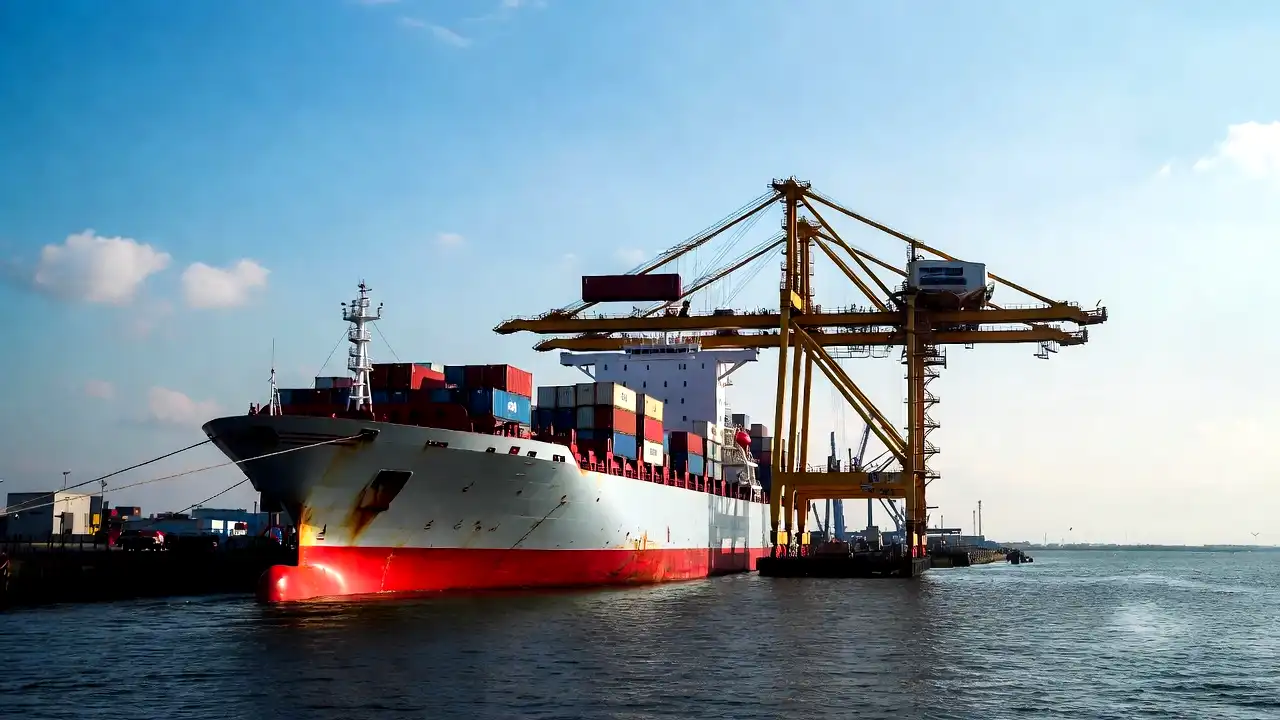
A massive $150 billion segment of the total investment package targets the maritime and shipbuilding sector. The American commercial shipbuilding industry has suffered from decades of underinvestment, leaving the nation highly dependent on foreign shipyards to construct its cargo vessels and service its naval fleet. South Korea, possessing some of the largest and most advanced shipyards on earth, sees an opportunity to export its manufacturing expertise.
The trade delegation timed its visit to coincide perfectly with the grand opening of the Korea-U.S. Shipbuilding Cooperation Center in Washington, D.C. The center will serve as the primary operational hub for joint maritime projects. South Korean companies plan to invest heavily in American shipyards, transferring advanced welding technologies, automated assembly line designs, and supply chain management software to domestic facilities.
This $150 billion commitment directly supports American national security objectives. A robust domestic shipbuilding industry allows the United States to rapidly produce and repair commercial and military vessels without relying on overseas partners. By funding this exact capability, South Korea is offering a massive strategic gift to Washington, expecting favorable trade terms in return.
Securing Energy and Tech Supply Chains
The remaining $200 billion of the investment package focuses entirely on high-technology manufacturing and energy security. The delegation scheduled sit-down meetings with the U.S. Energy Secretary to discuss massive capital injections into the American liquefied natural gas sector. South Korea operates as one of the world’s largest importers of natural gas. To secure a reliable, long-term energy supply, South Korean utility companies are exploring direct investments in new LNG export terminals along the Louisiana and Texas coastlines.
Beyond energy, the investment targets semiconductor fabrication and electric vehicle battery production. South Korean tech giants are already building massive, multi-billion-dollar battery plants in states like Georgia, Ohio, and Michigan. These facilities supply the raw power cells needed by American automakers like Ford and General Motors to transition their fleets away from fossil fuels.
The trade ministers will use these ongoing factory constructions as clear evidence of South Korea’s commitment to American economic growth. They will argue that applying a 12.5 percent Section 301 tariff on South Korean components would ironically punish the same companies that are pouring billions of dollars into rural American towns. Punishing foreign investors with unexpected tariffs makes the United States look like an unreliable business partner, a point the South Korean delegation will heavily emphasize during their closed-door meetings.
The Coupang Controversy: Smoothing Over Diplomatic Roadblocks
Despite the massive financial offerings, the trade talks face a highly volatile, unexpected roadblock. A fierce corporate regulatory dispute involving South Korea’s dominant e-commerce platform, Coupang, has poisoned the diplomatic well. Coupang operates almost entirely within South Korea but maintains its corporate headquarters in Seattle and trades publicly on the New York Stock Exchange. This structure classifies it as an American company, giving it access to aggressive lobbying power in Washington.
Over the past year, South Korean antitrust and privacy regulators launched a relentless series of investigations into Coupang. The company faced a historic $409 million fine for an internal data breach and received millions of dollars in additional penalties for alleged algorithm manipulation and supplier coercion. Furthermore, the South Korean antitrust watchdog attempted to designate Coupang’s American founder as the company’s controlling shareholder under a strict monopoly law traditionally reserved for domestic family-run conglomerates.
Addressing U.S. Investor Anxieties
American lawmakers and institutional investors view the regulatory assault on Coupang as a blatant act of protectionism. A recent U.S. congressional report explicitly accused the South Korean government of waging a targeted harassment campaign against American-owned businesses to protect local tech competitors like Naver. The White House echoed these concerns, signaling that discriminatory treatment of American corporations severely undermines bilateral trust.
This corporate dispute threatens to derail the entire tariff negotiation process. American trade representatives are highly unlikely to grant South Korea a tariff exemption if they believe Seoul is unfairly prosecuting American companies abroad.
Minister Kim openly acknowledged this diplomatic hurdle before boarding his flight to the United States. He told reporters that he fully intends to clear up any misunderstandings regarding the Coupang issue. The South Korean strategy involves convincing Washington that the fines against the e-commerce giant represent standard, objective enforcement of local privacy and monopoly laws, rather than a coordinated state-sponsored attack. Calming American anger over this specific corporate battle is an absolute prerequisite for securing any favorable movement on the Section 301 tariffs.
Broader Implications for Global Tech and Manufacturing
The outcome of these Washington negotiations carries immense weight for the global economy. The supply chains supporting modern technology are incredibly fragile and highly interconnected. A sudden 12.5 percent increase in the cost of South Korean goods would trigger a massive inflationary shock across multiple industrial sectors.
Consider the semiconductor market. While companies like Nvidia and AMD design the world’s most advanced artificial intelligence processors, those processors require high-bandwidth memory chips to function. South Korean companies manufacture the vast majority of the world’s premium memory chips. If the United States slaps a heavy tariff on these components, the cost of building artificial intelligence data centers will skyrocket overnight. Tech companies will pass those increased costs directly down to enterprise software buyers and retail consumers, fueling a new wave of technology-driven inflation.
The automotive sector faces an identical threat. The transition to electric vehicles relies entirely on affordable, high-capacity lithium-ion batteries. South Korean chemical companies produce the essential cathode and anode materials required to assemble these power cells. Imposing trade penalties on these raw materials makes electric vehicles more expensive to build, stalling the consumer transition away from gasoline-powered cars and undermining national environmental goals.
The Future of Allied Economic Integration
The current standoff highlights a fundamental tension in modern international relations. Nations desperately want to secure their own domestic manufacturing bases and protect local jobs, leading them to embrace aggressive tariff policies. Simultaneously, they recognize that punishing allied nations destroys the very supply chains they need to build advanced technologies.
The United States cannot rebuild its shipbuilding industry, expand its semiconductor manufacturing, and dominate the electric vehicle market without the engineering expertise and physical components provided by South Korea. Likewise, South Korea cannot maintain its export-driven economy without frictionless access to American consumers. The two nations depend on each other for economic survival.
The meetings taking place this week between South Korean trade envoys and the White House will dictate how the two allies balance these competing interests. If the ministers successfully leverage their $350 billion investment package to secure an exemption from the Section 301 tariffs, it will solidify a highly integrated, cooperative economic bloc capable of dominating the global technology market. If the talks fail and the tariffs take effect, it will spark a bitter, costly trade dispute that raises prices for consumers, delays critical infrastructure projects, and fractures the allied economic front. The decisions made in Washington over the coming days will permanently shape the cost of innovation and the speed of manufacturing for the rest of the decade.






