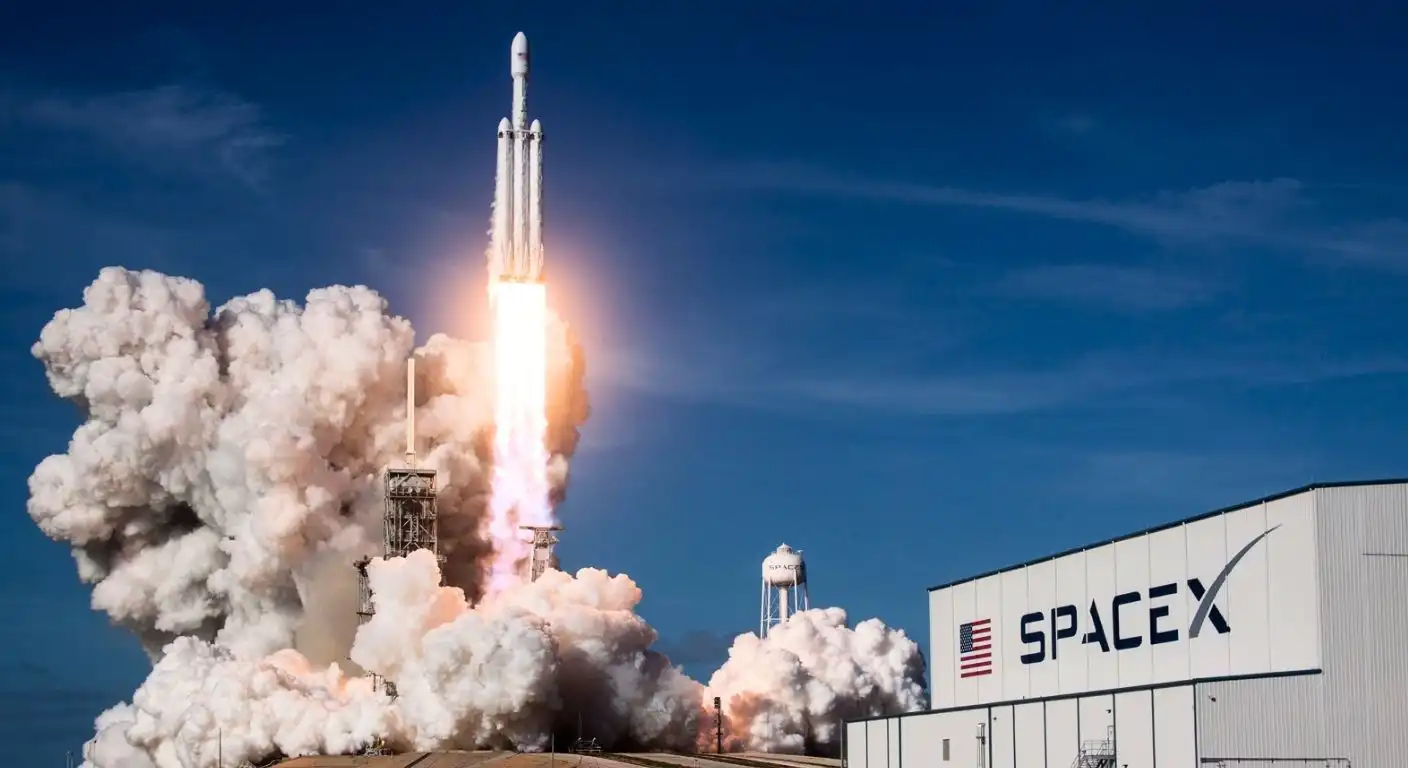
SpaceX IPO retail shares have emerged as the most anticipated investment opportunity of the decade, driving a massive wave of fear of missing out (FOMO) among everyday traders worldwide. Elon Musk’s rocket, satellite communications, and artificial intelligence company has set the stage for what will likely become the largest initial public offering in stock market history. This comprehensive exploration examines the intricacies of the upcoming SpaceX listing, detailing its valuation mechanics, key financial components, recent brokerage developments, notable corporate performance, and the unique challenges retail investors face when investing in this orbital empire.
Understanding the SpaceX IPO
An initial public offering represents a major turning point for any private corporation, but the scale of the SpaceX public launch is truly unprecedented. After operating as a private company for over twenty years, the aerospace giant has decided to list its shares publicly on the Nasdaq exchange under the ticker symbol SPCX. Rather than relying solely on traditional Wall Street institutional buyers, SpaceX is planning to give everyday retail investors a massive role in the debut, completely breaking with standard corporate listing practices.
The massive demand for SpaceX stock reflects the company’s unique position in the global economy. By combining a near-monopoly on commercial space launches, a rapidly growing satellite internet division, and a long-term plan to build AI data centers in Earth’s orbit, SpaceX has managed to capture the imaginations of both large-scale funds and small-scale retail traders. Moving a private company of this size to the public market is a massive undertaking, and the resulting public interest has triggered a global scramble for stock allocations.
Key Components of SpaceX’s Valuation
Several critical divisions and strategic goals underpin the company’s ambitious $1.75 trillion to $2 trillion target valuation:
- Space Launch Monopoly: SpaceX currently dominates the global space launch market. The company designs, manufactures, and operates reusable rockets that transport the vast majority of the world’s payload mass into Earth’s orbit, leaving traditional aerospace rivals far behind.
- Starlink Global Connectivity: This satellite internet constellation has evolved into SpaceX’s primary revenue engine. By deploying thousands of low-Earth orbit satellites, Starlink provides high-speed, global connectivity to millions of residential, commercial, and defense clients.
- AI and Space-Based Data Infrastructure: SpaceX is pitching its future growth around a massive, long-term opportunity in artificial intelligence. The company estimates a potential $23 trillion addressable market for space-based data centers, arguing that orbit-based computing can bypass the severe electricity, land, and cooling constraints facing data centers on Earth.
- Primary Share Issuance: The public offering will consist entirely of new, primary shares. This structure ensures that 100% of the $75 billion raised from the IPO will flow directly to the company to fund its expensive capital expenditure programs, rather than allowing existing insiders to cash out.
Recent Developments in the SpaceX IPO Allocations
SpaceX filed its preliminary S-1 registration statement with the Securities and Exchange Commission (SEC) on May 20, 2026, setting the stage for a public listing on Friday, June 12, 2026. In a highly unusual move, the company bypassed the traditional bookbuilding process by fixing its IPO share price at exactly $135 ahead of its institutional roadshow, aiming to raise a record-setting $75 billion by selling 555.6 million shares.
Earmarking a Historic 30% Tranche for Retail Investors
Typically, blockbuster initial public offerings restrict retail allocations to a small 5% to 10% of the total share pool, reserving the remainder for large hedge funds, mutual funds, and pension managers. Elon Musk has rewritten this Wall Street playbook. SpaceX has reportedly earmarked up to 30% of the total offering—equivalent to $22.5 billion in shares—specifically for individual retail investors, giving everyday traders an incredibly rare level of early access.
The American Brokerage Requirements
To facilitate this massive retail distribution in the United States, SpaceX has partnered with a select group of online brokerage platforms. Because of the sheer volume of available shares, some of these platforms have significantly lowered their typical entry barriers, allowing middle-class households to participate:
- Fidelity Investments: Fidelity made headlines by dropping its typical IPO account eligibility requirement from $500,000 in assets to just $2,000 in a retail brokerage account specifically for the SpaceX listing.
- Robinhood Markets: The retail-friendly platform is offering its users access to the IPO with a $0 account minimum, allowing retail traders to submit indications of interest for fractional or whole shares.
- SoFi Technologies and E*Trade: Both digital brokerages are participating with $0 account minimums, allowing users to bid for shares before the official listing.
- Charles Schwab: Taking a more conservative approach, Charles Schwab requires its clients to maintain at least $100,000 in household assets to submit an application for the offering.
Jolting European Retail Investing Back to Life
The retail frenzy is not confined to the United States. SpaceX is also offering shares to individual investors in several European countries, including the United Kingdom, Germany, Denmark, France, the Netherlands, Norway, Spain, Sweden, and Switzerland. This move has injected massive excitement into a stagnant European retail investing culture, where households currently hold only 17% of their assets in financial securities compared to 43% in the United States.
In the United Kingdom, eight major online investment platforms are actively inviting customers to apply for shares. Hargreaves Lansdown has set its minimum application threshold at £1,000 (about $1,334), while online broker AJ Bell is also processing client bids. On the European continent, digital investment platform eToro has opened applications with a low minimum requirement of just $750, allowing European retail investors to join what is being called the most significant individual share offering since the flotation of the Royal Mail in 2013.
Notable Financial Figures and Corporate Performance
While retail demand for SpaceX shares is exceptionally strong, the company’s financial disclosures reveal a highly complex corporate structure that poses significant risks to public shareholders.
According to its IPO prospectus, SpaceX recorded total revenue of $18.67 billion in 2025. However, the company also reported a substantial net loss of $4.94 billion for the year. This heavy loss was largely driven by its strategic acquisition of Elon Musk’s artificial intelligence startup, xAI, a transaction that consumed billions of dollars in capital. The financial documents show that two of SpaceX’s three primary operating units are massive cash drains, with only its satellite communications division generating positive cash flow.
Starlink’s Q1 2026 Milestone
Starlink continues to serve as the crown jewel of SpaceX’s financial story. In 2025, Starlink accounted for $11.4 billion of the company’s total revenue, representing roughly 61% of all inflows. The connectivity segment was also the only profitable division, generating a robust $4.42 billion in operating income.
This upward momentum accelerated in the first quarter of 2026. Starlink reported that its global paid subscription base reached 10.3 million subscribers during the quarter, doubling its user base from the same period in the previous year. This rapid subscriber growth supports SpaceX’s thesis that satellite communications can generate high-margin recurring revenue to subsidize the company’s expensive Mars and deep-space exploration programs.
Challenges and Risks in the SpaceX IPO
Despite the massive excitement surrounding the listing, several finance experts and academic researchers have urged caution, warning that the blockbuster IPO could prove to be a highly volatile ride for retail investors.
The Looming Risk of “Flipping” Penalties
Individual investors who receive share allocations in the IPO must navigate strict regulatory guidelines regarding the immediate sale of their shares. Brokerages like Fidelity and Charles Schwab warn clients against “flipping”, which is the practice of selling IPO shares within fifteen to thirty days after the stock begins trading on the secondary market.
To discourage this behavior, brokerages can impose severe penalties. Investors who flip their SpaceX stock could be barred from participating in any future initial public offerings on the platform for up to 6 months. This rule means retail buyers must be prepared to hold their shares for the long term, preventing them from quickly taking profits if the stock surges on its first day of trading.
Highly Ambitious Valuation and Lack of Broad Profitability
The $1.75 trillion to $2 trillion valuation target places SpaceX among the most valuable corporations on Earth, alongside tech giants like Microsoft, Apple, and Nvidia. However, unlike those highly profitable tech companies, SpaceX’s overall business remains loss-making.
Critics point out that the company’s valuation relies heavily on technologies and business models that do not yet exist, such as large-scale orbital data centers and commercial passenger space travel. If the adoption of these futuristic technologies lags behind expectations, or if Starlink’s subscriber growth begins to plateau, the stock could face severe downward pressure, leaving late-buying retail investors holding heavily depreciated shares.
Exclusion of Investors from China and Hong Kong
Geopolitical friction has also impacted the reach of the SpaceX IPO. According to a Reuters review of marketing documents and corporate websites, SpaceX restricted access to its IPO papers and roadshow materials in Hong Kong and mainland China. This exclusion prevents investors in these key Asian financial hubs from participating in the primary allocation. Given the global nature of Elon Musk’s business empire, this localized restriction highlights the growing geopolitical tensions surrounding satellite communications and defense-related space technologies.
Delayed S&P 500 Index Entry
Another major hurdle for the stock’s post-IPO performance is its exclusion from marquee stock indices. Although Nasdaq plans to fast-track SpaceX’s entry into the Nasdaq-100 index due to its massive size, the S&P Dow Jones Indices committee recently rejected a proposal to relax its profitability rules.
Currently, a company must show four consecutive quarters of cumulative profitability under generally accepted accounting principles (GAAP) to join the S&P 500. Because of SpaceX’s ongoing losses from its xAI acquisition and heavy rocket development costs, the company may have to wait several years before it can join the prestigious S&P 500 index. This delay means that passive S&P 500 index tracking funds will not be forced to buy the stock anytime soon, reducing the predictable, long-term institutional buying pressure that typically supports newly listed mega-cap stocks.
Future Trends in Space and AI Infrastructure
The launch of the SpaceX IPO marks the beginning of a broader trend where space-based infrastructure and artificial intelligence are merging into a single, integrated industry.
The Space-Based AI Data Center Frontier
As artificial intelligence models grow larger, technology companies on Earth are facing severe limits on power grid capacity, physical land availability, and water resources for cooling systems. SpaceX is pitching a bold solution to this problem: moving AI training and data processing to low-Earth orbit.
By operating solar-powered data centers in space, the company argues it can access limitless solar energy and use the vacuum of space to keep processing units naturally cool. If SpaceX can successfully demonstrate the viability of orbital data centers over the next decade, it could completely disrupt the global cloud computing market, unlocking a massive new source of high-margin corporate revenue.
Alternatives to the IPO for Retail Investors
For retail investors who do not receive share allocations through their brokerages, several alternative paths exist to gain exposure to SpaceX’s growth.
One of the most popular vehicles is the ERShares Private-Public Crossover ETF (XOVR). This exchange-traded fund holds approximately $292 million of SpaceX exposure through a dedicated special purpose vehicle (SPV), allowing everyday retail investors to indirectly own a stake in the space company without meeting any accredited investor net worth requirements. The ETF has grown rapidly, reaching nearly $1.5 billion in total assets.
Another option is the Destiny Tech100 (DXYZ) fund. This publicly traded closed-end fund holds stakes in a diversified portfolio of high-profile private companies, including SpaceX, OpenAI, and Stripe. However, it often trades at a significant premium to its net asset value.
Conclusion
The historic SpaceX initial public offering represents a ground-breaking moment for global financial markets, giving everyday retail investors an unprecedented opportunity to own a direct stake in Elon Musk’s space and technology empire. From the record-setting $75 billion capital raise to the unique 30% retail tranche, the listing is challenging traditional Wall Street conventions. However, the company’s substantial net losses, the structural hurdles of index inclusion, and the strict rules against short-term share flipping show that this high-profile listing carries real risks. As SpaceX embarks on its journey as a public corporation, individual investors must carefully weigh the incredible promise of its space-based AI future against the immediate financial realities of this historic orbital offering.