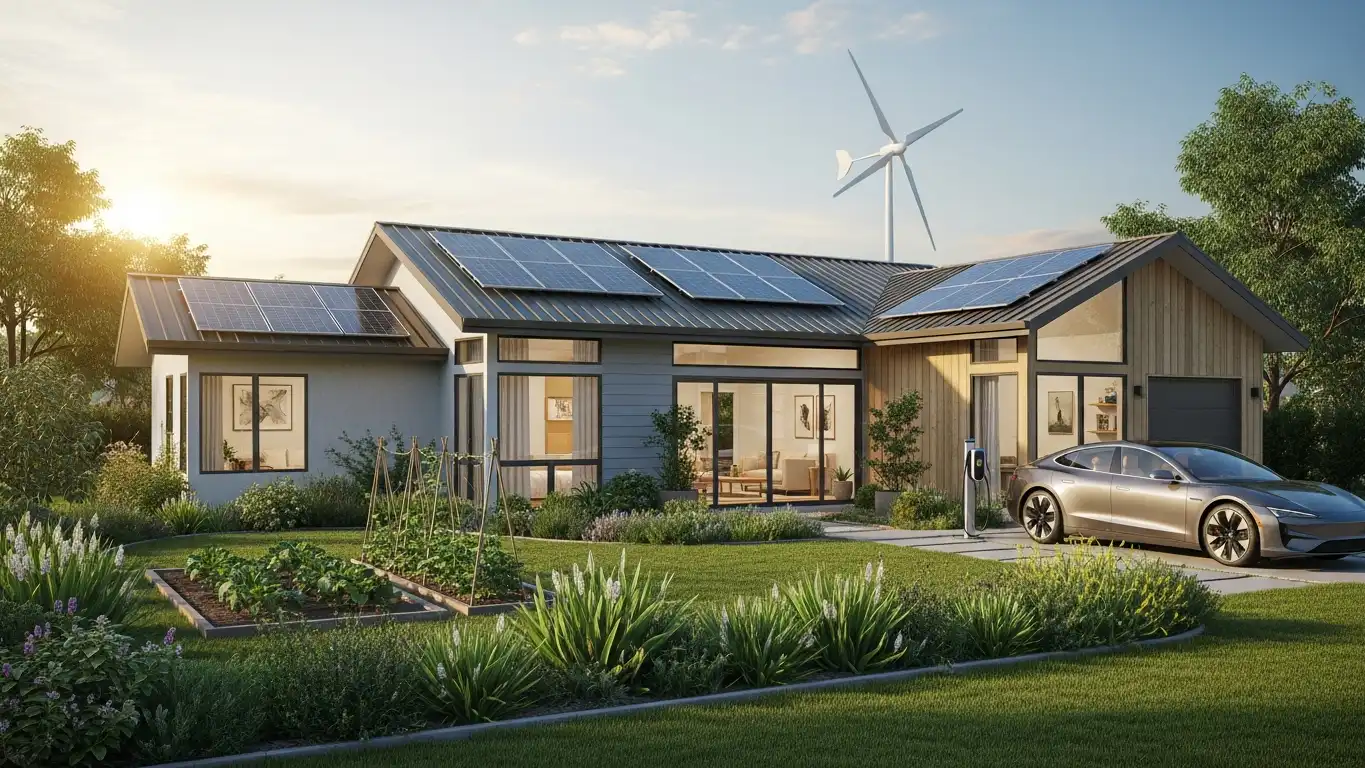
Solar power has emerged as a shining star in Europe’s clean energy transition, helping rescue millions of households from the soaring cost of volatile fossil fuels. Driven by geopolitical tensions in the Middle East and military conflicts involving Iran, oil and gas prices have skyrocketed over the past several months. In response, Europeans are scrambling to achieve energy independence, turning to local, decentralized power sources to secure their monthly utility bills.
As a result, home energy installations are experiencing a massive boom. In Germany, renewable energy firm Enpal BV saw consumer inquiries for solar panels rise by 30% shortly after regional conflicts in the Middle East began. Meanwhile, rival solar brand 1KOMMA5° GmbH reported that customer interest in home solar systems had almost doubled during the same period. In the United Kingdom, the energy firm EON recorded a 23% spike in solar interest in late February, followed by a massive 63% surge in early March.
But the solar transition is no longer limited to wealthy homeowners with large, unobstructed roofs. A rapidly growing trend called plug-in solar technology is democratizing energy generation across the continent. These compact, transportable systems—often referred to as balcony power plants or mini solar farms—are taking Europe by storm. However, as these convenient systems become a mainstream consumer category, property owners and renters must ask a critical question: Is plug-in solar actually better than traditional rooftop solar panels?
Understanding Plug-In Solar Technology
Traditional solar installations are highly complex engineering projects. They require professional installers, heavy structural roof reinforcement, extensive electrical wiring, and lengthy regulatory approvals from local utility companies. For millions of Europeans who rent their homes or live in multi-story apartment buildings, traditional rooftop solar has always felt completely out of reach.
Plug-in solar systems solve this accessibility problem. They consist of one or two compact solar panels designed for easy, tool-free installation. Users can simply clamp the panels onto balcony railings, hang them from windows, mount them on exterior walls, or place them on flat garden patios.
The primary innovation behind these systems is the microinverter. Traditionally, solar installations used a single central inverter connected to a long string of panels. If a tree branch shaded a single panel, the output of the entire string would plummet. Microinverters convert direct current (DC) into alternating current (AC) directly at the individual panel level. This allows each panel to operate independently, maximizing energy capture and making it safe to plug the system directly into a standard household grounded wall socket.
Key Components of Balcony Solar Systems
To understand how these portable generators operate, we must examine the essential hardware components that make up a standard plug-in solar kit:
- Compact Photovoltaic Panels: Highly durable, lightweight solar panels (typically producing between 400 and 800 watts) designed to attach safely to balcony railings, fences, or exterior building walls.
- Onboard Microinverter: A small electrical device mounted behind the panel that instantly converts low-voltage DC power into grid-compliant AC electricity.
- Standard Plug-and-Play Connectors: Heavy-duty, weather-resistant power cables that connect the microinverter directly to a standard domestic wall outlet.
- Anti-Islanding Safety Switches: A mandatory automatic safety feature built into certified microinverters that shuts down the system instantly during a power cut, protecting grid workers from electric shock.
- Smart Storage Batteries: Modular, plug-in battery packs (such as the Zendure Solarflow or Lidl’s compact Parkside battery) that store midday solar surplus for use during expensive evening peak hours.
The Rise of Balcony Power Plants: Triggered by Geopolitical Shocks
According to a report published by Euronews, the rapid adoption of plug-in solar systems across continental Europe is being driven by a profound desire for household energy sovereignty. In countries like Germany, Italy, France, and the Netherlands, hundreds of thousands of apartments now feature these compact panels.
Germany has emerged as the undisputed leader in this renewable movement. Progressive government regulations, simplified registration processes, and tax exemptions have supported the country’s widespread uptake of “Balkonkraftwerk” systems. In Germany, a single 400-watt balcony solar kit that used to cost between €300 and €500 can now be purchased for as little as €200. This dramatic price drop has turned solar power into a simple, affordable consumer appliance.
The trend is now crossing the English Channel. Until recently, the United Kingdom remained a notable exception to the European balcony solar boom. British electrical codes and utility regulations historically focused on fixed-wire rooftop solar installations, leaving plug-in systems in a legal gray area.
However, following recent government energy reviews and rising public frustration over high energy prices, the UK is actively preparing to upgrade its grid codes and wiring rules. This upcoming regulatory shift is set to unleash massive demand for plug-in solar kits, which are launching in the UK market for as little as £400 (around €461).
Traditional Rooftop Solar vs. Plug-In Systems: The Financial Comparison
When evaluating whether plug-in systems are better than traditional rooftop panels, the comparison ultimately comes down to upfront costs, operational capacity, and long-term financial returns.
The Lifetime Savings Gap
A detailed financial analysis of both systems shows a massive gap in total lifetime savings. According to research from the climate analysis group Carbon Brief, a typical plug-in solar system can save a standard UK household roughly £1,100 (around €1,261) during its estimated 15-year operational lifetime.
In contrast, a traditional, professionally installed rooftop solar system can save a household up to £15,000 (around €17,316) or more over the same 15-year period. While traditional systems cost significantly more to install upfront—often ranging from £5,000 to £10,000—they deliver a predictable six- to ten-year payback period, delivering far greater overall financial value to property owners over the long term.
Payback Periods and Accessibility
Despite the lower lifetime savings, plug-in solar systems offer an incredibly attractive return on investment for households that cannot afford the high upfront costs of traditional installations. Because a basic balcony solar kit costs only a few hundred euros or pounds, the system can pay for itself in just three to four years.
This short payback period, combined with the fact that renters can easily pack up the lightweight panels and take them along when they move to a new apartment, makes plug-in solar an ideal choice for millions of flat dwellers who were previously locked out of the solar revolution.
Technical Limitations: What Balcony Solar Cannot Do
While balcony solar systems are highly convenient, consumers must understand their physical and regulatory limitations before purchasing a kit.
The Appliance Capacity Gap
A standard balcony solar panel is not designed to run an entire household. With a typical output capped at 400 to 800 watts, these systems function primarily as a “top-up” product designed to offset a household’s idle baseload electricity consumption.
Natalie Mathie, an energy expert at Uswitch, explained that a 400-watt to 500-watt plug-in panel generates enough electricity to power always-on, low-draw appliances. This includes wifi routers, television standby modes, refrigerators, and energy-efficient devices like slow cookers (which draw around 300 watts of power).
However, plug-in solar cannot power energy-intensive household appliances. Attempting to run a plug-in air conditioning unit, a washing machine, an electric vehicle charger, or an air fryer requires far more electricity than a balcony panel can generate. For households with high daytime electricity use through electric vehicles or heat pumps, only a traditional, multi-kilowatt rooftop system can make a significant dent in their energy bills.
The Grid Back-Feeding Challenge
Another major limitation for plug-in solar users is the inability to sell excess electricity back to the utility company. Traditional rooftop systems are professionally wired to the home’s main distribution board via smart meters, allowing the homeowner to export surplus midday electricity to the public grid in exchange for feed-in tariffs.
In contrast, most European domestic plug sockets are not designed for back-fed generation. In the UK, for example, households using plug-in solar cannot sell their excess generation back to the grid. Any solar energy not consumed in real time by the home’s appliances is simply lost unless the system is paired with a dedicated battery storage unit.
The Blackout Limitation
Many consumers mistakenly believe that installing a balcony solar system will protect them from public power blackouts. However, due to mandatory safety regulations, plug-in solar systems cannot operate during a grid outage.
To protect utility workers repairing power lines from dangerous back-fed electricity, the microinverter’s anti-islanding feature shuts down the panel’s power output the instant it detects a loss of grid voltage. The system becomes completely useless during a blackout unless it is paired with a specialized battery setup, such as the Zendure Solarflow, which features an independent off-grid backup outlet capable of delivering 1,000 watts of emergency power.
Future Trends: Regulatory Reforms and Battery Integration
As the demand for energy independence continues to rise, the plug-in solar market is undergoing rapid technological and regulatory evolution.
The Integration of Compact Smart Batteries
One of the most important developments in the industry is the emergence of highly affordable, modular battery storage systems specifically designed for plug-in solar kits. Previously, home battery storage was an expensive luxury reserved for large rooftop installations. Now, retail giants are bringing cheap solar batteries to the mainstream market.
For instance, discount supermarket chain Lidl recently launched an affordable 2.24kWh Parkside solar battery in Germany for just €299 (around £260). This compact battery is compatible with almost all standard plug-in solar panels, allowing renters to store their surplus midday solar energy and discharge it during expensive evening hours, significantly reducing their reliance on the grid.
The Global Expansion of Balcony Solar
The balcony solar trend is rapidly expanding beyond Europe, capturing the attention of regulators and consumers in North America. In the United States, several states are passing landmark legislation to legalize plug-in solar.
The New York State Legislature recently approved the Solar Up Now NY Act (the SUNNY Act), which paves the way for residents in New York City and other urban centers to legally plug portable solar panels of up to 1,200 watts directly into standard wall sockets without needing prior utility approval. Similar laws have already taken effect in Utah and Virginia, signaling that the plug-and-play solar revolution is poised to go global as city dwellers worldwide demand access to clean, affordable energy.
Conclusion
Plug-in solar technology is not a direct replacement for traditional rooftop solar panels. For property owners with large roofs and high daytime energy needs, traditional installations remain the best option, delivering far greater lifetime savings and the ability to sell excess power back to the grid. However, for the millions of Europeans who rent their apartments, live in urban flats, or cannot afford the high upfront costs of a full installation, plug-in balcony solar is a revolutionary development. These compact, transportable systems offer a cheap, simple, and highly effective path to energy independence, shielding vulnerable households from the ongoing volatility of global fossil fuel markets. As battery technology becomes cheaper and regulations continue to improve, balcony power plants will play an increasingly vital role in democratizing clean energy for everyone.