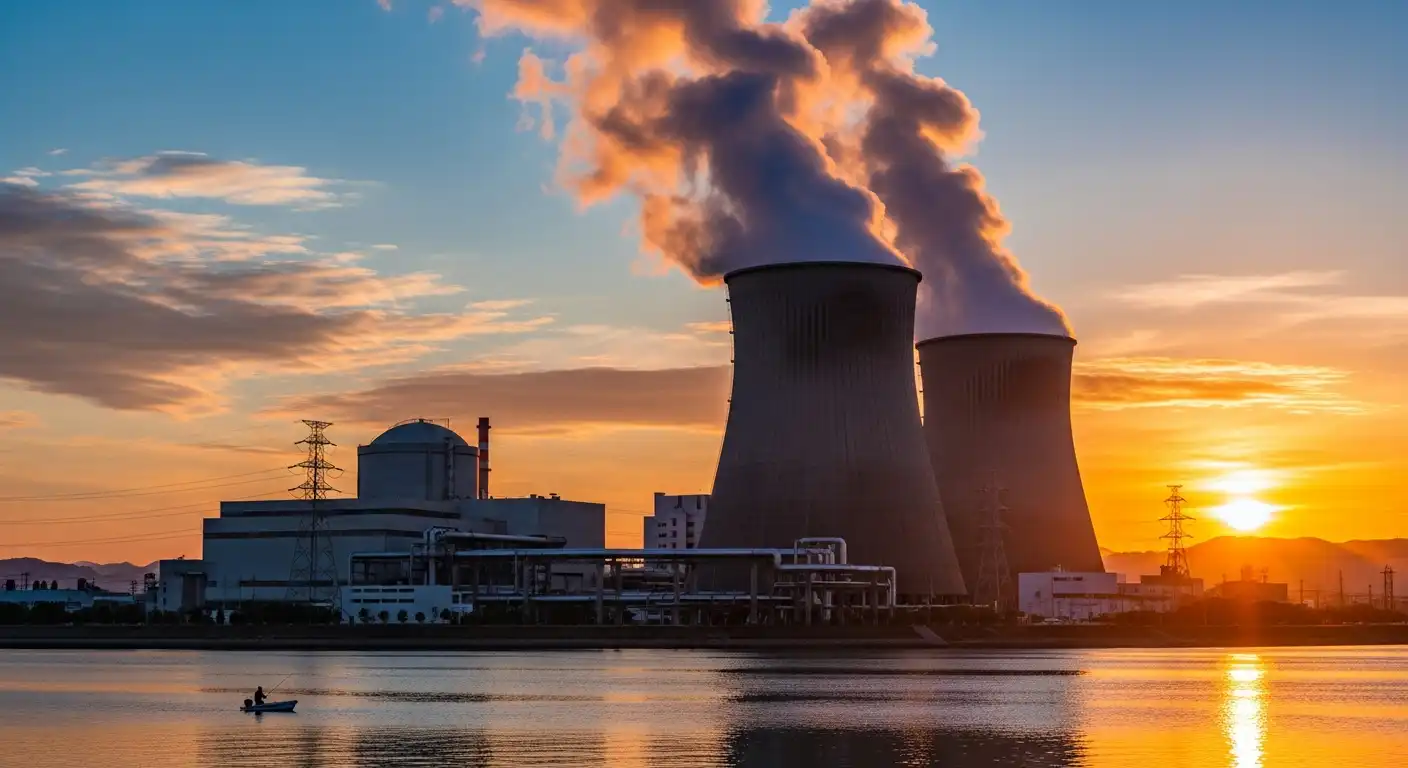
Central Europe is grappling with an extraordinary energy emergency that highlights the terrifying physical limitations of current power infrastructure. Hungary has been forced to take the unprecedented step of shutting down its only nuclear power facility, the Paks Nuclear Power Plant, as a record-breaking, multi-month drought has pushed the Danube River to dangerously low levels. The facility, which provides roughly 50 percent of the nation’s total electricity supply, relies on the river’s water to cool its massive reactor cores. As the water level continues to fall toward an all-time low, the thermal safety protocols mandated by national regulators have left the government with no other option than to pull the plug on the country’s most reliable carbon-free energy source.
The closure of the Paks facility is not merely a localized operational issue; it is a profound, systemic threat to the Hungarian economy and the stability of the broader European energy market. With the reactors offline, the government must scramble to find alternative baseload power, likely forcing it to rely on expensive, carbon-heavy fossil fuel imports from neighboring nations at a time when energy prices are already hovering near record highs. This shutdown serves as a direct, empirical warning to policymakers across the continent that climate change is no longer a distant theoretical threat—it is an active, physical force that can paralyze critical infrastructure and threaten national energy sovereignty.
For energy analysts and grid planners, the Paks crisis is a sobering reminder that the transition to a modern, decarbonized grid is incomplete without massive, redundant investment in water-independent cooling systems, grid-scale energy storage, and long-distance transmission infrastructure. As the region continues to experience more frequent, intense heatwaves and hydrological droughts, the standard operating models of 20th-century nuclear and thermal power plants are becoming increasingly incompatible with the physical reality of the 21st-century climate.
The Physical Reality of Reactor Cooling and Water Scarcity
Nuclear reactors are essentially massive, high-efficiency heat engines. The fundamental process of nuclear fission generates an incredible amount of thermal energy, which is used to boil water into steam to turn electrical turbines. After the steam passes through the turbines, it must be cooled back into liquid water to restart the cycle. While some modern plants utilize massive, air-cooled towers, the vast majority of legacy reactors—including the Russian-designed VVER-440 units at Paks—utilize a “once-through” cooling system that draws cold water directly from a nearby river or lake, circulates it through the condenser, and discharges the warmed water back into the environment.
This system works perfectly under normal hydrological conditions, but it fails during extreme droughts. Environmental safety regulations require that the discharged water must not exceed a specific temperature, usually around 30 degrees Celsius, to protect the local ecosystem and prevent massive fish die-offs. As the Danube’s flow rate drops during a drought, the river loses its natural capacity to dissipate the thermal load from the power plant. The water temperature in the river rises rapidly, forcing the plant to throttle back power production or shut down entirely to stay within these strict environmental safety limits.
In the case of the Paks facility, the situation reached a breaking point this month. The water flow rate of the Danube dropped to less than 40 percent of its seasonal average. The combination of low volume and high ambient temperatures meant that discharging any cooling water would have pushed the river’s temperature past the regulatory limit within just a few kilometers of the plant. Without the ability to cool the reactors, the facility had to execute an emergency, phased shutdown of all four of its active units, leaving the nation facing an immediate, 50 percent loss of its total domestic power generation capacity.
The Economic Consequences of a Baseload Power Vacuum
The loss of 50 percent of Hungary’s electricity supply presents an immediate, highly volatile economic challenge. In any modern industrial economy, you cannot simply replace 50 percent of your baseload power overnight. Nuclear power provides constant, reliable energy that runs 24 hours a day, regardless of weather conditions. Replacing this capacity requires a combination of aggressive conservation measures, rapid-response fossil fuel generation, and expensive, cross-border emergency imports.
The Hungarian government is taking every possible step to prevent localized blackouts. Energy authorities have invoked emergency powers to redirect available power from the industrial sector to residential and emergency services, effectively mandating industrial power rationing for major steel mills, chemical processors, and automotive assembly lines. This rationing will undoubtedly lead to a sharp, short-term contraction in industrial output, slowing down GDP growth and putting hundreds of millions of dollars in manufacturing revenue at risk for the third quarter.
To cover the massive generation shortfall, state-owned utility companies have been forced to enter the international wholesale electricity market and purchase emergency imports from neighboring countries, including Austria, Slovakia, and Romania. These emergency purchases come at an extraordinary premium, with spot market electricity prices in the region jumping by nearly 40 percent in the days following the Paks announcement. This cost will ultimately flow through to the Hungarian taxpayer and electricity consumer, leading to a new, aggressive wave of energy inflation that will likely last for several months as the government works to stabilize the national grid.
The Climate-Energy Feedback Loop: Why Modern Grids are Failing
The Paks crisis exposes a dangerous, self-reinforcing feedback loop that global energy planners are only beginning to understand. As climate change triggers more frequent and intense summer heatwaves, energy demand for residential and commercial air conditioning skyrockets, placing immense pressure on the electrical grid. At the same time, these heatwaves trigger hydrological droughts that lower river levels, directly crippling the traditional power plants that provide the baseload electricity needed to run those air conditioners.
This creates a “double-squeeze” that traditional, 20th-century grid architectures are poorly equipped to handle. In the past, grid operators could rely on thermal power plants to provide consistent energy whenever demand spiked. Today, those plants are physically limited by the very climate changes they are trying to accommodate. The more we need power to cope with heat, the harder it becomes to generate that power using standard cooling methods.
The Vulnerability of Water-Cooled Infrastructure
Most of the thermal power fleet currently operating in Europe and the United States relies on massive volumes of water. Coal, natural gas, and nuclear power plants are almost all built next to large rivers, lakes, or coastal estuaries to secure cheap cooling access. This centralization of generation capacity creates a systemic vulnerability. When a major river basin experiences a drought, it does not just threaten the local supply of drinking water or agricultural irrigation; it threatens the entire regional electricity grid.
Energy experts warn that the transition to a sustainable future requires a complete move away from this water-dependent industrial model. New generation capacity must focus on technologies that are water-neutral or highly water-efficient. This includes aggressive investment in dry-cooled solar arrays, wind turbine deployments that require zero water, and modular nuclear designs that utilize advanced gas or liquid-salt cooling systems, which do not require constant, high-volume river access. By failing to diversify our power generation beyond water-dependent technologies, we have built a power grid that is essentially allergic to the very climate reality we are trying to mitigate.
The Hidden Costs of Climate-Proofing the Grid
Updating the energy infrastructure to survive a warming world will cost hundreds of billions of dollars. The Paks facility is already exploring a major, multi-million-euro project to install massive, industrial-scale cooling towers, which would allow the plant to recycle its own water rather than discharging it back into the Danube. However, these systems are expensive to build, require significant electricity to operate, and increase the overall complexity of the facility.
For a nation like Hungary, the choice is difficult. Do they invest billions in “climate-proofing” their existing, aging thermal and nuclear plants, or do they prioritize that capital for building new, weather-resilient renewable assets? Most regional experts argue that the government must do both. The scale of the threat requires a balanced approach. The state must invest in retrofitting its most critical power assets while simultaneously decentralizing the grid to reduce the risk of a single river-level failure taking down the entire national electricity supply.
Geopolitical Security in an Age of Energy Scarcity
The shutdown of the Paks plant sends a chilling message across the broader European Union regarding energy security and geopolitical stability. Hungary, like many other central European nations, is highly sensitive to energy prices and supply consistency. The country historically relied on cheap, stable Russian gas to fuel its power plants, but that supply route has been severely constrained due to geopolitical sanctions and the ongoing regional conflicts.
Forcing Hungary to turn to the international spot market for expensive, emergency electricity imports weakens the country’s economic leverage and leaves it exposed to the predatory pricing strategies of neighboring nations. This is the ultimate, long-term consequence of the energy crisis: it turns electricity from a basic utility into a primary tool of geopolitical control. When a country loses its domestic generation capacity, it loses its ability to set its own economic priorities. It must instead bow to the energy supply and pricing terms dictated by the nations that have the surplus power to sell.
The European Power Market Integration
Europe has worked tirelessly to build an integrated, continental electrical grid, believing that a unified market would prevent localized supply shocks. If France has excess nuclear power, it can ship it to Germany; if Germany has excess wind power, it can ship it to Poland. The system is designed to share the burden of production and smooth out supply gaps across national borders.
However, the Paks shutdown tests the physical limits of this European integration. If Hungary requires a massive, sustained import of electricity, it places significant pressure on the interconnections with its neighbors.
If those neighbors are also facing heatwaves and drought-related production curtailments—as is frequently the case during regional summer heat events—the entire European grid faces a state of synchronized instability.
The crisis underscores that while an integrated market is excellent for efficiency during normal weather, it is exceptionally fragile during extreme, systemic climate events, reinforcing the need for every nation to maintain a robust, independent reserve of internal generation capacity.
Regional Energy Trade as a Diplomatic Leverage
The energy crisis has transformed international power trading into a sophisticated, highly strategic diplomatic leverage point. Nations that possess a consistent energy surplus—such as France or Scandinavia—now wield enormous influence over the economic policies of their neighbors.
They can use the export of electricity to build stronger political alliances, or they can restrict the flow of energy to punish rivals who violate regional policy agreements.
Hungary, caught in the middle of this high-stakes competition, must carefully manage its diplomatic relationships to ensure that its neighboring countries remain willing to supply the emergency electricity it requires to prevent blackouts.
This environment turns every kilowatt-hour into a symbol of diplomatic success or failure, proving that energy security is not just an engineering goal, but the single most important factor for modern statecraft in a warming world.
Future Projections: Adaptation or Systemic Failure?
The path ahead for Hungary and the broader European power market is fraught with extreme risk. The simple, low-cost baseline generation model that characterized the late 20th century has reached its physical limits. Climate change is actively rearranging the conditions required for energy generation, and the power systems we currently use are largely designed to fail in this new, unpredictable environment.
Adapting to this reality will require a level of investment, political courage, and technological innovation that has yet to be fully realized. Governments must prioritize the construction of grid-scale energy storage, invest in diverse, water-independent power generation, and build much stronger, more flexible high-voltage transmission networks. They must also move away from the assumption that the climate will cooperate with their power generation models, treating heatwaves and droughts as permanent, expected features of the annual operating cycle.
The Paks reactor shutdown is a wake-up call that the world cannot afford to ignore. It is a stark reminder that as we transition away from fossil fuels, we are building a new, highly complex energy infrastructure that is not just about reducing carbon emissions; it is about maintaining human stability in an environment that is becoming increasingly, and permanently, hostile. The nations that successfully solve this engineering crisis—who find a way to generate reliable, weather-proof, and clean power—will be the nations that capture the economic leadership of the 21st century, while those that fail will find themselves trapped in an endless, expensive cycle of energy crises, industrial rationing, and economic decline.