Key Points:
- Nvidia has started pitching its new “Vera” central processing units to major Chinese cloud computing clients.
- The company plans to start shipping the new 88-core, Arm-based server processors as early as August.
- Standalone CPUs face fewer U.S. export restrictions than the firm’s advanced graphics processors.
- At least one major Chinese cloud provider plans to place an initial order for more than 300 dual-CPU servers.
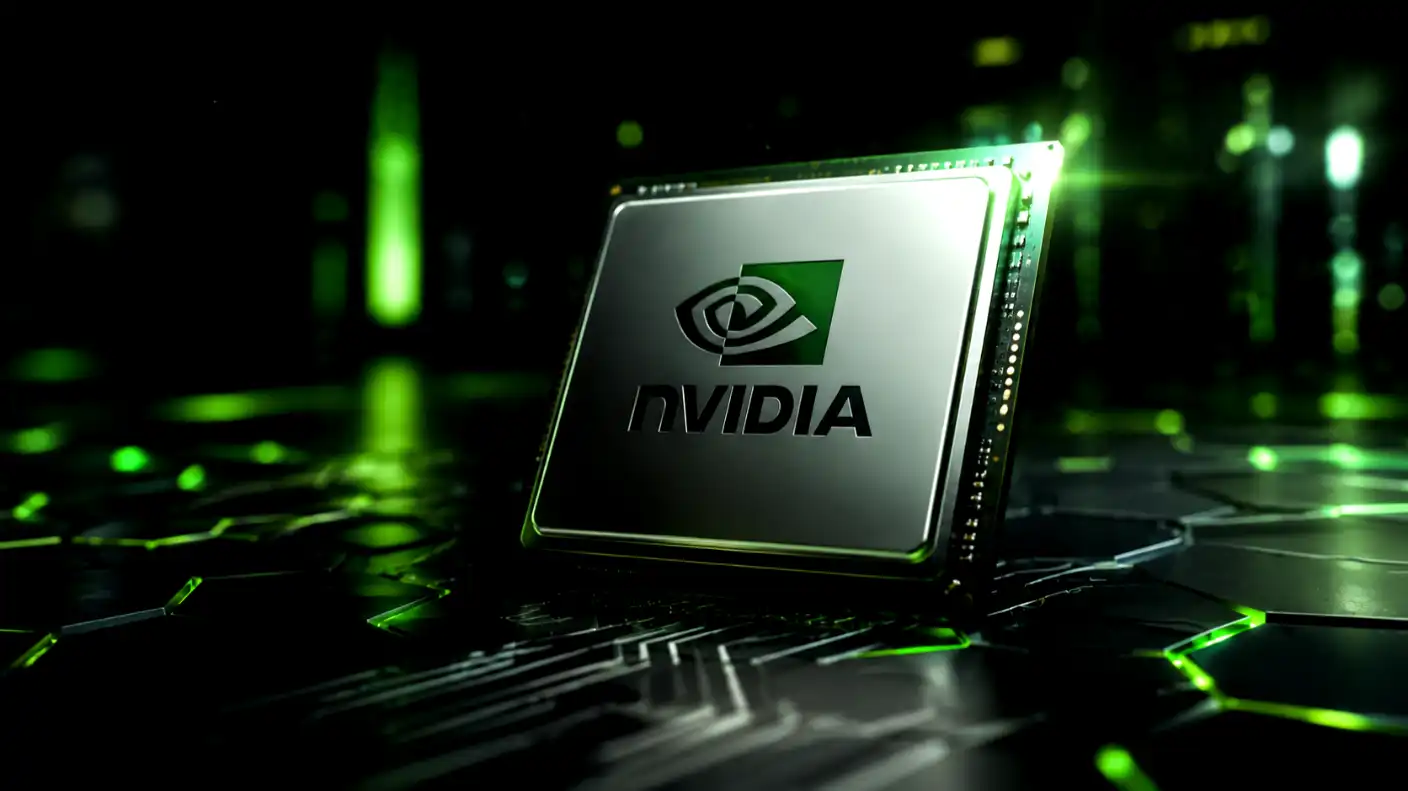
Nvidia has begun actively pitching its new “Vera” central processing units (CPUs) to Chinese technology companies, offering them the chance to place early orders for hardware that could ship as soon as August. The sudden sales push represents a strategic effort by the Silicon Valley giant to salvage its business in China. Following a series of strict U.S. government export controls and Beijing’s aggressive push for domestic semiconductor self-sufficiency, Nvidia’s once-dominant market share in the world’s second-largest economy had effectively plummeted to zero.
This rapid pivot to the newly introduced CPU architecture comes as shipments of Nvidia’s advanced graphics processors (GPUs) remain completely blocked. Although the U.S. government previously licensed approximately 10 Chinese technology companies to purchase the H200—the firm’s second-most powerful AI processor—regulatory delays from Chinese authorities have stalled actual deliveries for months. Because CPUs face less stringent U.S. export controls than high-performance GPUs, the firm hopes that selling standalone server processors will provide a smoother, less politically sensitive pathway to capture Chinese revenues.
Unveiling the processor in March, Chief Executive Officer Jensen Huang described the Vera chip as the company’s next multibillion-dollar business. Specifically designed to handle the heavy computational demands of “agentic AI,” the processor is built for systems that perform tasks autonomously. Unlike traditional conversational chatbots that simply answer user queries, autonomous AI agents must independently plan workflows, execute code, evaluate results, and manage databases. Built on an efficient 88-core, Arm-based architecture, the newly manufactured processor reportedly runs up to 1.8 times faster at executing these background agent tasks than comparable x86 processors from competing firms.
The launch of the new standalone CPU directly challenges the decades-long dominance of legacy chipmakers Intel and AMD. For nearly thirty years, the host socket in high-performance server racks was almost exclusively occupied by Intel’s Xeon or AMD’s Epyc processors, with Nvidia’s GPUs serving simply as accelerators. By integrating its own proprietary CPU directly into standard system designs, Nvidia is attempting to capture a larger share of the global server CPU market, which executives value at roughly $200 billion. The firm expects its new CPU business to generate $20 billion in total revenue by the end of the current fiscal year, which ends in January.
Several major Chinese cloud computing firms have already shown significant interest in the new processor, with companies like Alibaba and ByteDance actively collaborating with the chipmaker to test the platform. One prominent Chinese cloud service provider reportedly plans to place an initial order for more than 300 high-performance servers, with each system utilizing a dual-processor configuration containing two Vera CPUs. This initial positive feedback provides much-needed commercial validation for the new chip architecture in a highly competitive market.
However, ongoing geopolitical tensions continue to dictate how these Chinese tech giants deploy foreign hardware. Due to domestic political pressure in Beijing to use local Chinese alternatives for internal networks, cloud providers plan to initially deploy the new processors only within their overseas data centers. This strategy allows firms to thoroughly test software compatibility and hardware performance in a neutral environment. If the initial trials prove successful, the tech firms will then decide whether to expand their purchase orders and integrate the chips into broader regional networks.
This semiconductor transition reflects a massive, industry-wide shift in the evolution of artificial intelligence. Tech companies are rapidly moving beyond the initial phase of training large language models on graphics chips toward deploying practical, physical AI systems. These autonomous agents require continuous, highly efficient background compute to coordinate software tools and manage real-time workflows. Because this layer of software relies heavily on CPU-driven data orchestration, the demand for specialized server processors is set to explode, creating a massive new growth engine for the hardware industry.
The aggressive sales pitch in China demonstrates that the world’s most valuable chip company remains deeply committed to maintaining its commercial footprint in Asia despite complex trade barriers. By quickly shifting its strategy from highly restricted graphics processors to advanced, standalone CPUs, the firm has opened a fresh front in the global technology race. As the first shipments roll out in August, the success of this product pivot will determine whether the Silicon Valley giant can bypass geopolitical bottlenecks, challenge established server CPU monopolies, and reclaim its status as a vital hardware partner for China’s expanding tech sector.