China’s industrial sector has achieved a historic milestone, permanently altering how global economists view the relationship between economic growth and environmental sustainability. For decades, the rapid expansion of emerging economies required a massive, unavoidable increase in fossil fuel consumption. As factories multiplied, urban areas expanded, and electricity demand climbed, coal and natural gas plants had to burn more fuel to keep the national grid stable.
But a newly released national energy report shows that China has successfully broken this link. In 2025, the country’s massive expansion of green power generation fully offset its annual increase in national electricity consumption. This achievement marks the first time in history that all additional electricity demand driven by economic growth was met entirely by zero-emission renewable energy, demonstrating that massive economic expansion can coexist with a structural decline in fossil fuel reliance.
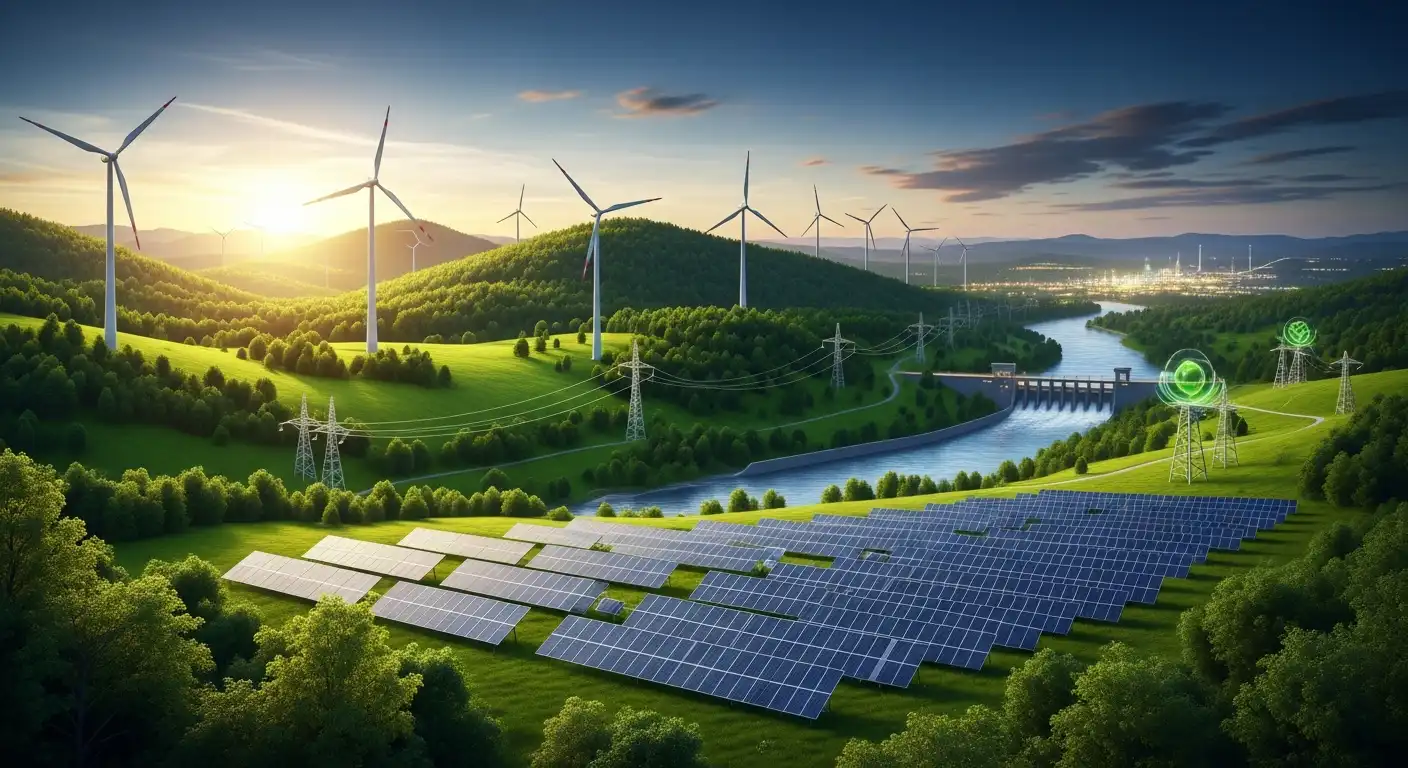
The rapid scaling of China’s renewable energy capacity has transformed the country into the primary engine of the global green transition. By deploying solar panels, wind turbines, and advanced grid-scale battery systems at an unprecedented scale, the country has managed to decouple its industrial growth from rising carbon emissions. This comprehensive analysis examines the structural shifts in the country’s energy mix, breaks down the record-shattering capacity figures, details the ambitious deployment targets for 2026, and explores how clean energy is expanding beyond the power grid to transform heavy manufacturing, transport, and ecological restoration.
Understanding China’s Green Power Crossover
To understand why this milestone is so significant, we must examine the concept of incremental energy demand. In any expanding economy, the grid must continuously add new power plants to handle the rising demand from new factories, electric vehicles, and residential homes. Historically, even if a country built massive wind and solar farms, the speed of its economic growth often outpaced its renewable installations, forcing it to keep burning coal to fill the remaining gap.
The crossover achieved in 2025 proves that the country’s renewable deployment has finally reached a critical velocity at which it can completely offset the growth of national electricity demand. By generating more than enough green power to satisfy the country’s economic expansion, the renewable sector has effectively capped the growth of coal-fired generation.
Any future increase in electricity demand will no longer require building more fossil fuel plants. Instead, the country can focus on retiring its older, highly polluting coal facilities, thereby beginning a permanent downward trajectory in industrial carbon emissions.
Key Components of China’s Green Power Milestone
The successful execution of this energy transition relies on several highly integrated, advanced technological and infrastructure systems:
- Distributed Solar Domination: Scaling up small, localized solar installations on the roofs of residential homes, commercial warehouses, and public buildings to bypass grid bottlenecks.
- The 1 Trillion Kilowatt-Hour Threshold: Pushing both wind and solar power generation past the 1 trillion kilowatt-hour milestone to establish them as core pillars of the national grid.
- Ultra-High Voltage Direct Current (UHVDC) Lines: Building massive, long-distance transmission corridors to transport clean electricity from western deserts directly to eastern manufacturing hubs.
- Grid-Scale Battery Storage Expansion: Deploying massive battery storage systems to stabilize the grid and manage the natural intermittency of wind and solar power.
- Industrial Decarbonization Integration: Moving clean electricity beyond the grid to power zero-carbon industrial parks, green hydrogen production, and electric cargo shipping.
Breaking Down the Record-Shattering Capacity Figures
The raw capacity numbers achieved show the unmatched speed and scale of the country’s clean energy buildout. According to the national energy report, the country’s newly installed renewable energy capacity reached a historic record high, accounting for more than 60% of all global renewable additions.
By the end of 2025, China’s total installed renewable energy capacity exceeded a staggering 2.337 billion kilowatts. To put this number in perspective, the country’s renewable capacity is now larger than the combined electricity grids of the United States and Europe.
Furthermore, new renewable energy installations accounted for an extraordinary 82.7% of all newly added power capacity nationwide during the year. This means that more than eight out of every ten new power plants built in the country were clean, zero-emission facilities, while traditional coal and gas additions fell to a tiny minority of the market.
The Phenomenon of Distributed Solar Power
A major driver of this capacity explosion is the rapid, decentralized growth of distributed solar power. For years, utility-scale solar farms built in remote desert regions dominated the market.
However, these remote installations require massive transmission lines to deliver power to coastal cities, a process that can take several years to permit and build. Distributed solar bypasses this issue entirely by placing solar panels directly on the roofs of buildings where the electricity is consumed.
Distributed solar installations exceeded 100 million kilowatts for the second consecutive year, demonstrating that solar power has evolved from a specialized utility project into a common, widely accessible consumer appliance. This rapid, decentralized deployment has allowed hundreds of thousands of small businesses and rural households to generate their own clean electricity locally, drastically reducing their reliance on the centralized grid and lowering their monthly energy expenses.
Surpassing the 3.99 Trillion Kilowatt-Hour Generation Mark
The massive capacity additions have translated directly into record-breaking electricity generation. In 2025, the country’s total renewable energy generation reached 3.99 trillion kilowatt-hours, representing a robust 9.6% increase year-on-year.
This immense volume of clean power accounted for 38.3% of China’s total electricity generation mix, up from roughly 30% a few years ago.
More importantly, both wind and solar power generation surpassed the critical 1 trillion kilowatt-hour milestone for the first time in history. Each of these two renewable sources now accounts for more than 10% of the country’s total electricity supply.
This double-digit share proves that wind and solar have graduated from niche, alternative energy sources into the primary pillars of the national electricity grid, capable of delivering reliable, high-volume power to sustain the country’s industrial economy.
The 2026 Forecast: Chasing the 300 Million Kilowatt Target
The national energy report makes it clear that the country has no intention of slowing down its green energy momentum. Looking ahead, China is projected to maintain its aggressive deployment pace, setting even higher targets for the coming year.
The report forecasts that newly installed wind and solar power capacity will reach approximately 300 million kilowatts. Adding 300 million kilowatts in a single year requires an extraordinary mobilization of labor, raw materials, and manufacturing capacity, representing a buildout rate that global competitors cannot match.
To support this massive influx of clean energy, the country plans to connect more than 50 million kilowatts of new energy storage capacity to the grid.
The Critical Need for Grid-Scale Storage
As wind and solar power grow to account for nearly 40% of the total electricity mix, managing their inherent intermittency has become the primary challenge for grid operators. Solar panels do not produce power during the night, and wind turbines stop spinning when the weather settles.
If a cloud system suddenly blocks a massive solar array, the grid can experience a rapid voltage drop, threatening to cause regional power blackouts if the system cannot respond within milliseconds.
Massive lithium-ion battery storage arrays and pumped hydro facilities solve this reliability issue. These systems act as a giant physical buffer for the grid, absorbing excess solar electricity generated during the sunny midday hours and releasing it back onto the grid during evening peak-demand hours, when millions of citizens return home and turn on their appliances.
By adding 50 million kilowatts of new storage capacity, the country is building a highly resilient, self-stabilizing grid that can safely handle high-density renewable energy without relying on legacy coal plants as backup.
Shifting Applications: Expanding Beyond the Power Grid
One of the most important trends highlighted in the national report is that renewable energy is rapidly expanding beyond traditional electricity generation, moving deep into heavy industry, transportation, and ecological recovery.
Zero-Carbon Industrial Parks
In major manufacturing provinces like Jiangsu and Zhejiang, local governments are building zero-carbon industrial parks powered entirely by dedicated, local wind and solar installations. These parks use advanced microgrids, smart energy management software, and on-site battery storage to ensure that heavy industrial operations—such as aluminum smelting and chemical manufacturing—run entirely on clean energy.
By eliminating fossil fuels from the manufacturing process, these industrial parks enable local exporters to avoid carbon tariffs imposed by Western countries, thereby securing their competitive edge in the global market.
Green Transportation and Ecological Restoration
The country is also using its massive renewable capacity to decarbonize its transportation sector. Electric vehicle charging stations are being linked directly to local solar arrays, allowing drivers to power their cars with clean, solar electricity.
Furthermore, the country is deploying clean energy to support ecological restoration in its vast, arid western regions. Under the “photovoltaic-plus-ecology” model, developers build massive solar arrays in desert regions like the Gobi Desert.
The solar panels shade the desert floor, reducing water evaporation from the soil and allowing drought-resistant grasses and crops to grow beneath the arrays. This unique system helps reverse desertification and restores local ecosystems while generating gigawatts of clean electricity for the country’s eastern cities.
The Battle of Global Clean Energy Supply Chains
The extraordinary success of China’s domestic renewable rollout has major geopolitical implications, highlighting the growing technological and manufacturing gap between East Asian producers and Western nations.
While the United States and the European Union have built massive tariff walls—imposing 100% tariffs on Chinese electric vehicles and heavy duties on solar panels to protect their domestic manufacturing bases—China has used these trade restrictions as a catalyst to double down on its domestic market. Because Chinese solar and wind manufacturers can sell their products to a highly supportive, fast-growing domestic market, they can maintain massive production volumes and continue to drive down costs through advanced research and economies of scale.
This domestic strength allows Chinese companies to export highly affordable clean technology to developing markets across Latin America, Africa, and Southeast Asia, establishing the country as the undisputed leader of the global green transition.
Conclusion
The historic energy transition achieved in 2025 represents a major turning point for the global economy. By generating enough clean, renewable energy to cover its annual increase in electricity consumption fully, China has proved that economic growth no longer requires a rise in fossil fuel use. Supported by a total installed capacity of 2.337 billion kilowatts, record-shattering distributed solar deployment, and the milestone of wind and solar each surpassing 1 trillion kilowatt-hours of generation, the country has built a highly resilient, green power grid. As the nation prepares to add another 300 million kilowatts of wind and solar capacity and 50 million kilowatts of energy storage, the clean energy sector is expanding far beyond the grid, driving deep decarbonization across heavy manufacturing, green transit, and desert ecosystems. While Western nations build tariff walls to protect their legacy industries, China’s massive domestic market and unmatched supply chain efficiency ensure that the country will remain the primary engine of the global green transition, securing its position as the world’s clean energy superpower for decades to come.