Key Points:
- China’s PV sector topped 1,200 GW in cumulative capacity and exceeded 1 trillion yuan in annual output during 2021–2025.
- The government eliminated export tax rebates for solar products on April 1, 2026, to curb low-price price wars.
- Intelligent factories are deploying AI-powered inspection systems, reducing headcount and boosting efficiency fourfold.
- Dual-use projects, such as offshore fishery-solar arrays and agrivoltaics, are opening up vital new domestic markets.
China’s Solar Industry Shifts its primary growth strategy as the highly competitive sector navigates a permanent transition from rapid, volume-driven expansion to high-value technological innovation. During the nation’s 14th Five-Year Plan period from 2021 through 2025, the annual output value of the domestic photovoltaic manufacturing industry soared past 1 trillion yuan ($147.65 billion), while cumulative exports surpassed $180 billion. With total installed solar capacity topping 1,200 gigawatts, domestic factories successfully exported solar modules to more than 200 countries and regions. However, this massive success has triggered intense domestic overcapacity, driving down global selling prices and forcing both policymakers and businesses to rethink their long-term strategies.
To curb destructive, low-price domestic competition and prevent international trade disputes, the central government enacted a major policy shift. Beginning April 1, 2026, the state officially eliminated export tax rebates for all photovoltaic products. Industry experts believe this decisive regulatory move will permanently discourage companies from engaging in extensive, scale-driven price wars. Instead, the policy change forces solar manufacturers to focus on technological premiums, brand building, and the development of higher-efficiency, smarter products, effectively accelerating the structural upgrading of the entire clean energy sector.
This transition toward high-tech manufacturing is already highly visible across regional production hubs. Inside the advanced manufacturing facility of Ronma Solar in Jinhua, Zhejiang province, robotic arms and automated material-handling systems work in perfect coordination. The factory floor runs continuously as silicon wafers move through a series of automated chemical and physical processes to become high-efficiency solar modules. Company executives confirmed that despite the challenging price environment, the firm recently secured substantial new supply contracts from Central Asia and Southeast Asia, prompting them to ramp up production lines.
For leading clean energy firms, competing internationally has evolved far beyond simply exporting physical solar panels. True global success now requires exporting entire corporate brands and establishing localized manufacturing footprints across the entire value chain. A key example of this strategy occurred in March, when intelligent manufacturing company Astronergy secured a major solar-plus-storage project in Ereğli, Konya province, Turkey. Instead of shipping modules from China, the company’s local Turkish factory manufactured and supplied all the required photovoltaic panels. Its parent company, Chint Group, provided a comprehensive, one-stop solution covering module supply, energy storage systems, and full engineering construction.
To protect their operating margins from falling global prices, leading manufacturers are investing heavily in digitalized and intelligent factory systems. At Astronergy’s national-level green factory in Haining, Zhejiang province, managers pioneered a “photovoltaic manufacturing plus internet” model. By integrating artificial intelligence into the production line, the facility has dramatically reduced its operational overhead. For instance, the factory previously required eight full-time workers to manage manual quality inspections across four day-and-night production lines. After introducing automated AI-powered camera inspection, the factory requires only two workers to monitor the same lines, while overall inspection efficiency has increased fourfold.
These advanced automation efforts align with a broader regional push to manage supply chain overcapacity and restore market balance. Zhejiang province, which ranks as a national leader in both photovoltaic manufacturing and grid-connected solar installations, has seen intense, localized “involution-style” competition since 2023. In response, regional departments rolled out supportive guidelines encouraging industry self-discipline and production control. Industry leaders from new energy technology firm Aiko emphasize that outdated, low-efficiency manufacturing capacity will inevitably face elimination, forcing the global industry to return to a healthy, quality-driven growth cycle.
As traditional ground-mounted solar installations face land constraints, developers are actively expanding the range of alternative, multi-use application scenarios. Approximately 700 meters offshore from the Wengle reclamation area in Yueqing, Zhejiang province, nearly 500,000 silver-blue solar panels shimmer in the ocean sunlight. Beneath this massive floating array, fish swim freely in the shaded waters of the Wenzhou Hengtai fishery-solar complementary power generation project. By utilizing the water resources beneath the panels for aquaculture, each mu of tidal flat generates an additional 3,000 yuan ($443.57) in annual fishery output while creating more than 1,000 local jobs.
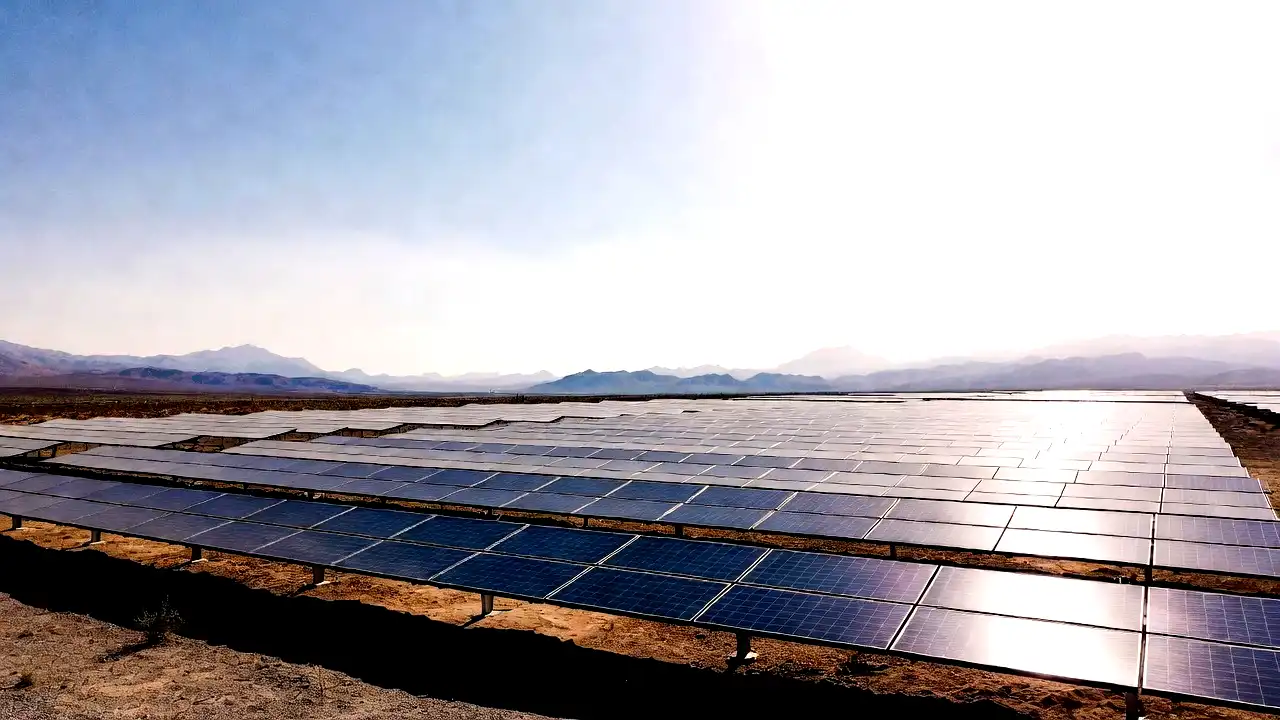
Similar land-sharing innovations are revitalizing rural agricultural communities across China’s mountainous interior. In Mianqianling village, located in Taishun county, rows of solar panels stretch across the green hillsides, generating clean electricity for the local grid. To maximize land utility, the village developed a demonstration base beneath the panels to cultivate valuable, shade-tolerant Chinese yew trees. This agrivoltaic project generates roughly 200,000 yuan ($29,571) in annual income for the local village collective. Furthermore, by partnering with a nearby aviation camp, the village has launched a popular aerial tourism program, allowing visitors to view the scenic solar installations from the air.
The continuous development of these innovative, multi-use application scenarios will play a vital role in absorbing and expanding manufacturing capacity. Industry representatives suggest that the next major growth cycle for the sector will focus on replacing smaller, legacy solar arrays with larger, high-efficiency modules, as well as upgrading aging grid-connection facilities. By transitioning from cheap, volume-based exports to value-driven globalization and intelligent manufacturing, the industry is building a highly sustainable and resilient foundation. The elimination of export tax rebates marks a permanent turning page, ensuring that technology, safety, and product quality dictate the future of global solar energy.