

Key Points:
- Coinbase has introduced “Coinbase for Agents” and “Coinbase Advisor” to automate crypto trading.
- Coinbase for Agents allows external systems like ChatGPT to trade and execute strategies autonomously.
- The SEC-registered Coinbase Advisor serves as an in-app co-pilot, building custom portfolios in seconds.
- The tools utilize the open x402 protocol, enabling AI agents to pay for premium data using stablecoins.
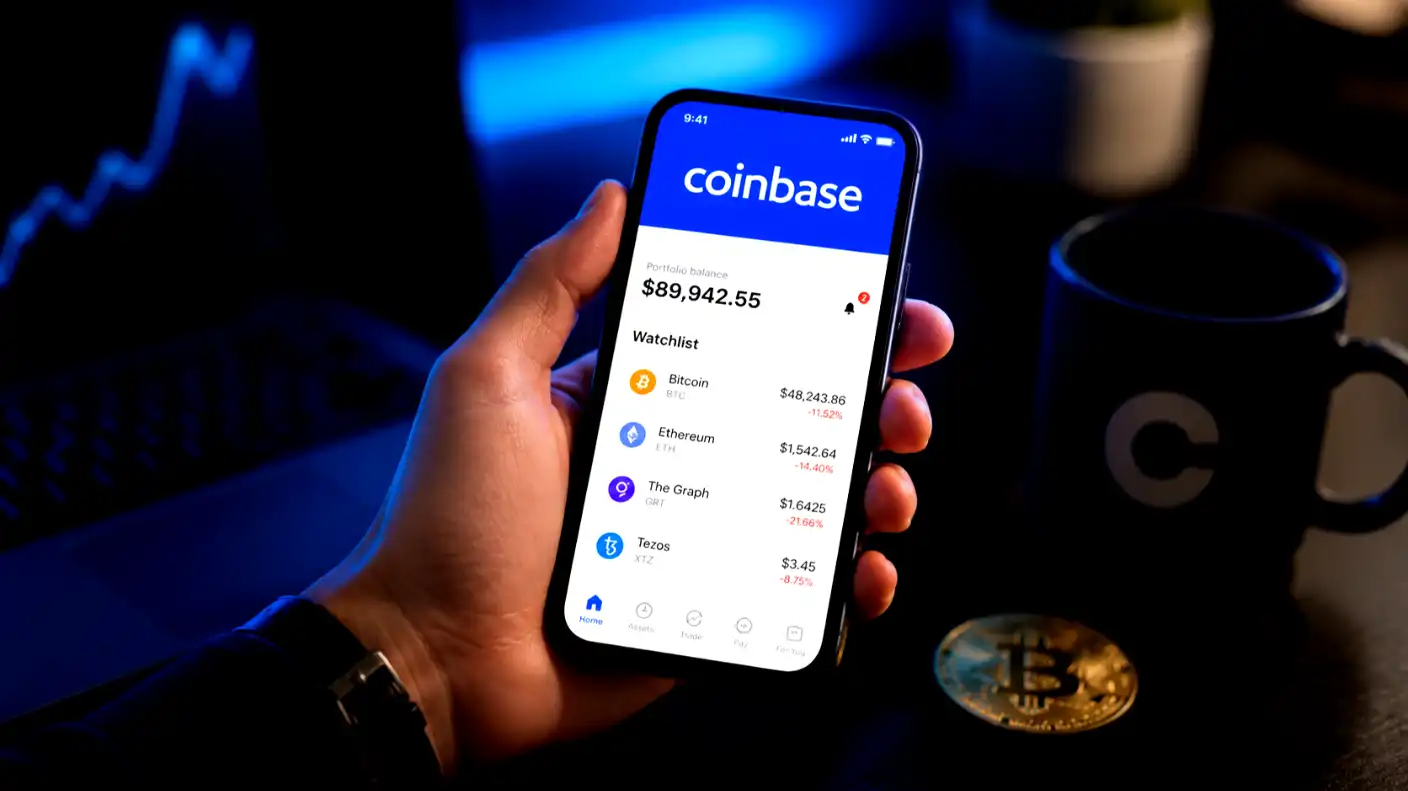
Coinbase Launches AI tools designed to transform retail and institutional investing by automating portfolio management and delivering personalized, registered financial advice. Released under a massive, system-wide update, the new product suite introduces “Coinbase for Agents” and “Coinbase Advisor,” establishing the company as a pioneer in the emerging “agentic finance” sector. By integrating advanced machine learning models directly with its core trading rails, the San Francisco-based exchange wants to redefine how users interact with the internet. The development signals a permanent shift away from traditional, manual application menus and toward a future where autonomous digital assistants execute complex financial tasks.
The first major component of the release, Coinbase for Agents, operates as a discretionary execution portal that connects external AI models directly to a user’s trading account. Rather than requiring users to manually log in, monitor charts, and execute individual trades, this tool allows external AI agents—including popular web assistants like ChatGPT and Claude—to manage the account autonomously. Users can configure these external systems to operate within separate, insulated sandboxes, preventing the algorithms from accessing other assets while they execute complex trading strategies, rebalance portfolios, or place limit orders in real time.
The company provided several practical examples showing how users can immediately put these autonomous agents to work. A user can instruct an agent to gradually transition their portfolio toward a target allocation of 60% Bitcoin, 20% Ethereum, and 20% Solana over a period of months. The agent can monitor market movements, use historical hourly price data to identify optimal trading windows, and set automated limit orders to “buy the dip” when prices fall by 5%, 10%, or 15%. This automated, strategy-led execution eliminates the need for constant human oversight, allowing investors to trade on highly disciplined parameters.
While the “for Agents” platform executes transactions autonomously, the newly launched “Coinbase Advisor” serves as a non-discretionary, highly regulated financial co-pilot. Built directly into the core mobile application, Coinbase Advisor is registered with both the Securities and Exchange Commission (SEC) as a Registered Investment Advisor and the Commodity Trading Advisor (CTA) with the Commodity Trading Advisor (CTA) with the Commodity Futures Trading Commission (CFTC). The digital advisor analyzes real-time market trends, answers complex macroeconomic questions, and builds personalized, diversified portfolios based on the user’s specific risk profile. Crucially, the advisor cannot execute trades on its own; it compiles the plan, but only executes transactions when the user grants explicit, real-time permission.
To ensure the absolute accuracy and credibility of the digital advisor’s recommendations, the company’s machine learning models remain heavily grounded in human financial expertise. A team of veteran portfolio managers with over 75 years of combined experience from the world’s top asset management institutions developed the underlying investment frameworks that guide the AI. By combining these professional, institutional-grade methodologies with real-time market data, the digital advisor democratizes the elite wealth management experience, bringing institutional-quality financial advice to everyday retail savers.
The native integration of the “x402” protocol presents the most technically significant feature of the new platform. The x402 protocol enables true machine-to-machine commerce, allowing AI agents to pay directly for digital services—such as premium research APIs, paywalled news, and on-demand cloud computing power—using stablecoins like USDC as the core settlement currency. This protocol has already achieved massive commercial traction in the developer community, processing over 75 million transactions and generating $24 million in volume over the past 30 days alone, showing that the machine economy is rapidly scaling up.
The exchange has released the developer tools in two distinct, highly accessible formats to maximize adoption across the technology sector. The first format uses the Model Context Protocol (MCP), a standardized server integration that allows web-based AI platforms like ChatGPT, Claude, and OpenAI Codex to connect directly to the user’s account without requiring complex API keys or custom coding. Advanced developers can utilize the second format, a command-line interface (CLI) designed to help them build bespoke trading models from scratch on top of the exchange’s core liquidity pools.
This massive artificial intelligence rollout fits squarely within the company’s broader, long-term “Everything Exchange” strategy. While the current features support spot cryptocurrency and derivatives trading, the company is actively preparing to expand the agent-enabled platform to traditional financial assets. Over the coming months, developers plan to introduce support for stock portfolio transfers, options trading, thematic equity index perpetuals, and prediction markets. By enabling AI agents to manage both digital and traditional assets on a single, unified platform, the company is building a highly defensible, all-in-one financial ecosystem that traditional banks cannot easily replicate.
A new paradigm of secure, automated, and personalized agentic finance is rapidly replacing the comfortable era when retail investors had to manually execute every single transaction. The era when retail investors had to manually execute every single transaction and pay high fees for financial advice is ending, replaced by a new paradigm of secure, automated, and personalized agentic finance. As autonomous software continues to take over the internet, the platforms that successfully build the financial and payments infrastructure for these digital actors will likely dominate the future of global wealth allocation.






