Key Points:
- Nvidia CEO Jensen Huang stressed that society has no choice but to adapt to the advent of AI.
- He called for “new social norms,” encouraging everyone to actively use and engage with AI tools.
- He drew a comparison to the early automotive era, showing how society created rules to make cars safe.
- Huang emphasized that governments must establish strict safety regulations and prioritize national security.
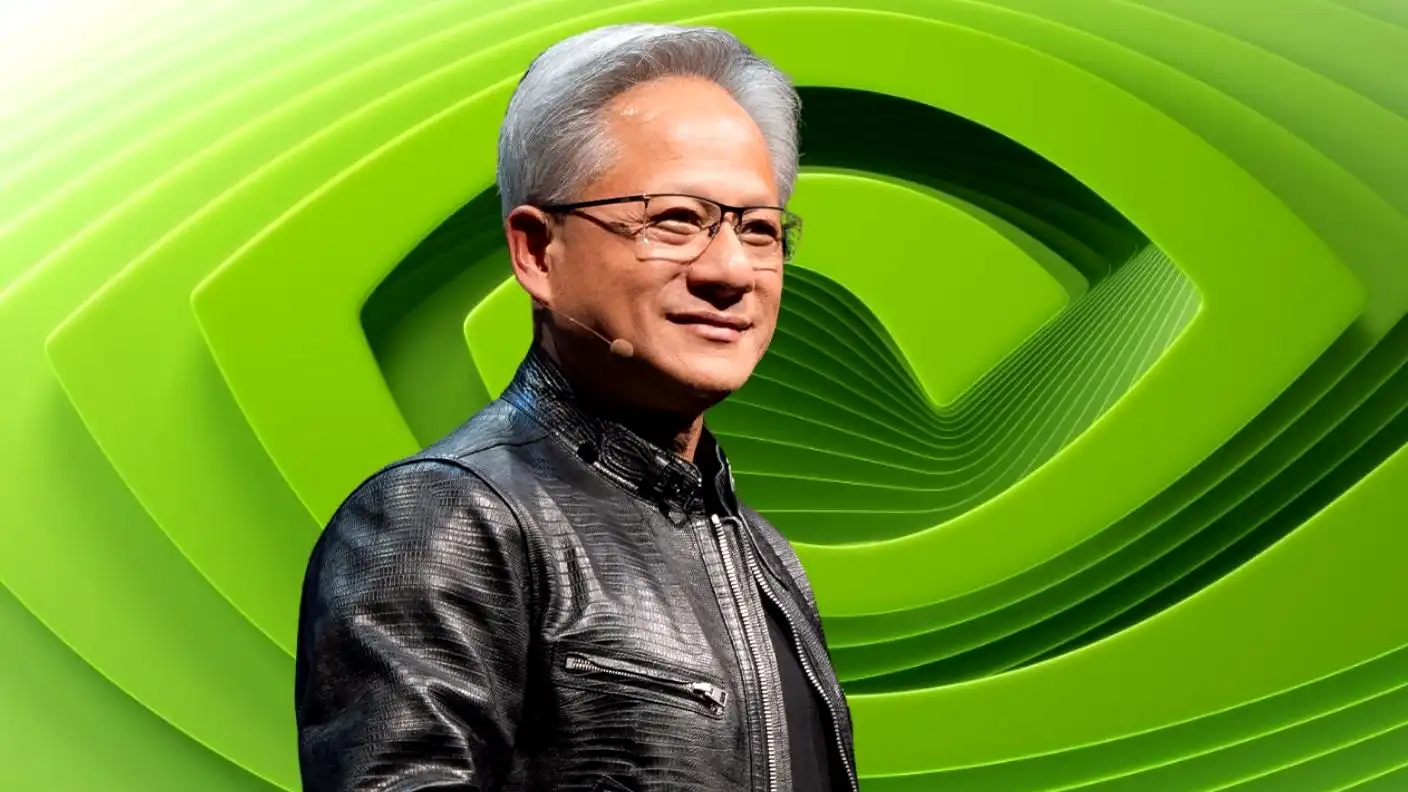
Nvidia’s Jensen Huang says society must actively construct “new social norms” to safely integrate and adapt to the rapid, unstoppable rise of artificial intelligence. Speaking during a recent media interview in Sherman, Texas, the chief executive officer of the world’s most valuable company stressed that humanity has no choice but to evolve alongside technology. The prominent tech leader, whose high-performance graphics processing units (GPUs) serve as the essential hardware backbone of the generative AI boom, urged citizens to directly engage with AI software rather than fearing its disruptive potential.
The chip executive believes that rather than widening economic inequalities, advanced software platforms are successfully closing the technological divide across America. Huang noted that the unique ability of modern AI models to build functional websites, analyze complex corporate documents, guide advanced scientific research, or even plan a home kitchen remodeling allows non-technical individuals to perform highly advanced computer work. By eliminating the historical requirement to know how to write software or program code, the technology has democratized access to the digital economy, enabling millions of creative minds to bring their ideas to life.
To help contextualize this massive transition, the 63-year-old tech pioneer compared the current societal anxiety over AI to the historical arrival of the automobile. He noted that when passenger cars first entered public streets over a century ago, early critics frequently portrayed them as dangerous, child-killing machines. However, instead of banning the technology, society chose to adapt by creating entirely new public safety norms, such as constructing dedicated sidewalks, painting pedestrian crosswalks, and teaching children not to play in the streets. Huang noted that just as the world adjusted to cars, it will successfully establish the necessary boundaries to co-exist with artificial intelligence.
Huang delivered these remarks before attending a groundbreaking ceremony for a major expansion of optical material manufacturer Coherent’s production facility in Sherman, Texas. The joint project is a key component of Nvidia’s broader, long-term strategy to scale up its local hardware supply chain and boost high-paying domestic manufacturing jobs. The executive argued that the installation of advanced automated systems inside factories will not result in mass unemployment, but will instead raise industrial productivity and create entirely new categories of high-skilled manufacturing roles, with the new Texas expansion serving as a primary test bed for this human-machine collaboration.
While expressing high optimism regarding the economic and scientific breakthroughs promised by the technology, the chief executive stressed that the sector requires robust government regulation and strict safety standards. He argued that because artificial intelligence has successfully become the primary engine driving U.S. stock market gains and broader macroeconomic growth, protecting these national digital systems is a matter of paramount national security. He called on state planners to collaborate closely with silicon designers to establish proactive guardrails, ensuring that proprietary domestic models do not fall into the hands of adversarial foreign actors.
The immense, global influence of Huang’s words reflects the unparalleled market power his company has established since the generative AI boom first took off three years ago. By anticipating the computing needs of deep learning and tailoring its graphics chips to train large language models, the Silicon Valley pioneer carved out an insurmountable lead over legacy processor competitors. This hardware monopoly has produced astonishing financial metrics, helping the company boost its annual revenues from a modest $27 billion in 2022 to over $216 billion last year, translating into a record-shattering $5.4 trillion corporate market capitalization.
To protect this valuable hardware lead from supply chain bottlenecks and geopolitical friction, the chipmaker is also executing massive capital investments across the Asia-Pacific region. The company recently announced plans to ramp up its annual purchasing and development spending with Taiwanese supply chain partners to an unprecedented $150 billion. By designating Taiwan as the absolute epicenter of the global hardware revolution, Huang’s strategic capital allocation ensures that his company maintains guaranteed access to the world’s most advanced semiconductor fabrication facilities, even as trade tensions between Washington and Beijing continue to escalate.
The historic warnings and policy suggestions delivered by the pioneer of modern computing highlight a permanent turning page for how humanity engages with technology. The comfortable era when developers could view artificial intelligence as a niche, experimental software tool has officially ended, replaced by a pervasive technology that is rapidly rewriting the rules of daily life and global commerce. As governments and developers work to establish these new social norms and safety standards over the coming years, the success of the transition will depend on our willingness to adapt. By proactively engaging with these advanced tools, society can transform automation from a disruptive threat into a powerful engine of human potential.