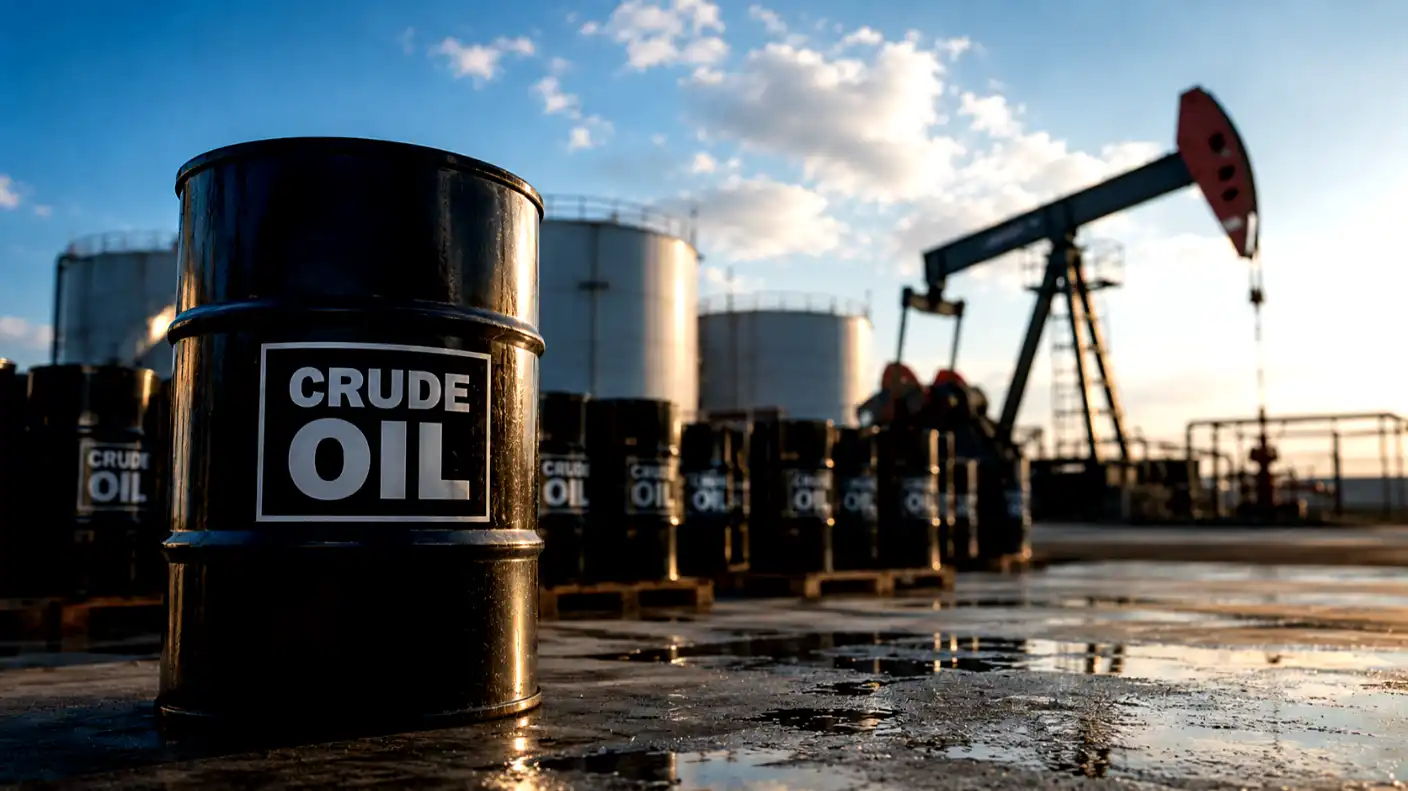
A sweeping diplomatic breakthrough has shifted the geopolitical and economic landscape of West Asia. On June 22, 2026, the United States Department of the Treasury issued a temporary, 60-day general license that waives severe sanctions on Iran’s energy sector. This decisive administrative action permits the production, delivery, and sale of Iranian crude oil, petrochemicals, and petroleum products through August 21, 2026. The decision directly follows an interim peace agreement signed in Switzerland by US President Donald Trump and Iranian negotiators, aimed at ending the devastating war that broke out earlier this year.
The temporary sanctions waiver represents a profound pivot in Washington’s foreign policy. After months of intense military engagements and highly punitive economic blockades, the US administration has opted for a phased economic normalization program. The move provides immediate relief to international energy markets, which have suffered from high volatility and supply shortages since the conflict began. By authorizing financial, shipping, and insurance transactions for Iranian energy products, the Treasury Department is actively laying the groundwork for a broader, permanent peace treaty.
The framework of the agreement hinges on mutual concessions. While the US eases its economic chokehold, Tehran has committed to taking significant steps to de-escalate regional tensions. Most notably, Iran has agreed to allow free transit through the Strait of Hormuz and to readmit international inspectors to monitor its nuclear infrastructure. These commitments address the central security concerns that originally triggered the war, transforming a destructive military conflict into a complex, high-stakes diplomatic process.
Understanding General License X
The Office of Foreign Assets Control, a specialized division of the US Treasury Department, formally designated the new waiver as General License X. This document authorizes a broad array of transactions that US law previously prohibited under strict anti-terrorism and counter-proliferation programs. Specifically, General License X permits the production, sale, transportation, and offloading of Iranian-origin crude oil and refined petroleum products. This legal authorization runs until 12:01 AM Eastern Daylight Time on August 21, 2026, matching the exact 60-day negotiating window established in the bilateral peace memorandum.
A crucial component of General License X is its coverage of secondary, supporting services. The waiver does not just legalize the purchase of the physical commodity; it also authorizes the entire logistical supply chain required to move oil from Iranian ports to global markets. Under the terms of the license, global maritime firms can legally provide vessel management, crewing, bunkering, piloting, registration, flagging, and salvage services for tankers carrying Iranian crude. Furthermore, international financial institutions and maritime insurance syndicates can now process payments and underwrite voyages in US dollars without fear of violating American sanctions.
Importantly, the license extends these permissions to tankers that previously appeared on the US Treasury’s sanctions blacklist. This detail ensures that Iran can immediately utilize its existing fleet of vessels to transport oil, avoiding the logistical bottlenecks that would occur if it had to secure entirely new, un-sanctioned transport fleets. However, the US Treasury Department has maintained several strict boundaries. General License X explicitly prohibits any transactions involving North Korea, Cuba, or Russian-occupied regions of Ukraine, ensuring that Washington’s broader geopolitical containment strategies remain intact.
The Context of the 2026 Iran War
To understand the magnitude of this sanctions waiver, one must examine the rapid escalation and severe toll of the 2026 Iran war. Hostilities began abruptly on February 28, 2026, when the United States and Israel launched a massive, coordinated air campaign against military and government sites inside Iran. Dubbed “Operation Epic Fury” by Washington, the initial strikes targeted Iranian air defenses, missile silos, and nuclear development facilities. The strikes resulted in the assassinations of several top Iranian officials, including the country’s long-serving Supreme Leader, Ayatollah Ali Khamenei.
Following the strikes, Iran’s Assembly of Experts quickly appointed Khamenei’s son, Mojtaba Khamenei, as the new Supreme Leader. Under this new leadership, Iran launched a fierce retaliatory campaign. Tehran deployed hundreds of ballistic missiles and explosive drones targeting US military bases in Iraq, Syria, Jordan, and Kuwait, as well as sites across Israel and key energy facilities in the Gulf states. The escalation quickly drew neighboring countries, including Saudi Arabia, the United Arab Emirates, and Kuwait, into defensive and retaliatory military actions, threatening to ignite a total regional conflagration.
The human and economic cost of the conflict escalated rapidly. Diplomatic sources estimate that more than 1,500 civilians lost their lives during the fighting, including at least 175 children who died in a highly controversial strike on an Iranian elementary school. The war also claimed the lives of 13 US service members. Financially, the conflict threw global markets into a panic, particularly after Iran effectively blocked shipping access to the Persian Gulf. The realization that a prolonged war would cause permanent damage to the global economy eventually pushed both Washington and Tehran to the negotiating table in Switzerland.
A Major Victory for Global Energy Security
The military conflict immediately jeopardized the global energy supply, primarily due to the vulnerability of the Strait of Hormuz. As a narrow waterway through which approximately 20% of the world’s daily petroleum consumption passes, any disruption in the Strait has immediate, worldwide consequences. When the war broke out in late February, Iran’s naval forces and coastal missile batteries effectively shut down commercial shipping through the channel. This action removed millions of barrels of crude oil from the daily global supply, forcing shipping lines to abandon the route or pay astronomical maritime insurance premiums.
The closure triggered a massive energy shock. Global oil prices spiked violently, with Brent crude climbing past $93 a barrel and recording a single-day surge of up to 13% during the opening phase of the crisis. Industrialized nations faced rising fuel costs, which threatened to undo years of delicate macroeconomic recovery and fuel domestic inflation. Consequently, the reopening of the Strait of Hormuz became a non-negotiable demand for the United States and its allies during the secret peace talks mediated in Switzerland.
Under the terms of the newly signed memorandum of understanding, Iran has committed to maintaining free, unhindered transit through the Strait. The agreement mandates that regional maritime traffic must return to its prewar levels within 30 days. The issuance of General License X serves as the economic reward for this commitment. By allowing global tankers to enter the region safely, the US has successfully restored stability to the Persian Gulf. Global energy markets reacted to the policy shift, with key oil benchmarks like West Texas Intermediate dropping by 1.5% within hours of the announcement as traders anticipated a steady influx of supply.
The Economics of China’s Teapot Refineries
Prior to the outbreak of the war, Iran’s oil export economy survived largely due to a network of independent, privately owned refineries in China. Commonly referred to in the energy industry as “teapot” refineries, these facilities are highly concentrated in China’s Shandong province. Because these independent operators had minimal business exposure to the United States financial system, they were uniquely positioned to ignore Washington’s secondary sanctions. They purchased Iranian crude through opaque, underground channels, utilizing complex ship-to-ship transfers and localized currencies to hide the origin of the oil.
However, this illicit trade came at a steep price for Tehran. Because Iran could not sell its oil on the open market, Chinese teapot refineries demanded massive discounts, often purchasing Iranian crude at rates far below global benchmarks. This arrangement allowed China to secure cheap energy while limiting Iran’s actual profit margins. US officials acknowledged that their previous maximum-pressure sanctions campaign did not completely stop Iranian exports to China; instead, it merely forced the trade into dark networks and deprived the US of regulatory oversight.
The implementation of General License X fundamentally alters this economic dynamic. By granting a formal sanctions waiver, the US Treasury has effectively brought this underground trade into the light. Chinese independent refineries can now buy Iranian crude openly and legally, utilizing standard maritime insurance and paying in US dollars. For Iran, this removes the necessity of offering steep, desperate discounts, allowing the government to capture full market value for its natural resources. For the global market, it brings a massive volume of previously discounted, hidden crude into official supply calculations, helping to depress global prices and stabilize retail fuel costs for consumers worldwide.
The Role of International Inspection and Nuclear Oversight
The central casus belli of the 2026 war was Iran’s rapidly advancing nuclear program and its refusal to cooperate with international monitoring agencies. Washington and Jerusalem launched their initial air campaign under the belief that Iran was on the verge of developing a nuclear weapon. Therefore, any diplomatic path toward ending the war required Tehran to make verifiable concessions regarding its nuclear facilities. The temporary sanctions waiver is not an act of unilateral trust; rather, it is a strictly conditional incentive tied to rigorous, on-the-ground compliance.
As part of the Swiss peace framework, Supreme Leader Mojtaba Khamenei’s government has formally agreed to permit inspectors from the International Atomic Energy Agency (IAEA) back into the country. These inspectors will have unrestricted access to key nuclear sites, including enrichment facilities that were targeted during the initial US and Israeli airstrikes. This return of international oversight represents a major diplomatic victory for the Trump administration, which has long argued that a combination of overwhelming military force and pragmatic deal-making is the only way to secure real concessions from Tehran.
The 60-day duration of General License X serves as a testing period. US Treasury Secretary Scott Bessent and Vice President JD Vance, who led the American negotiating team in Switzerland, have made it clear that the waiver can be revoked at any moment if Iran restricts inspector access or violates the terms of the memorandum. This “snapback” mechanism ensures that Washington retains leverage. The next two months will determine whether the two nations can transition this temporary cease-fire into a permanent, comprehensive treaty that permanently restricts Iran’s nuclear ambitions in exchange for lasting economic integration.
Rebuilding and the Future $300 Billion Aid Package
The physical destruction inside Iran after months of intensive airstrikes is immense. Key transport networks, power grids, and military installations require extensive repairs. To incentivize Iran to sign a final, permanent peace treaty, the interim agreement outlines a highly ambitious post-war rehabilitation and economic development plan. According to leaked drafts of the memorandum, the United States and its regional partners have agreed to coordinate a massive international reconstruction fund.
This proposed fund would provide at least $300 billion in financing to rebuild Iran’s civilian infrastructure and modernize its battered energy sector. Additionally, the agreement envisions the gradual release of dozens of billions of dollars in Iranian assets that have been frozen in foreign bank accounts for years. The US has committed to making these funds fully available to Tehran, though the exact timeline and security safeguards for the release remain subject to ongoing negotiations.
For the new Supreme Leader, Mojtaba Khamenei, this economic package is essential for his political survival. Iran entered the 2026 war in a weakened domestic state, plagued by widespread public protests, high inflation, and failing public infrastructure. The physical destruction of the war has only worsened these domestic pressures. By securing the right to sell oil freely under General License X and gaining access to a multi-billion-dollar reconstruction fund, Mojtaba Khamenei can demonstrate tangible economic relief to a weary and restless population. However, this lifeline is entirely contingent on his willingness to cooperate with the West during the upcoming 60 days of intensive talks.
Regional Reactions and the Political Fallout
The sudden shift from active combat to diplomatic rapprochement has sent shockwaves through the Middle East, drawing wildly different reactions from regional powers. In Israel, the peace agreement has met with intense domestic opposition. Prime Minister Benjamin Netanyahu and his security cabinet view the 60-day sanctions waiver as a major setback. Critics in Jerusalem argue that the deal stops the war prematurely, leaving Iran’s nuclear infrastructure damaged but not fully destroyed. They fear that the immediate economic relief provided by General License X will allow Iran to rebuild its military capabilities and continue funding its regional proxy networks, such as Hezbollah in Lebanon and the Houthis in Yemen.
In contrast, the Gulf Arab states—specifically Saudi Arabia, the United Arab Emirates, and Qatar—have warmly welcomed the de-escalation. During the fighting, these countries found themselves directly in the line of fire, suffering retaliatory drone and missile strikes from Iran that threatened their vital oil terminals and multi-billion-dollar tourism and financial hubs. Leaders in Riyadh and Abu Dhabi actively mediated behind the scenes to push Washington and Tehran toward a cease-fire. For these nations, a stabilized Strait of Hormuz and a normalized Iran are essential for maintaining regional economic growth and securing foreign investment.
In the United States, the announcement of General License X has sparked a heated domestic political debate. The Trump-Vance administration has vigorously defended the policy as a masterclass in pragmatic diplomacy. They argue that continuing the war would have dragged the United States into another endless, multi-trillion-dollar military occupation in the Middle East. By utilizing targeted military strikes to eliminate Iran’s senior leadership and then pivoting to economic deal-making, the administration claims it has successfully protected American interests, brought home troops, and lowered global energy prices without committing to a costly ground invasion.
Market and Investment Implications
The immediate release of General License X has forced global financial institutions, logistics providers, and maritime insurers to rapidly update their compliance protocols. For years, the global compliance industry operated under a highly restrictive regime where any contact with Iranian assets could result in ruinous fines and exclusion from the US banking system. Now, legal teams are parsing the specific language of the 60-day waiver to identify new commercial opportunities.
The explicit inclusion of shipping services under the waiver is particularly significant for the maritime transport sector. Insurance syndicates, which previously refused to underwrite any vessel entering Iranian waters, can now legally insure tankers carrying Iranian crude. This changes the risk calculation for global shipping, potentially lowering overall freight costs and increasing the efficiency of global supply chains. Furthermore, the authorization of banking transactions in US dollars means that international banks can process these lucrative energy deals directly, avoiding the complex barter systems and obscure regional currencies that characterized the pre-war black market.
However, financial analysts warn that the 60-day window is incredibly narrow. Because the waiver is temporary and highly dependent on delicate political negotiations, many conservative Wall Street firms and major international oil companies may hesitate to sign long-term supply contracts. Instead, the market is likely to see a surge in short-term, spot-market transactions, led by flexible independent traders and state-backed entities that can move quickly to secure oil before the August 21 deadline.
The peace process initiated in Switzerland remains incredibly fragile. While General License X offers a clear economic path forward, the fundamental ideological differences between Washington and Tehran have not disappeared. The next two months will test whether economic incentives can permanently replace military conflict as the primary tool of diplomacy in West Asia.