The global energy market is experiencing a massive shift in supply dynamics. In June 2026, Russia’s seaborne oil exports climbed to their highest level of the year, defying a relentless, months-long campaign of Ukrainian drone strikes targeting the Kremlin’s domestic energy infrastructure. However, as Moscow floods international markets with raw crude to make up for a decline in refined fuel production, it is running straight into a massive new competitive threat.
The United States has formally authorized Iranian oil sales under a temporary general license, following an interim peace agreement between Washington and Tehran. This diplomatic breakthrough threatens to unleash a massive wave of Iranian oil onto the global market, driving down prices and cutting directly into Russia’s crucial war chest.
This sudden convergence of physical disruption and diplomatic maneuvering has created a highly volatile environment for global crude benchmarks. For much of the spring, global energy prices hovered near multi-year highs, driven by the effective closure of the strategic Strait of Hormuz.
Now, with Russia maximizing its raw crude exports and Iran preparing to officially return to the global market, supply concerns are rapidly easing. For Western central bankers struggling to control inflation, this sudden supply surge represents a highly welcome development.
For the Kremlin, however, it represents a severe financial challenge, as tumbling crude prices force Russia to export higher volumes of oil just to maintain its current revenue levels.
The Numbers Behind Russia’s Seaborne Export Surge
The volume of oil currently moving out of Russian ports is staggering. According to comprehensive ship-tracking data compiled by Bloomberg, Russia’s average seaborne crude oil shipments reached 3.83 million barrels per day in the four weeks leading up to June 14, 2026. This represents the fastest pace of exports recorded so far this year.
Since the beginning of 2026, Russia’s seaborne crude shipments have averaged 3.49 million barrels per day, comfortably beating the full-year averages recorded in 2023, 2024, and 2025.
The primary driver of this export surge is a physical paradox. Since the spring, Ukraine has significantly ramped up its long-range drone campaign, launching at least 31 separate attacks on Russian oil refineries, pipeline nodes, and coastal export terminals in May alone.
These strikes successfully knocked out substantial domestic refining capacity, forcing multiple facilities to temporarily shut down or drastically cut their output. At various points in 2026, drone damage idled a significant share of Russia’s domestic oil processing capabilities, leading to localized gasoline shortages and forcing several Russian regions to implement strict fuel rationing for private vehicles.
However, while these strikes severely damaged Russia’s ability to refine raw crude into finished products like gasoline, diesel, and jet fuel, they did not stop the flow of oil out of the ground. Because oil wells cannot easily be turned off without causing long-term damage to the geological reservoirs, Russian producers had to find a new home for their raw crude.
With domestic refineries offline, Russia had no choice but to divert this raw crude directly to its seaborne export terminals. Consequently, seaborne exports of raw crude climbed to wartime highs, even as domestic oil production actually declined in May to 9.009 million barrels per day, falling 690,000 barrels per day below Russia’s required level under its OPEC+ agreement.
The Iranian Competition: The US Sanctions Waiver
While Russia has successfully rerouted its raw crude to export markets, the sustainability of its financial windfall is facing an immediate threat from a major geopolitical shift.
The Geneva Interim Peace Agreement
The strategic landscape of the Middle East underwent a historic transformation when diplomats formally signed an interim peace agreement between the United States and Iran in Switzerland. The agreement aims to establish a permanent de-escalation of the regional conflict that has disrupted global shipping lanes since February 2026.
As part of this diplomatic breakthrough, the US Treasury Department issued a temporary general license allowing the production, delivery, and sale of Iranian-origin crude oil, petroleum products, and petrochemicals through August 21, 2026.
This temporary waiver represents a massive shift in global energy policy. For the first time in decades, the United States has authorized Iran to market and sell its crude oil in US dollars, removing the legal, financial, and logistical barriers that had previously restricted Iranian sales to the gray market.
While the ultimate durability of the peace deal remains to be seen, the immediate prospect of millions of barrels of official, non-sanctioned Iranian crude entering the market has completely altered global supply expectations.
Reopening the Strait of Hormuz
The primary physical benefit of the US-Iran peace agreement is the planned reopening of the Strait of Hormuz. The strategic waterway, which handles more than 20% of the world’s daily petroleum shipments, had been effectively closed to international transit since the outbreak of the regional war in February, trapping more than 400 oil tankers on the water and forcing shipping companies to take longer, more expensive routes around the southern tip of Africa.
Following the diplomatic breakthrough, shipping companies and tanker operators have already begun repositioning their vessels in anticipation of a gradual, supervised reopening of the strait.
Although maritime security experts warn that clearing the backlog of stranded cargo and restoring full shipping confidence will take time due to remaining security concerns, the market has already begun pricing in the return of these massive oil flows. This has significantly reduced the geopolitical risk premium that had kept energy prices elevated for months.
The Impact on Global Benchmarks and Urals Crude
The combination of surging Russian exports and the imminent return of Iranian crude has triggered a sharp downward correction in global oil prices. Brent and West Texas Intermediate (WTI) benchmarks both fell significantly, tracking expectations that global inventories will quickly recover in the second half of the year.
This international price pullback has hit Russia’s flagship Urals crude particularly hard. Urals crude fell below $65 per barrel, trading near $64.42, marking a massive decline from its historic peak of $124.85 recorded in April 2026 when the closure of the Strait of Hormuz was at its height.
During the height of the Middle East crisis, Russia had briefly succeeded in marketing its oil at close to open-market prices, as the United States eased some price-cap restrictions to prevent a global energy panic.
With those emergency measures now ending and cheaper Iranian oil entering the market, Urals crude is once again trading at a deep discount, severely cutting into Moscow’s export revenues and limiting the Kremlin’s ability to fund its military operations.
The Changing Buying Patterns of China and India
The shifting supply dynamics are also forcing Russia’s two largest buyers, China and India, to adjust their purchasing strategies, creating a highly competitive environment for seaborne crude.
China’s Double-Edged Procurement
China has long acted as a primary buyer of both Russian and Iranian crude, utilizing its massive refining sector to absorb discounted seaborne barrels. In May and June, China’s imports of Russian seaborne crude remained highly robust, with the vast majority consisting of premium East Siberia-Pacific Ocean (ESPO) grade crude shipped from the Pacific port of Nakhodka.
Additionally, China is preparing a second liquefied natural gas (LNG) import terminal in Longkou, Shandong province, to handle cargoes from Russia’s sanctioned Arctic LNG 2 project, offering Moscow another vital outlet for its energy exports.
However, the return of official Iranian crude presents a complicated challenge for Russian marketers in China. In May, imports of Russian crude unloaded at China’s Dongjiakou oil terminal surged by 144%, correlating with a significant 66% month-on-month decrease in imports from Iran’s Kharg Island, as local shipping friction and high insurance costs temporarily limited Iranian sales.
With the new US sanctions waiver in place, Iranian oil can now be shipped and processed legally, allowing Tehran to offer highly competitive pricing to Chinese independent refiners. This increased competition from Iran will likely force Russia to offer even deeper discounts on its Urals and ESPO grades to defend its market share in China.
India’s Massive Hydrocarbon Intake
India has also emerged as a dominant buyer of Russian energy, importing a total of EUR 5.8 billion of Russian hydrocarbons in May alone. Crude oil made up the vast majority of these purchases, totaling EUR 4.8 billion, with refined oil products and coal accounting for the remainder of the monthly imports.
India’s total crude import volumes recorded an 8% month-on-month increase in May, partially explained by a 21% jump in seaborne crude loadings at Russia’s Baltic and Black Sea ports.
Indian refiners have proven highly adept at processing discounted Russian Urals crude, blending it with other grades to produce refined fuels for domestic use and export to European markets.
However, like China, Indian buyers are highly price-sensitive. If the return of Iranian crude drives down global oil benchmarks, Indian refiners will gain significant leverage, allowing them to demand even steeper discounts from Russian sellers.
The Physical Constraints: Dark Fleets and Gas Flaring
As Russia maximizes its seaborne exports, the physical infrastructure supporting this massive trade is showing signs of intense strain, leading to logistical bottlenecks and environmental damage.
The Shadow Fleet Congestion at Sea
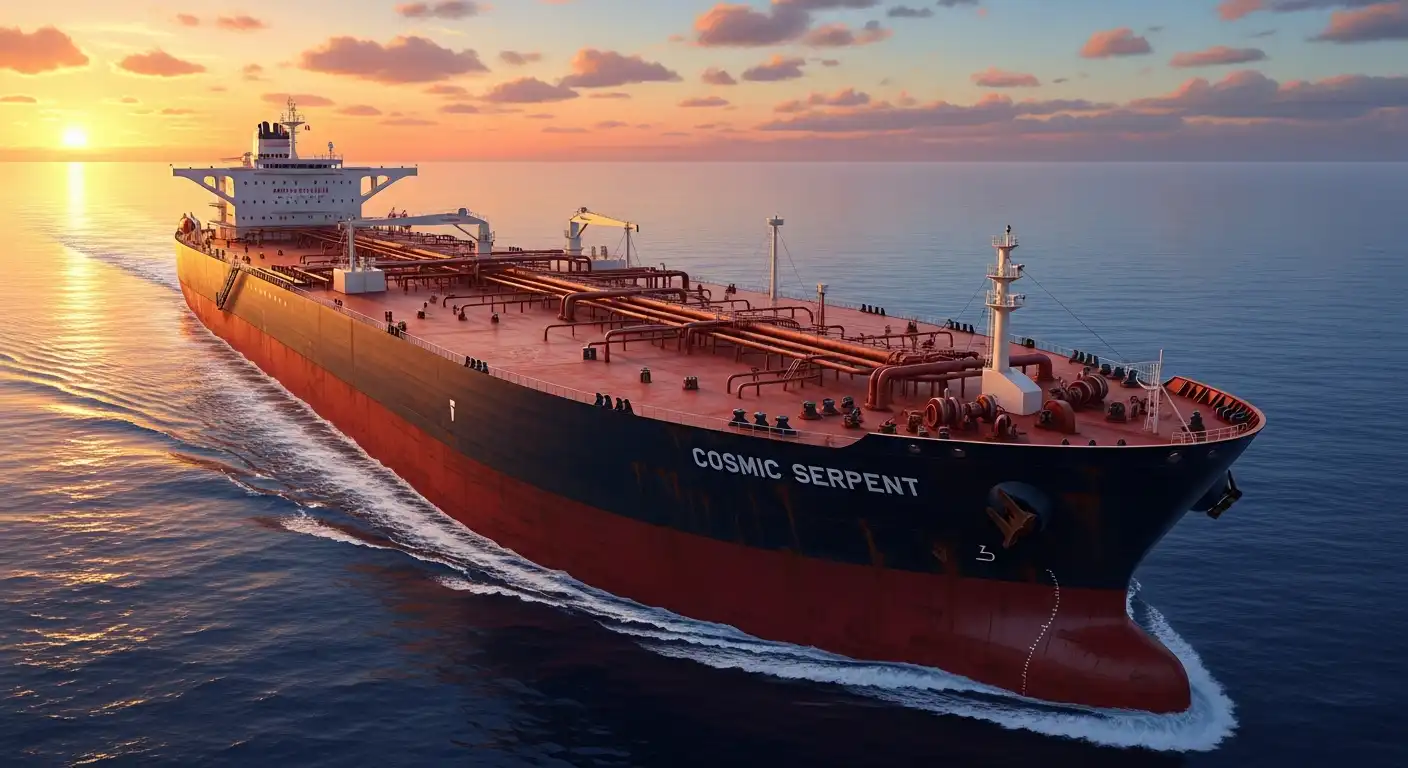
To bypass Western sanctions and the G7 price cap, Russia has built a massive “shadow fleet” of older, unregulated tankers operating under false flags. In June, the volume of Russian oil sitting in transit or floating storage at sea reached a massive 120 million barrels, representing a 25% increase compared to April.
The seaborne trade has become highly dependent on these shadow vessels. According to monthly export data, sanctioned shadow tankers carried 54% of Russia’s total fossil fuel exports, while G7-compliant tankers transported a further 44%, with the remainder being carried by non-sanctioned independent vessels.
This high reliance on older, poorly maintained ships is creating significant logistical risks. Many of these shadow vessels are operating under flags of convenience, lacking proper international maritime insurance or regular safety inspections.
As global port authorities step up their scrutiny of these high-risk vessels, multiple shadow tankers have been forced to sit idle at sea for months without loading or unloading their cargoes, creating localized shipping congestion and raising the risk of environmental disasters in busy shipping lanes.
The Environmental Toll: A Surge in Gas Flaring
The physical disruptions to Russia’s domestic refining sector have also had a severe environmental impact. According to new data published by the World Bank, global gas flaring rose to its highest level in six years, driven primarily by increased industrial activity in Russia and Iran.
Gas flaring occurs when natural gas produced alongside crude oil is burned off instead of being captured and processed for commercial use. The World Bank report noted that Russia, Iran, and Iraq together accounted for roughly half of all global flaring.
The practice reached a global volume of 167 billion cubic meters, wasting an estimated $54 billion worth of energy.
Because Ukrainian drone strikes forced multiple Russian refineries to shut down, Russian oil producers had to rapidly increase their raw crude production for direct export.
Because the local infrastructure was not equipped to capture the excess natural gas associated with this surge in raw crude output, producers simply burned it off, releasing massive amounts of carbon dioxide and methane into the atmosphere.
Future Outlook for the Global Energy Market
The simultaneous surge in Russian seaborne exports and the diplomatic return of Iran have created a highly bearish outlook for global energy prices. The prospect of an additional 1 to 1.5 million barrels per day of official Iranian crude entering the market over the coming months will likely keep global oil prices relatively subdued, capping any potential rallies driven by OPEC+ production cuts.
While this supply surge is a positive development for Western consumers at the pump, it presents a difficult challenge for the OPEC+ alliance. Russia has consistently struggled to meet its required production cuts, choosing instead to maximize its seaborne exports to fund its domestic war efforts.
With Iran now preparing to expand its own market share under the US waiver, the cohesion of the oil-producing cartel will be put to a severe test, as individual member states compete for market share in a falling price environment.
A Structural Shift in Energy Geopolitics
The global energy market is undergoing a profound structural transformation. Russia’s ability to achieve a 2026 export peak despite relentless Ukrainian drone strikes on its refineries is a powerful demonstration of Moscow’s industrial adaptability, showing that the Kremlin can quickly reroute its resources to keep cash flowing into its war chest.
Yet, this export boom is running straight into a major geopolitical countermove. The US-Iran peace agreement and the subsequent sanctions waiver have introduced a formidable competitor to the global market, driving down oil benchmarks and cutting directly into Russia’s export margins.
As the battle for market share in China and India intensifies, the Kremlin will be forced to offer even deeper discounts on its crude, proving that in the modern energy landscape, volume alone is not enough to secure financial victory.
Ultimately, the easing of Middle East tensions and the return of Iranian oil have shifted the balance of power, leaving Russia to navigate a low-price environment that will put its economic resilience to the ultimate test.