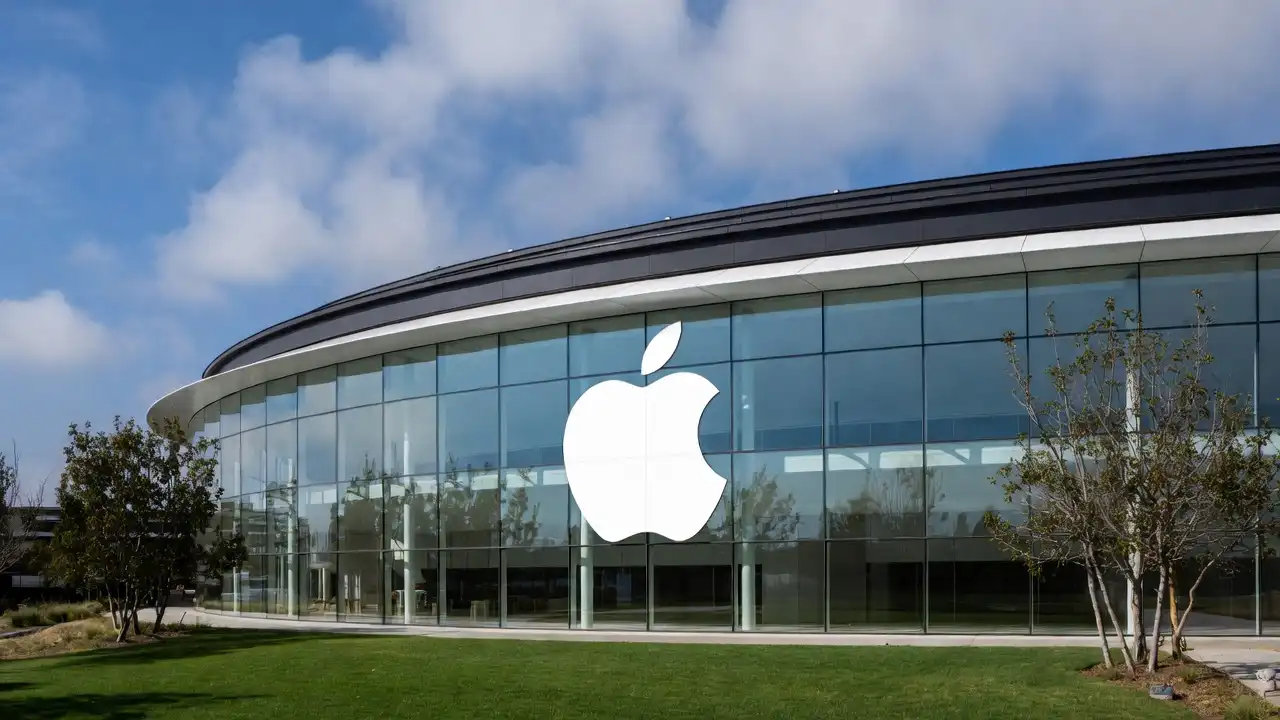
The relationship between the world’s most valuable technology company and the pioneer of personal computer silicon has taken a historic turn. In mid-June 2026, President Donald Trump announced that Apple had agreed to partner with Intel to design and manufacture its custom chips domestically in the United States. While neither company has issued a formal joint statement, the news immediately sent shockwaves through the global technology and financial sectors.
This alliance combines a clear strategic necessity with a bold domestic ambition. Apple has spent years searching for a way to diversify its manufacturing footprint and reduce its reliance on a single supplier, while Intel has focused on rebuilding its credibility as a world-class contract manufacturer. By bringing Apple’s massive chip volume to American soil, the partnership validates Washington’s long-term push to rebuild domestic semiconductor production.
However, a major reality check looms over this high-profile deal. Semiconductor manufacturing is an incredibly slow and complex process. Industry analysts warn that it will take at least two to three years of intense engineering work before any advanced, Intel-made Apple chips roll off the assembly line. Because designing, testing, and scaling new silicon nodes requires extreme precision, the strategic benefits of this partnership will not translate into market-ready products until the end of the decade.
The Logic Behind a Surprising Alliance
To understand why Apple decided to work with Intel, one must examine the extreme supply chain pressures currently facing the tech industry. For nearly a decade, Apple has relied almost exclusively on Taiwan Semiconductor Manufacturing Company (TSMC) to fabricate its highly advanced A-series and M-series processors. While this relationship allowed Apple to lead the industry in performance, it also created a major concentration risk.
Escaping the Solitary Hold of TSMC
As artificial intelligence applications explode globally, the competition for advanced chip manufacturing capacity has reached a fever pitch. Tech giants like Nvidia, Advanced Micro Devices (AMD), and other massive cloud providers are competing aggressively for the same leading-edge manufacturing lines at TSMC. Consequently, Apple has faced tightening allocation windows, even as its own demand for hardware continues to climb.
This bottleneck has had a measurable impact on Apple’s business performance. Apple Chief Executive Officer Tim Cook previously acknowledged that supply constraints at its contract manufacturer have actively held back iPhone sales. Additionally, a global surge in memory chip pricing has begun to squeeze Apple’s hardware margins. Cook publicly noted that the pricing situation had become unsustainable, making retail price increases almost unavoidable.
By partnering with Intel, Apple secures a critical secondary source of manufacturing capacity. This diversification protects the company from regional geopolitical tensions, global transport bottlenecks, and the intense allocation fights currently playing out at TSMC’s factories in Taiwan.
Rebuilding Intel’s Credibility as a Contract Foundry
For Intel, securing Apple as a foundry customer is the ultimate validation of its business turnaround strategy. For the past 18 months, Intel Chief Executive Officer Pat Gelsinger has focused on transforming the company into a major contract manufacturer capable of competing directly with TSMC and Samsung. Gelsinger positioned Intel Foundry as the western hemisphere’s answer to supply chain vulnerability—a highly advanced, domestic fabrication facility backed by the United States government.
Landing a marquee customer like Apple does more for Intel’s reputation than any government contract or subsidy ever could. Apple has notoriously high standards for manufacturing quality, schedule adherence, and engineering support.
If Intel can successfully manufacture silicon that meets Apple’s strict criteria, it will prove to the entire tech industry that its factories are ready to handle the most demanding workloads in the world. This credibility boost is already showing up in the company’s financials, with Intel Foundry revenue accelerating 16% to reach $5.4 billion in the first quarter of fiscal 2026.
Navigating the Multi-Year Technical Reality Check
While the strategic logic of the deal is flawless, the technical execution presents a massive engineering challenge. Moving a chip design from one factory’s manufacturing process to another is not as simple as sending a digital file to a different printer. It requires years of custom redesign, testing, and calibration.
The Long Road from Design to Silicon Yield
The absolute best-case scenario for the partnership is two to three years of development before the first production chips flow off the line. Designing a highly complex system-on-chip (SoC) for a modern consumer device takes up to two years. Once the design is complete, the factory must spend several months ramping up production and calibrating its machines to maximize yield.
In the semiconductor world, “yield” is the most critical metric of financial success. It represents the percentage of functioning, defect-free chips on a single silicon wafer at the end of the manufacturing run.
TSMC has led the industry for years because its factories consistently deliver exceptionally high yields, making chip production highly cost-effective. Intel, on the other hand, has historically struggled with yield issues, process delays, and quality control. If Intel cannot quickly match the yield standards that Apple has come to expect from TSMC, the partnership will turn into an incredibly expensive commercial gamble.
Selecting the Right Node: From 18A to the Advanced 14A Process
Analysts are currently split on which specific manufacturing process Apple will choose for its Intel-built chips. Some believe Apple will target Intel’s next-generation “14A” process technology. This node utilizes the world’s most advanced extreme ultraviolet (EUV) photolithography tools, but the process is not expected to reach high-volume production until 2028 or 2029.
Others expect Apple to sacrifice cutting-edge performance gains in exchange for reliability, opting instead for Intel’s 18A-P process—a refined version of Intel’s most advanced node that began initial production in June 2026. Alternatively, Apple could choose an older, highly stable node like Intel 3 to minimize risk.
To protect its primary product lines, Apple is highly likely to hedge its bets. Rather than trusting Intel with its flagship iPhone processors right away, the company will likely focus its initial work on less critical, lower-end components. These initial chips are expected to power entry-level devices, such as the MacBook Air or certain iPad Pro models, allowing both companies to test and refine their collaborative manufacturing processes before committing to high-volume, flagship silicon.
Washington’s Strategic Hand and Geopolitical Shifts
The partnership between Apple and Intel is not just a commercial transaction; it is a highly coordinated geopolitical maneuver. The deal reflects the U.S. government’s aggressive efforts to repatriate critical technology manufacturing and secure local supply chains.
The Political Push for Made-in-America AI Chips
The U.S. government has used a combination of financial incentives, tariffs, and direct political pressure to rebuild domestic chipmaking. Intel has emerged as a key pillar of this national strategy. Under the guidance of the federal government, the silicon pioneer has secured a 10% state-backed equity stake and a massive $5 billion investment from Nvidia to support its foundry expansion.
President Donald Trump’s direct involvement in announcing the partnership on social media highlights the political importance of the deal. By securing a commitment from Apple, the administration can point to a tangible, high-profile victory for its “Made in America” manufacturing push. This political backing provides Intel with the long-term financial stability and regulatory support needed to build out its expensive, multi-billion-dollar fabrication facilities in states like Ohio, Oregon, and Arizona.
The Squeeze of Global Supply Chains and Memory Price Surges
The push for domestic manufacturing is also a direct response to a highly volatile global logistics environment. The semiconductor industry has faced a series of supply chain shocks, ranging from shipping delays in the Middle East to escalating trade tensions in East Asia.
At the same time, a sharp spike in memory chip pricing has begun to threaten the profit margins of hardware developers. When global component costs rise, companies have less flexibility to absorb manufacturing delays or shipping disruptions.
By establishing a secure, domestic manufacturing pipeline with Intel, Apple insulates its business from these unpredictable international forces. Even if a geopolitical crisis disrupts shipping lanes in the Pacific, Apple will have a reliable, local source of silicon to keep its assembly lines running, transforming the deal into a vital national insurance policy.
Financial and Market Waves Across the Semiconductor Sector
The announcement of the partnership triggered an immediate, historic rally across the entire semiconductor industry. Investors read the news as a clear signal that the global foundry landscape is permanently splitting away from its historical, single-supplier model, unleashing a massive wave of capital.
On the day following the announcement, Intel stock surged 10.64% to close at $133.99 per share. This single-day move capped a spectacular run for the silicon pioneer, pushing the stock up more than 500% year-over-year. The rally was not limited to Intel; the Philadelphia Semiconductor Index (SOX) advanced more than 6% to hit a record, while international chipmakers like Samsung and SK Hynix also reached historic highs in South Korea.
This widespread optimism is driven by the sheer scale of the modern technology market. The global semiconductor industry is projected to exceed $1.5 trillion in 2026, marking the first time the market will break the $1 trillion barrier, fueled entirely by massive capital spending on artificial intelligence infrastructure.
By securing Apple as a validation customer, Intel positions its foundry business to capture a significant share of this multi-trillion-dollar market. If Intel can successfully manufacture Apple-quality silicon, every major cloud provider and AI developer in the world will be taking notes, opening the door for Intel to challenge TSMC’s long-standing monopoly.
The Long Journey to Domestic Silicon
The chipmaking partnership between Apple and Intel represents a monumental strategic victory for both companies and a major milestone for American manufacturing. By combining Apple’s search for secure capacity with Intel’s ambitious foundry turnaround, the deal provides a viable, long-term roadmap to diversify the global semiconductor supply chain and protect critical technology infrastructure.
However, both companies must now navigate a long, highly complex, and risk-filled engineering journey. Turning a preliminary agreement into working, high-volume silicon will require years of intense collaboration, massive capital investment, and flawless execution.
If Intel can overcome its historical yield struggles and deliver reliable Apple-quality chips by the end of the decade, it will cement its position as a global foundry powerhouse. Until then, the tech industry will watch closely as these two giants work to translate a highly promising paper agreement into the physical machinery of the modern digital economy.