

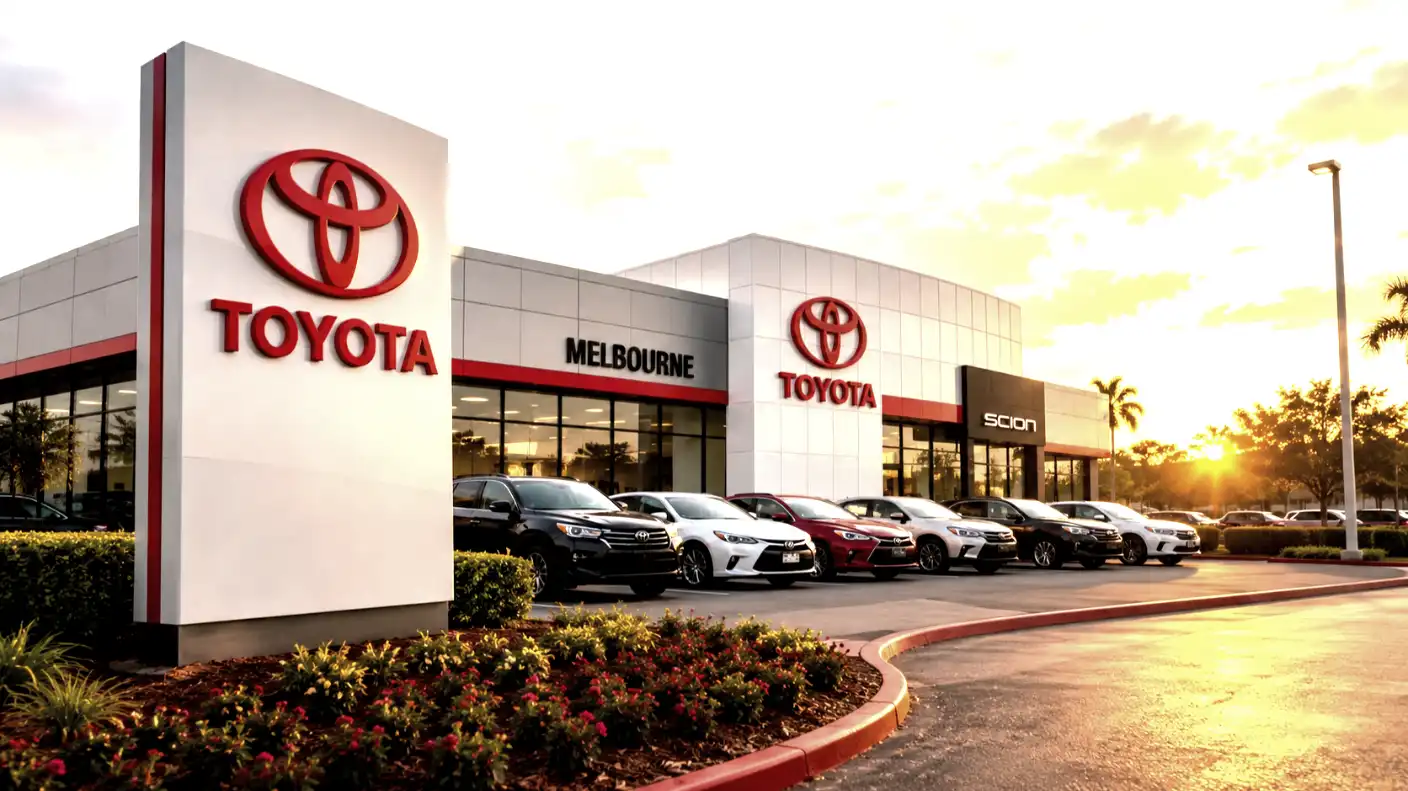
A quiet revolution is reshaping the American automotive industry. For nearly a century, Detroit’s legacy giant, General Motors, has reigned almost uninterrupted as the top-selling automaker in the United States. However, changing consumer preferences, high inflation, and a major strategic divide over the path to vehicle electrification have brought a foreign competitor within striking distance of the crown.
According to a comprehensive mid-year forecast released by Cox Automotive, Japanese manufacturing giant Toyota is rapidly closing the sales gap with General Motors in the U.S. market. The driving force behind this historic shift is a massive surge in Toyota hybrid demand, coupled with a sharp industry-wide slowdown in the adoption of all-electric vehicles (EVs).
The data suggests that the era of uncontested domestic dominance for General Motors is facing its most significant challenge in decades. As American car buyers turn away from expensive, battery-only vehicles and seek out practical, fuel-efficient alternatives, the strategic decisions made by both corporate boardrooms years ago are finally playing out on dealership lots across the country.
The Historical Battle for the U.S. Sales Crown
To understand the significance of the narrowing sales gap, one must look back at the history of the American auto market. General Motors has held the title of the best-selling automaker in the United States since 1931, when it permanently overtook Ford. For ninety-five years, GM’s vast portfolio of brands—including Chevrolet, GMC, Buick, and Cadillac—allowed it to dominate every segment of the domestic market, from compact sedans to massive family SUVs and working trucks.
The single exception to this historic run occurred in 2021. During the height of the global coronavirus pandemic, severe semiconductor shortages and shipping bottlenecks crippled domestic manufacturing lines. Toyota, which had built a more resilient global supply chain and maintained larger stockpiles of critical components, managed to keep its factories running while GM’s assembly lines ground to a halt. As a result, Toyota briefly surpassed GM to become the top-selling automaker in the United States for the first time in history.
The win was celebrated in Japan, with Toyota’s chairman and company scion, Akio Toyoda, famously admitting he did a “happy dance” upon hearing the news. However, Toyota executives were realistic, acknowledging that the victory was an anomaly driven by temporary supply chain distortions rather than a permanent shift in consumer demand. By 2022, GM had restored its supply chains and reclaimed its crown.
But the situation playing out in 2026 is entirely different. Toyota’s current surge is not a fluke caused by missing microchips or closed shipping ports. Instead, it is the direct result of a fundamental shift in what American consumers want to buy, making the threat to General Motors far more permanent and alarming.
Decoding the Hybrid vs. EV Strategic Divide
The current sales battle highlights a massive strategic gamble that divided the automotive industry five years ago. When the pressure to transition away from fossil fuels intensified, global automakers took two completely different paths.
Toyota’s Big Bet on Multi-Path and Hybrid Engineering
For years, Toyota faced intense criticism from environmental organizations, tech enthusiasts, and Wall Street analysts for its sluggish transition to all-electric vehicles. While competitors promised to phase out internal combustion engines entirely, Toyota’s leadership advocated for a “multi-pathway” approach to carbon reduction.
The company argued that the global charging infrastructure was not ready for a rapid transition to battery-electric vehicles (BEVs), and that a lack of raw battery materials meant the most efficient way to reduce overall emissions was to put hybrid powertrains in millions of vehicles rather than full batteries in a select few.
Instead of spending all of its capital on battery-only platforms, Toyota continued to refine and expand its hybrid lineup. By 2026, the company offered more than 20 distinct gasoline-electric hybrid models across its Toyota and Lexus brands. The strategy reached its peak with the decision to make core, high-volume models like the redesigned Camry sedan and the popular RAV4 crossover exclusively available as hybrids or plug-in hybrids.
This product-planning decision has paid off handsomely. Through May, Toyota’s “electrified” sales—which consist almost entirely of traditional hybrids—grew by 5.6% in a contracting market, demonstrating that consumers are eager to buy partial electrification when it is integrated into reliable, familiar vehicles.
General Motors and the High-Stakes EV Gamble
General Motors took the exact opposite path. Encouraged by government subsidies and a booming stock market valuation for pure-play EV startups, GM announced an ambitious plan to eliminate tailpipe emissions from all of its light-duty vehicles by 2035. The company invested billions of dollars to develop its proprietary Ultium battery platform, built dedicated electric assembly plants, and launched high-profile electric vehicles like the Chevrolet Blazer EV, the Cadillac Lyriq, and the GMC Hummer EV.
In its rush to jump directly from gasoline to electricity, GM chose to largely bypass traditional hybrid technology. Corporate executives frequently dismissed hybrids as an expensive, transitional distraction that added unnecessary complexity by combining two separate propulsion systems under one hood. GM’s message was clear: the future is fully electric, and the transition would happen rapidly.
That gamble has run into a harsh wall of reality. While some early adopters eagerly purchased luxury EVs, the broader American public has proven highly hesitant to make the jump to fully electric cars. High initial purchase prices, an unreliable public charging network, and concerns about winter battery performance have caused EV sales to sputter.
Because GM did not maintain a robust hybrid backup plan, the sudden slowdown in EV adoption has left its dealerships with a shortage of highly efficient vehicles to sell, resulting in a projected 7.2% decline in its first-half sales.
The Macroeconomic Catalysts of 2026
The strategic divide between the two automakers has been amplified by the difficult economic conditions facing American households. High interest rates, persistent inflation, and rising energy costs have made car buyers highly sensitive to the total cost of ownership.
Fuel Price Pressures and the Total Cost of Ownership
Running a vehicle has become a major headline expense for the average American family. With retail gasoline prices approaching $4 a gallon in many parts of the country, fuel economy is once again a primary consideration for car buyers.
This environment plays directly into the strengths of hybrid vehicles. A hybrid vehicle delivers immediate, substantial fuel savings. A hybrid version of a compact SUV can easily achieve over 40 miles per gallon in city driving, nearly doubling the fuel economy of its traditional, gasoline-only counterpart.
At the same time, hybrids do not require buyers to change their daily routines. There is no need to install an expensive Level 2 home charger, which can cost upwards of $1,500, and there is no “range anxiety” during long road trips. Drivers simply refuel at a standard gas station in a few minutes, making the adoption hurdle for a hybrid significantly lower than for a fully electric vehicle.
High Interest Rates and the Decline of the Luxury EV Market
The high-interest-rate environment has also severely damaged the market for premium electric vehicles. Because most new car purchases are financed, high rates have driven up monthly car payments to historic levels, forcing buyers to look for maximum value.
Most of the EVs that legacy automakers introduced over the past few years were expensive, high-end models designed to capture maximum profit margins. With average EV transaction prices sitting well above $55,000, these vehicles have become luxury goods that are out of reach for middle-class families facing high credit card debt and rising housing costs.
As a result, expensive electric vehicles are sitting on dealer lots for record periods. Cox Automotive’s forecast projects that overall U.S. EV sales will plummet by 23.3% in the first half of the year, while the overall new-vehicle market is expected to contract by a more modest 3%. This dramatic decline in EV demand has directly impacted General Motors, whose dealership network has had to rely on heavy discounts and promotional leasing deals to move its electric inventory, dragging down overall sales volumes and corporate profitability.
The Numbers: A Tightening Race for Year-End
The shifting market dynamics are clearly visible in the mid-year sales projections compiled by Cox Automotive. The figures paint a sobering picture for General Motors and show that Toyota is within striking distance of a historic upset.
Analyzing the Narrowing 83,255 Vehicle Gap
According to the Cox Automotive forecast, Toyota is projected to report a nearly 1% increase in its U.S. sales through the first half of the year, reaching a total of 1.25 million vehicles. In contrast, General Motors is expected to see its U.S. sales slide by 7.2%, falling to a total of 1.33 million vehicles.
This leaves an estimated gap of just 83,255 vehicles between the two manufacturing giants. Outside of the supply-disrupted year of 2021, this represents the narrowest mid-year sales gap between GM and Toyota in history.
Charlie Chesbrough, senior economist and director of industry insights at Cox Automotive, noted during a media briefing that at these current selling rates, General Motors may find itself looking over its shoulder. He warned that if the current trends hold through the second half of the year, Toyota could potentially overtake GM to claim the year-end sales crown, a development that Chesbrough described as concerning for General Motors.
Market Share Shufflings and the Threat of Dealer Incentives
The sales divergence is also triggering a significant shift in U.S. market share. Cox Automotive projects that Toyota’s share of the highly competitive U.S. new-vehicle market will rise to 15.8% for the first half of the year.
At the same time, GM’s market share is expected to slip by nearly a full percentage point, falling to 16.8%. While a 1% shift may sound minor, in an industry that generates hundreds of billions of dollars in annual revenue, it represents billions of dollars in shifting capital and thousands of lost or gained customer relationships.
Faced with this threat, General Motors is highly unlikely to yield its historic crown without a fight. Industry observers expect GM to unleash a wave of dealer incentives, low-interest financing offers, and lease promotions in the second half of the year to artificially boost its sales volume and protect its market lead.
However, using heavy incentives is a highly expensive strategy that erodes corporate profit margins, forcing GM to choose between maintaining its prestigious number-one sales rank and protecting its bottom-line profitability.
Broader Industry Performance and Future Outlook
The sales battle between GM and Toyota is happening within a highly volatile and mixed broader automotive market. While some legacy brands are struggling, others are managing to carve out consistent gains.
The Hyundai Motor Group, which includes both the Hyundai and Kia brands, has continued to deliver steady growth, increasing its first-half market share by 0.7 percentage points due to its well-balanced lineup of affordable hybrids, plug-in hybrids, and electric vehicles.
Similarly, Stellantis has staged a modest recovery, with its sales volume rising 4.8% after several years of painful market share declines, driven by a renewed focus on its Ram and Jeep brands. Conversely, Ford is facing a difficult year, with slow electric pickup adoption and high manufacturing costs putting pressure on its commercial and retail divisions.
The outcome of the Toyota-GM sales race will have profound implications for the future product pipelines of all major automakers. If Toyota successfully claims the U.S. sales crown by year-end, it will serve as an undeniable proof of concept for the hybrid-first strategy.
Such a result would force competing boards of directors at GM, Ford, and Stellantis to rapidly adjust their long-term plans. They would likely have to scale back their all-electric timelines, divert capital toward hybrid engineering, and redesign their product lineups to include more partial-electrification options, permanently slowing down the transition to a fully electric American transportation grid.
The Pragmatic Consumer Wins the Day
The tightening race for the U.S. auto sales crown proves that while the long-term future of transportation may indeed be fully electric, the present belongs to the hybrid. By listening to the pragmatic needs of the average consumer—who wants fuel economy and reliability without the high purchase price or the public charging headaches of a full EV—Toyota has successfully positioned itself to challenge America’s largest automaker on its own home turf.
While General Motors possesses the financial strength, manufacturing capacity, and brand loyalty to defend its crown through aggressive dealer incentives, the underlying market trends are a clear warning.
As the industry navigates the second half of the year, the narrowing gap between these two automotive giants serves as a powerful reminder that technological transitions cannot be forced on the public before the physical and economic infrastructure is ready to support them. In the end, the automakers that win the market are not those with the most ambitious long-range promises, but those that deliver the practical, affordable, and efficient vehicles that families need to power their daily lives today.






