The global artificial intelligence industry is witnessing a dramatic reallocation of capital, talent, and strategic focus. For the past two years, the narrative surrounding the race toward Artificial General Intelligence (AGI) was dominated by Silicon Valley’s massive, multi-billion-dollar capital expenditures on physical hardware, high-end chip clusters, and rapidly expanding workforces. However, the emergence of highly efficient, low-cost Chinese models has challenged the assumption that achieving AGI is purely a matter of spending the most money.
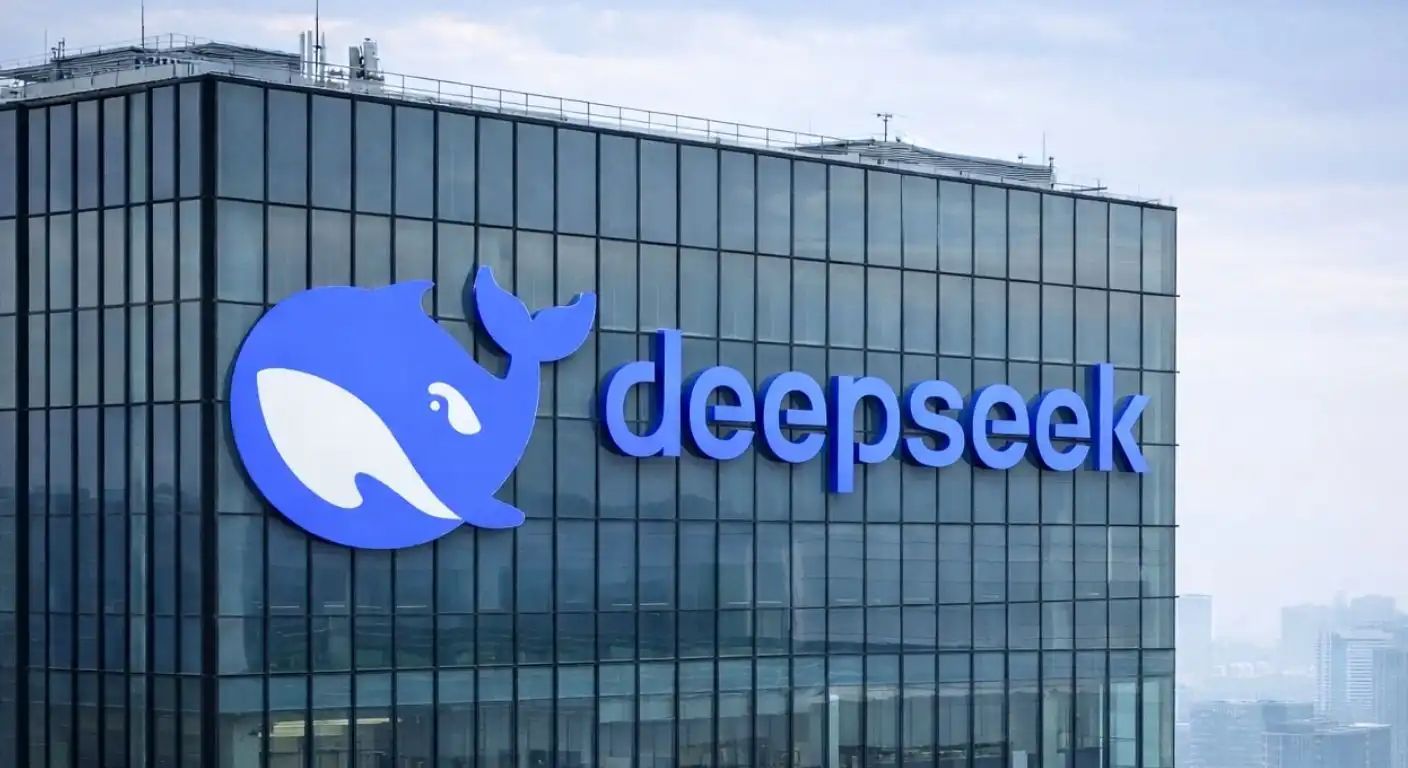
At the center of this paradigm shift is DeepSeek, the Hangzhou-based artificial intelligence lab that stunned the technology world by training competitive, open-source reasoning models at a fraction of the cost of its Western competitors. In a bold statement published on WeChat, the company announced a massive recruitment drive to at least double its workforce across all departments. The aggressive hiring push follows a blockbuster $7.4 billion (approximately 50 billion yuan) funding round, marking the first time the highly secretive company has accepted external capital.
This rapid expansion represents a critical inflection point for DeepSeek. Historically, the company has operated with an incredibly lean team of roughly 150 to 170 employees—a headcount that is smaller than most mid-sized accounting firms. By launching this massive hiring push, DeepSeek is transitioning from a pure research lab into a commercial product company. The move aims to scale its internal operations, defend its talent from aggressive poaching by domestic rivals, and build a massive suite of commercial AI agents to compete directly with industry leaders like OpenAI and Anthropic.
Decoding the Blockbuster $7.4 Billion Defense Round
The sheer scale of DeepSeek’s recent funding round has reshaped the financial landscape of the Chinese technology sector, marking it as one of the largest startup financings in the country’s history.
A Staggering Valuation Reaching Fifty-Nine Billion Dollars
The approximately 50-billion-yuan funding round has elevated DeepSeek’s valuation to a historic range of between $50 billion and $59 billion, depending on the post-money estimate. This valuation puts the young startup on par with established global technology giants, despite its remarkably small employee base.
The investor list for the round reads like a who’s who of Chinese corporate power. Major domestic conglomerates, including tech giant Tencent and CATL, the world’s largest electric vehicle battery manufacturer, participated heavily in the fundraise. These strategic backers are not just providing capital; they are establishing a powerful domestic alliance designed to integrate DeepSeek’s highly efficient models directly into China’s vast industrial, automotive, and digital ecosystems.
Founder Liang Wenfeng’s Three-Billion-Dollar Personal Bet
While the institutional backing is impressive, the most striking detail of the $7.4 billion raise is the personal contribution of DeepSeek’s founder, Liang Wenfeng. Wenfeng, a low-profile quantitative trading pioneer who built his fortune running the highly successful quant firm High-Flyer Capital Management, personally contributed approximately $3 billion of his own money to the round.
This massive personal investment is almost unheard of in the startup world, where founders typically seek to reduce their financial exposure as their companies grow. Wenfeng structured his investment through a custom limited partnership arrangement specifically designed to preserve absolute founder control over governance decisions.
By funding a significant portion of the round himself, Wenfeng ensures that DeepSeek can remain laser-focused on its long-term open-source and AGI goals, protecting the company from the external pressure for short-term commercialization that often plagues venture-backed startups.
Transitioning from Pure Research to Commercial Dominance
With $7.4 billion in fresh capital, DeepSeek is moving rapidly to expand its product capabilities, shifting its focus from publishing academic research papers to building scalable, consumer-facing software.
Recruiting Across Seven Key Technical and Operational Areas
To support this transition, the company is actively recruiting for more than 30 specific roles across seven core technical and operational departments. The hiring drive targets high-caliber talent in Beijing and Hangzhou, focusing on key areas required to build and maintain massive, commercial-scale systems.
The open positions include pre-training data engineers, server-side development engineers, full-stack developers, and AI search algorithm architects. By expanding these departments, DeepSeek aims to build the robust infrastructure needed to run its models at scale, addressing the latency, reliability, and load issues that frequently affect open-source models when they face heavy, real-world enterprise traffic.
Cui Tianyi and the New “Harness” Agent Coding Team
The most significant strategic development in the hiring push is the creation of a new, specialized team named “Harness.” To lead this high-stakes initiative, DeepSeek recruited former Jane Street quantitative researcher Cui Tianyi, a move that highlights the company’s deep roots in the quantitative trading sector.
Under Cui’s leadership, the Harness team is tasked with building a next-generation autonomous coding agent. This new product is designed to directly challenge leading Western coding tools, such as Claude Code and OpenAI’s Codex, but at a fraction of the operating cost.
By focusing on the agent layer—which manages context, tool routing, memory, and multi-step planning—DeepSeek aims to transition its raw model capabilities into highly practical, autonomous software tools that can execute complex programming tasks directly for enterprise clients, turning the startup into a formidable competitor in the developer-tool market.
The Core Challenge: Preserving the “DeepSeek Efficiency” at Scale
While the hiring drive has generated massive excitement, it also introduces a significant operational risk. DeepSeek’s primary competitive advantage has always been its extraordinary efficiency, and doubling the workforce could threaten the very culture that made the company successful.
Operating with Only One Hundred Fifty Employees Versus Silicon Valley Giants
The disparity in workforce sizes between DeepSeek and its western competitors is staggering. While OpenAI and Anthropic employ thousands of software engineers, researchers, and operational staff, DeepSeek has built world-class models with a core team of fewer than 170 people.
This lean team structure allowed the company to operate with zero bureaucratic red tape, enabling rapid decision-making, fast iteration cycles, and a highly focused research agenda. As the headcount doubles across all departments, the company faces the difficult challenge of scaling its operations without losing this agility. Managing a larger, more complex corporate structure can easily introduce administrative friction, slow down development cycles, and dilute the intense, mission-driven culture that allowed a small team in Hangzhou to rattle Silicon Valley.
The Fight for Talent Retention in a High-Stakes Domestic Market
The decision to double the workforce is also a defensive necessity. Because DeepSeek’s researchers have authored some of the most influential and efficient AI papers of the past year, they have become prime targets for aggressive poaching by larger, cash-rich Chinese technology conglomerates like Alibaba, Baidu, and ByteDance.
This talent drain was highlighted in the technical report for DeepSeek V4, which showed that several core research and engineering contributors had recently departed the company. To stop this drain, DeepSeek is using a significant portion of its $7.4 billion funding round to fund attractive equity grants and salary increases. By providing its existing staff with a strong financial reason to stay put, the company aims to protect its core intellectual property and maintain its technological momentum as it scales up its hiring.
Broad Market Waves: Nvidia and the Global Semiconductor Implications
The announcement of DeepSeek’s massive hiring drive and its successful $7.4 billion fundraise has sent ripples through the global financial and semiconductor markets, raising serious concerns about the long-term sustainability of hardware spending.
Following the news, Nvidia shares slid by as much as 3.5% in U.S. trading. The market’s reaction reflects a growing anxiety among global investors regarding the sustainability of the massive, multi-billion-dollar spending on advanced AI accelerators.
If low-cost, highly efficient Chinese models like DeepSeek can achieve competitive AGI-level capabilities using a fraction of the hardware footprint and training budget of Western labs, the global tech industry may eventually realize that it does not need to continue buying millions of expensive Nvidia GPUs to train its models.
As the focus of the AI market shifts from raw, brute-force model training to highly optimized local inference and autonomous agents, the demand for massive training clusters could slow down, posing a significant risk to the historic stock valuations of hardware suppliers.
Redefining the Race to AGI
The confirmed workforce expansion at DeepSeek is a landmark event that signals a new, commercial phase in the global artificial intelligence race. By doubling its headcount across all departments on the heels of a historic $7.4 billion funding round, the Chinese AI pioneer is building the physical and human infrastructure needed to challenge the dominance of Silicon Valley.
While the company must navigate the difficult operational challenges of preserving its legendary efficiency at scale and defending its talent from domestic rivals, its strong financial backing and clear product focus on autonomous coding agents make it a formidable competitor.
As the Harness team begins its work and new engineers join the Hangzhou office, the success of this expansion will decide whether DeepSeek can maintain its competitive edge, proving to the world that the path to AGI is not just about having the largest budget, but about having the most efficient, agile, and disciplined team of builders.