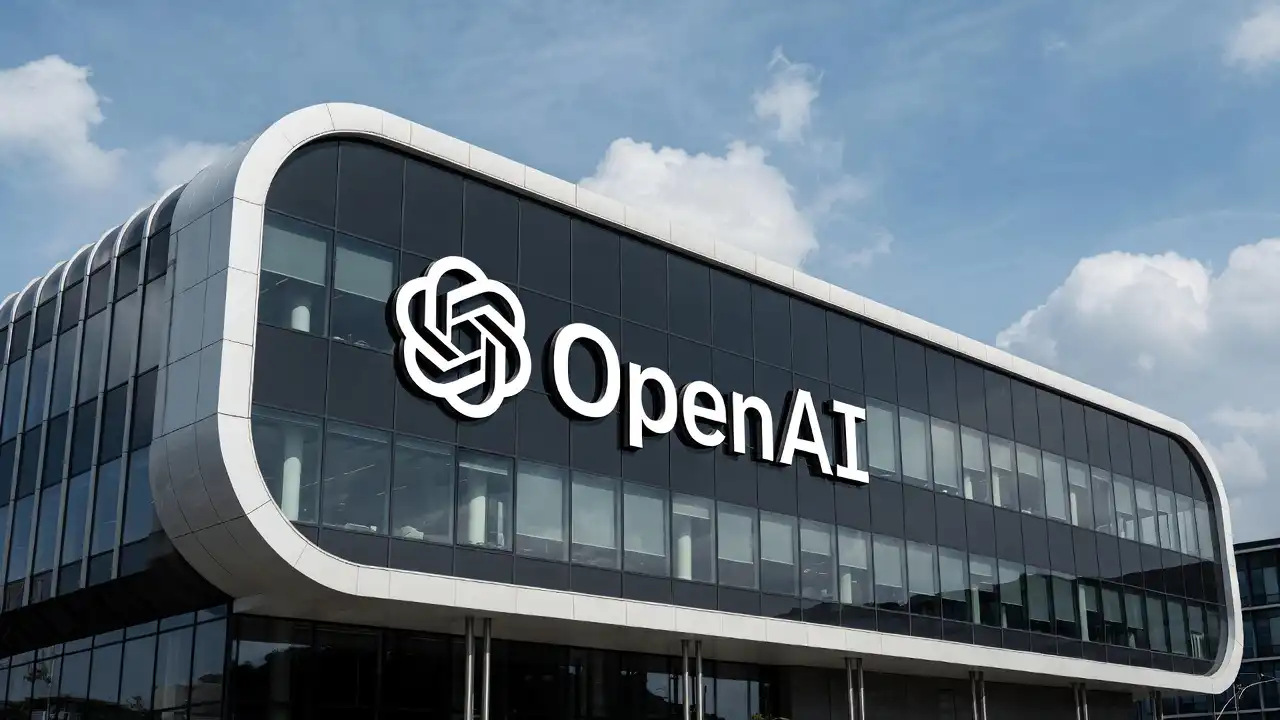
The global technology and financial markets are experiencing a period of intense, highly volatile realignment. For the past few years, the stock market’s upward trajectory was driven by an insatiable, almost unquestioning enthusiasm for anything associated with artificial intelligence. However, as the initial hype cycle matures, investors are beginning to demand real cash flows, sustainable business models, and reasonable valuations.
This shift in investor sentiment is hitting the industry’s most prominent pioneers. In late June, reports emerged that generative artificial intelligence leader OpenAI is considering postponing its highly anticipated initial public offering (IPO) until 2027. This potential delay, combined with recent price hikes from Apple due to soaring memory costs, has reignited intense anxiety regarding overstretched technology valuations, triggering a sharp pullback across the major stock indexes.
At the same time, space exploration and satellite giant SpaceX is preparing to launch a major offensive on the consumer telecommunications market. During its recent public roadshow, the company’s leadership revealed plans to launch a Starlink-branded mobile phone service in the United States. This direct-to-consumer offering would put Elon Musk’s company in direct competition with established wireless carriers, demonstrating that the race for digital infrastructure is expanding from the terrestrial cloud to low-Earth orbit.
Navigating the Multi-Billion Dollar Rumors of the OpenAI IPO Delay
The prospect of an OpenAI public listing has been one of the most highly anticipated financial events in the tech sector. As the developer of ChatGPT, OpenAI has served as the primary catalyst for the generative AI boom, making its potential public debut a vital litmus test for the entire industry.
Sam Altman’s Non-Negotiable One Trillion Dollar Valuation Target
According to a detailed report from the New York Times, OpenAI’s internal advisers are pushing Chief Executive Officer Sam Altman to delay the company’s stock market debut until 2027. The primary source of tension within the company’s leadership is the startup’s massive, highly ambitious valuation target.
Altman is reportedly targeting an extraordinary $1 trillion valuation for the public listing, a figure he considers non-negotiable given the company’s massive research expenses and long-term AGI goals. However, the startup was last privately valued at approximately $730 billion.
Financial advisers have cautioned that attempting to launch an IPO at a $1 trillion valuation in the current market environment carries immense risks. They warn that the market’s appetite for unprofitable, high-expenditure tech startups is cooling, and that OpenAI must either accept a significantly lower valuation or wait until 2027 to allow its commercial revenues to catch up with its lofty financial expectations.
The SoftBank Shockwave and Rising Valuation Jitters
The report of the potential IPO delay triggered immediate, widespread panic across the global financial markets. Shares of Japanese technology conglomerate SoftBank Group, which is a major investor in OpenAI and has built its entire corporate strategy around the AI boom, plummeted by as much as 12% in Tokyo trading.
This sharp selloff reflects a growing, systemic anxiety among institutional investors regarding the sustainability of current AI valuations. For the past year, companies have justified their massive capital spending on the assumption that a wave of highly valuable AI IPOs would soon hit the market, providing a highly profitable exit path for early-stage backers.
By pushing its listing window back to 2027, OpenAI has signaled that even the market leader is wary of public investor scrutiny. This delay has forced the financial community to take a much more critical look at the industry’s underlying economics, with investors rotating away from speculative momentum plays in favor of stable, cash-generating corporate assets.
SpaceX Targets the U.S. Consumer with Starlink Mobile Networks
While OpenAI is taking a cautious, defensive approach to the public markets, SpaceX is moving aggressively to expand its business operations far beyond its traditional boundaries of rocket launches and satellite internet.
Gwynne Shotwell Unveils Direct-to-Consumer Cellular Plans
During SpaceX’s recent, highly successful IPO roadshow, where the company officially went public under the ticker SPCX, President Gwynne Shotwell outlined a bold new strategy to target the mass consumer market in the United States. According to reports from the Financial Times, SpaceX is actively considering launching its own Starlink-branded mobile phone service.
The planned cellular service would build directly on Starlink’s massive low-Earth orbit satellite constellation. Rather than requiring users to purchase expensive, bulky satellite dishes, the service would connect directly to standard, unmodified smartphones, providing seamless, nationwide coverage even in the most remote geographical areas.
By offering a direct-to-consumer mobile plan, SpaceX aims to transform itself from a specialized aerospace contractor into a massive, consumer-facing digital utility, opening up a highly lucrative, recurring revenue stream to fund its ambitious space exploration programs.
Disruption in the Wireless Market and Competition with Major Carriers
The launch of a Starlink-branded mobile service represents a major, existential threat to established terrestrial wireless carriers like T-Mobile, AT&T, and Verizon. Historically, satellite communication was viewed as a niche, slow, and expensive service designed solely for maritime operations, military units, and remote scientific researchers.
SpaceX’s low-Earth orbit constellation has completely changed these technical limits. By placing thousands of active satellites just 340 miles above the Earth’s surface, Starlink can deliver high-speed, low-latency connectivity that rivals the performance of traditional cellular networks.
While Starlink currently partners with telecom carriers to improve regional coverage, a direct-to-consumer mobile offering would place Elon Musk’s company in direct competition with its former partners. This competitive threat is already forcing traditional wireless carriers to accelerate their own satellite partnerships, setting off a high-stakes, trans-atmospheric battle to control the future of global communications.
Tech Markets Under Pressure: The Shift to Quality and Selective AI Investing
The combination of the OpenAI IPO delay and rising geopolitical tensions has put intense pressure on global stock markets, leading to another difficult week for the technology sector.
The Nasdaq Four-Day Losing Streak and Rising Volatility
The tech-heavy Nasdaq Composite posted a painful four-day losing streak, as investors chose to take profits from the year’s big winners. While the long-term transformative potential of artificial intelligence remains undisputed, the market’s behavior suggests that the era of blind, momentum-driven investing has come to an end.
Investors are becoming increasingly selective, paying closer attention to valuations, corporate spending, and actual earnings growth rather than simply buying into the AI story. This rotation has triggered a sharp pullback in overextended semiconductor and optical communication stocks, sweeping across the entire AI hardware supply chain.
As money managers rebalance their portfolios heading into the second half of the year, they are demanding clear evidence of commercial monetization, forcing startups and tech giants alike to demonstrate how their massive capital investments will translate into bottom-line profitability.
Apple’s Memory-Driven Price Hikes Weaken Consumer Tech Sentiment
The market’s anxiety was further compounded by Apple’s decision to implement significant, quiet price increases across almost all of its major hardware lineups, including the MacBook Air, MacBook Pro, iPad Air, and iPad Pro.
The tech giant is blaming a massive, unprecedented spike in global RAM and flash storage costs for the sudden pricing adjustments, as memory manufacturers like Micron, Samsung, and SK Hynix dedicate their limited silicon wafer capacity to manufacturing high-margin AI memory.
This hardware price hike has introduced systemic inflation concerns, weighing heavily on Wall Street sentiment. If the most powerful consumer electronics company in the world cannot shield its customers from these rising component costs, other hardware developers will likely have to follow suit, potentially slowing down the pace of consumer upgrades and dragging down overall retail demand across the technology sector.
Structural Trends: Tech Companies Staying Private for Longer
The potential postponement of OpenAI’s IPO until 2027 reflects a broader, highly significant trend among high-profile technology companies. Rather than rushing to the public markets at the earliest opportunity, the world’s most valuable startups are choosing to remain private for much longer.
This transition is driven by several operational and financial factors:
- The Regulatory Burden of Public Markets: Operating as a publicly traded company requires compliance with strict disclosure laws, regular audits, and intense regulatory oversight. For a fast-moving AI startup like OpenAI, which is constantly pushing the boundaries of technology and ethics, the scrutiny of public markets can act as a major operational drag.
- The Pressure of Quarterly Earnings: Public market investors are notoriously focused on short-term, quarterly financial results. This short-term focus can work in direct opposition to the long-term, capital-intensive research and development cycles required to build advanced AI systems and multiplanetary space hardware.
- Deep Pools of Private Capital: Historically, companies went public because they needed to access the deep liquidity of the public stock markets to fund their expansion. Today, private equity funds, venture capital firms, and sovereign wealth funds are holding record levels of “dry powder,” allowing private startups to raise billions of dollars without needing to go through the expensive and complex IPO process.
By remaining private, OpenAI can continue to focus on its long-term AGI research without needing to worry about daily stock price fluctuations or quarterly profit margins. However, this private-for-longer strategy also means that retail investors must wait much longer to participate in the growth of the world’s most anticipated technology companies, restricting the wealth-generation opportunities of the digital economy to a small group of elite institutional investors.
Navigating the Volatile Waves of the Digital Economy
The recent developments in technology and financial markets have proven that the digital economy has entered a highly critical transition phase. The potential postponement of OpenAI’s IPO until 2027 and the rising competition in the satellite mobile market from SpaceX demonstrate that the path to long-term success requires a delicate balance between ambitious innovation and disciplined financial execution.
While the Nasdaq’s recent four-day losing streak and rising component costs warrant a cautious, highly selective investment approach, the underlying demand for advanced digital infrastructure remains incredibly robust.
As SpaceX prepares to launch its Starlink-branded cellular service to challenge traditional wireless carriers, and OpenAI continues to refine its commercialization strategy in the private markets, the technology sector is proving that the future of global industry is being built on a massive, highly integrated foundation of cloud, space, and artificial intelligence, paving a volatile but highly transformative path for the global economy.