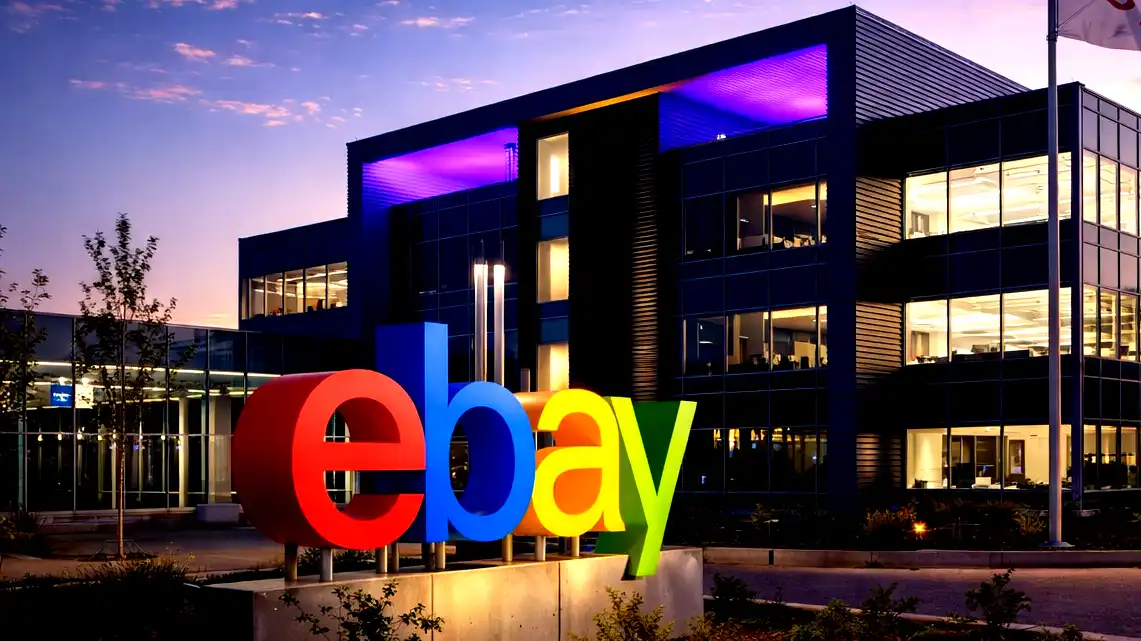
The global e-commerce and retail sectors are watching one of the most audacious and volatile corporate takeover battles in modern financial history. In a bold regulatory filing, videogame retailer and meme-stock champion GameStop formally pledged to pursue its proposed $56 billion acquisition of online marketplace pioneer eBay. The announcement represents a significant escalation, proving that GameStop’s leadership has no intention of backing down, even after eBay’s board of directors rejected the unsolicited cash-and-stock offer as neither credible nor attractive.
This corporate battle represents a classic David vs. Goliath struggle. eBay is roughly five times larger than GameStop, carrying a market capitalization of approximately $48 billion compared to the videogame retailer’s far smaller valuation. To demonstrate his absolute commitment to the deal and focus the company’s leadership entirely on the acquisition, GameStop’s billionaire Chief Executive Officer and Chairman, Ryan Cohen, took the extraordinary step of taking his own proposed multi-billion-dollar compensation package completely off the table.
Alongside this leadership sacrifice, GameStop issued a highly bullish financial forecast, projecting that its adjusted earnings before interest, taxes, depreciation, and amortization (EBITDA) will exceed $600 million for the current fiscal year. This represents a massive increase compared to the $345.4 million reported in the previous fiscal year, helping to push GameStop’s shares higher in extended trading. As both companies prepare their respective strategies, the high-stakes standoff is set to test the limits of shareholder loyalty, regulatory oversight, and the raw power of activist retail investing.
The Financial Scale of the David vs. Goliath Battle
The financial details of the proposed transaction reveal a highly aggressive, carefully planned attempt to merge two entirely different eras of retail. GameStop’s initial, unsolicited proposal was submitted to eBay’s board of directors in May.
Inside GameStop’s Fifty-Six Billion Dollar Cash-and-Stock Offer
The non-binding proposal offers to acquire 100% of eBay’s outstanding common stock at $125 per share. This offer represents a massive 46% premium to eBay’s unaffected closing price on February 4, the exact day GameStop quietly began accumulating its ownership stake in the e-commerce company through derivative contracts.
Under the terms of the offer, the $56 billion purchase price would be funded through a 50-50 mix of cash and GameStop common stock. The proposal grants eBay shareholders full election rights, allowing them to choose whether they want to receive their payment in cash, stock, or a combination of both, subject to standard pro-rata allocation rules.
While eBay’s board has dismissed the offer as a highly speculative move by an unstable meme-stock champion, GameStop’s leadership argues that the premium is too substantial for shareholders to ignore, establishing the foundation for a highly contentious public campaign.
Funding the Deal with Nine Billion on Hand and Bank Backing
One of the primary reasons why eBay’s board questioned the credibility of the offer was the sheer physical size of the transaction. How could a struggling, brick-and-mortar videogame retailer with declining revenues and widespread store closures afford to buy a massive, highly profitable global e-commerce marketplace?
GameStop addressed these funding concerns by detailing its substantial, cash-heavy balance sheet. As of January 31, the company held approximately $9.4 billion in cash and highly liquid investments. This massive cash pile is the direct result of several successful, highly lucrative share sales that GameStop executed during previous meme-stock rallies, allowing the company to build up a substantial financial war chest.
To cover the remaining cash portion of the acquisition, GameStop secured a “highly confident” letter from investment banking giant TD Securities for up to $20 billion in third-party acquisition financing. By combining its own $9.4 billion in cash with $20 billion in committed bank debt and funding the remaining $28 billion through the issuance of new GameStop common stock, the company’s planners argue that they have built a fully viable, credible financing package that can successfully support the $56 billion purchase.
Raising the Stakes: GameStop Builds a Six Percent Ownership Position
Faced with a swift, defensive rejection from eBay’s board in May, Ryan Cohen chose to escalate the conflict. Instead of backing down or offering a higher price, GameStop quietly continued to purchase shares of the e-commerce giant in the open market.
According to a subsequent regulatory filing made with the Securities and Exchange Commission (SEC), GameStop successfully increased its economic stake in eBay to approximately 6.55%, up from its initial 5% position. The company built this position through a combination of beneficial common stock ownership and structured derivative contracts, specifically put/call option pairs.
By building a significant, near-7% ownership stake, Cohen has positioned himself as one of eBay’s largest individual shareholders. This substantial holding gives GameStop the legal right to demand access to corporate records, propose shareholder resolutions, and potentially call special meetings, laying the groundwork to take the acquisition offer directly to eBay’s retail and institutional shareholders if the board continues to refuse to negotiate.
Strategic Rationale: Challenging Amazon by Revitalizing Retail
The core thesis behind Ryan Cohen’s ambitious takeover bid is the belief that combining GameStop’s physical footprint with eBay’s online marketplace will create a massive, highly competitive e-commerce giant capable of challenging Amazon’s dominance.
Merging Video Games, Collectibles, and the eBay Marketplace
Under the proposed operational plan, the combined company would integrate GameStop’s legacy brick-and-mortar stores with eBay’s global online platform, which currently connects over 135 million active buyers across 190 markets.
Cohen believes that the future of retail belongs to unified, omnichannel platforms that can seamlessly bridge the gap between physical stores and digital marketplaces.
The combined entity would focus heavily on high-growth, high-margin retail categories, most notably physical video games, retro consoles, board games, trading cards, and pop-culture collectibles.
By using GameStop’s physical stores as localized distribution centers, trade-in hubs, and physical showcases for eBay’s online sellers, the company can drive significant foot traffic to its stores while providing online buyers with a secure, instant, and physical verification network for high-value collectible items, creating a unique retail ecosystem that Amazon cannot easily replicate.
Squeezing Two Billion in Costs out of the Combined Platform
To justify the high purchase price to Wall Street, GameStop’s management has drafted a highly aggressive cost-reduction plan. The company claims it can deliver approximately $2 billion in annualized cost reductions within the first twelve months of completing the merger.
The majority of these savings—approximately $1.2 billion—would come from a complete restructuring of eBay’s sales and marketing department. GameStop’s planners pointed out that eBay spent a massive $2.4 billion on sales and marketing last year, yet only managed to add one million net active buyers, representing a net increase of less than 0.75%.
GameStop argues that spending billions of dollars on marketing is highly inefficient for a platform that already possesses near-universal global brand recognition.
The remaining savings would be split between product development and administrative expenses, with GameStop cutting $300 million from product research and $500 million from general overhead. By eliminating redundant corporate roles, closing overlapping administrative offices, and scaling back inefficient technology projects, the company’s management aims to significantly improve the combined platform’s profit margins, turning the slow-growing e-commerce marketplace into a highly profitable cash-generating engine.
Ryan Cohen’s Personal Sacrifice: Taking the Pay Package Off the Table
The pursuit of the eBay acquisition has required a significant, unprecedented sacrifice from GameStop’s executive leadership, designed specifically to build trust with investors and demonstrate complete commitment to the deal.
Withdrawing the CEO Performance Award to Rebuild Trust
In January, before GameStop decided to actively pursue the acquisition of eBay, the company’s board of directors approved a massive, long-term CEO performance award for Ryan Cohen. The compensation package, which was subject to shareholder approval at the upcoming annual meeting, was designed to reward Cohen with billions of dollars in stock grants if he successfully improved GameStop’s long-term operating performance and stock price.
Following the formal decision to target eBay, Cohen took the highly unusual step of requesting the board to completely withdraw the proposed compensation package from the company’s proxy statement.
In a regulatory filing explaining the decision, GameStop stated that Cohen chose to forfeit the performance award because he wants the entire leadership team to remain fully and exclusively focused on the company’s operating performance and the proposed eBay acquisition.
This voluntary forfeiture represents a rare act of executive alignment in modern corporate governance. By taking his own multi-billion-dollar pay package off the table, Cohen has demonstrated to both GameStop and eBay shareholders that he is not pursuing the acquisition to enrich himself through short-term stock grants.
Instead, he is placing his entire personal reputation and his significant existing investment in GameStop on the line, proving to the financial community that he is fully committed to the long-term success of the combined enterprise.
Rebuilding the Legacy Business Amid Store Closures
While Cohen focuses on the high-stakes eBay acquisition, his primary task remains the stabilization of GameStop’s legacy brick-and-mortar retail business, which has faced steep revenue declines and structural challenges for years.
The transition from physical game discs to digital downloads has severely impacted GameStop’s traditional business model. To stop the financial bleeding, the company has executed a painful, nationwide store-closure program, shutting down hundreds of unprofitable retail locations across North America and cutting back its corporate headcount.
By raising its adjusted EBITDA guidance to more than $600 million for the fiscal year, the company is attempting to prove to Wall Street that its cost-cutting efforts are working and that the legacy business has successfully stabilized, giving the company the financial credibility needed to support its ambitious e-commerce expansion plans.
Market Reaction and the Future of the Takeover
The formal pledge by GameStop to stick with its eBay acquisition plans, combined with its strong financial guidance, triggered an immediate reaction in the financial markets, setting up a highly volatile environment for both stocks.
Following the late-Friday announcement, GameStop shares rose by more than 3% in extended trading, as retail investors and quantitative funds reacted to the company’s strong EBITDA outlook and the cancellation of Cohen’s pay package.
Conversely, eBay shares fell slightly, as institutional investors evaluated the growing threat of a hostile proxy battle or an outright, unsolicited tender offer directly to shareholders.
The road ahead for the takeover bid remains highly complex and full of obstacles. eBay’s board of directors, led by CEO Jamie Iannone, is highly likely to deploy several powerful corporate defense mechanisms to block the acquisition.
This includes potentially invoking a “poison pill” shareholder-rights plan to dilute GameStop’s ownership stake, launching legal challenges over potential antitrust issues, and arguing to institutional investors that accepting GameStop’s volatile, retail-driven common stock as payment represents an unacceptable financial risk.
However, Ryan Cohen has spent his entire career proving that he is not afraid of a corporate fight. As the co-founder of highly successful online pet retailer Chewy, Cohen has a proven track record of disrupting established industries and building world-class digital brands.
By converting his legacy retail chain into a $9.4 billion investment vehicle and quietly building a near-7% stake in eBay, Cohen has built the necessary financial infrastructure to support a long, drawn-out battle, ensuring that the outcome of this historic takeover bid will be decided by the raw forces of shareholder democracy and market value.
A Historic Retail Standoff
The formal pledge by GameStop to pursue its proposed $56 billion takeover of eBay represents a landmark event that permanently alters the competitive dynamics of the global e-commerce industry. By combining its massive, meme-backed cash reserves with a highly aggressive, 100,000-person cost-reduction strategy, the videogame retailer has built a highly credible, well-financed challenge to the world’s oldest e-commerce marketplace.
While the legal and regulatory hurdles ahead remain significant, and the opposition from eBay’s board will be fierce, Ryan Cohen’s personal sacrifice of his own multi-billion-dollar compensation package has sent a powerful message of commitment to the market.
As the two companies prepare for a high-stakes, long-term proxy war, the outcome of this historic standoff will decide more than just the ownership of an online marketplace. It will decide whether a legacy, brick-and-mortar retail champion can successfully use the power of digital finance and activist investing to reinvent its corporate identity, proving to the world that in the modern digital economy, the ultimate winners are those who are willing to make the most daring and disruptive bets on the future.