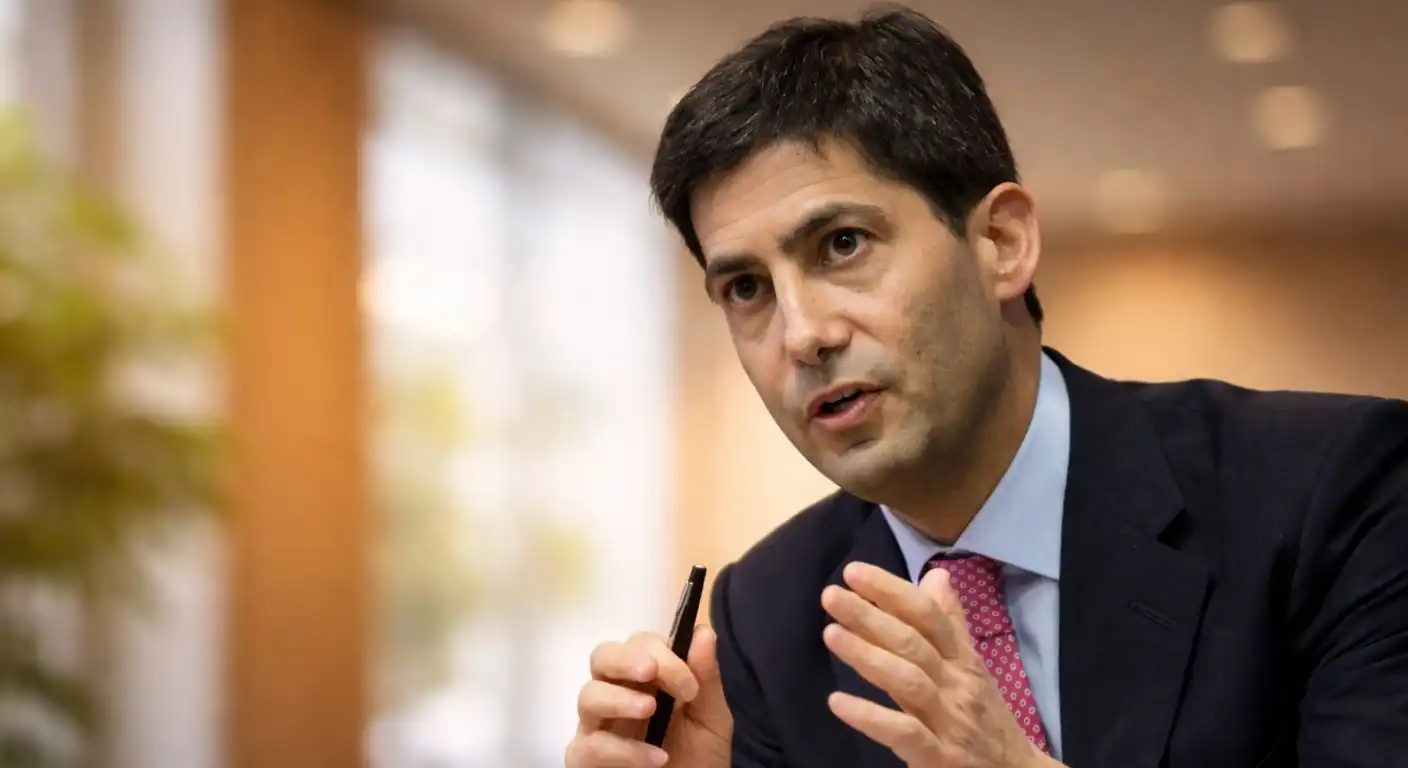
The global financial system has entered a highly sensitive and unpredictable period, as the leadership of the world’s most powerful central bank faces a series of coordinated legal and economic challenges. Kevin Warsh, who took the helm as the seventeenth Chairman of the Federal Reserve Board of Governors on May 22, 2026, is barely two weeks into his early tenure and is already facing a trial by fire.
The new central bank chief must navigate a highly complex, multi-front landscape. Back home, a persistent wave of inflation has climbed to a three-year high of over 4%, driven by ongoing geopolitical energy shocks in the Middle East.
At the same time, Warsh is preparing to make his highly anticipated international debut at the European Central Bank (ECB) Forum on Central Banking in Sintra, Portugal, where he will share the stage with ECB President Christine Lagarde to discuss global monetary policy coordination.
But the most consequential threat to Warsh’s early tenure is playing out not in the financial markets, but in the chambers of the United States Supreme Court. As the high court enters the final week of its current term, the justices are set to deliver a landmark ruling in the case of Trump v. Cook.
The outcome of this constitutional dispute, which centers on the president’s authority to summarily fire a sitting Federal Reserve governor, could fundamentally redefine the separation of powers and alter the independence of the Federal Reserve for decades to come, turning a dry legal debate into a major structural shock for global investors.
Navigating the Supreme Court Standoff of Trump v. Cook
The legal conflict currently heading toward a final decision at the Supreme Court represents the most significant challenge to the internal structure of the Federal Reserve since its founding in 1913.
The Constitutional Question of Presidential Removal Power
The case of Donald J. Trump, et al. v. Lisa D. Cook (Docket No. 25A312), which the Supreme Court heard during oral arguments on January 21, 2026, centers on a direct conflict between the executive branch and the independent status of the central bank.
The dispute began in August 2025, when President Donald Trump announced that he was immediately removing Federal Reserve Governor Lisa Cook from her post. Cook, who was appointed by President Joe Biden, was serving a fourteen-year term that was originally scheduled to run until 2038.
The Trump administration’s decision to fire Cook was based on allegations of mortgage fraud. The government contended that before her appointment to the Fed, Cook had made false statements on mortgage applications, allegedly identifying both a primary residence in Michigan and a vacation home in Georgia as her principal address.
Cook has strongly denied these allegations, and her legal team, led by prominent attorney Abbe David Lowell, filed a lawsuit challenging her removal. They argued that the president’s unilateral dismissal violated her constitutional due process rights and breached the statutory protections established under the Federal Reserve Act.
Analyzing the “For Cause” Standard and Lower Court Rulings
The legal battle over Cook’s removal has focused intense attention on a critical, historically untested provision of the Federal Reserve Act. Under the statute, members of the Board of Governors can only be removed by the president before the expiration of their terms “for cause.”
However, Congress has never formally defined what constitutes “cause” under the law, and no previous president has ever successfully tested the limits of this removal power in court.
In September 2025, Judge Jia Cobb of the U.S. District Court for the District of Columbia issued a preliminary injunction that blocked Trump’s removal order, allowing Cook to remain in office while the litigation proceeded.
Judge Cobb ruled that Cook had made a strong showing that her purported removal did not comply with the law, holding that the “for cause” protection should only apply to an official’s conduct and performance while in office, rather than their behavior before assuming their post.
The U.S. Court of Appeals for the D.C. Circuit and the Supreme Court subsequently rejected emergency appeals by the Trump administration to lift the stay, setting up the current, high-stakes final ruling on the merits.
The Strategic Implications for Federal Reserve Independence
The outcome of the Trump v. Cook case carries profound consequences for the global financial markets, as it goes to the heart of the central bank’s ability to manage monetary policy free from political interference.
Protecting the Central Bank from Political Interference
Federal Reserve independence is a cornerstone of modern global finance. Central banks are intentionally designed to operate independently of the executive branch to ensure that monetary policy decisions—most notably the setting of interest rates—are based on long-term economic data rather than short-term political considerations.
If a president has the unbridled authority to fire Fed governors at will, they can easily pressure the board to cut interest rates to boost the economy ahead of an election, even if such a move risks triggering severe, long-term inflation.
Harvard Law Professor Daniel Tarullo, a former Fed governor, warned that the Trump v. Cook case represents a critical test of whether there is any limit to executive authority over independent agencies.
If the Supreme Court rules in the president’s favor, it will effectively dismantle the “for cause” protection that has shielded Fed governors for over a century, allowing the executive branch to influence interest rate decisions through the threat of immediate dismissal, completely undermining the credibility of the U.S. dollar and triggering massive volatility across the global bond markets.
The Awkward Position of Newly Sworn-In Chair Kevin Warsh
For Kevin Warsh personally, the ongoing legal drama has created a highly delicate and awkward operational dynamic. Warsh was confirmed by the Senate in a narrow 54-45 vote—the closest confirmation margin for a Fed chair in history—and was sworn in on May 22, 2026, with Supreme Court Justice Clarence Thomas administering the oath of office at the White House.
Warsh succeeded Jerome Powell, whose eight-year chairmanship concluded under a cloud of controversy. While Powell’s term as chair ended, he chose to remain on the Fed’s Board of Governors as a regular governor, citing an unresolved Justice Department investigation into ongoing construction and renovation costs at the Fed’s Washington headquarters.
Having both his predecessor (Powell) and a contested governor (Cook) sitting alongside him on the twelve-member Federal Open Market Committee (FOMC) has made Warsh’s early leadership exceptionally complex.
To maintain his authority and lead a reform-oriented Fed, Warsh must find a way to unite a deeply divided FOMC while protecting the institution’s independent reputation from the fallout of the Supreme Court’s ruling.
The Sintra Summit: Warsh’s Debut on the Global Stage
As the Supreme Court prepares to rule, Warsh is heading to Sintra, Portugal, to attend the prestigious ECB Forum on Central Banking. The three-day conference, running from June 29 to July 1, will serve as a high-profile platform for Warsh to outline his policy vision to a global audience.
Facing the European Central Bank’s War-Driven Rate Hikes
The international economic environment has grown increasingly hostile, putting intense pressure on the world’s major central banks to coordinate their policy moves.
Earlier in June, the European Central Bank became the first major central bank to raise interest rates in response to the Middle East conflict, lifting its benchmark rate to 2.25% from 2.0% to combat rising price pressures.
The ongoing conflict in the Middle East has severely disrupted global energy flows, with shipping bottlenecks in the Strait of Hormuz pushing Brent crude prices to nearly $93 per barrel.
As higher fuel costs drive up consumer prices across Europe and the United States, central bank chiefs are facing a difficult challenge: how to raise borrowing costs to tame inflation without triggering a severe industrial recession.
At the Sintra summit, Warsh will share the stage with ECB President Christine Lagarde and Bank of England Governor Andrew Bailey to discuss how to manage this energy shock, with international investors looking closely to see if the major economies can coordinate their rate paths to avoid a global financial meltdown.
The Low-Information Approach and the Rejection of Strong Forward Guidance
A primary focus of the international community is Warsh’s unique, highly distinct approach to monetary policy communication. For the past decade, the Federal Reserve relied heavily on “forward guidance”—providing the market with explicit, long-term projections of where it expected interest rates to go in the future.
Warsh is actively moving away from this highly structured model, choosing to adopt a “low-information” approach that avoids committing the Fed to any future policy actions.
During his first FOMC meeting as chair on June 16-17, Warsh kept the federal funds rate steady at 3.50% to 3.75%, but declined to publish a detailed “dot plot” of future rate expectations, choosing instead to keep the central bank’s options fully flexible.
This shift has received strong support from international economic leaders. Pierre-Olivier Gourinchas, the outgoing chief economist of the International Monetary Fund (IMF), noted in an interview with Reuters that strong forward guidance had gotten “really bad press” because it committed central banks to specific paths regardless of how the economy evolved.
Gourinchas argued that moving away from these rigid commitments is entirely appropriate, as it gives policymakers the flexibility to react quickly to sudden economic shocks, such as the current Middle East energy crisis.
Balancing High Inflation and Market Expectations
While Warsh prefers a flexible, low-information approach, the financial markets are demanding immediate, decisive action to combat rising domestic prices.
At his first FOMC meeting, Warsh managed to secure a majority vote to hold interest rates steady, but the decision was far from unanimous. With U.S. consumer price inflation climbing back above 4% for the first time in three years, several hawkish members of the committee, including Minneapolis Fed President Neel Kashkari, have publicly warned that the central bank may be forced to raise interest rates later in the year to keep inflation expectations anchored.
This persistent inflation pressure has completely transformed Wall Street’s expectations. Money markets have abandoned their early-year predictions of rate cuts, with LSEG interest rate futures now implying better than even odds that the Fed will deliver a 25-basis-point rate hike in September.
With the S&P 500 completing a solid first half of the year with a 7% gain, any future rate hike could trigger significant volatility, making the upcoming June employment and inflation data critical milestones that will decide whether Warsh can successfully guide the U.S. economy toward a soft landing.
A Crucial Turn for Global Monetary Policy
The upcoming week represents a historic, highly volatile turning point that will permanently shape the future of global monetary policy and the structural boundaries of presidential power. By bringing the legal battle of Trump v. Cook to a final Supreme Court decision and sending Fed Chair Kevin Warsh to his international debut at the ECB forum in Sintra, the global financial system is facing a series of extraordinary, highly coordinated challenges.
While the domestic economy must continue to manage the severe, real-world pressures of rising energy costs and sticky 4% inflation, the preservation of the central bank’s independent status remains the most critical priority for long-term market stability.
Whether the Supreme Court chooses to uphold the “for cause” protection of Fed governors or grants the executive branch expanded removal powers, the ruling will reshape the balance of power in Washington for decades to come.
As Warsh prepares to address his international peers in Portugal, his ability to defend the Federal Reserve’s independence, coordinate policy under a flexible low-information framework, and navigate a deeply divided FOMC will be the ultimate key to protecting the U.S. dollar, stabilizing global markets, and securing long-term economic prosperity in a changing world.