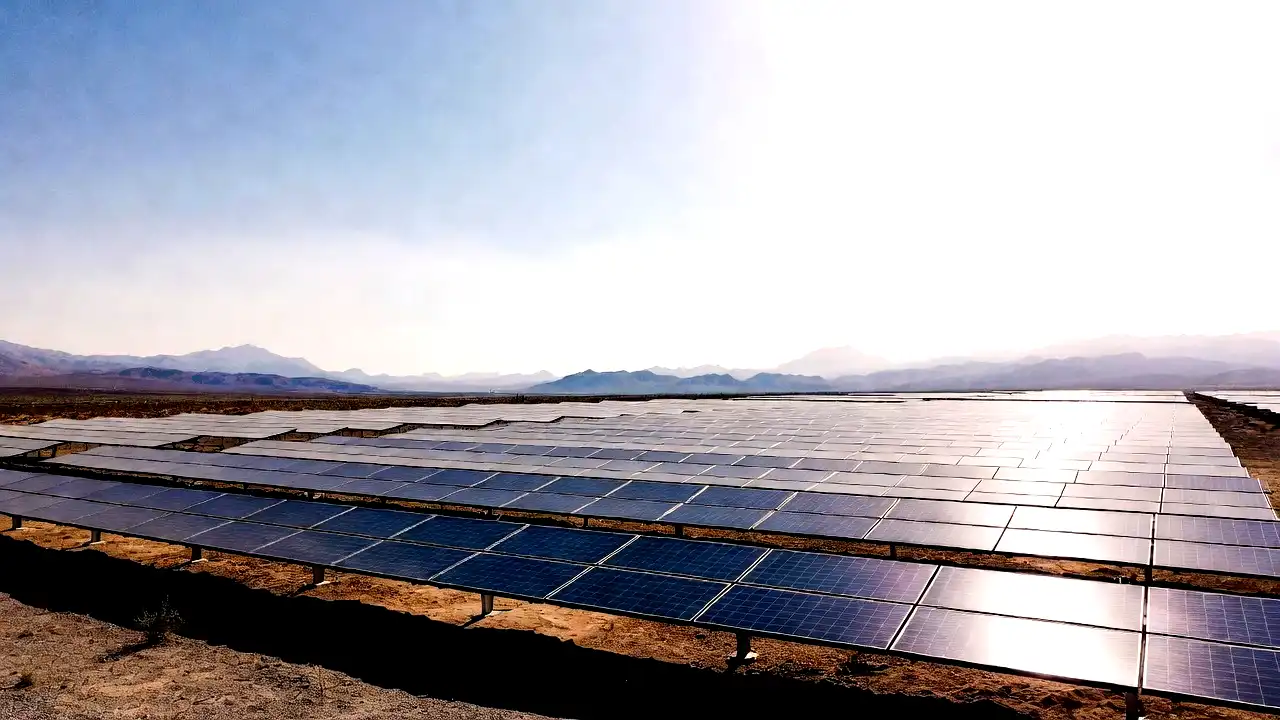
The global clean energy landscape is experiencing a profound shift. At the heart of this evolution is the relationship between European decarbonization ambitions and Chinese manufacturing efficiency. During the recent Intersolar Europe exhibition held in Munich, industry leaders, policymakers, and green technology developers gathered to map out the future of renewable energy. Markus Elsaesser, the founder and chief executive officer of Solar Promotion GmbH—the organization behind Europe’s largest solar and energy storage exhibition—shared a clear perspective on the direction of the market. He warned that as Europe accelerates its efforts to eliminate greenhouse gas emissions, deeper industrial cooperation with China, rather than geopolitical decoupling, remains vital for keeping clean energy affordable and advancing the energy transition.
The three-day exhibition in Munich, which took place from June 23 to June 25, hosted around 2,800 international exhibitors and showcased the latest breakthroughs in solar and battery storage technology. Elsaesser highlighted that China’s rapid scaling of manufacturing, optimization of production processes, and construction of highly efficient supply chains have dramatically reduced the cost of clean energy. These cost reductions have made solar power combined with battery storage a highly competitive, commercially attractive alternative to conventional fossil-fuel power sources. For European nations striving to meet strict climate deadlines, trying to replicate or isolate these supply chains would prove both slow and prohibitively expensive.
The Economic Reality of China’s Clean Tech Dominance
The global transition to renewable energy relies heavily on cost-deflation curves. Over the past fifteen years, the cost of solar panels and battery storage has plummeted by over 90%, transforming green energy from a subsidized luxury into the cheapest form of new electricity generation in history. China’s immense manufacturing capacity has driven this downward price spiral. By building vast industrial parks, concentrating supply chains, and investing heavily in automation, Chinese factories have achieved economies of scale that Western manufacturers find difficult to match.
This price decline is highly visible in the energy storage sector. The global average price of a lithium-ion battery pack fell to a record-low $108 per kilowatt-hour (kWh). Within China, the costs for lithium iron phosphate (LFP) battery packs plummeted even further, reaching roughly $84 per kWh. For stationary utility-scale storage systems, which are vital for stabilizing electricity grids, battery pack prices dropped to just $70 per kWh. This massive cost reduction has completely changed the financial equations for utility companies and independent power producers. Incorporating large battery banks is now a highly viable way to build reliable, constant clean energy plants.
China’s Strategic Tax Policy Shift
The year 2026 has introduced new financial variables to the clean technology market, driven by policy shifts in Beijing. For years, the Chinese government supported its solar exporters through a value-added tax (VAT) export rebate. This program allowed manufacturers to claim a tax refund on products shipped overseas, keeping export prices incredibly low. However, in an effort to curb overcapacity, stabilize domestic margins, and ease international trade tensions, China’s Ministry of Finance and the State Taxation Administration completely abolished the 9% VAT export rebate for solar modules and silicon wafers on April 1, 2026.
This policy shift triggered an unprecedented wave of global buying ahead of the deadline. In March 2026, Chinese manufacturers exported a record-shattering 68 gigawatts (GW) of solar components, including panels, cells, and wafers. This massive volume represented a 49% increase from the previous monthly record set in August 2025. Following the removal of the rebate, global solar module prices experienced an immediate adjustment of 8% to 10%, with average export prices settling between $0.108 and $0.112 per watt. The Chinese government is applying a similar phased approach to battery products, reducing the VAT export rebate from 9% to 6% during the second half of 2026 before fully abolishing it on January 1, 2027. While these changes have pushed up wholesale prices slightly, the overall cost of solar and storage remains highly competitive compared to traditional fossil fuels.
The Looming Target: Achieving REPowerEU Goals
The European Union’s ambitious REPowerEU plan aims to rapidly eliminate dependency on imported fossil fuels while fast-tracking the green transition. Under this framework, the bloc has set a target of reaching 592 GW of installed solar photovoltaic capacity by 2030, with some environmental plans aiming for as much as 740 GW. Europe has made strong progress, with renewable sources now supplying over 47% of the European Union’s total electricity. However, to meet the upcoming 2030 targets, the continent must install tens of gigawatts of new capacity every single year.
Achieving these targets without access to cost-effective Chinese hardware presents a major logistical and financial challenge. The cost of manufacturing battery packs and solar modules inside Europe remains significantly higher than in Asia. For example, battery pack assembly costs are roughly 56% higher in Europe than in China due to higher labor costs, elevated electricity prices, and incomplete domestic supply chains. Attempts to enforce wholesale decoupling or implement heavy import tariffs would immediately increase the capital expenditure requirements for European green energy developers. This price hike would slow down project deployment, make electricity more expensive for consumers, and threaten Europe’s ability to hit its legally binding climate goals.
Defining Trends: The Convergence of Storage and Intelligent Integration
The Intersolar Europe exhibition in Munich highlighted a clear shift in how the industry approaches renewable energy. For years, developers treated solar panels, wind turbines, batteries, and electric vehicle (EV) charging stations as separate, independent systems. Today, those boundaries are disappearing. The industry is moving rapidly toward integrated, highly intelligent energy ecosystems where hardware and software work together in real-time.
This shift is particularly evident in the commercial and industrial sectors, where businesses are using smart energy systems to lower their peak electricity demand charges. Rather than simply installing solar panels on a warehouse roof, companies are deploying complete microgrids that combine solar generation with on-site battery storage, automated building climate controls, and EV fleet chargers. By managing these components through a single, cloud-based software platform, businesses can optimize their energy consumption patterns, storing cheap power during the day and using it when utility rates spike.
Battery Energy Storage as the Backbone of Grid Stability
As wind and solar power make up a larger percentage of the electricity mix, grid operators face a major challenge: intermittency. Solar panels only generate electricity when the sun shines, and wind turbines require a steady breeze. This variable generation often does not align with consumer demand patterns, which typically peak in the early morning and late evening. Without a way to balance this supply and demand, grids can become unstable, leading to transmission bottlenecks or even localized blackouts.
Battery energy storage systems (BESS) provide the critical solution to this problem. Utility-scale batteries act as a giant buffer for the electricity grid, absorbing excess solar electricity generated during the peak hours of midday and discharging it back into the grid during the evening peak. This process of energy shifting stabilizes grid voltage and prevents negative electricity prices, which occur when too much solar power floods the grid during peak daylight hours. The rapid fall in battery prices, driven by China’s massive manufacturing output, has made BESS projects highly profitable, turning stationary storage into one of the fastest-growing segments of the global energy sector.
The Convergence of Solar, EV Charging, and Smart Management
Another notable trend at the Munich exhibition was the transition of Chinese manufacturers from hardware suppliers to providers of fully integrated energy solutions. Many of the largest exhibitors did not just display individual solar cells or battery modules. Instead, they showcased unified energy ecosystems that integrate solar generation, battery energy storage, bidirectional EV charging infrastructure, and intelligent home energy management systems.
This integrated approach represents the future of the clean energy sector. By combining these technologies, consumers and businesses can turn their homes and facilities into active participants in the local electricity market. With bidirectional charging, also known as vehicle-to-grid (V2G) technology, millions of electric vehicles can serve as mobile battery storage units. These vehicles can absorb cheap, surplus solar power from the grid during the day and feed that power back into the system during periods of peak demand, creating a highly flexible, decentralized, and resilient power grid.
Moving Beyond the Traditional Supplier-Customer Model
The relationship between European and Chinese clean technology companies is undergoing a major structural evolution. For over a decade, this relationship operated on a simple supplier-customer model: Chinese factories manufactured cheap solar panels and lithium batteries, and European developers purchased and installed them. Today, this transactional model is giving way to deeper, more collaborative industrial partnerships that leverage the unique strengths of both markets.
European companies are increasingly looking to collaborate with Chinese manufacturers to learn from their advanced manufacturing capabilities and supply-chain efficiency. At the same time, Chinese clean tech firms are establishing localized research, development, and assembly facilities inside Europe. This localization allows them to bypass trade friction while gaining access to Europe’s highly advanced engineering talent. Furthermore, Chinese developers can benefit from Europe’s extensive experience in integrating massive shares of variable renewable electricity into complex, mature power grids. This mutual exchange of manufacturing expertise and grid integration experience is critical for building a highly efficient global clean energy system.
Conclusion
The insights shared by Markus Elsaesser at the Intersolar Europe exhibition highlight a critical truth: the global clean energy transition is a collaborative effort that cannot succeed through isolation or geopolitical decoupling. China’s extraordinary manufacturing scale and supply-chain efficiency have driven down the cost of solar power and battery storage, making these technologies highly competitive with conventional fossil fuels. For European nations aiming to meet their strict REPowerEU decarbonization goals, maintaining a deep, cooperative relationship with Chinese industrial partners is the only viable path to keeping energy prices affordable.
As the industry moves away from isolated hardware components and embraces integrated, intelligent energy solutions, the need for global cooperation will only increase. Reconciling the complex challenges of grid stability, bidirectional EV charging, and critical material supply chains requires a shared commitment to innovation and trade. By combining China’s unmatched manufacturing capabilities with Europe’s decades of experience in grid management and regulatory policy, the global community can build a resilient, affordable, and sustainable clean energy system for the future.