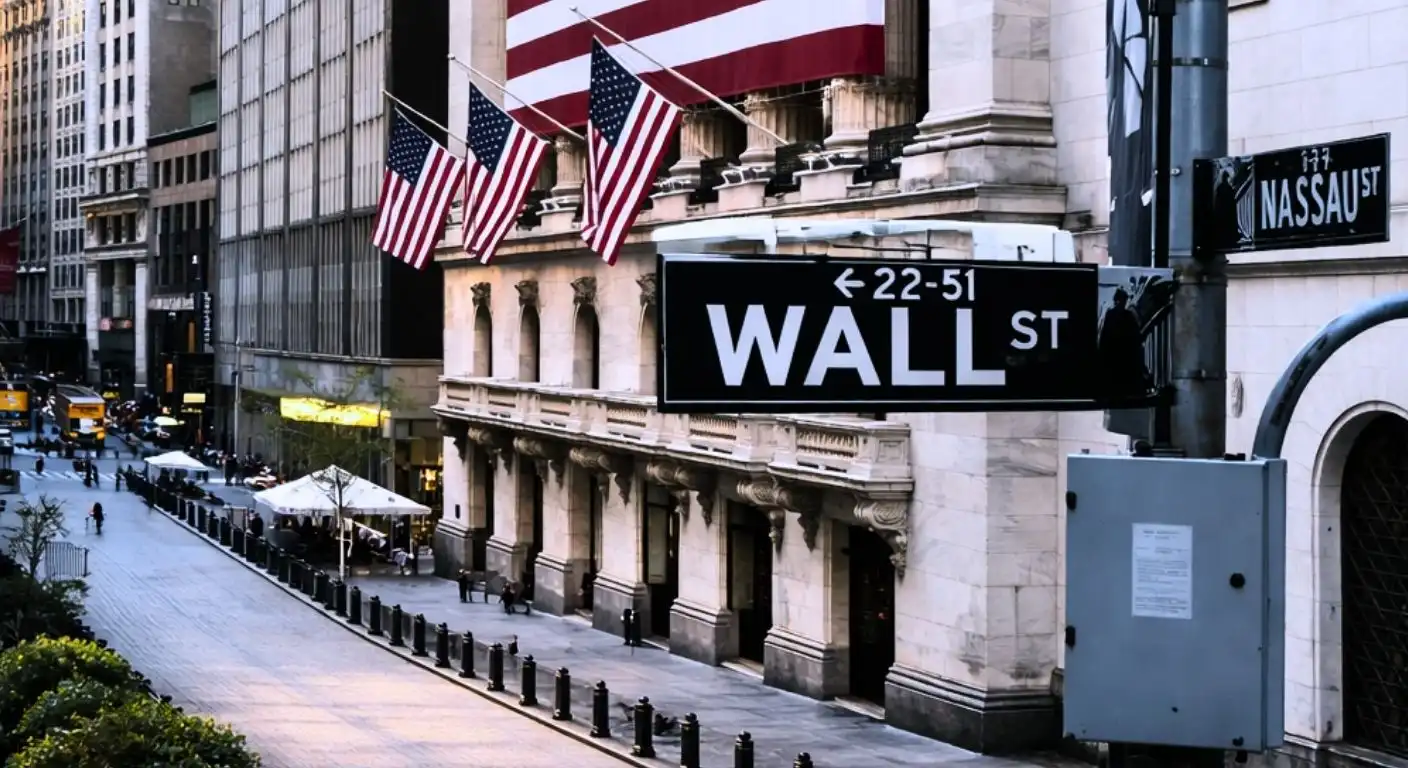
The global financial markets closed the second quarter of 2026 with a historic surge, leaving investors with some of the strongest returns in years. Standard & Poor’s 500 index and the tech-heavy Nasdaq Composite both wrapped up their best quarterly performances since the second quarter of 2020. This blistering rally arrived as a surprise to many, especially given the macroeconomic headwinds and geopolitical tensions that overshadowed the early months of the year. Investors shrugged off these worries, pouring billions of dollars into equities and pushing major market benchmarks to record heights.
On the final trading day of the quarter, the S&P 500 closed at 7,499.36, capping a massive three-month advance of 14%. The Nasdaq Composite ended the quarter at 26,213.72, securing a stellar quarterly gain of nearly 20%. Meanwhile, the blue-chip Dow Jones Industrial Average finished at 52,319.20, marking a 9% gain for the first half of the year and its strongest first-half showing since 2021. However, as the celebrations on Wall Street wind down, a growing number of market strategists are raising a critical question: can this exceptional momentum continue? With valuations historically high and hidden leverage building in the background, the second half of the year could prove to be a much more difficult path to navigate.
The Driving Force Behind the AI Infrastructure Boom
The primary engine of this historic quarterly performance was an insatiable global appetite for artificial intelligence infrastructure. Over the past three months, the market underwent a massive reallocation of capital, moving away from software applications and shifting heavily into the physical hardware components necessary to power large language models. This trend triggered an extraordinary rally in semiconductor, memory, and networking stocks.
The Philadelphia Semiconductor Index (SOX) served as the undisputed star of the quarter, soaring 88% to record its best quarterly performance in history. Within this space, three major semiconductor giants—Micron Technology, Intel, and Advanced Micro Devices (AMD)—collectively added roughly $2 trillion in market value during the three-month rally. Shares of AMD jumped an extraordinary 186% for the quarter, while other key players in the hardware supply chain posted similarly jaw-dropping gains. Networking equipment manufacturer Marvell Technology climbed about 200% over the period, and British chip designer Arm Holdings surged 134%. This concentrated buying in hardware and chip design acted as a powerful structural force, lifting the capitalization-weighted market indexes even as other sectors of the economy showed signs of slowing down.
Resolving the Energy Crisis and the Crude Oil Retrenchment
The dramatic stock market gains were also made possible by a significant easing of geopolitical and inflation worries. Earlier in the year, the outbreak of a military conflict involving Iran triggered widespread panic across global markets. Investors feared that shipping disruptions through the critical Strait of Hormuz would cause oil prices to spike, triggering a renewed wave of global inflation that would force central banks to raise interest rates further.
During the second quarter, those fears faded. Diplomatic progress and the continuation of oil flows through key shipping channels helped stabilize energy markets, leading to a massive decline in crude prices. International benchmark Brent crude futures dropped 38% over the three months, marking its worst quarterly performance since the peak of the pandemic. In the United States, West Texas Intermediate (WTI) crude futures declined 31% to settle at $69.50 per barrel, posting a monthly loss of more than 18% in June alone. This dramatic cooling of energy costs lowered inflation expectations, giving central banks the breathing room to keep interest rates steady and providing a highly supportive backdrop for equity markets.
Earnings Resiliency: A 22% Profit Jump on the Horizon
While high stock valuations often raise concerns about a potential market bubble, corporate earnings have remained remarkably resilient. According to data from FactSet, companies in the S&P 500 are projected to report a substantial 22% year-over-year jump in second-quarter profits. Looking ahead at the full year, earnings growth is expected to maintain an impressive 23% trajectory.
This strong fundamental performance has helped justify the high prices that investors are currently paying for equities. When corporate earnings grow at double-digit rates, the market can support higher price-to-earnings ratios without immediately triggering a correction. However, the high expectations built into these earnings projections mean that companies will face immense pressure to deliver flawless operational results during the upcoming corporate reporting season. Any major earnings disappointments or downward revisions to future guidance could quickly trigger a sharp pullback.
The Hidden Leverage and Option-Driven Retail Market Risk
Despite the strong fundamental backdrop, several market analysts are warning that the intensity of the second-quarter rally was amplified by a dangerous build-up of leverage. Over the past three months, retail and institutional traders increasingly combined margin lending with short-dated options buying to maximize their returns in hot technology stocks.
This trend is particularly visible in the rapid growth of single-stock leveraged Exchange-Traded Funds (ETFs). These specialized financial products allow investors to make double-long or double-short bets on the daily performance of individual high-beta stocks like Nvidia, Tesla, and Apple. While these tools can generate massive gains during a rising market, they also create a highly unstable foundation. If the momentum in tech stocks suddenly shifts, the forced selling from these leveraged funds can accelerate price declines, turning a standard market correction into a rapid, cascading selloff.
The Divergence in Small-Cap and Equal-Weight Indexes
A closer look beyond the major headline indexes reveals that the second-quarter rally was historically narrow. While the capitalization-weighted S&P 500 and Nasdaq Composite posted spectacular gains, the vast majority of stocks on the market actually lagged behind.
Equal-weighted market indexes, which treat every component company equally regardless of its size, and small-cap benchmarks like the Russell 2000 underperformed the tech-heavy indexes by a wide margin. This divergence highlights a significant concentration risk. When a small group of mega-cap technology giants—including Microsoft, Apple, Nvidia, Alphabet, and Amazon—carries the entire market index on its shoulders, the broader economy’s health is not fully reflected in the headline numbers. If any of these tech giants encounter operational difficulties, supply chain bottlenecks, or regulatory challenges, their decline could easily drag down the entire market, regardless of how well the other 490 companies in the index are performing.
Geopolitical Wildcards and the Path of Federal Reserve Policy
As the market enters the third quarter, the direction of federal interest rate policy remains a major source of uncertainty. Central bank policy rates currently stand in the 3.50%-3.75% range, and policymakers have maintained a highly cautious, wait-and-see stance. While the sharp decline in crude oil prices has helped lower headline inflation, core service-sector inflation and a resilient domestic labor market suggest that bringing inflation back down to the target 2.0% level will take more time.
This persistent inflation pressure means that the Federal Reserve is unlikely to implement rapid interest rate cuts in the near term. At the same time, the risk of renewed geopolitical disruptions remains a constant wildcard. Any sudden flare-up in global conflicts could immediately push energy prices back up, reversing the progress made on inflation and forcing central banks to adopt a more restrictive policy. This environment requires investors to remain highly vigilant, as the supportive macroeconomic conditions of the second quarter could shift rapidly.
A Historical Perspective: Best Quarters and What Follows
To understand the outlook for the remainder of the year, it is helpful to place the second-quarter performance in a historical context. Calendar quarters where the S&P 500 rises by more than 12% are rare events, typically occurring during the early stages of a major economic recovery, such as the rebound following the pandemic in 2020 or the recovery after the financial crisis in 2009.
Historically, these extraordinary surges are followed by a natural digestion period. After a rapid run-up in stock prices, the market often experiences a period of consolidation or a moderate correction of 5% to 10% as investors take profits and re-evaluate their portfolios. This historical pattern suggests that while the long-term bull market may remain intact, the spectacular returns of the second quarter are highly unlikely to be repeated in the third quarter. Instead, the market is entering a transitional phase where stock picking and risk management will become far more important than simply buying the broad market index.
Looking Ahead to the Second Half of 2026
The consensus among major Wall Street investment strategists is that the second half of the year will present a much more challenging environment for equity investors. While corporate earnings are expected to remain supportive, the combination of high starting valuations, political uncertainty, and potential shifts in interest rate expectations suggests that market volatility is set to increase.
Investors who want to navigate this transition successfully should consider several defensive portfolio adjustments:
- Emphasizing Quality: Shifting capital toward high-quality companies with robust balance sheets, strong free cash flows, and reliable earnings that can withstand an economic slowdown.
- Diversifying Portfolios: Reducing concentration in the mega-cap technology sector and reallocating capital to underperforming areas like industrials, healthcare, and consumer staples, which offer more attractive valuations.
- Managing Leverage: Reducing exposure to high-risk, short-dated options and leveraged ETFs to avoid being caught in sudden, volatile margin calls during a market pullback.
- Maintaining Cash Reserves: Keeping a reasonable cash cushion to take advantage of buying opportunities during the inevitable market corrections.
By adopting a more balanced, disciplined investment approach, market participants can protect the gains they achieved during the spectacular second quarter while positioning themselves to capture long-term value as the market normalizes.
Conclusion
The spectacular second-quarter performance of Wall Street represents a major milestone for the global technology and financial sectors. Powered by an extraordinary surge in artificial intelligence infrastructure investments and supported by a dramatic decline in global oil prices, the S&P 500 and Nasdaq Composite delivered their best quarterly returns since the pandemic recovery of 2020. However, the sheer intensity of this rally has created a challenging set of expectations for the remainder of the year.
As the market transitions into the third quarter, the high concentration in mega-cap technology stocks, the presence of hidden leverage, and the persistent uncertainty surrounding interest rate policy suggest that the road ahead will be far more volatile. While corporate earnings remain strong enough to support a long-term upward trend, investors should prepare for a natural digestion period. By focusing on high-quality companies, managing risk, and diversifying away from over-concentrated sectors, market participants can successfully navigate the coming months, recognizing that while the spectacular gains of the second quarter will be a hard act to follow, the broader foundation of the market remains resilient.