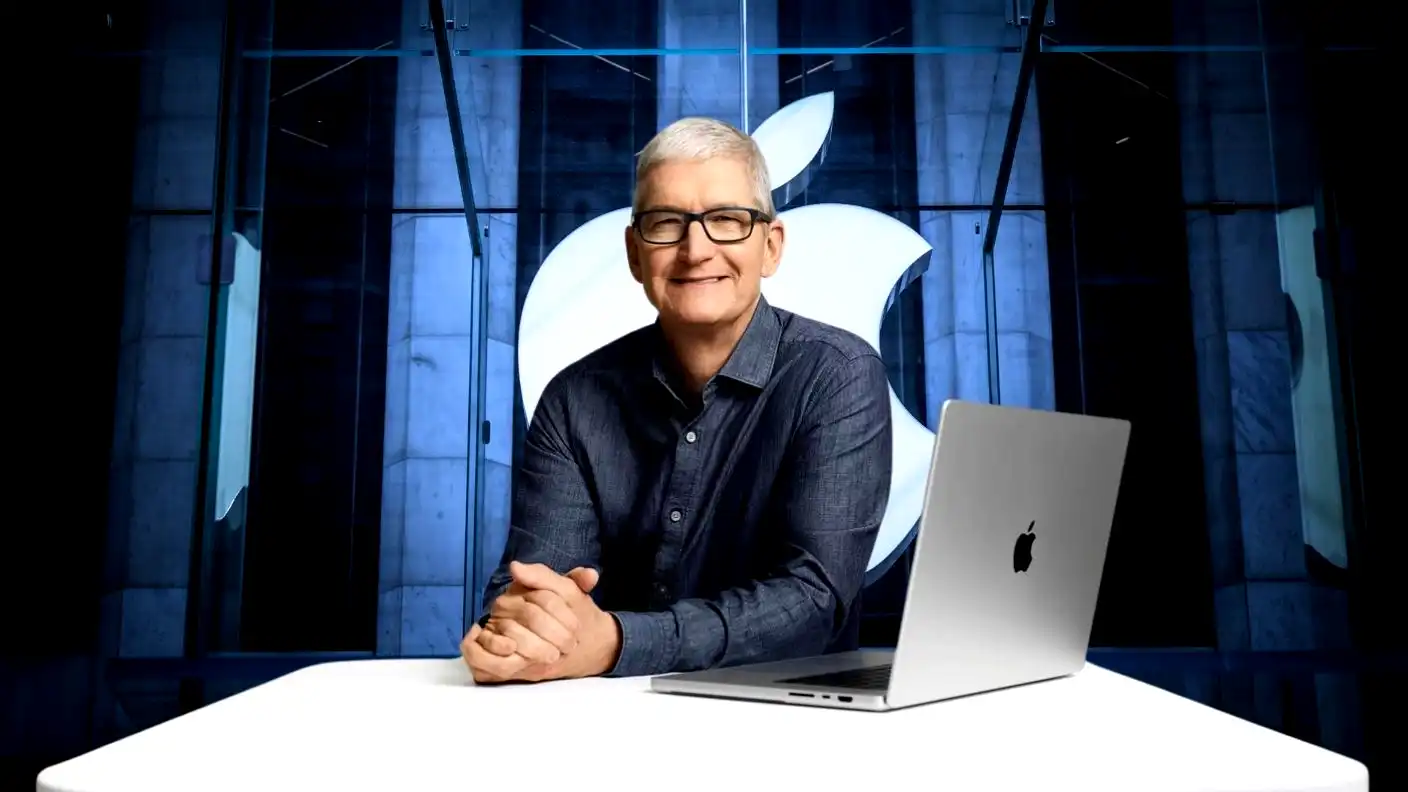
Apple CEO Tim Cook held a high-stakes video call with the European Union’s technology chief to resolve a deepening standoff over the deployment of the company’s next-generation artificial intelligence. A spokesperson for the European Commission confirmed on Wednesday, July 1, 2026, that Cook and European Technology Commissioner Henna Virkkunen engaged in a constructive exchange of views. The virtual meeting focused on finding a regulatory compromise that would allow Apple to launch its newly revamped “Siri AI” platform within the European Union while strictly adhering to the bloc’s landmark Digital Markets Act (DMA).
The virtual meeting highlights the growing tension between Silicon Valley’s rapid artificial intelligence development and Brussels’ strict regulatory oversight. At its Worldwide Developers Conference (WWDC) in June 2026, Apple introduced its broad “Apple Intelligence” initiative, showcasing a completely rebuilt Siri assistant powered by advanced on-device and cloud-based foundation models. However, because of the strict compliance rules governed by the DMA, Apple announced that these advanced features would be blocked for users in the 27 EU member states when iOS 27 and iPadOS 27 roll out later this year. This decision sparked a bitter public dispute, forcing both sides to the negotiating table to prevent a permanent technological divide.
The Core of the Siri AI Standoff in Europe
The current deadlock over Siri AI stems from a fundamental disagreement over how far the European Union’s digital rules should reach into a company’s proprietary operating system. When Apple designed its new artificial intelligence platform, it engineered the system to integrate deeply with the core architecture of iOS, allowing the assistant to access on-device data, read messages, manage calendar events, and perform actions across multiple installed applications. This deep integration is what makes the virtual assistant highly capable, enabling it to understand personal context and execute complex, multi-step tasks for the user.
However, the European Union’s Digital Markets Act imposes strict “interoperability” requirements on designated technology “gatekeepers” like Apple. Under these rules:
- The DMA mandates that gatekeepers must allow third-party applications and services to interoperate with the core features of their operating systems on an equal footing.
- Apple argues that this rule would force it to grant third-party virtual assistants—such as Google Assistant or Amazon Alexa—the same deep, system-level access that Siri AI enjoys.
- The company claims that allowing external, third-party software to read sensitive user messages, track locations, and execute background purchases would severely compromise user privacy and device security.
- To protect its users, Apple chose to delay the European launch of its AI tools, claiming that the European Commission refused to engage constructively to find a safe way to support rival assistants.
The European Commission, however, presents a very different version of the story. EU regulators argue that the choice to withhold the technology is Apple’s decision alone, pointing out that the company has simply failed to develop the necessary interoperability solutions to meet the bloc’s privacy and security standards. The Commission also rejected Apple’s request for an 18-month compliance exemption under the DMA, stating that the law does not permit arbitrary delays for gatekeepers. This mutual blame game has left European consumers caught in the middle, facing the prospect of buying expensive new iPhone models that are stripped of their most advanced features.
Tim Cook’s Strategic Transition and Government Liaison Role
The high-level video call between Tim Cook and Henna Virkkunen carries significant corporate weight because of the leadership transition currently taking place at Apple’s headquarters in Cupertino, California. Tim Cook is set to step down as chief executive officer on September 1, 2026, ending a highly successful fifteen-year tenure at the helm of the consumer electronics giant. He will be succeeded by longtime hardware engineering chief John Ternus, who will take over the daily operational management of the company.
Following his retirement as CEO, Cook will transition to the role of Executive Chairman, where he will focus on government relations, antitrust navigation, and global regulatory diplomacy. Cook’s decision to personally handle this delicate call with the European Commission head—rather than delegating the task to senior vice presidents like Eddy Cue or Craig Federighi—demonstrates that he is taking on his new role as a government liaison sooner than expected. Over his career, Cook has proved to be an exceptionally skilled diplomat, successfully navigating complex tariff disputes and regulatory threats across multiple presidential administrations in Washington. By taking charge of the European negotiations, Cook is attempting to leverage his immense personal capital to secure a settlement that protects Apple’s ecosystem while satisfying European regulators.
Navigating the Digital Markets Act Minefield
The primary motivation driving Apple to find a compromise with Brussels is the threat of devastating financial penalties. The Digital Markets Act was designed by EU lawmakers specifically to curb the market power of dominant American technology firms, establishing a strict set of rules that govern everything from app store distribution to default browser choices.
The financial penalties built into the DMA are designed to be highly punitive:
- For a first-time violation of the DMA’s core guidelines, the European Commission can impose a fine of up to 10% of a gatekeeper’s global annual revenue.
- For repeated violations, the maximum penalty rises to an extraordinary 20% of global annual revenue.
- Based on Apple’s current multi-billion-dollar global revenue, a 10% fine could easily exceed tens of billions of dollars, representing a catastrophic financial blow to the company’s balance sheet.
- The law also grants the Commission the power to impose structural remedies, including forcing the breakup of a company’s business units if it engages in systemic non-compliance.
These immense financial stakes explain why Apple cannot simply ignore the European market or refuse to engage with regulators. While the company is willing to delay the launch of its AI tools to protect its proprietary software architecture, it must find a long-term, legally compliant pathway to bring Siri AI to Europe to satisfy its massive European customer base and avoid triggering formal non-compliance investigations that could lead to ruinous fines.
The Interoperability Dilemma for Virtual Assistants
Integrating an advanced, on-device artificial intelligence assistant into a modern smartphone is fundamentally different from opening up web browsers or allowing alternative app stores. Traditional interoperability rules, which forced Apple to allow alternative web browsers to use their own rendering engines on iOS, were relatively straightforward to implement.
An AI assistant, however, must continuously scan on-screen content, analyze user behavior, and interact with the physical operating system to be useful. Creating a standardized, secure API that allows third-party assistants like Google Assistant to access these same deep system hooks without exposing sensitive user data to external servers is an incredibly complex engineering challenge. Apple engineers must design a sandboxed environment that can verify the security credentials of third-party apps in real-time, a task that requires extensive development and testing before it can be safely deployed to millions of active devices.
The Threat of Multi-Billion Dollar Compliance Fines
The threat of facing a multi-billion-dollar fine under the DMA has forced Apple to adopt a more cooperative posture in its discussions with the European Commission. While the company has historically utilized aggressive litigation to challenge antitrust rulings in both the United States and Europe, the strict enforcement timeline of the DMA leaves little room for legal delay.
By engaging in constructive dialogue with Commissioner Virkkunen, Apple is attempting to negotiate a mutually acceptable compliance roadmap. If the company can secure a formal regulatory blessing for a phased rollout of Siri AI—where certain advanced features are introduced gradually as secure interoperability APIs are developed—it can avoid the threat of active non-compliance investigations. This strategy of proactive regulatory diplomacy is a core part of Tim Cook’s leadership playbook, allowing the company to manage its legal exposure while preserving its core business models.
The Fragmented User Experience for European Consumers
The ongoing regulatory standoff has created a highly fragmented user experience for Apple’s global customer base. When iOS 27 and iPadOS 27 are released later this year, users in the United States, Asia, and other non-EU regions will gain access to a highly advanced suite of writing tools, automated photo editing features, and an expressive, context-aware Siri assistant.
In contrast, consumers across the 27 EU member states will be left with a legacy version of the operating system, stripped of the core intelligence features that define the new generation of Apple devices. This disparity is creating significant frustration among European consumers, who are paying the same premium prices for iPhones and iPads as users in other parts of the world, but are receiving a vastly inferior software experience. If the delay drags on for years, it could severely damage Apple’s brand loyalty in Europe, prompting some consumers to switch to rival Android devices that may find a faster path to regulatory compliance.
Regulating the Future: AI Sovereignty vs. Corporate Control
The conflict between Apple and the European Commission is part of a broader, global struggle over the governance of artificial intelligence. As U.S.-based technology giants continue to dominate the development of frontier foundation models and custom semiconductors, European policymakers are growing increasingly concerned about technological dependency.
The strict enforcement of the DMA is a key part of the EU’s broader push for technological sovereignty. By forcing American platform holders to open up their advanced systems to local competitors, Brussels hopes to foster a domestic European technology ecosystem that is not entirely dependent on Silicon Valley gatekeepers. However, this aggressive regulatory stance can also act as a double-edged sword: if the rules are too restrictive, global tech companies may choose to delay or withhold their latest innovations from the European market entirely, leaving European citizens and businesses at a competitive disadvantage in the global digital economy.
The Path Forward: Can Apple and the EU Find a Compromise?
Despite the constructive tone of the recent video call between Tim Cook and Henna Virkkunen, the road to a final resolution remains filled with technical and legal obstacles. The European Commission has made it clear that it will not compromise on the core principles of the Digital Markets Act, insisting that Apple must provide equal access to third-party developers and assistants to maintain a fair, competitive marketplace.
The most likely path forward involves the development of a highly detailed, phased compliance roadmap. Apple is reportedly working on a series of specialized, secure APIs that will allow third-party virtual assistants to access certain system functions—such as basic app launching and message drafting—under strict, sandboxed security controls.
If the European Commission accepts this phased approach as a good-faith effort to comply with the DMA’s interoperability mandates, the regulator may grant Apple the necessary clearance to begin a gradual rollout of Siri AI in Europe. However, because both sides must thoroughly test and verify these complex technical solutions, it could take several months or even years of back-and-forth negotiations before European consumers can officially access the full capabilities of Apple Intelligence on their personal devices.
Conclusion
The high-stakes negotiations between outgoing Apple CEO Tim Cook and EU Technology Commissioner Henna Virkkunen represent a critical chapter in the ongoing struggle over the regulation of the global digital economy. By engaging in constructive dialogue to resolve the Siri AI standoff, both sides are attempting to find a delicate balance between the strict requirements of the Digital Markets Act and the complex technical challenges of AI system security.
While the immediate delay of Apple Intelligence in Europe has created a fragmented, frustrating experience for millions of consumers, the financial threat of a 10% global revenue fine has successfully forced Apple to the negotiating table. As Tim Cook prepares to transition to his new role as Executive Chairman, his hands-on leadership in these negotiations demonstrates that regulatory diplomacy will remain an essential requirement for corporate survival in the AI era. Whether Apple and the European Commission can successfully build a secure, interoperable framework for next-generation virtual assistants will establish a powerful global precedent, defining the boundaries of corporate control and sovereign regulation in the digital age.