

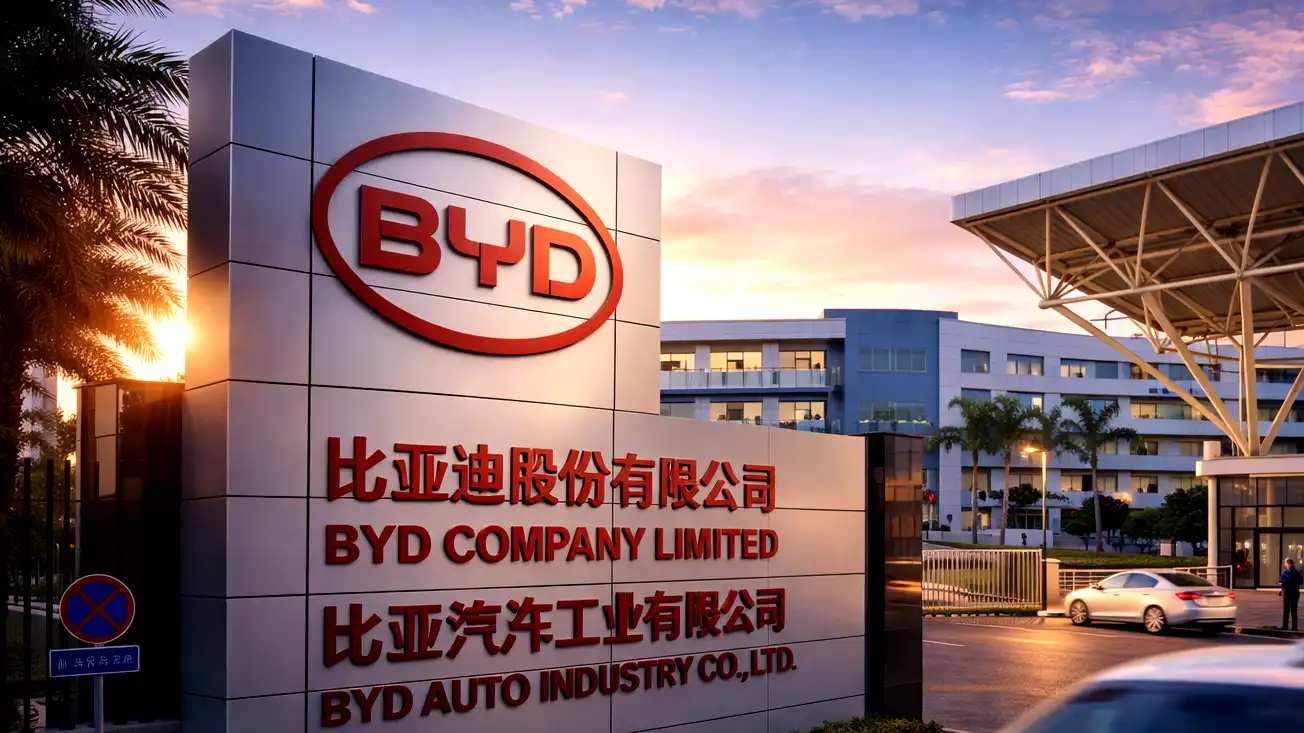
The global automotive landscape is going through a massive structural shift, driven by the rapid expansion of electric vehicle (EV) manufacturers and shifting consumer preferences. At the very center of this competitive storm is the fierce rivalry between Tesla Inc. and China’s BYD Co. As both companies prepare to release their second-quarter performance metrics, market indicators show that the Chinese automaker is positioned to reclaim the crown as the world’s top seller of fully electric vehicles, leveraging a highly integrated supply chain and a massive surge in international exports.
This back-and-forth battle for volume dominance highlights two fundamentally different approaches to the clean energy transition. While Tesla relies on a premium, highly focused brand image and is increasingly pivoting its valuation toward autonomy, artificial intelligence, and robotics, BYD is utilizing an aggressive, high-volume, multi-brand strategy that targets budget-conscious buyers across emerging and established markets alike. As the two giants face off in the second half of the year, the results will write the next chapter of the global electric vehicle race.
Historical Context: The Back-and-Forth Battle for Supremacy
The rivalry between Tesla and BYD has developed into one of the most closely watched corporate battles in the world. For more than a decade, Elon Musk’s Tesla operated as the undisputed leader in the mass-market EV space, using its early-mover advantage to build giant manufacturing facilities in the United States, China, and Germany. However, BYD’s rapid growth has systematically challenged that dominance.
The battle reached a major turning point during the full year of 2025:
- BYD’s 2025 Triumph: For the first time in history, BYD officially became the world’s largest seller of battery-electric vehicles (BEVs) for a full calendar year, delivering approximately 2.26 million pure electric units worldwide.
- Tesla’s 2025 Decline: Tesla’s annual deliveries fell by 8.6% year-over-year, dropping to 1.64 million vehicles down from nearly 1.8 million in 2024, as the company struggled with an aging product lineup and rising competition.
- The Q1 2026 Rebound: Tesla managed to narrowly reclaim the top spot during the first quarter of 2026, delivering 358,023 vehicles compared to BYD’s 310,000 BEVs, primarily because domestic sales in China slowed down after the local government adjusted its electric vehicle purchase tax exemptions.
While Tesla’s first-quarter bounce brought some relief to Wall Street, the recovery appears to be short-lived. BYD’s rapid recovery in the second quarter, fueled by an extraordinary export push and aggressive pricing adjustments, has set the stage for the Chinese manufacturer to take the lead once again, proving that the structural advantages of its business model are highly resilient.
BYD’s Global Export Engine: Offsetting Domestic Sluggishness
The primary driver of BYD’s current momentum is its highly successful international expansion strategy. The domestic car market in China is currently locked in a brutal price war, with dozens of local brands slashing prices to near-zero margins to capture market share. This intense competition, combined with cooling domestic consumer demand, has weighed heavily on BYD’s home-market sales, which fell by 22% year-over-year in June.
However, BYD has successfully offset this domestic slowdown by aggressively scaling up its international exports. In June, the company’s overseas sales jumped an extraordinary 94.7% compared to the same month last year, reaching 175,349 vehicles. This export surge built on a highly successful performance in April, when the company exported a record-high 134,542 passenger vehicles and pickups outside of China, representing a 71% year-over-year increase for the month. This strong international momentum prompted BYD management to revise its annual export target upward from 1.3 million to 1.5 million units, demonstrating immense confidence in its global logistics and localized distribution networks.
Building an Unmatched Vertical Integration Advantage
The core foundation of BYD’s pricing and manufacturing advantage lies in its unique corporate history. Founded in Shenzhen in 1995 by Wang Chuanfu with just 20 employees, the company began as a cell phone battery manufacturer before expanding into the automobile business in 2003. This deep, early-stage expertise in chemistry and battery pack assembly continues to define the company’s vertically integrated approach today.
Unlike legacy automakers in the West, which rely on external suppliers for almost all of their key components, BYD manufactures nearly every part of its vehicles in-house, including its proprietary lithium iron phosphate (LFP) Blade batteries, electric motors, and power electronics. This extreme vertical integration allows the company to bypass the supply chain bottlenecks that frequently plague its competitors, while keeping its production costs incredibly low. According to industry analyses, BYD’s battery manufacturing costs are roughly 30% cheaper than those of Western automakers, giving the company a massive, structural pricing advantage that is highly difficult to overcome.
Expanding the European Footprint Amidst Tariff Threat
To sustain its global growth, BYD is moving rapidly to establish a permanent manufacturing footprint inside Europe, aiming to bypass rising protectionist barriers. The European Union has moved to defend its domestic automotive industry by preparing to implement anti-subsidy tariffs of up to 35.3% on imported Chinese electric vehicles.
BYD’s strategy to counter these tariffs relies on rapid localization. The company is already constructing its first European passenger vehicle factory in Hungary, which is expected to begin operations within the next two years. Furthermore, a senior adviser to the company’s European operations confirmed that BYD is nearing a final decision on the location of its second European manufacturing plant. To build brand awareness and win over local consumers, the company has also pursued high-profile marketing initiatives, including serving as an official sponsor for the UEFA Euro 2024 soccer tournament. This local manufacturing and marketing push will allow the Chinese giant to establish itself as a trusted, domestic brand in the European market, protecting its sales from regulatory trade wars.
Tesla’s Stabilization Strategy and the Pivot to Autonomy
While BYD relies on high volume and rapid physical expansion, Tesla is executing a very different strategic playbook. The Austin-based electric vehicle pioneer is preparing to release its highly anticipated second-quarter production and delivery report, which represents a crucial test of whether the company’s automotive business has successfully stabilized after a difficult two-year stretch.
Wall Street’s consensus expectations for Tesla’s second-quarter deliveries are highly focused:
- Tesla IR Consensus: The company-compiled average of 22 sell-side analysts projects 406,024 total deliveries for the quarter, with a median estimate of 408,609.
- Bloomberg Consensus: A slightly more conservative average compiled from approximately 20 analysts projects 396,465 deliveries.
- Stock Price Reaction: Anticipation of a solid delivery report sent TSLA shares surging by over 8% in late June to close at $411.84, logging the stock’s best day in over a year.
- The Year-Over-Year Benchmark: Any delivery number that clears the 384,122 vehicles Tesla delivered in the second quarter of 2025 will represent a return to positive year-over-year growth, signaling that the company’s automotive business has successfully put its recent declines behind it.
To stimulate sales in a cooling market, Tesla has rolled out lower-specification, more affordable versions of its popular Model 3 and Model Y over the past year, while offering aggressive financing promotions and discounts in key international markets like China and Europe.
The Pricing and Affordability Conundrum in Western Markets
The broader challenge facing the Western electric vehicle market is one of affordability. During the early phases of the EV transition, early adopters with high disposable incomes were willing to pay premium prices for electric cars. Today, as the market attempts to transition to mass-market consumers, the high purchase price of electric vehicles has become a major roadblock.
In the United States, the average transaction price for a new EV hovers around $55,000, compared to approximately $47,000 for all vehicles, representing a significant price premium that many middle-class families cannot afford. This affordability gap has been worsened by the expiration of the $7,500 federal EV tax credit under previous policy guidelines, which immediately cooled demand in the U.S. market. Ford CEO Jim Farley highlighted this structural challenge, pointing out that mass-market buyers simply do not want to spend more than $30,000 on an EV, but building a profitable, high-quality electric car at that price point remains highly difficult for legacy automakers due to high battery and manufacturing costs. This pricing mismatch has left a massive open door for Chinese manufacturers like BYD, whose ultra-affordable models like the Seagull can retail for a fraction of the cost of Western models.
Betting the Farm on Autonomy, AI, and Humanoids
Because the profitability of its hardware-automotive business is facing intense pressure from low-cost Chinese competition, Tesla is shifting its long-term corporate identity away from traditional car manufacturing. Elon Musk has repeatedly stated that Tesla’s premium stock valuation is not justified by its car sales alone, but by its future potential in autonomy, artificial intelligence, robotics, and advanced software.
Financial analysts at Cantor Fitzgerald recently described 2026 as a “transformational year” for Tesla, highlighting several key non-automotive catalysts expected to drive the company’s future value:
- The Cybercab: Tesla is preparing to unveil its dedicated robotaxi, designed from the ground up for fully autonomous ride-hailing services.
- Full Self-Driving (FSD) Upgrades: The company recently rolled out its advanced FSD V14 Lite software upgrade to early-access Hardware 3 owners, significantly improving the capabilities of older vehicles in its fleet.
- Energy Storage Deployments: Tesla’s energy storage division is experiencing explosive growth, with analysts projecting Q2 Megapack deployments to reach 15.7 GWh, significantly beating previous estimates.
- Optimus Humanoid Robots: The company has begun installing its first-generation robot production line at its California facilities, aiming to deploy humanoid robots in active factory roles by the end of the year.
This pivot to artificial intelligence and robotics allows Tesla to position itself as a high-margin technology platform rather than a low-margin hardware manufacturer, protecting its market capitalization from the commodity price wars currently reshaping the automotive industry.
The Five-Year Vision: Becoming the World’s Largest Automaker
Despite Tesla’s pivot to software and autonomy, BYD is keeping its focus squarely on physical, global automotive dominance. During the company’s annual shareholder meeting in Shenzhen, Chairman Wang Chuanfu outlined an incredibly ambitious corporate objective: to transform BYD into the world’s largest overall automaker within the next five years.
This goal extends far beyond simply leading the electric vehicle market. If successful, BYD would surpass legacy combustion-engine giants like Toyota and Volkswagen to become the largest car manufacturer on earth in terms of total volume. To achieve this, the company is investing heavily in next-generation hybrid technologies, solid-state battery upgrades, and advanced fast-charging capabilities, aiming to offer highly efficient, affordable vehicles to consumers across every major market in Asia, Latin America, Europe, and the Middle East. While legacy automakers are scaling back their electrification targets due to high costs, BYD’s aggressive vertical integration and relentless focus on volume are allowing it to run at full speed, reshaping the future of the global transportation sector.
Conclusion
The ongoing battle between Tesla and BYD represents a defining moment for the global automotive industry. As the second-quarter delivery reports prepare to go public, BYD is poised to reclaim the title of the world’s largest seller of fully electric vehicles, using its robust export engine and vertical integration advantages to offset domestic challenges in China. By scaling up its overseas deliveries to 175,349 units in June and expanding its localized manufacturing footprint in Europe, the Chinese giant is executing a highly successful, high-volume growth strategy.
At the same time, Tesla is stabilizing its core automotive business, with Q2 delivery consensus pointing to a respectable 406,024 vehicles, representing a return to positive year-over-year growth. However, Tesla’s long-term future is increasingly tied to its high-margin pivot toward autonomy, artificial intelligence, and robotics, leaving the low-cost volume race to its Chinese rival. As these two different business strategies play out across the globe, the competition between Tesla’s premium AI platform and BYD’s manufacturing powerhouse will continue to drive rapid innovation, ultimately deciding who controls the future of the global electric vehicle market.






