The rapid evolution of artificial intelligence has created an insatiable demand for computing power. As model architectures grow more complex and user adoption climbs, the physical infrastructure supporting these systems faces unprecedented pressure. This challenge is particularly acute for Chinese artificial intelligence laboratories, which must navigate both explosive software demand and strict international hardware limitations. Beijing-based Zhipu AI, one of the most prominent players in the region, finds itself at the center of this dynamic.
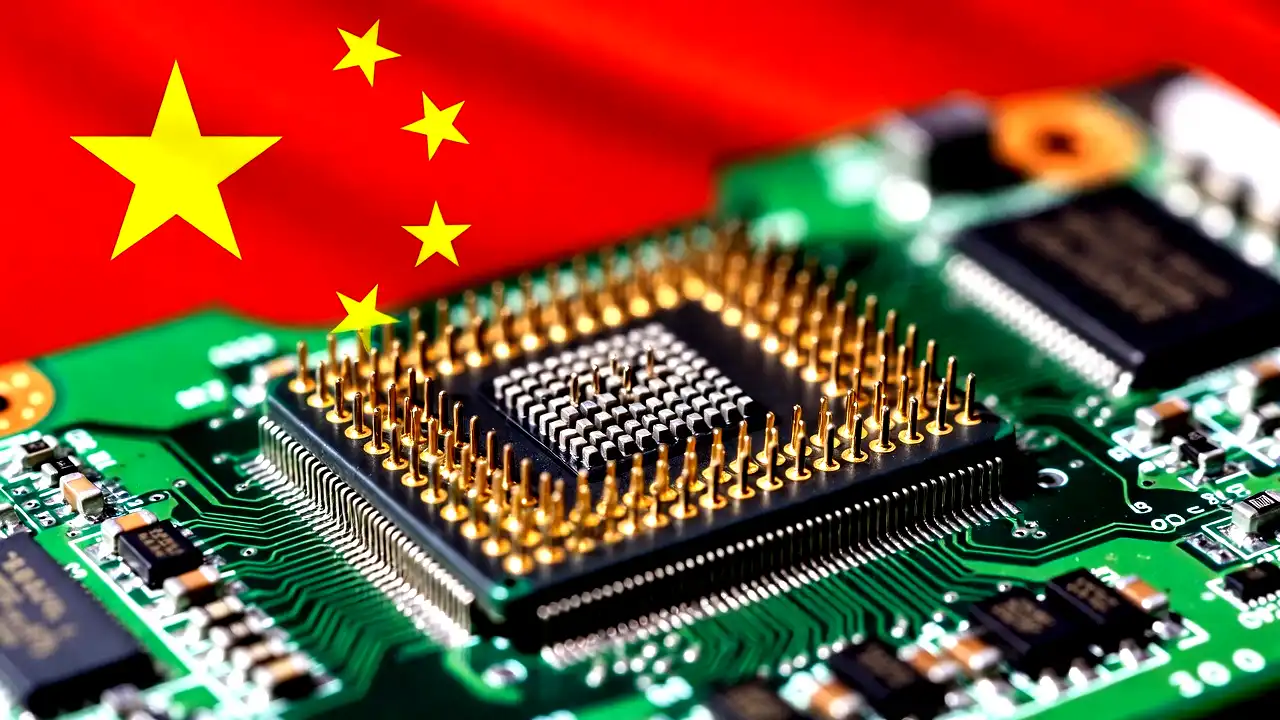
Recently, the company released its highly anticipated GLM-5.2 large language model. The market response was immediate, with daily token usage on developer platforms surging by as much as 27 times during its first week of availability. This massive spike in demand has forced the company to reconsider its long-term hardware strategy. To sustain this trajectory and bypass ongoing supply constraints, the lab is in early discussions with domestic chip design houses about developing a custom Application-Specific Integrated Circuit, or ASIC, tailored specifically for its GLM model family.
This move represents a significant moment in the global AI hardware landscape. Historically, technology companies have relied on general-purpose graphics processing units, or GPUs, to train and run their models. However, the shift toward proprietary, application-specific silicon highlights a broader trend: as software matures, the hardware must become highly specialized to maximize efficiency and reduce operating costs. For Zhipu AI, building custom silicon is not merely an optimization project; it is a strategic necessity to ensure the long-term viability of its open-weight ecosystem.
The Phenomenal Surge of GLM-5.2
The release of GLM-5.2 in mid-June marked a major milestone for the open-source developer community. Positioned as a direct competitor to proprietary Western frontier models, GLM-5.2 brought advanced reasoning and coding capabilities to the market at a fraction of the cost. The model features a 744-billion-parameter Mixture-of-Experts architecture, utilizing roughly 40 billion active parameters per token. This design allows the model to deliver high-tier performance while maintaining operational efficiency during inference.
One of the standout specifications of the new model is its 1-million-token context window. This capacity represents a fivefold increase over its predecessor, GLM-5.1, which capped context at 200,000 tokens. The model also supports up to 131,072 output tokens, making it highly capable for long-horizon agentic tasks, such as generating complete codebases or conducting deep security audits.
Because of these capabilities, the model has gained rapid traction on major model aggregator platforms like Vercel and OpenRouter. During its initial launch week, daily token traffic for GLM-5.2 rose 27-fold, outpacing the post-launch adoption rates of many Western and domestic competitors. Developers have praised the model for performing within a single percentage point of Anthropic’s Claude Opus 4.8 on key coding benchmarks, despite costing roughly 20% of what Western competitors charge for API access.
To accelerate adoption, the company has paired the model with aggressive developer incentives. For example, the recently introduced ZCode—a specialized control harness that helps GLM-5.2 execute tasks autonomously—arrived with promotions that increased existing subscriber data quotas by 50% and offered 5 million free tokens to new users. This aggressive pricing strategy has forced software-as-a-service companies to rethink their AI procurement strategies, driving token volume even higher and placing an immense load on Zhipu AI’s underlying hardware infrastructure.
The Strategic Pivot to Custom ASICs
When daily token usage multiplies by 27 times in a matter of days, the financial and logistical burden of running inference on general-purpose hardware becomes clear. While GPUs are incredibly versatile and excellent for training a wide variety of models, they are not always the most efficient choice for running a specific model at massive scale. This reality is driving Zhipu AI to explore custom ASIC development.
An ASIC is designed from the ground up for a single, specific task. By collaborating with domestic chip design houses, Zhipu AI aims to build a processor optimized specifically for the mathematical operations and data pathways used by the GLM model family. This optimization can yield massive improvements in throughput and energy efficiency, allowing the company to serve more users while lowering the cost per token.
However, embarking on a custom chip design program is a long-term and high-risk endeavor. Industry analysts estimate that the entire process—from initial architecture design to manufacturing, testing, and software integration—will take more than two years. Zhipu AI will need to significantly expand its in-house semiconductor engineering team to manage this project.
The process requires several distinct phases. First, engineers must define the specific hardware blocks that will accelerate GLM’s Mixture-of-Experts architecture. Once the design is finalized, the chip must go through a physical layout and design phase before being sent to a foundry for manufacturing—a process known as tape-out. After receiving the physical silicon, the team must run extensive test cycles to ensure the chip operates reliably. Finally, the company will have to rewrite its entire software stack, ensuring its deep learning frameworks can interface seamlessly with the new custom architecture.
Despite the long timeline, the potential rewards are substantial. Successful execution would give Zhipu AI complete control over its hardware supply chain, sheltering the lab from market shortages and international trade disputes.
Bypassing Nvidia: The Geopolitical and Financial Backdrop
The decision to explore custom silicon does not happen in a vacuum. It is deeply connected to the geopolitical friction between Washington and Beijing. Over the past few years, the United States has steadily tightened export controls on advanced semiconductors, targeting high-performance GPUs. These restrictions are designed to slow down the development of frontier-grade artificial intelligence systems in the region.
For Zhipu AI and other domestic labs, these export controls have transformed computing power from a simple financial line item into a hard physical constraint. Securing Nvidia’s most capable chips, which have long been the industry standard for AI workloads, has become increasingly difficult and expensive. This constraint has triggered a major push for domestic self-reliance.
This shift presents a long-term challenge for Nvidia. Although demand for Nvidia’s hardware remains incredibly strong worldwide, losing the Chinese market permanently would represent a significant blow. Every domestic developer that successfully shifts its workloads to a custom ASIC represents a piece of Nvidia’s addressable market that becomes structurally harder to recover. Once a company invests millions of dollars and several years into building a custom hardware and software ecosystem, they are unlikely to return to general-purpose GPUs, regardless of how future export control policies evolve.
Evaluating the Fully Domestic Silicon Training Claims
The discussion surrounding Zhipu AI’s hardware strategy has also shed light on how the company managed to train its latest models under existing constraints. Reports have circulated within the developer community indicating that Zhipu AI trained GLM-5.2 entirely on Huawei Ascend silicon, bypassing Nvidia hardware completely.
This training project reportedly cost around $25 million, representing a 90% cost reduction compared to what a similar project would have cost using standard Western cloud infrastructure. If true, this achievement demonstrates that Chinese AI labs can build highly competitive, frontier-adjacent models using a fully domestic hardware stack.
While some engineers in the open-source community have expressed skepticism about the total absence of Western silicon during the pre-training phases, the consensus is that the domestic hardware ecosystem has made rapid progress. Huawei’s Ascend processors have emerged as a viable alternative for many training and inference workloads.
However, even if domestic alternatives exist, the sheer volume of demand means that relying on a single supplier like Huawei is risky. By pursuing its own custom ASIC, Zhipu AI can diversify its hardware portfolio, ensuring that its infrastructure can scale to meet the needs of millions of developers without relying solely on third-party silicon providers.
Market Performance, Valuation, and Global Rivalries
Zhipu AI’s rapid growth has not gone unnoticed by public markets. Known internationally as Z.ai, the company trades on the Hong Kong Stock Exchange under the name Knowledge Atlas Tech, using the stock code HK: 2513. Following reports of its potential inclusion in several Hang Seng indexes, the company’s shares jumped 26.2% in a single trading session, highlighting strong investor confidence in its commercial potential.
Financial institutions have also taken note. Analysts at JPMorgan recently maintained an Overweight rating on the stock, sharply hiking their price target. The bank pointed to Zhipu AI’s strong commercial pricing model and saw the company as well ahead of its peers in a highly competitive cloud infrastructure market. With some estimates placing the company’s market valuation close to $100 billion, the lab has the financial resources necessary to fund a multi-year, capital-intensive custom silicon program.
This financial strength is fueling an intense rivalry with Western AI labs, particularly Anthropic. The competition is playing out across multiple fronts, from raw model performance to developer tooling. Zhipu AI’s launch of ZCode was widely viewed as a direct response to Anthropic’s Claude Code platform, aiming to capture the rapidly growing market for autonomous coding assistants. As Western labs restrict access to their advanced APIs for users in certain jurisdictions, Zhipu AI has stepped into the vacuum, offering powerful, open-weight alternatives that give developers greater flexibility and control.
The Global Implications for AI Infrastructure
Zhipu AI’s exploration of custom ASICs is part of a broader, global shift in how artificial intelligence infrastructure is built. In the early days of the AI boom, general-purpose GPUs were the ideal tool because model architectures were changing constantly, and flexibility was paramount. Today, however, certain architectures like the Transformer and Mixture-of-Experts have become dominant standards.
When the industry converges on standard architectures, the economic argument for custom silicon becomes overwhelming. Major global technology firms have already pioneered this path. Google has long relied on its custom Tensor Processing Units, or TPUs, to power its search and AI workloads. Meta has developed its own custom silicon, the Meta Training and Inference Accelerator, or MTIA, while Amazon Web Services offers its custom Trainium and Inferentia chips.
By designing its own silicon, Zhipu AI is following a proven playbook for achieving scale and cost efficiency. For enterprises, this trend suggests that the future of AI cloud computing will be highly fragmented. Rather than a single dominant hardware provider, the market will likely feature a variety of specialized processors, each optimized for different models and workloads.
At the same time, the rise of powerful, open-weight models from Chinese firms introduces new considerations for global enterprises. While these models offer incredible cost efficiency and the ability to self-host, businesses must carefully navigate data sovereignty, compliance, and security frameworks. The availability of high-performing, low-cost models will continue to put downward pressure on API pricing globally, forcing all AI providers to focus intensely on infrastructure efficiency.
Looking Ahead in a Fragmented Tech Ecosystem
The modern artificial intelligence sector is moving at a relentless pace. Zhipu AI’s journey from a Beijing-based research lab to a major player on the global stage highlights the speed at which the industry is changing. The 27-fold surge in daily token usage for GLM-5.2 demonstrates that the global appetite for advanced, cost-effective artificial intelligence is virtually limitless.
Yet, this software-driven demand is constantly hitting the hard physical limits of hardware availability. By taking the first steps toward designing its own custom ASIC, Zhipu AI is attempting to build a bridge over the geopolitical and logistical obstacles that threaten to slow its progress. If successful, this effort will not only secure the company’s position at the forefront of the AI race but will also provide a blueprint for how other technology firms can navigate a deeply divided global market. The transition from general-purpose GPUs to highly optimized, custom silicon is no longer just an engineering goal; it has become the defining battleground for technological independence.