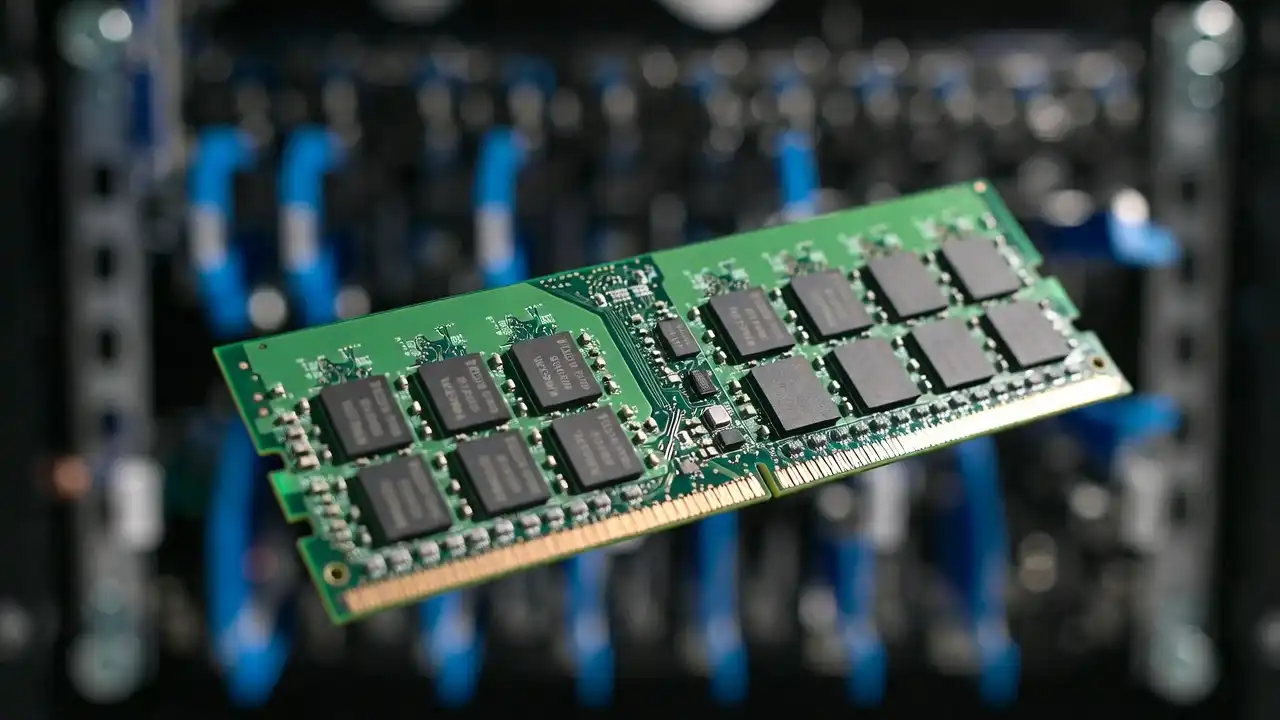
The global semiconductor industry has enjoyed one of its most lucrative periods in recent history, driven almost entirely by the rapid expansion of artificial intelligence. High-bandwidth memory, advanced dynamic random-access memory (DRAM), and enterprise NAND flash storage have shifted from standard commodities into highly valued bottlenecks. Earlier this year, this surge propelled the market valuations of South Korea’s SK Hynix and U.S.-based Micron Technology above the historic $1 trillion club, signaling massive investor confidence in a permanent structural revaluation of the sector.
However, this period of high valuation is colliding with the cyclical realities of the semiconductor industry. Historically, memory chipmakers have operated on brutal boom-and-bust cycles. Periods of high prices and supply shortages inevitably prompt manufacturers to build massive new capacity. Once that capacity comes online, it often overshoots demand, leading to a severe oversupply, a collapse in prices, and a prolonged market downturn.
The concern that the market is entering the final phases of its current upcycle gained significant credibility recently. Michael Burry, the prominent investor famous for predicting the 2008 subprime mortgage crisis, disclosed a high-profile short position against Micron Technology, entering the trade at roughly $1,051.87 per share. Burry’s bearish bet has intensified a debate over whether the current artificial intelligence memory boom is sustainable, or if the market is heading for a dot-com-style oversupply correction. For memory makers like Micron and SK Hynix, navigating this shifting terrain will require a major departure from traditional operating models to prevent a severe market meltdown.
Decoding the Bearish Shift in Public Markets
Michael Burry has built a reputation on identifying speculative bubbles before they pop. In his public disclosures, he was direct about his skepticism regarding the memory chip supercycle, stating that Micron defines cyclicality like no other. He argued that when market conditions are favorable, semiconductor stocks are bid up far beyond their intrinsic value, and when conditions turn negative, they are sold down just as aggressively.
The numbers behind the current upcycle explain why many investors remain optimistic, even as skeptics build short positions. SK Hynix is projected to record massive revenues of 355 trillion won and net profits of 221 trillion won in 2026, representing increases of 265% and 415%, respectively, from 2025.
Micron expects to post revenue of $130 billion, up 247%, and a net profit of approximately $83 billion, up 876%, for its fiscal year ending August 31. These earnings figures make memory stocks look cheap on a forward price-to-earnings basis.
Yet, as Burry points out, these forward multiples can be highly deceptive. If the market anticipates that these peak earnings are unsustainable, capital immediately begins to flee the sector. We have already seen this play out in real time. Following Micron’s earnings report in late June, initial optimism quickly gave way to a broader selloff.
SK Hynix, typically the most volatile of the big three memory producers, fell as much as 25% from its recent peak. This capital flight occurred because investors began to worry about a potential slowdown in capital expenditures from tech giants like Meta Platforms and Apple, proving that even record-breaking profits cannot shield cyclical stock prices from shifting sentiment.
The Half-Trillion-Dollar Supply Tsunami
The fundamental threat to the memory chip market is not a sudden collapse in demand, but rather a massive, coordinated expansion of supply. Driven by the fear of missing out on the artificial intelligence boom, the world’s leading memory producers are investing historic sums to build new manufacturing facilities.
Samsung and SK Hynix have announced plans to invest more than $500 billion in semiconductor capacity expansion over the next decade. As part of this push, SK Hynix plans to nearly double its DRAM wafer production capacity by 2031, aligning with commitments to double overall wafer production capacity within five years.
This level of capital expenditure is unprecedented in the semiconductor sector. Historically, memory chips have functioned as a commodity business. When multiple capital-flush players simultaneously build new production lines to capture the same pool of demand, they almost always create a supply glut.
If this massive wave of new manufacturing capacity hits the market before demand can absorb it, a severe price correction is highly likely. Some analysts are already forecasting that DRAM prices could drop by as much as 80% to 90% over the next three years as these new factories begin volume production.
This risk is compounded by changes in how technology giants are funding their artificial intelligence buildouts. Companies like Alphabet and Microsoft have recently turned to debt and equity markets to raise capital rather than relying purely on cash reserves. This shift suggests that the era of unlimited corporate spending on artificial intelligence hardware may be nearing its peak, raising the risk that new chip supply will arrive just as demand begins to normalize.
Apple’s Secret Negotiations with Chinese Chipmakers
The potential end of the memory shortage was brought into sharp focus by a major supply chain development involving Apple. For months, the consumer electronics giant has grappled with soaring memory component costs. This situation escalated to a crisis point in late June, when Apple took the rare step of raising prices mid-cycle across its entire Mac, iPad, and Vision Pro lines by approximately 50%, citing a “hundred-year flood” of rising component costs.
To bypass this “chipflation” pressure, Apple CEO Tim Cook secretly initiated procurement negotiations with two blacklisted Chinese memory manufacturers: ChangXin Memory Technologies (CXMT) and Yangtze Memory Technologies (YMTC). Apple’s strategy involves using these lower-cost Chinese chips exclusively in devices sold within the Chinese domestic market, thereby avoiding direct conflicts with U.S. national security sanctions.
When news of these negotiations leaked, it triggered a global semiconductor selloff on July 3. SK Hynix plummeted 15% in a single day, while Samsung Electronics fell 9%, and Japan’s Kioxia Holdings dropped 13%.
This reaction reflects deep concern among investors. CXMT is not a minor player; it captured approximately 8% of the global DRAM market by early 2026, expanding its monthly production capacity from 100,000 wafers to 290,000 within a single year. Meanwhile, YMTC has grown to capture 13% of the global NAND flash market, approaching Micron’s 14% share.
If Apple successfully integrates these Chinese suppliers, it will structurally reduce demand for premium chips from Micron, Samsung, and SK Hynix. This move serves as a stark warning to the memory cartel that downstream customers are actively seeking cheaper alternatives and will not tolerate high pricing indefinitely.
Long-Term Agreements: A Shield with Limited Power
To convince Wall Street that this cycle is different, memory manufacturers have pointed to the widespread adoption of Long-Term Agreements, or LTAs, with their largest customers. Micron, for instance, has successfully secured multi-year agreements that stretch up to five years. These contracts typically require substantial upfront prepayments from customers and are designed to secure guaranteed supply for buyers while providing predictable revenue visibility for manufacturers.
In theory, these agreements should insulate memory makers from the wild price swings of the spot market. If a supply glut occurs, the LTAs are supposed to act as a financial floor, ensuring that a significant portion of production is sold at pre-negotiated, profitable rates.
However, public markets remain highly skeptical of this defense. Despite Micron’s efforts to highlight its long-term contract coverage, its stock fell from 11 times forward earnings to just seven times forward earnings in a matter of weeks.
The reason for this skepticism is that long-term agreements are rarely ironclad in the technology sector. If a major economic downturn occurs, or if hyperscale data center operators face a sudden decline in cloud revenues, they often renegotiate, delay, or scale back their purchase commitments.
Furthermore, if spot market prices collapse by 80%, a customer bound to a long-term contract at peak rates faces a massive competitive disadvantage. This pressure eventually forces memory manufacturers to adjust their contract pricing to preserve long-term client relationships, meaning that LTAs can soften the impact of a market crash, but they cannot prevent it entirely.
The Transition from Commodities to Custom Partners
If Micron and SK Hynix are to dodge a severe memory meltdown, they must structurally alter how they do business. The traditional memory model—manufacturing massive batches of identical, standardized silicon wafers and selling them on the open market—is inherently vulnerable to boom-bust cycles.
To break this pattern, memory makers must transition from being commodity suppliers to becoming highly specialized, customized hardware partners. The nature of modern artificial intelligence workloads makes this transition possible.
Next-generation systems require highly specialized memory architectures, such as High-Bandwidth Memory 4 (HBM4), which is scheduled to begin rolling out in the second half of 2026. HBM4 is not a generic, off-the-shelf component. It requires custom logic layers, advanced packaging, and deep integration with the specific graphics processing units and accelerators built by firms like Nvidia and Google.
By co-designing customized memory chips directly with logic designers and advanced foundries, memory makers can build highly sticky customer relationships. A customized HBM4 chip designed for a specific Nvidia processor cannot easily be swapped out for a cheaper, generic alternative from a competitor. This custom integration creates a structural moat, shielding the manufacturer from the price volatility of the broader commodity DRAM market and allowing them to maintain stable, high-margin revenue streams even during an industry-wide oversupply.
Coordinated Choking and Legal Headwinds
The memory industry’s attempts to manage pricing power have also run into significant legal and regulatory challenges. In late June, a major class-action lawsuit was filed in California accusing Samsung, SK Hynix, and Micron of engaging in coordinated DRAM price-fixing.
The lawsuit alleges that the three dominant memory manufacturers used their highly publicized transition to high-bandwidth memory production as a convenient cover to artificially choke the supply of older, legacy memory technologies, such as DDR3 and DDR4.
By limiting the production of these standard PC and server chips, the manufacturers allegedly drove up prices across the entire consumer electronics sector, contributing to the sharp price increases seen on retail devices.
This legal challenge highlights the risks of trying to maintain high prices through supply manipulation. While capacity cuts can temporarily stabilize a declining market, doing so in a coordinated fashion invites intense antitrust scrutiny and costly litigation.
For Micron and SK Hynix, relying on supply restrictions to keep prices elevated is a high-risk strategy that can backfire. Instead, their focus must remain on genuine technological differentiation and operational efficiency, ensuring they can remain profitable even when market pricing inevitably softens.
Navigating the High-Stakes Semiconductor Cycle
The global memory chip market stands at a critical crossroads. The massive demand generated by the artificial intelligence boom has driven unprecedented revenue and pushed valuations to historic highs. Yet, the industry is now facing a massive, half-trillion-dollar wave of new manufacturing capacity that threatens to flood the market with supply. Michael Burry’s high-profile short position serves as a powerful reminder that the laws of supply and demand have not been suspended, and that every semiconductor boom has historically ended in a cyclical bust.
However, a total market meltdown is not inevitable. If Micron and SK Hynix can maintain strict capital discipline, resist the urge to overbuild generic capacity, and successfully execute their transitions to custom, co-designed memory architectures like HBM4, they can structurally insulate themselves from the worst of the downturn. The coming years will test whether the memory cartel has truly evolved into a specialized tech sector, or if it remains bound to the volatile, commodity-driven patterns of the past.