The commercialization of space has reached an inflection point where logistics, shipping, and infrastructure are no longer limited to low Earth orbit. For decades, lunar exploration remained the exclusive playground of heavily funded government agencies executing bespoke, high-cost missions. Today, the focus has shifted toward building a sustainable, high-frequency logistics network on and around the moon.
In a major step for this emerging sector, Tokyo-based lunar transport company ispace announced a new lower-cost lunar cargo service. The company is taking a bold step by securing dedicated payload space on SpaceX’s massive Starship heavy rocket and lunar lander system.
Under the terms of the agreement, ispace has purchased 500 kilograms (1,102 pounds) of payload capacity on an upcoming SpaceX Starship flight. This mission is scheduled to touch down on the lunar surface as early as 2030.
Instead of operating a completely independent launch vehicle and lander for every project, ispace plans to aggregate multiple payloads from commercial, academic, and governmental clients worldwide. This project represents the first formal “rideshare” service to the moon using next-generation heavy-lift infrastructure.
This partnership marks a fundamental shift in how private companies approach deep-space logistics. Rather than building every piece of the transportation stack from scratch, companies are beginning to specialize.
While SpaceX focuses on the heavy-lift transportation required to move massive tonnage from Earth to the moon, ispace is positioning itself to handle the delicate “last-mile” integration, deployment, and surface operations. By combining their strengths, both firms are establishing the structural foundations for a functional, commercial lunar economy.
Translating the iSpace and SpaceX Lunar Agreement
The mechanical scale of this agreement highlights the dramatic transition occurring in space launch capabilities. For years, commercial moon missions relied on medium-class rockets like the Falcon 9, which required landers to be exceptionally lightweight and tightly optimized.
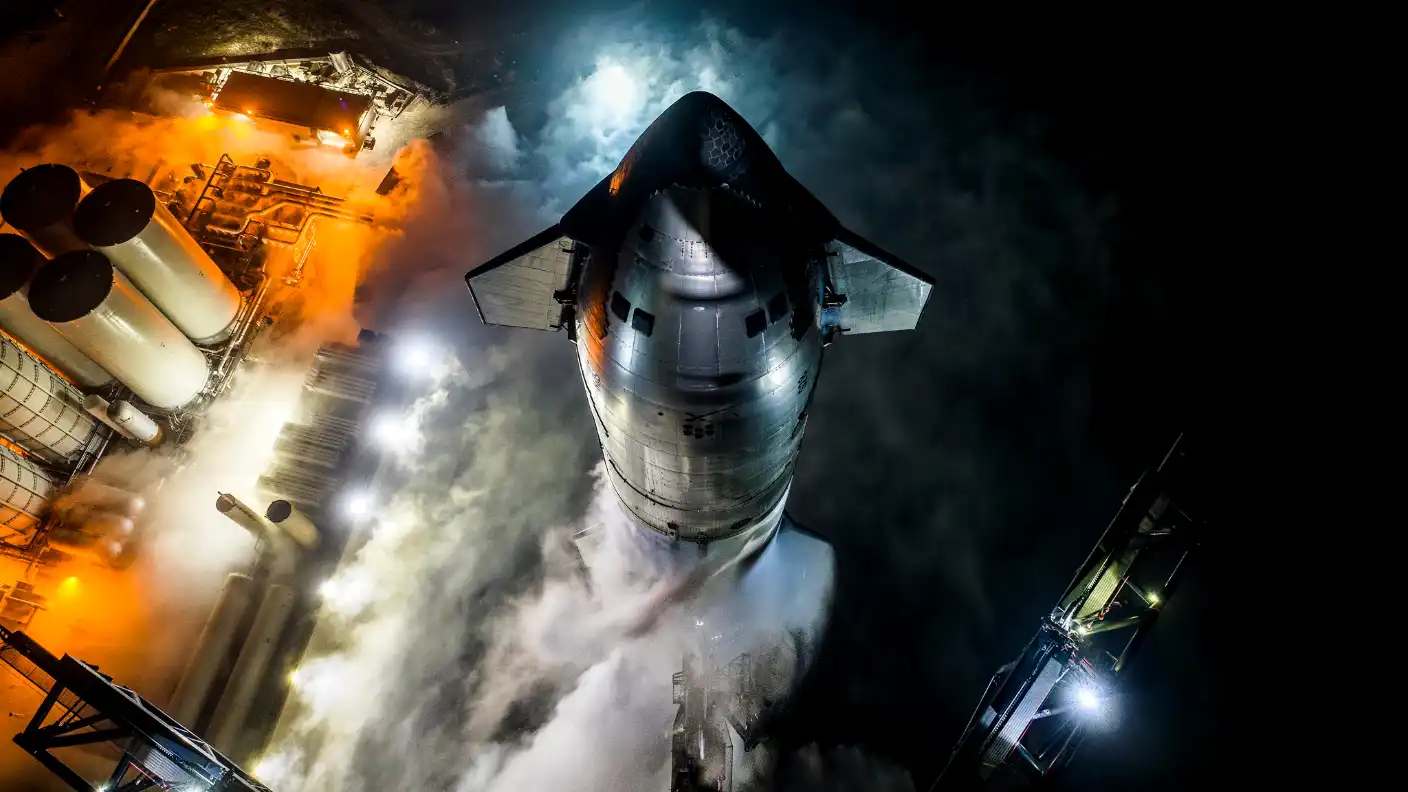
SpaceX’s Starship completely rewrites these design constraints. As the largest and most powerful rocket ever developed, Starship can carry over 100 metric tons of cargo directly to the lunar surface by utilizing in-space refilling depots.
By purchasing a 500 kg block of this massive capacity, ispace is securing a highly competitive footprint inside Starship’s cargo bay. The company is using this capacity to complement its existing lander programs, such as its “ULTRA” lunar lander.
While the ULTRA lander remains a core offering for specific high-value missions, the Starship agreement allows ispace to offer a more affordable, standardized transport service to clients with smaller payloads that do not require a dedicated lander.
For customers, this rideshare model operates much like commercial shipping on Earth. A university research lab or a private technology firm looking to test a new scientific instrument or a small robotic rover does not need to raise hundreds of millions of dollars to fund a dedicated spaceflight.
Instead, they can purchase a few kilograms of capacity from ispace. ispace then takes care of the complex engineering, structural integration, and regulatory paperwork required to get that payload safely integrated onto Starship, landed on the Moon, and activated on the surface.
Launching the Mobile Cargo System
While securing space on Starship is a major logistical win, getting payloads from the cargo bay of a 50-meter-tall spacecraft down to the dusty lunar surface is an incredibly complex engineering challenge. Starship’s cargo bay sits high above the ground, requiring specialized deployment mechanisms to safely lower vehicles and payloads to the regolith.
To solve this problem, ispace is developing a proprietary “Mobile Cargo System.” This system is essentially a highly versatile, heavy-duty lunar surface vehicle or rover platform that remains inside Starship during transit.
Once Starship lands safely on the Moon, the Mobile Cargo System will deploy, carrying the 500 kilograms of customer payloads with it.
This mobile system acts as a central hub for all the rideshare payloads on board. It will provide structural support, thermal protection, and standardized electrical and data connections to each individual instrument during the journey.
Upon landing, the vehicle will drive off the lander and navigate across the lunar terrain, allowing ispace to deploy customer payloads at specific, optimal locations or keep them mounted on the vehicle to conduct mobile scientific research. This mobility adds immense value for clients, transforming a stationary landing into an active, wide-ranging surface mission.
Bridging the Gap as a Lunar Access Integrator
With this new initiative, ispace is shifting its primary business identity toward becoming a “Lunar Access Integrator.” This concept mirrors the freight-forwarding and logistics integrators that keep global trade moving on Earth.
In terrestrial shipping, companies like DHL or FedEx do not necessarily own the commercial airplanes or cargo ships that transport goods across oceans. Instead, they buy cargo space in bulk, aggregate packages from thousands of individual customers, and handle the complex, end-to-end delivery process.
By acting as a Lunar Access Integrator, ispace is applying this proven logistics model to deep space. The company’s value proposition is no longer just about building aerospace hardware; it is about managing the complex technical interfaces between different systems.
ispace engineers will design standardized payload mounts, coordinate the data and communication protocols between customer instruments and Starship’s telemetry systems, and provide full operational support during and after landing.
This standardization is crucial for lowering the barrier to entry for space exploration. Many organizations with valuable scientific ideas or technologies lack the specialized aerospace engineering expertise required to design hardware for spaceflight.
By providing a set of simple, pre-configured interface guidelines, ispace makes it possible for a wider variety of industries—ranging from agriculture and mining to telecommunications and materials science—to conduct research and development on the Moon.
The Economics of Starship Lunar Cargo
The financial realities of space exploration have historically limited the field to a small group of wealthy nations. However, the introduction of rapidly reusable heavy-lift rockets is dramatically driving down the cost per kilogram of launching material into space.
SpaceX’s publicized baseline price for Starship cargo flights to the lunar surface starts at approximately $100 million per metric ton.
For a 500-kilogram payload capacity, this pricing implies a baseline transport cost of roughly $50 million for the payload reservation alone. While this is a significant sum, it represents a massive reduction in cost compared to historical lunar landing attempts, where dedicated missions routinely cost hundreds of millions of dollars for a fraction of the payload capacity.
By dividing this $50 million block among multiple rideshare clients, ispace can offer lunar surface access at prices that are accessible to mid-sized corporations, university consortiums, and smaller national space programs.
This economic shift is expected to trigger a wave of new commercial and academic research. When the cost of transport falls, the financial risk of failure decreases, allowing organizations to be more experimental with the technologies and instruments they send to the moon.
This environment of rapid experimentation is exactly what is needed to accelerate the development of practical lunar infrastructure, such as water-ice extraction tools, solar power arrays, and local manufacturing facilities.
Competing for Regional Supremacy in the Lunar Economy
The partnership between ispace and SpaceX is unfolding against a backdrop of intensifying geopolitical and commercial competition in the Asia-Pacific region. Governments and private enterprises across Asia are rapidly accelerating their lunar exploration roadmaps, recognizing that early participation in the lunar economy will yield significant technological and strategic advantages.
While Japan’s private sector is moving quickly through firms like ispace, other regional players are stepping up their state-run programs:
- South Korea: The nation recently announced an ambitious plan to launch its own national moon lander by 2030. The mission is planned to utilize South Korea’s domestic Nuri (KSLV-II) space launch vehicle or its upcoming next-generation heavy-lift successors, establishing the country as a major, independent player in deep-space exploration.
- China: The Chinese space program is consistently testing its heavy-lift capabilities, with the goal of executing its first crewed lunar landing missions by 2030. These missions are supported by the development of the Long March 10 rocket family and the Mengzhou spacecraft, which are undergoing active test phases.
- India: Following its successful robotic landings near the lunar south pole, India is expanding its lunar exploration roadmap to include sample-return missions and long-term surface operations.
In this highly competitive environment, the alliance between ispace and SpaceX provides Japan’s commercial sector with a major strategic advantage. Rather than waiting for domestic, state-funded heavy-lift rockets to complete their multi-year development cycles, ispace is leveraging SpaceX’s rapidly maturing Starship infrastructure to deploy its commercial services immediately.
This approach allows the company to build a global customer base, refine its surface operations, and establish its Mobile Cargo System as an industry standard long before rival regional systems can achieve operational readiness.
Looking Ahead to a Multi-Ton Lunar Future
The 500-kilogram rideshare mission planned for 2030 is just the beginning of ispace’s long-term commercial roadmap. As SpaceX refines its Starship launch operations and achieves a high frequency of interplanetary flights, the capacity available for commercial cargo will grow exponentially.
ispace has already signaled its intention to scale its cargo services over time, moving from 500-kilogram blocks to multi-ton payloads and establishing permanent, long-range transport routes across the lunar surface.
The transition from exploratory science missions to practical industrial development on the moon is no longer a science fiction scenario. Over the next decade, the moon will likely become a busy hub of commercial activity, supported by standardized logistics lines, robust surface transportation, and shared power grids.
By acting as an early integrator for these complex systems, ispace is securing a vital role in the supply chain of the future, proving that the key to unlocking the lunar economy lies in smart, scalable, and collaborative logistics partnerships.