

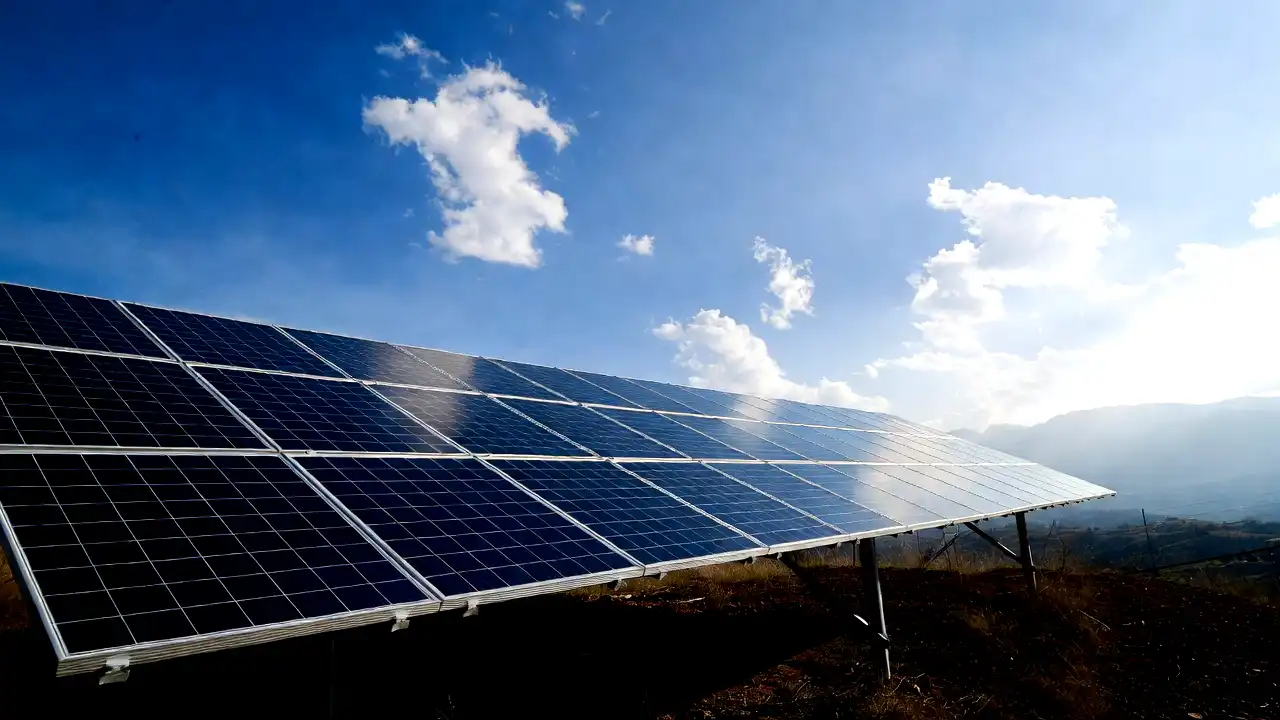
The European Union has long positioned itself as a global leader in the fight against climate change, setting ambitious targets to achieve a fully decarbonized, highly energy-efficient building stock by 2050. Because residential buildings represent a massive 26% of the continent’s total energy consumption, improving the energy balance of private homes has been a major priority for public policy.
To accelerate this transition, the European Commission established the €577 billion Recovery and Resilience Facility in 2021. This temporary pandemic-recovery fund required member states to dedicate at least 37% of their total funding to climate and energy objectives.
Under these recovery plans, member states allocated €43 billion directly to residential energy-efficiency renovations. This massive budget represents roughly 8% of the entire recovery program and 17% of the total commitment to climate action.
However, a landmark audit has exposed a significant gap between these financial commitments and actual, verifiable progress. In its Special Report 20/2026, titled “Improving the energy efficiency of private homes with the RRF – Broad financial support, but weaknesses in the foundations,” the European Court of Auditors raised serious questions about the program’s execution.
The auditing body revealed that despite the €43 billion expenditure, neither the European Commission nor individual member states can prove that these subsidies delivered meaningful, verified energy savings.
The findings highlight a fundamental flaw in the execution of European green funding, revealing that the program repeatedly prioritized spending money quickly over achieving long-term climate impact.
The Core Conflict: Easy Reforms over Real Climate Impact
The central failure of the home renovation initiative lies in how projects were selected, approved, and executed. To achieve deep decarbonization, residential buildings require comprehensive retrofits. These “deep renovations” typically involve complete building insulation, advanced window replacements, and the installation of modern, low-emission heating systems.
When executed correctly, deep renovations can reduce a home’s energy consumption by more than 60%. However, these comprehensive projects are slow, technically complex, and expensive to coordinate.
Instead of targeting these high-impact projects, the structure of the recovery fund unintentionally incentivized the opposite behavior. Because the recovery program was designed as a temporary crisis-response tool, it carried a strict completion and disbursement deadline of August 2026.
This tight timeline created immense administrative pressure on national governments. To meet their spending targets before the funds expired, member states systematically prioritized projects that were quick, simple, and easy to complete.
As a result, a massive portion of the €43 billion was directed toward lower-complexity upgrades, such as basic window replacements, individual solar panel installations, and standard boiler upgrades. While these modifications are beneficial, they do not deliver the deep, systemic energy reductions required to hit the European Union’s long-term climate targets.
Auditors noted that projects were routinely approved based on basic eligibility criteria alone, without any comparative process to prioritize the homes with the highest potential for energy savings or the greatest economic need. The money went where it was easiest to spend, rather than where it would make the most significant environmental difference.
Case Studies: How National Plans Missed the Mark
To compile its evidence, the auditing team conducted a detailed analysis of renovation schemes across four specific member states: Belgium, Cyprus, Italy, and Lithuania. The findings from these diverse regional markets confirmed that the lack of strategic prioritization was a systemic issue across the entire bloc.
In Cyprus, the audit raised serious doubts about the reported energy savings of local renovation programs. The findings showed that a significant portion of the funding went toward minor upgrades that failed to meet the program’s minimum 30% energy-saving threshold. In practice, these localized measures did not significantly reduce the overall, real-world energy consumption of the target buildings, meaning that taxpayers funded renovations that delivered virtually no measurable climate benefit.
Similarly, in Italy, the implementation of massive tax-incentive schemes, such as the country’s Superbonus program, faced criticism for a lack of cost-effectiveness and poor targeting. Because the Italian program offered exceptionally high subsidy rates with very broad eligibility criteria, it triggered a massive surge in demand.
However, the state did not require competitive selection processes to prioritize the oldest, most inefficient housing stock. Consequently, vast sums of public money were spent on homes that already possessed moderate efficiency ratings, leaving the most vulnerable, energy-poor households with little to no support.
In Lithuania and Belgium, the pressure to meet strict, short-term spending deadlines similarly distorted national priorities. Rather than developing targeted programs aimed at multi-family residential complexes—which represent the most energy-inefficient segment of the urban building stock—governments favored single-family home upgrades.
These projects were much faster to approve and execute, allowing the countries to report successful fund deployment to the European Commission, even though the actual, long-term impact on national energy consumption was minimal.
The Data Tracking Deficit: Why Savings Are Unverifiable
Beyond the poor targeting of funds, the audit identified a severe lack of reliable data and tracking mechanisms. For a performance-based program like the recovery fund, one would expect robust systems to measure exactly how much energy was saved as a direct result of the €43 billion investment.
Instead, the auditing team found that the information on energy savings was non-comparable, inconsistent, and highly unreliable.
The core of the tracking problem lies in a heavy reliance on theoretical calculations rather than actual, metered energy consumption. In most member states, energy savings were estimated using Energy Performance Certificates.
These certificates are generated by technicians before and after a renovation, using standardized models to predict how much energy a building should theoretically save.
However, real-world energy use is heavily influenced by human behavior, local climate variations, and construction quality. By failing to collect actual billing or utility data post-renovation, neither the European Commission nor the member states can verify whether the theoretical savings ever materialized in reality.
Furthermore, the audit revealed that the cost-effectiveness of these building renovations was not tracked in any systematic way. Member states did not calculate the cost per unit of energy saved, making it impossible to determine whether the €43 billion was spent efficiently.
Without these metrics, the European Union is left with no way to evaluate the return on investment for taxpayers, leaving future green funding programs with no clear, data-driven foundation to build upon.
The Danger of the Efficiency “Lock-In” Effect
The long-term consequence of this short-sighted spending strategy is a phenomenon known as the “lock-in” effect. This is perhaps the most damaging environmental outcome of the poorly designed renovation programs.
When a building undergoes a superficial, medium-tier renovation—such as replacing the windows and upgrading the boiler without insulating the walls—its efficiency rating improves slightly, but it remains far from the zero-emission standard required for 2050.
Once a property owner has completed these basic upgrades, they are highly unlikely to fund a second, more comprehensive deep retrofit for decades. The high upfront costs, disruption of daily life, and long payback periods mean that partial renovations effectively “lock in” a building’s subpar energy performance for thirty to forty years.
By subsidizing low-complexity projects, the European Union has inadvertently kept millions of residential buildings at low efficiency levels, making the future task of complete, deep decarbonization significantly more expensive and difficult to execute.
Technology Solutions for Future Energy Auditing
For technology analysts and enterprise software developers, this regulatory failure highlights a massive opportunity for digital intervention. The primary challenge identified by the audit is the lack of reliable, comparable, and scalable data tracking.
Traditional paper-based Energy Performance Certificates are no longer sufficient to manage multi-billion-dollar climate portfolios. The future of energy auditing must rely on advanced digital tools.
Several emerging technology sectors can directly address the data tracking gap:
- IoT Smart Metering: Integrating smart utility meters and real-time energy-monitoring sensors can allow utilities and governments to collect actual, anonymized consumption data before and after renovations. This approach replaces theoretical models with hard, billing-based proof of energy savings.
- Digital Building Logbooks: Implementing cloud-based digital building logbooks would create a single, permanent record of a property’s physical features, past renovations, actual energy use, and long-term decarbonization pathway. This transparency ensures that future buyers, lenders, and regulators have complete visibility into a building’s real-world performance.
- AI-Driven Thermal Imaging: Utilizing satellite data and drone-based thermal imaging can allow municipal governments to identify the most energy-inefficient neighborhoods and properties automatically. This technology-driven targeting ensures that public subsidies are directed to the homes that require deep retrofits the most, maximizing the environmental return on investment.
By transitioning from theoretical estimates to verified, technology-enabled performance metrics, future public funding instruments can move away from “financing not linked to costs” and embrace true, results-oriented accountability.
Redefining the Metrics of Green Success
The European Court of Auditors’ report serves as a critical wake-up call for the global climate finance sector. For too long, public institutions have measured the success of green initiatives by financial deployment metrics—specifically, how much money was allocated, approved, and spent within a given fiscal year.
As the €43 billion home renovation program demonstrates, spending money quickly does not automatically translate into meaningful environmental progress.
To achieve the goals of the green transition, future programs must shift their focus entirely to outcome-based metrics. This means that funding disbursements should be tied directly to verified carbon reductions and actual energy savings, rather than the simple completion of physical works.
If governments continue to prioritize speed of execution over strategic depth, they will continue to waste precious public resources on superficial upgrades, delaying the hard work of deep decarbonization and putting global climate targets out of reach.
Looking Ahead in a Demanding Climate Era
The findings of Special Report 20/2026 arrive at a critical moment, as the European Commission prepares its proposals for the 2028-2034 EU budget. Despite the clear weaknesses identified in the current recovery fund framework, the Commission’s draft plans continue to include options for financing residential renovations.
The lessons of the past five years must be integrated into these future programs if the European Union is to have any realistic chance of meeting its 2050 climate goals.
This requires a complete overhaul of funding guidelines. Future programs must prioritize deep renovations, establish clear and competitive criteria to target the most inefficient housing stock, and mandate the use of digital tracking technologies to verify actual energy reductions.
The era of unverified, quick-fix subsidies must come to an end. Only by combining massive financial support with rigorous, data-driven accountability can the European Union transform its residential building stock and prove that its green transition is a verified success rather than a costly paper exercise.






