The commercialization of autonomous vehicles is moving past small-scale testing and entering a period of rapid, nationwide deployment. For years, self-driving cars were viewed as an experimental curiosity, limited to highly controlled pilot programs and specific neighborhoods in a few select cities. Today, that narrative has changed.
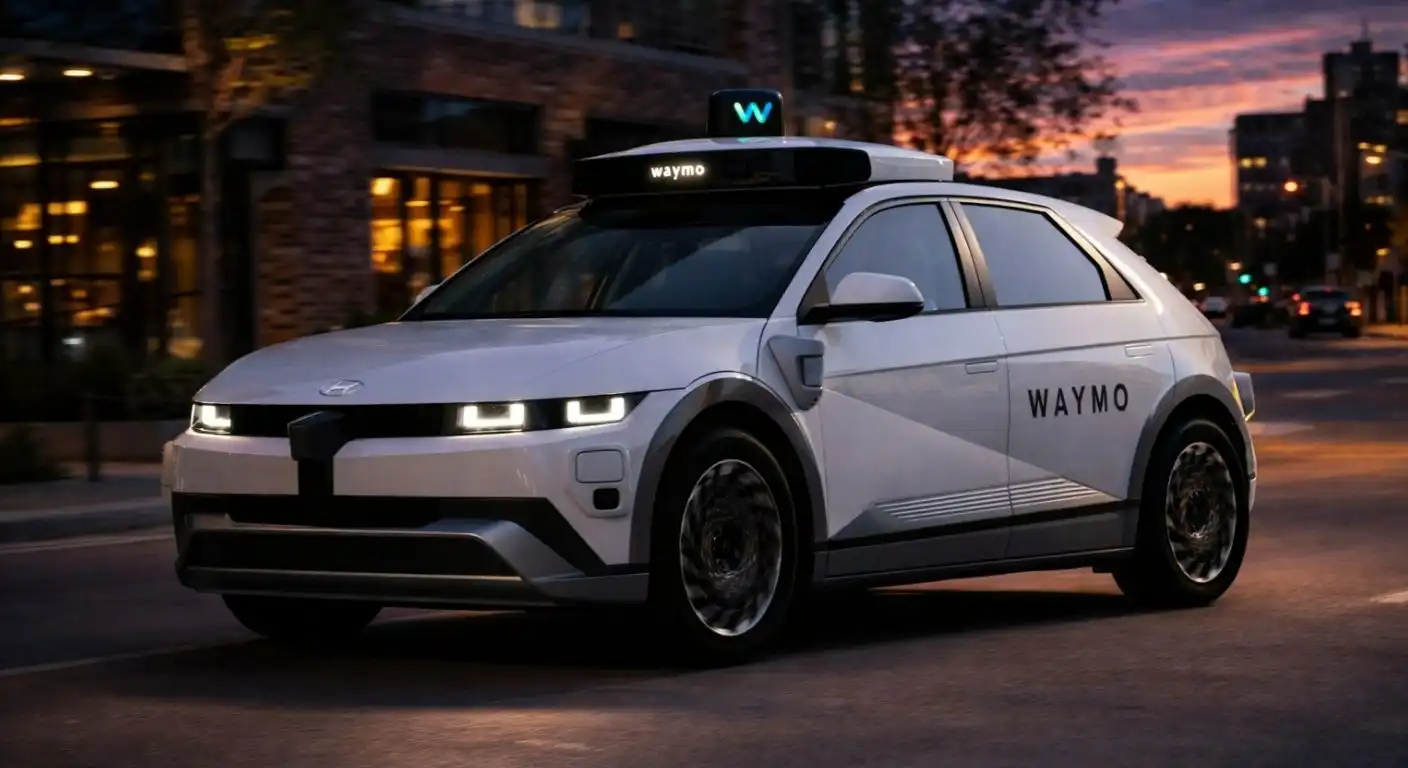
In a major expansion of its commercial footprint, Alphabet-owned Waymo announced the activation of its fully driverless vehicle services in four major new U.S. cities: Las Vegas, Denver, San Diego, and Tampa.
The expansion marks a significant milestone in Waymo’s city-by-city rollout. The company confirmed that fully driverless operations—which Waymo calls “autonomous mode activated”—are running immediately in Las Vegas, with no human safety driver behind the wheel.
The service in Denver, San Diego, and Tampa will follow in the coming weeks.
To manage this rollout safely, the initial phase of rides in these new cities will be restricted to Alphabet and Waymo employees before the company opens the booking system to the general public.
This aggressive expansion reflects a broader effort by Waymo to secure a dominant position in the rapidly growing robotaxi market. As the cost of developing and maintaining autonomous driving software remains incredibly high, achieving commercial scale is essential for long-term viability.
By adding four major metropolitan areas to its active footprint, Waymo is attempting to widen its lead over well-funded competitors, moving closer to its stated goal of providing millions of fully autonomous rides per week.
The Phased Rollout Strategy
Deploying autonomous vehicles in busy, unfamiliar urban environments requires a highly calculated, step-by-step approach. While Waymo has been conducting road testing with human safety drivers behind the wheel in several of these new markets for months, transitioning to fully driverless operations represents a major technical and regulatory leap.
To ensure a smooth transition, Waymo is utilizing a phased rollout strategy that begins with its own workforce. During this initial employee-only phase, Waymo and Alphabet workers will use the standard mobile application to summon driverless rides for their daily commutes and personal trips.
This internal testing phase allows the company’s engineering teams to gather real-world performance data, monitor system responses, and validate local mapping structures under normal operating conditions.
This approach is highly visible in Denver, where employee rides will initially be restricted to specific high-traffic neighborhoods, including River North (RiNo), Baker, and Cherry Creek.
By starting in these contained, well-mapped districts, the company can refine its routing algorithms before scaling up.
While Waymo has not provided a precise date for when the public can begin booking rides in these new cities, company spokespersons have indicated that the service will open to general users soon, with a wider public launch expected later this year.
The Ojai and the 6th-Generation Waymo Driver
The expansion into Denver is also serving as the ultimate testing ground for Waymo’s newest hardware and vehicle platform. For years, Waymo’s commercial fleet relied almost entirely on retrofitted consumer vehicles, most notably the all-electric Jaguar I-PACE SUV.
In Denver, however, the company is preparing to deploy its purpose-built robotaxi, code-named the Ojai.
The Ojai represents a major evolution in autonomous vehicle design. Built on a custom electric vehicle chassis manufactured by Chinese automaker Geely—specifically the Zeekr all-electric platform—the Ojai was designed from the ground up to serve exclusively as a commercial robotaxi.
The vehicle features a spacious, passenger-centric cabin, sliding doors for safe curb access, and an integrated sensor layout that replaces the bulky roof-mounted rigs seen on retrofitted cars.
Under the hood, the Ojai utilizes Waymo’s 6th-generation self-driving hardware and software stack. This next-generation system features a suite of advanced sensors, including high-resolution lidar, radar, and cameras that provide a continuous, three-dimensional view of the vehicle’s surroundings.
Crucially for the Denver market, the 6th-generation Driver includes advanced sensor cleaning mechanisms.
These automated cleaning systems are designed to keep cameras and lidar lenses clear of mud, dust, and ice, allowing the vehicle to navigate through colder, snowy, and icy winter conditions that have historically presented major challenges for self-driving technology.
Scaling Toward One Million Weekly Rides
The addition of Las Vegas, Denver, San Diego, and Tampa is a key component of Waymo’s long-term business strategy, which focuses on achieving rapid commercial scale. Earlier this year, the company was providing approximately 500,000 paid rides per week across its existing markets, which include Phoenix, San Francisco, Los Angeles, Austin, and Atlanta.
By adding four new cities to its active service network, Waymo is aiming to double its weekly output, targeting a milestone of 1 million paid rides per week by the end of 2026.
To support this volume, the company maintains a domestic fleet of roughly 3,500 to 4,000 robotaxis.
As these vehicles transition from test platforms to active, revenue-generating commercial assets, the economics of the autonomous ride-hailing business become increasingly viable, bringing the company closer to long-term profitability.
The Financial War Chest: Inside the $16 Billion Capital Injection
Scaling a physical fleet of advanced electric vehicles across multiple metropolitan areas requires an extraordinary amount of capital. Fortunately for Waymo, its parent company and external partners have provided the necessary financial backing to support this aggressive expansion.
Earlier this year, Waymo closed a massive $16 billion funding round—the largest single investment in the history of the autonomous vehicle industry—valuing the company at approximately $126 billion.
This capital is being deployed directly to fund vehicle manufacturing, build out local maintenance and charging depots, and cover the high costs of regional regulatory compliance.
In an industry where high development costs and long paths to profitability have forced several smaller startups to shut down or scale back operations, Waymo’s massive financial reserve serves as a formidable barrier to entry, allowing the company to expand confidently while its competitors remain capital-constrained.
The Competitive Landscape: Bypassing Tesla and Amazon’s Zoox
Waymo’s rapid multi-city expansion is also designed to keep the company ahead of a rising wave of commercial rivals. The autonomous ride-hailing sector is no longer a one-player game, as several of the world’s most valuable technology and automotive firms are preparing their own rival services.
Amazon-owned Zoox, which was acquired for $1.3 billion in 2020, has been steadily expanding its active testing footprint.
The company is currently running its purpose-built, carriage-style robotaxis in Las Vegas and San Francisco, with plans to launch commercial passenger services in Austin and Miami later this year.
At the same time, Tesla is slowly expanding its own robotaxi offerings, testing vehicles in limited areas of Miami, Austin, Dallas, and Houston.
By launching fully driverless operations in Las Vegas, Denver, San Diego, and Tampa, Waymo is attempting to establish its brand and secure market share before these competitors can launch their own public services.
With its active fleet already operating across more than 14 U.S. cities, Waymo’s early-mover advantage has allowed it to build a massive repository of real-world driving miles, refining its software and building public trust far ahead of its rivals.
Navigating the Regulatory and Public Safety Balance
As driverless cars become a more common sight on municipal streets, safety and regulatory oversight remain top priorities for both operators and local governments.
Federal agencies, such as the National Highway Traffic Safety Administration (NHTSA), closely monitor autonomous vehicle operations, requiring companies to document and report all crashes and safety incidents.
While autonomous vehicles are not without safety challenges, data from the first half of the year shows that automated driving systems averaged about 120 total crashes per month nationwide, the vast majority of which were minor fender-benders that resulted in no injuries.
By starting its expansions with a dedicated employee-only testing phase, Waymo can work closely with local transit authorities, first responders, and municipal planners to address specific regional concerns—such as navigating around Denver’s light rail systems or managing the high volume of tourist pedestrian traffic on the Las Vegas Strip—before opening the service to the general public.
Looking Ahead to a Driverless Future
The expansion of Waymo’s fully autonomous services to Las Vegas, Denver, San Diego, and Tampa represents a significant step forward for the commercial transportation sector.
The transition from human-driven rides to fully autonomous fleets is no longer a distant possibility; it is a rapidly unfolding reality that is redefining urban mobility and commercial logistics.
As Waymo continues to scale its fleet, integrate next-generation vehicles like the Ojai, and deploy its software across diverse weather climates, the company is proving that autonomous ride-hailing can function as a reliable, safe, and highly efficient public utility.
The coming months will test how quickly these new markets can transition from employee testing to public commercial operations, but the direction of travel is clear: the future of urban transport is driverless, and Waymo is leading the way.