The race for leadership in the artificial intelligence sector is shifting from research laboratories directly to the trading floors of Wall Street. For the past several years, foundational AI startups have relied on massive injections of private venture capital, strategic corporate investments, and cloud infrastructure partnerships to fund their highly expensive computational needs.
Today, as these private funding channels reach their limits, the industry is preparing for a transition to public equity markets.
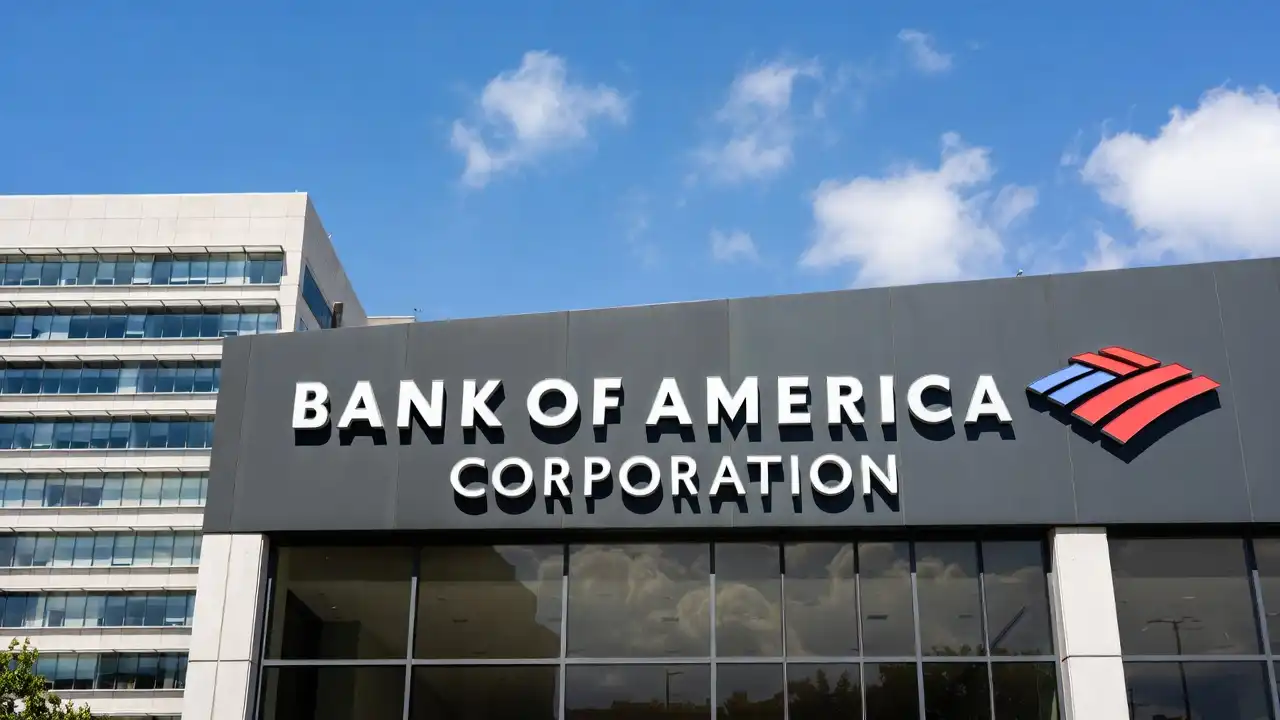
In a major development within this financial migration, Bank of America has executed a significant strategy shift by providing OpenAI with a $520 million credit line.
This financial arrangement represents a notable turnaround for the investment bank. Previously, corporate credit officers at Bank of America had viewed the ChatGPT creator as too risky for large-scale debt instruments, pointing to the startup’s high cash burn and the lack of a near-term path to standard profitability.
However, the prospect of playing a lead underwriting role in what could become the largest initial public offering in stock market history has prompted the bank to override its previous risk assessments.
By quietly handing OpenAI a half-billion-dollar credit facility in recent weeks, Bank of America is attempting to secure a lead spot on the prospectus for a public listing that could target a valuation of up to $1 trillion.
This high-stakes financial maneuvering highlights a classic Wall Street dynamic. Global investment banks routinely use low-yield credit facilities and relationship loans as loss leaders to build strong corporate ties with high-value clients.
By extending capital when a company is still private, banks position themselves to capture highly lucrative advisory and underwriting fees when that company eventually debuts on public exchanges.
As OpenAI and its closest rivals accelerate their IPO timelines, the competition among major financial institutions to fund these tech giants is reaching unprecedented levels.
The Mechanics of the $520 Million Credit Facility
To understand the strategic value of the new $520 million credit line, one must look at how corporate debt is structured for fast-growing, pre-IPO technology companies. A credit line of this nature does not function like a standard business loan, where the entire principal is disbursed upfront.
Instead, it operates as a flexible, revolving credit facility that OpenAI can draw down, repay, and redraw as needed to manage its immediate operational costs, working capital requirements, and IPO transition expenses.
This liquidity is essential for a company navigating the complex compliance path to a public listing. Preparing for an initial public offering requires millions of dollars in administrative costs, including extensive auditing fees, legal restructuring expenses, and investor relations infrastructure.
While OpenAI has raised billions of dollars in equity, much of that capital is tied up in long-term commitments for computing power and GPU clusters. Having an independent, cash-based credit facility ensures that the firm can meet its daily administrative and legal obligations without having to liquidate its equity reserves or alter its long-term technology roadmaps.
For Bank of America, extending this credit facility is a direct play to challenge the historical dominance of other major investment banks that have advised OpenAI. Institutions like Goldman Sachs, Morgan Stanley, and JPMorgan Chase have long-standing relationships with the startup’s executive team and have actively advised on previous private capital rounds.
By providing a significant credit line on flexible terms, Bank of America is demonstrating its willingness to take on direct balance-sheet risk to earn a seat at the underwriting table, ensuring it is not left behind when the final IPO syndicate is assembled.
Inside OpenAI’s Cash Burn and Valuation Metrics
The primary reason financial institutions originally hesitated to extend credit to OpenAI is the company’s massive, ongoing operational deficit. Despite generating substantial subscription and API revenues, the cost of developing and running frontier artificial intelligence systems is extraordinarily high.
The Scale of Private Capital Accumulation
The sheer volume of capital that OpenAI has raised highlights the high cost of the AI race. In March 2026, the company successfully closed its latest private funding round, raising $122 billion in committed capital.
This transaction valued the firm at an impressive $852 billion post-money, establishing it as one of the most valuable private enterprises in history.
This capital injection provided the necessary cash to continue building out advanced data center infrastructure, but it also increased the pressure on the company to deliver a massive liquidity event for its institutional backers.
The Realities of Enterprise Cash Burn
Behind the impressive valuation figures lies a challenging financial picture. Financial documents shared with shareholders earlier this year revealed that OpenAI burned through approximately $3.7 billion during the first quarter of 2026 alone.
While the company generated $5.7 billion in revenue during that same three-month window, the costs of model training, cloud compute leases, and specialized engineering talent consumed more than half of its total intake.
Projections indicate that OpenAI is on track to burn roughly $27 billion over the course of 2026. This operational deficit is expected to widen even further, potentially reaching $63 billion in 2027 as the company begins pre-training its next-generation models.
Under current business projections, OpenAI does not expect to achieve cash-flow breakeven until 2030.
For traditional credit analysts, a business model that projects multi-billion-dollar losses for the next four years is highly unusual, explaining why Bank of America’s decision to extend a $520 million credit line is viewed as a high-risk, strategically driven pivot.
The Strategic Shift in Wall Street’s Risk Appetite
The decision by Bank of America’s executive committee to approve the credit facility also exposes a growing division between the bank’s investment analysts and its dealmakers. For months, the bank’s research division had urged caution regarding the rapid rise of artificial intelligence valuations, warning that the market was showing classic signs of excessive speculation.
Chief investment strategists at the bank pointed out that technology stocks had reached a historic concentration level, accounting for more than 44% of the S&P 500 index.
The bank’s proprietary Bubble Risk Indicator hit a reading of 0.91, significantly higher than the levels recorded during the tech-heavy Nasdaq correction of 2000.
Research notes warned that the coming wave of mega-cap AI listings, including OpenAI and Anthropic, could push the technology sector’s weighting past every historical bubble peak on record.
Yet, while research analysts warned of a potential market correction, the bank’s global capital markets division recognized that the fees generated by these massive public listings represent a once-in-a-generation revenue opportunity.
If OpenAI, SpaceX, and Anthropic complete their planned stock market debuts, they could collectively add more than $3.6 trillion of market value to U.S. exchanges.
For an investment bank, the underwriting fees on transactions of this scale can reach hundreds of millions of dollars. Fearing that a conservative lending stance would lock the bank out of these lucrative transactions, Bank of America’s leadership chose to override its strategic warnings and extend the $520 million credit facility to OpenAI, proving that on Wall Street, the fear of missing out on massive investment banking fees often outweighs traditional risk-management guidelines.
The Race to Underwrite the Largest Listings in Financial History
Bank of America’s pivot occurs during an intense period of preparation as the world’s most valuable artificial intelligence and aerospace private giants race to debut on Wall Street. This convergence of mega-listings is set to test the limits of public market liquidity.
The Staggering Scale of the SpaceX Listing
While OpenAI is targeting a $1 trillion valuation, Elon Musk’s SpaceX is poised to execute a public offering of historic proportions.
The rocket and satellite communications giant is reportedly pursuing a listing that would value the company at approximately $1.8 trillion.
SpaceX plans to offer 555.6 million shares at a fixed price of $135 each, aiming to raise $75 billion in public markets.
If completed under these terms, the debut will easily surpass Saudi Aramco’s record-setting $29.4 billion listing in 2019, making it the largest initial public offering in corporate history.
Anthropic’s Fast-Moving Public Market Pivot
Simultaneously, OpenAI’s closest rival, Anthropic, is moving quickly with its own public market plans.
Following a massive Series G funding round that valued the developer at $380 billion, the company filed confidential S-1 paperwork to go public on U.S. exchanges.
Industry analysts suggest that Anthropic has enjoyed faster near-term revenue growth in its enterprise API business, making it a highly attractive option for institutional investors who want exposure to generative AI but are cautious about OpenAI’s high consumer-facing overhead.
In this crowded capital environment, investment banks are competing aggressively for lead roles. Underwriting syndicates for listings of this scale typically include multiple tiers of banks.
By providing OpenAI with a $520 million credit facility, Bank of America is positioning itself to secure a place as a joint bookrunner or lead manager alongside firms like Goldman Sachs and Morgan Stanley.
This senior positioning is critical because lead underwriters capture the largest share of the transaction fees and hold the most influence over the pricing and allocation of shares.
Navigating Complex Regulatory and Governance Hurdles
As OpenAI prepares for its public debut, the company must also resolve a series of unique regulatory and corporate structure challenges that complicate its valuation.
Since its transition from a non-profit research lab to a commercial enterprise, the firm has operated under a complex, multi-tiered governance structure that limits the control and returns of traditional equity investors.
To appease federal regulators and clear potential national security obstacles, OpenAI’s executive team has initiated discussions to hand over a 5% equity stake directly to the United States government.
Based on the company’s recent private valuation of $852 billion, this proposed equity gift would be worth approximately $43 billion.
Chief Executive Officer Sam Altman has pitched the idea to administration officials as a creative way to ensure that the public shares directly in the upside of the artificial intelligence boom, while also creating a sovereign-backed buffer against future anti-monopoly or legislative restrictions.
Furthermore, the company is in the process of overhauling its corporate charter to transition into a public benefit corporation. This transition is designed to legally protect OpenAI’s commitment to safety and public benefit, but it also introduces unique governance risks for public shareholders.
Under a public benefit corporation structure, the board of directors can prioritize ethical considerations and general public safety over the maximization of shareholder value, a corporate design that traditional public market investors are still learning how to value.
For the underwriting banks, translating these complex regulatory structures, government equity stakes, and non-profit overhangs into a clear, investable prospectus will require unprecedented financial engineering.
High-Stakes Gambling on the Future of Artificial Intelligence
Bank of America’s $520 million credit commitment to OpenAI represents a defining moment in the modern tech sector. By reversing its previous risk assessments and extending a half-billion-dollar credit facility to a private startup that is burning billions of dollars every quarter, the investment bank has made a clear, strategic bet on the future of generative artificial intelligence and the public markets’ appetite for mega-cap tech listings.
As OpenAI, SpaceX, and Anthropic move closer to their public debuts, this aggressive lending behavior is likely to become more common among major financial institutions.
While research analysts continue to warn that the rapid expansion of AI valuation shares structural similarities with the tech bubble of 1999, the potential underwriting fees are simply too massive for Wall Street to ignore.
The coming quarters will determine whether Bank of America’s strategic pivot was a brilliant, forward-looking move to secure a lead role in the listing of the decade, or a high-risk gamble on a technology sector that has yet to prove its long-term financial sustainability.