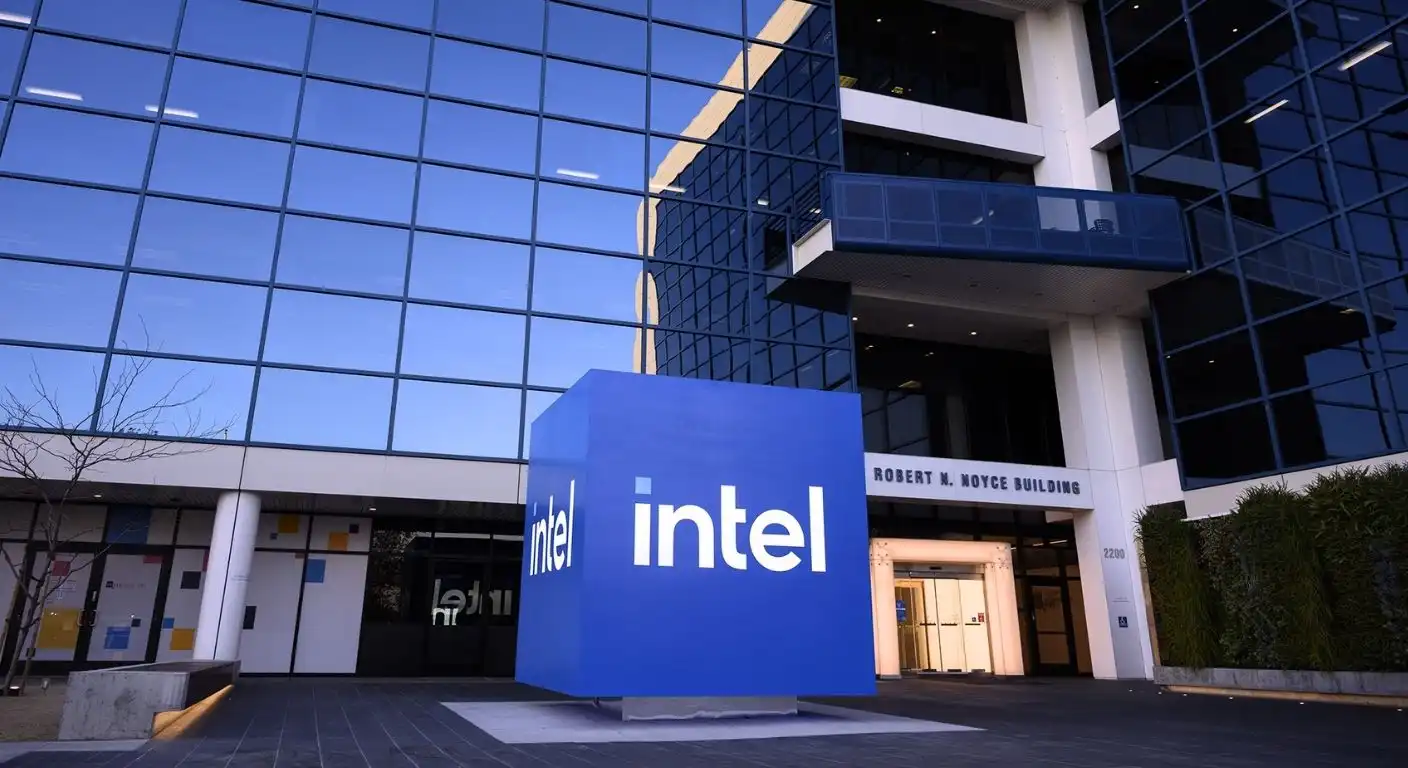
The global semiconductor industry is witnessing one of the most remarkable experiments in state-backed capitalism in modern history. Faced with the prospect of losing the domestic manufacturing race for the silicon that powers the modern digital world, the United States government has taken a historically unprecedented, heavy-handed role in saving Intel. In a dramatic policy pivot, Washington has transformed the struggling American chipmaker into a national champion, using administrative leverage, tariff threats, and direct equity ownership to secure massive contracts from the world’s most valuable technology companies.
According to an investigative report by the Wall Street Journal, the White House has made the recovery of Intel a major national priority, treating it as both an economic and national security imperative. The most striking symbol of this intervention occurred when the federal government converted 9 billion dollars in federal grants into a 10% common stock equity stake in Intel, making Washington the company’s largest single shareholder.
However, the government did not stop at financial aid. The administration has taken an incredibly direct approach to customer acquisition, actively twisting the arms of major technology companies—including Apple, Nvidia, and Elon Musk’s SpaceX—to secure manufacturing contracts for Intel’s contract-manufacturing division, Intel Foundry. For Intel, this political sponsorship has breathed new life into its turnaround efforts, but it also raises profound questions about the long-term risks of government-led industrial policy.
The Return of State Capitalism: Inside Washington’s High-Stakes Bet on Intel
For decades, the United States championed free-market economics, criticizing other nations for using state funds and political pressure to support domestic industrial champions. That policy has been completely discarded in the race for artificial intelligence supremacy. Recognizing that advanced chip manufacturing is almost entirely concentrated in East Asia, primarily through Taiwan Semiconductor Manufacturing Company, U.S. policymakers concluded that allowing Intel to fail was a risk the nation could not afford.
The federal government’s 9 billion dollar equity conversion in the summer of 2025 marked a historic turning point. By becoming Intel’s largest shareholder, the White House gained a direct interest in ensuring the company’s financial success. To protect this massive taxpayer investment, Commerce Secretary Howard Lutnick and other senior trade officials began holding regular, high-level meetings with the chief executives of America’s leading tech firms, using the full weight of federal regulatory and trade policy to steer manufacturing orders toward Intel’s factories.
This state-led sales campaign has yielded immediate results. Under intense pressure from Washington, major technology companies that had historically relied on TSMC for their custom silicon have signed landmark manufacturing and investment agreements with Intel. These deals have provided Intel Foundry with the high-profile, anchor customers it desperately needed to establish credibility in the highly competitive contract-manufacturing market.
The Apple Bargain: Trading Tariff Exemptions for Silicon Manufacturing Commitments
The most dramatic example of this government-brokered trade diplomacy involved Apple. For years, Apple has relied exclusively on TSMC to manufacture the custom processors that power its iPhones, iPads, and Mac computers. This absolute dependency on Taiwanese fabs made Apple highly vulnerable to potential disruptions in the Taiwan Strait and put the company directly in the crosshairs of Washington’s shifting trade policies.
In the summer of 2025, Apple faced an existential crisis when the administration proposed a sweeping 100% tariff on semiconductor imports. Such a tariff would have triggered catastrophic cost increases for Apple, forcing the company to raise retail prices for its flagship products or suffer a massive contraction in its profit margins.
The Looming Threat of a One-Hundred Percent Semiconductor Tariff
Apple Chief Executive Officer Tim Cook scrambled to Washington to launch a massive, high-priority lobbying campaign. Cook met repeatedly with President Donald Trump and Commerce Secretary Howard Lutnick, arguing passionately that a blanket tariff on semiconductor imports would severely damage one of America’s most successful corporations, hurt domestic consumers, and undermine the competitiveness of the U.S. technology sector.
While the administration was willing to listen to Cook’s concerns, officials recognized that they held a powerful piece of leverage. During these closed-door negotiations, Trump and Lutnick made it clear that a tariff exemption would not be granted for free. They explicitly pointed out that the U.S. government was now a major stakeholder in Intel, and that Apple, as the world’s largest buyer of semiconductors, had a responsibility to support the domestic manufacturing base.
The Oval Office Agreement and the Move to Intel’s Fabs
Ultimately, Apple successfully secured its exemption from the massive import tariffs, avoiding a devastating financial blow. However, the exemption came with a major, legally binding condition. Under pressure from the White House, Apple agreed to enter into a contract-manufacturing agreement with Intel.
Under the terms of the deal, Apple plans to entrust a portion of the production of its self-designed processors for future Mac laptops and iPhone devices to Intel’s U.S.-based factories. For Apple, this represents a significant shift in its supply chain strategy, forcing the company to manage the technical complexities of transitioning a portion of its advanced silicon production away from TSMC.
For Intel, securing Apple as a customer is a monumental victory, providing the ultimate validation of its manufacturing capabilities and signaling to the rest of the tech industry that its foundry services are ready for first-tier products.
Twisting Arms on Wall Street: Nvidia and SpaceX Step in to Support the Champion
Apple was not the only technology giant to feel the weight of Washington’s industrial policy. The administration applied similar direct pressure to other leading players in the artificial intelligence and aerospace sectors, convincing them that supporting Intel was essential for maintaining their own regulatory goodwill in Washington.
The results of this pressure became clear in September 2025, when Nvidia announced a massive 5 billion dollar investment in Intel and agreed to purchase custom, specialized processors designed for its AI data center systems. Securing Nvidia—the undisputed leader of the generative AI boom—as a customer and investor provided an extraordinary boost to Intel’s turnaround credibility, proving that the company’s manufacturing technologies could meet the extreme performance demands of modern AI workloads.
Elon Musk’s Terafab Project and the Next-Generation 14A Node
The administration’s outreach also reached Elon Musk, who has been building a massive, vertically integrated technology empire spanning Tesla, SpaceX, and his artificial intelligence startup, xAI. In April 2026, Intel announced a surprising partnership with Musk’s ambitious Terafab project.
The Terafab initiative is a long-shot effort to develop and manufacture custom semiconductors tailored specifically for autonomous vehicles, humanoid robots, space-based data centers, and advanced AI systems.
Under the partnership, Intel will contribute its extensive expertise in chip design, contract fabrication, and advanced packaging.
Crucially, the Terafab project plans to utilize Intel’s next-generation 14A manufacturing node, representing one of the first major commercial commitments for the company’s most advanced future fabrication technology.
Easing the Regulatory Path: The Role of the Chips Czar
Managing this highly complex web of government interventions, corporate negotiations, and technical milestones is Bill Frauenhofer, a veteran semiconductor industry investment banker who serves as the administration’s chips czar. Frauenhofer has taken an incredibly hands-on approach to monitoring Intel’s business, keeping tabs on every aspect of the company’s operational recovery.
Frauenhofer receives detailed, private briefings from Intel Chief Financial Officer David Zinsner every quarter, while members of his staff meet regularly with Intel executives in Washington and at the company’s Santa Clara headquarters.
This deep level of integration ensures that the government can quickly identify and address any operational bottlenecks, whether that means fast-tracking federal permits, adjusting capital allocation models, or providing additional policy support to protect the country’s primary semiconductor champion.
Engineering the Turnaround: The Leadership of Lip-Bu Tan
While Washington’s political leverage has secured critical customer contracts, the internal operational recovery of Intel is being guided by CEO Lip-Bu Tan. A respected veteran of the semiconductor industry, Tan took over the top job at Intel in March 2025, inheriting a company that had lost its technological leadership, suffered from severe manufacturing delays, and logged billions of dollars in operating losses.
Tan immediately launched a comprehensive restructuring program designed to restore the company’s engineering discipline. He cut unnecessary corporate spending, reorganized the engineering division to accelerate product development, and successfully recruited top-tier manufacturing talent from key Asian competitors, including Samsung and SK Hynix.
Capital Discipline and the Focus on Tooling over Factories
One of the most critical strategic changes implemented under Tan’s leadership was a complete re-evaluation of the company’s capital expenditure model. Under previous leadership, Intel spent billions of dollars constructing massive, empty factory shells before securing the advanced manufacturing equipment needed to run them.
Tan reversed this approach, implementing strict capital discipline. He chose to delay the construction of several new factory sites, choosing instead focusing the company’s available capital on purchasing advanced manufacturing tools and upgrading existing cleanrooms.
This shift dramatically improved the company’s capital efficiency and sped up the development of its advanced 18A manufacturing node. The stock market responded enthusiastically to this disciplined approach; Intel’s shares have multiplied by more than four times since Tan took over in March 2025, restoring billions of dollars in market value to the company.
The CPU Renaissance and Advanced Packaging in New Mexico
Intel’s operational recovery is also being supported by an unexpected shift in the artificial intelligence market. During the initial phases of the AI boom, cloud operators focused their budgets almost exclusively on purchasing graphics processing units, causing demand for traditional central processing units (CPUs) to collapse.
By mid-2026, that trend began to normalize. As data centers scale up their AI operations, they require massive, high-performance CPU networks to coordinate and manage the data flows entering and leaving the GPU clusters.
This “CPU renaissance” has triggered a surge in demand for Intel’s high-margin Xeon processors, highlighted by a massive, multi-billion-dollar order from Google Cloud.
At the same time, the administration is pushing Intel to expand its capacity at a New Mexico plant that produces advanced packaging—the process of combining multiple smaller chiplets into a single, high-performance semiconductor. Both the government and Intel view advanced packaging as the company’s best near-term option to compete directly with TSMC.
The Risks of Political Sponsorship: Can Intel Stand on Its Own?
Despite the undeniable progress made over the past year, the turnaround of Intel remains incomplete. The company’s contract-manufacturing division continues to lose billions of dollars annually as it scales up its advanced nodes, and the company must still prove it can mass-produce advanced chips reliably and profitably without government assistance.
Many trade and industrial policy specialists have voiced concerns regarding the long-term consequences of Washington’s heavy-handed intervention. Scott Lincicome, an expert in trade and industrial policy at the Cato Institute, warned that being the government’s darling only works as long as the company is performing well.
Lincicome pointed out that politicians operate on incredibly short timelines, driven by election cycles and public opinion. If Intel suffers a technical setback, a manufacturing delay, or a major financial loss, the political support that currently shields the company could evaporate quickly, leaving the chipmaker exposed to intense market pressures.
Ultimately, Washington’s extraordinary intervention has bought Intel the time and the customers it needed to survive its most critical existential crisis. However, the government’s hand on the scale cannot permanently replace market-driven execution.
Over the coming years, Lip-Bu Tan and his engineering teams must prove that Intel Foundry can deliver world-class yields, match the manufacturing efficiency of TSMC, and retain its high-profile customers on the merits of its technology rather than the leverage of federal tariffs.
The battle for the future of American silicon is far from over, and the true test of this historic industrial experiment will be whether Intel can eventually stand on its own two feet as a self-sustaining, global technology powerhouse.