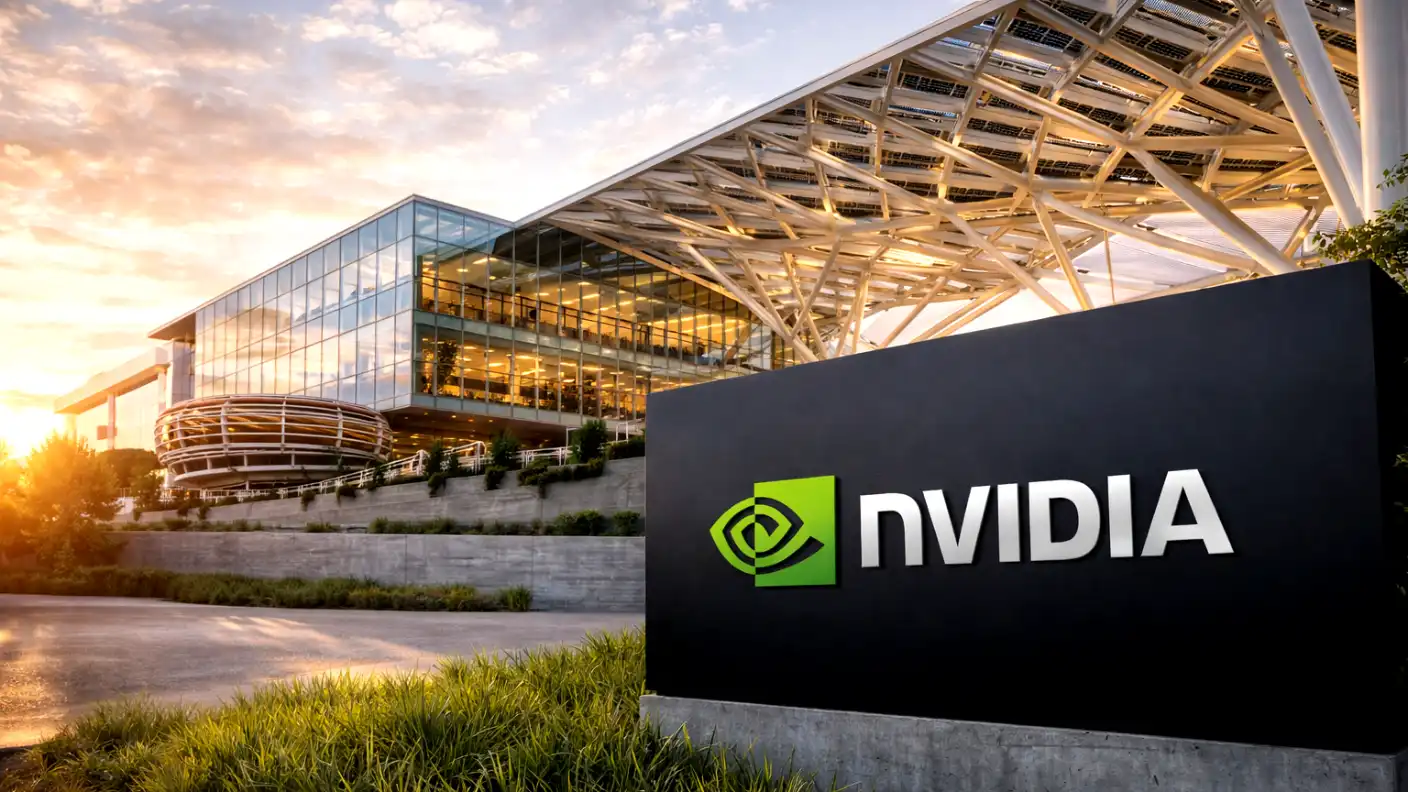
The global technology sector is navigating a period of intense scrutiny as investors begin to demand concrete evidence of execution and long-term viability in the artificial intelligence sector. For more than two years, the rapid growth of the AI market was driven primarily by massive, centralized capital investments from a handful of American cloud hyperscalers. Today, that narrative is undergoing a significant transformation. Recent market data documents that artificial intelligence demand is broadening rapidly beyond traditional cloud providers, establishing itself as a vital public utility across corporate enterprises, specialized research laboratories, and sovereign nations.
Amid this broadening demand, the semiconductor industry remains highly sensitive to any potential disruption in the technology supply chain. When unverified market rumors recently suggested that one of the chipmaker’s primary next-generation product architectures had faced manufacturing delays, global technology stocks suffered sharp, sudden swings. This rapid market reaction exposed how front-loaded investor expectations have become, highlighting that successful, on-time product delivery has replaced speculative promise as the new anchor of the technology trade.
To stabilize market sentiment and reassure its global partners, Nvidia moved quickly to refute the rumors, telling major institutional investors and research firms that its development timelines remain completely on track. The chipmaker clarified that its upcoming architectures suffer from no technical delays, confirming that its ambitious, near-annual product rollout schedule remains fully intact. By reaffirming this roadmap, the company has stabilized its global supply chain, proving that it possesses the capital discipline and component lock-in required to maintain its undisputed leadership of the global digital economy.
The High-Stakes Battle Over Silicon Timelines: Inside Nvidia’s Recent Roadmap Dispute
The vulnerability of the modern technology trade became exceptionally clear when rumors surfaced regarding a potential bottleneck in the production of Nvidia’s next-generation rack-scale computing systems. A social media post published by the research firm SemiAnalysis claimed that the company’s upcoming “Kyber NVL144” server cabinet had encountered severe manufacturing issues involving its high-end printed circuit boards. The report suggested that these advanced printed circuit board setbacks would delay the project’s delivery by more than twelve months, pushing the commercial launch out to 2028.
The market’s reaction to this unverified claim was immediate and severe. Because the Kyber system represents a major milestone in Nvidia’s scale-out computing roadmap—designed to pack 144 of the company’s most advanced processors into a single, vertically integrated unit that operates as a single giant computer—any delay would directly impact the infrastructure deployment schedules of major cloud providers. Within hours of the report’s publication, shares of critical hardware suppliers across South Korea, Taiwan, and Japan plunged, as investors scrambled to reduce their exposure to potential supply chain bottlenecks.
To prevent this volatility from triggering a broader market correction, Nvidia’s investor relations team and executive leadership issued a direct, forceful pushback. A company spokesperson told major international financial publications that the company’s product roadmap remains fully intact. The chipmaker confirmed that its production schedules have not changed, reassuring the market that its next-generation platforms will ship in strict alignment with its previously published guidance. This rapid response helped stabilize the technology sector, demonstrating that the company’s internal operations are highly resilient against localized manufacturing challenges.
Decoupling the Demand: How the AI Market is Shifting from Hyperscalers to Sovereigns
The controversy surrounding the Kyber system highlights the extreme importance of Nvidia’s hardware pipeline to the global economy. During the initial phases of the artificial intelligence boom, the vast majority of advanced processor shipments went directly to a tiny group of major American cloud providers, most notably Microsoft, Amazon, Alphabet, and Meta Platforms. This high concentration of demand created significant anxiety among financial analysts, who worried that if these few hyperscalers scaled back their capital expenditures, the semiconductor industry would face a sudden, painful oversupply crisis.
By the middle of 2026, those concentration risks began to dissipate. In discussions with institutional research groups, Nvidia confirmed that its customer base is undergoing a rapid, structural diversification. While the major cloud hyperscalers continue to spend heavily to upgrade their networks, three new customer segments—sovereign nations, corporate enterprises, and independent artificial intelligence laboratories—have gained massive operational momentum, consuming an ever-larger share of the company’s total manufacturing output.
The Surge of Sovereign AI and National Tech Infrastructure
The most significant new growth engine for the semiconductor market is the rapid rise of sovereign artificial intelligence. Governments around the world have concluded that relying entirely on foreign, commercial cloud networks to host their national data and run their public services introduces severe national security and data privacy risks. Consequently, countries across Europe, the Middle East, and East Asia are investing billions of dollars to construct localized, state-owned AI data centers.
These sovereign AI initiatives represent a massive, non-commercial revenue stream that is highly insulated from standard corporate margin pressures. National governments are purchasing advanced computing systems directly from hardware manufacturers, using their sovereign capital to build localized, highly secure digital infrastructure. Because these national programs prioritize geopolitical sovereignty and data security over near-term commercial profitability, their purchasing decisions are highly stable, offering a reliable, long-term buffer that protects the semiconductor supply chain from localized economic downturns.
Enterprise On-Premise Deployments and the Rise of AI Agents
At the same time, traditional, non-tech corporate enterprises are transitioning from initial cloud-based experimentation to permanent, on-premise hardware deployments. In sectors like financial services, healthcare, and advanced logistics, companies are finding that running continuous, high-volume workloads on public cloud servers can quickly become cost-prohibitive. To lower their long-term operational expenses and protect sensitive proprietary data, these enterprises are building their own private, on-premise computing clusters.
This transition is being accelerated by the rapid deployment of autonomous AI agents. Unlike simple digital assistants that merely generate information when prompted by a human user, autonomous agents are designed to execute complex, multi-step workflows across diverse corporate databases without human intervention.
Running these continuous, autonomous systems requires significant, dedicated local computing power. As enterprises scale up their agent networks to automate core back-office functions, their demand for local server hardware is expanding rapidly, driving a massive, long-term upgrade cycle that is independent of public cloud spending trends.
The Engineering Frontier: Dissecting the Rubin, Feynman, and Spectrum-X Roadmaps
To maintain its dominant competitive position in this broadening market, Nvidia is pursuing an aggressive, near-annual product development cycle. The company’s ability to consistently deliver massive performance gains with each new generation of silicon has made it incredibly difficult for competitors like Advanced Micro Devices and Intel to capture meaningful market share.
The cornerstone of the company’s future hardware strategy is the upcoming “Vera Rubin” chip platform, which is scheduled to begin rolling out in 2026. Succeeding the Blackwell Ultra architecture of 2025, the Rubin platform represents a massive technological leap, integrating advanced graphics processing units, central processing units, and high-performance networking silicon into a single, unified computing architecture.
By designing all three layers of the silicon stack to work together seamlessly, the Rubin platform can deliver extraordinary gains in computing efficiency and thermal performance, allowing data centers to process complex workloads while consuming significantly less electrical power.
The Vera CPU and the Power of Coordinated Processing
A critical element of the Rubin architecture is the inclusion of the company’s new Vera data center central processing unit. During the initial phases of the AI boom, investors focused their attention almost exclusively on graphics processing units, viewing the traditional CPU as a legacy component that was secondary to the deep-learning capabilities of the GPU.
Modern, scale-out computing architectures have challenged this assumption. As data centers link tens of thousands of individual graphics chips together to train large-scale reasoning models, the primary operational bottleneck is no longer raw mathematical performance, but data coordination.
The central processing unit serves as the essential traffic controller of the data center, directing the flow of information into and out of the GPU clusters.
Nvidia’s Vera CPUs are designed specifically to resolve these data bottlenecks, coordinating massive information flows with minimal latency and ensuring that the high-power graphics clusters are never left waiting for data.
The Spectrum-X Networking Engine and the Pivot to Co-Packaged Optics
Aside from raw processor speed, the ultimate limit on data center performance is networking bandwidth. To prevent signal degradation and latency delays as data travels across massive, room-sized server installations, the semiconductor industry is executing a major transition from traditional copper interconnects to optical communication systems.
Nvidia told investors that its co-packaged optics (CPO) technology is already in active production, integrated directly into its Spectrum-X scale-out networking platform. Co-packaged optics replace traditional electrical signals with high-speed laser beams, allowing data to travel between processors at the speed of light while generating virtually zero heat.
This optical integration is a vital component of the company’s long-term scale-out strategy. Beginning with the upcoming Feynman platform in calendar 2028, the company will offer customers a clear choice, allowing them to implement their NVLink connections using either advanced co-packaged optics or high-conductivity copper interconnects depending on their specific budget and cooling infrastructure.
The Supply Chain Moat: High-Bandwidth Memory and Manufacturing Alliances
While the company’s engineering breakthroughs are impressive, Nvidia’s most formidable competitive advantage lies in its absolute control over the high-tech manufacturing supply chain. Designing a world-class processor is meaningless if a company cannot secure the manufacturing capacity and specialized components required to build it on time and at scale.
To protect its delivery timelines, Nvidia has built a deep, highly integrated network of partnerships with the world’s most dominant semiconductor suppliers. In discussions with financial institutions, the company confirmed that it has successfully secured a robust, long-term supply of key components to support its projected growth through 2027. This supply security is particularly critical regarding high-bandwidth memory (HBM) DRAM, which remains in a state of absolute, global shortage due to the extreme demand from the AI hardware sector.
Securing the High-Bandwidth Memory Pipeline
High-bandwidth memory is an essential, highly constrained component of any modern AI accelerator. Because deep-learning models must access billions of parameters in a fraction of a second, standard memory architectures cannot deliver the required data speeds. HBM solves this by stacking multiple memory dies vertically on top of the processor, using microscopic vertical connections to deliver massive data bandwidth.
By collaborating closely with leading memory manufacturers like Samsung Electronics, SK Hynix, and Micron, Nvidia has successfully locked up a significant portion of the world’s available HBM manufacturing capacity.
This strategic component lock-in creates an incredibly high entry barrier for competitors. Even if a rival chip designer develops an academically superior processor, they cannot easily bring it to market at a commercial scale if they cannot secure the highly constrained high-bandwidth memory required to run it, allowing Nvidia to maintain its dominant market share.
The Financial Picture: Record-High Margins and Wall Street Expectations
This absolute control over both technology and supply chains is reflected in the company’s extraordinary financial performance. Shares recently closed near $210.96, and the company continues to operate with a record-high net margin of 63.0%, a figure that sits far above its historical three-year average of 51.5%.
Maintaining this level of profitability represents a significant challenge as the company’s business scales. Financial analysts point out that as competition increases and customers begin to explore lower-cost, in-house custom silicon alternatives, maintaining a 63.0% net margin will become increasingly difficult.
However, by consistently executing its product roadmap, delivering massive energy efficiency gains, and securing its component supply lines, the company is proving that it can defend its premium valuation and continue to serve as the primary engine of the global technology sector.
The transition of the artificial intelligence market from an experimental phase to a permanent, foundational utility is a structural reality of the modern economy. By broadening its customer base to include sovereign nations and corporate enterprises, and by successfully keeping its next-generation Rubin, Feynman, and Spectrum-X roadmaps completely on track, Nvidia has demonstrated that it is far more than a simple chip manufacturer.
The company has successfully established itself as the indispensable platform supporting almost every major computing system in operation today, ensuring that its hardware will continue to power the digital architecture of the global economy for decades to come.