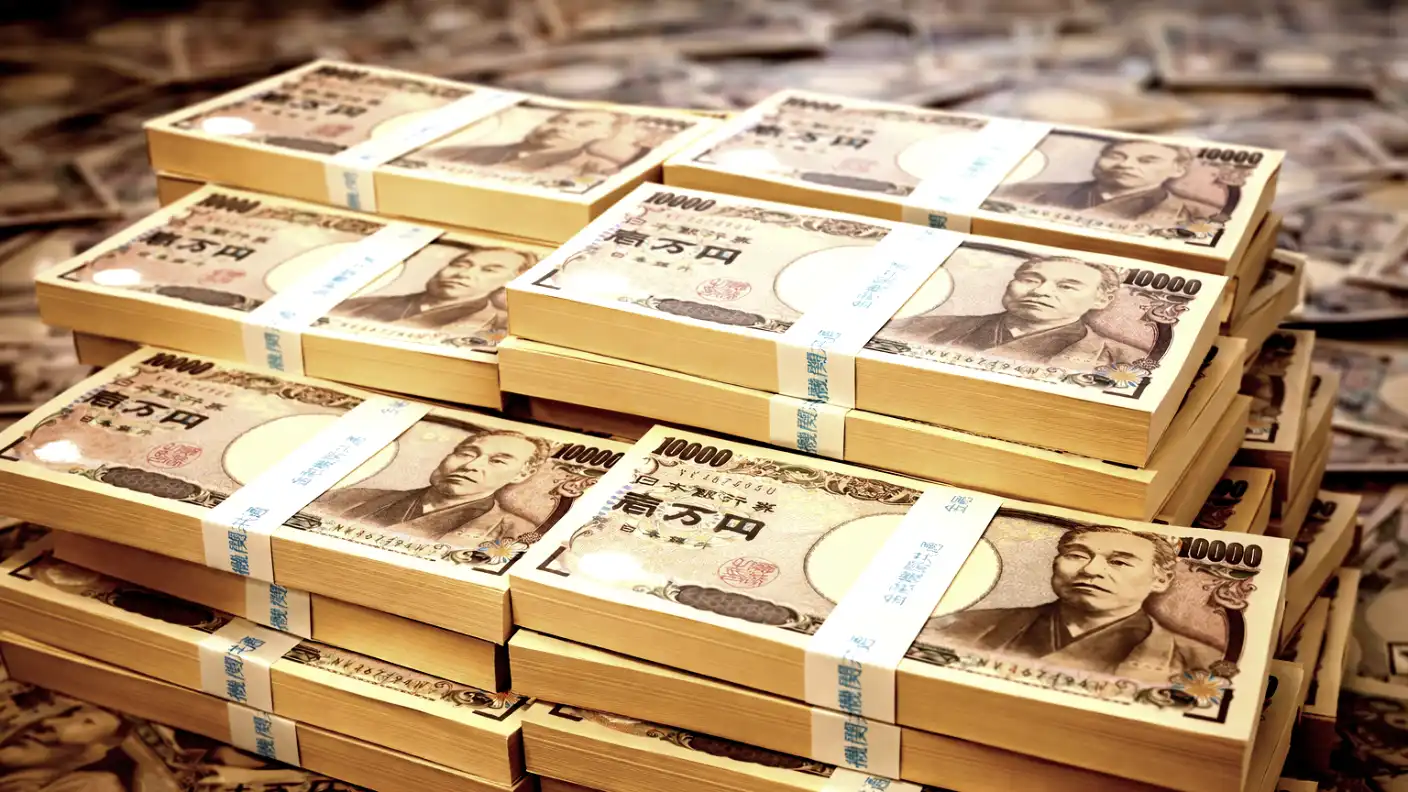
Global financial markets were jolted this week by reports that the United States Treasury has moved to intervene in the foreign exchange markets, specifically targeting the Japanese yen. For months, the yen faced relentless downward pressure, drifting toward historic lows that threatened to destabilize regional trade in East Asia and create a messy, inflationary spillover effect across the Pacific. This intervention signals a dramatic departure from the long-standing “strong dollar” preference that defined American economic policy for years, reflecting the urgent need for Washington to stabilize its most important alliance in the Indo-Pacific.
The currency crisis reached a breaking point as the yen touched levels not seen since the late 1980s. This rapid depreciation undermined the Bank of Japan’s ability to manage its domestic interest rate policy, forcing the country to burn through massive foreign exchange reserves just to keep its currency from falling off a cliff. By finally stepping into the fray, the United States Treasury is attempting to restore order, signaling to global hedge funds and institutional speculators that it will no longer tolerate the weaponization of currency volatility against one of its primary security partners.
This coordinated move between Washington and Tokyo carries massive, multi-trillion-dollar implications. The intervention is not merely about currency levels; it is about maintaining the balance of global trade, protecting the stability of the semiconductor supply chain, and ensuring that interest rate differentials do not trigger a wider regional financial contagion. As the dust settles on this surprise market action, analysts and institutional investors are working to determine if this is a one-off defensive measure or the start of a far more aggressive, persistent effort to manage the valuation of the world’s most traded currencies.
The Structural Causes of the Yen’s Historic Depreciation
To understand the necessity of this intervention, one must examine why the yen suffered such a catastrophic collapse in the first place. The currency’s weakness was rooted in an extreme, structural divergence between the monetary policy of the United States and Japan. For the past three years, the Federal Reserve maintained interest rates at elevated, restrictive levels to battle domestic inflation, while the Bank of Japan stubbornly stuck to its ultra-loose, negative interest rate policy to combat a persistent, decades-long deflationary cycle.
This massive interest rate gap created the perfect environment for the “yen carry trade.” Global hedge funds and institutional investors borrowed billions of dollars worth of yen at near-zero interest rates in Tokyo and instantly converted that capital into U.S. dollars to buy high-yielding American Treasuries or aggressive technology stocks. This process, repeated on a massive, automated scale, created a continuous, self-reinforcing wave of selling pressure on the yen. Every single day, international investors dumped billions of yen onto the market, pushing the currency lower and lower against the dollar, creating a volatile feedback loop that the Japanese authorities simply could not contain on their own.
The Breakdown of the Interest Rate Carry Trade
The carry trade eventually became the most crowded and widely discussed strategy on Wall Street. It was essentially free money, allowing institutions to generate risk-free returns simply by leveraging the policy mismatch between the two central banks. However, the sheer volume of this capital movement pushed the yen to a point of economic absurdity, where the cost of imported energy, food, and industrial raw materials became so expensive for Japanese businesses that the currency’s weakness ceased to be an export advantage and instead became a domestic inflation nightmare.
When the exchange rate breached the 160-yen-per-dollar threshold, it triggered a series of alarming economic symptoms. Japanese retail consumers faced a massive, hidden tax on daily living, while small-to-medium-sized manufacturers, which lack the sophisticated hedging tools of global conglomerates, found their profit margins completely hollowed out by the rising cost of imported inputs. The Bank of Japan’s attempts to defend the currency via open-market intervention were consistently overwhelmed by the sheer volume of speculative selling, leaving the U.S. Treasury as the only entity with the deep pockets and global credibility to restore confidence and force a reversal of the carry trade.
Geopolitical Stability and the Semiconductor Supply Chain
The U.S. Treasury’s involvement in the currency market is not just an economic decision; it is a vital national security priority. Japan serves as the primary, indispensable anchor for the United States’ semiconductor and high-tech supply chain in East Asia. From the high-end chemicals supplied by Shin-Etsu to the advanced testing machinery manufactured by Advantest and the critical manufacturing components provided by Tokyo Electron, the modern American AI hardware buildout depends entirely on the stability and reliability of the Japanese industrial base.
When the yen collapses, Japanese manufacturers face an existential threat. They struggle to recruit talent, finance their capital expansion projects, and secure the raw materials necessary to keep their factories running. If the currency remains in freefall, the operational costs for these critical technology partners will rise, threatening the delivery schedules of the advanced silicon that the U.S. military and American tech giants desperately require. By stabilizing the yen, Washington is effectively protecting the hardware foundation of its own artificial intelligence infrastructure, ensuring that its closest allies remain financially healthy, stable, and fully capable of fulfilling their industrial commitments.
Washington’s Intervention Strategy: Why the Treasury Finally Acted
The surprise intervention signals a major, high-profile pivot in the Biden administration’s trade and currency policy. For the past two years, Treasury Secretary Janet Yellen and the broader economic team maintained a strictly hands-off approach to the foreign exchange markets, arguing that market forces should dictate currency valuations. The sudden change of heart highlights that the U.S. Treasury no longer views the yen’s decline as a market-driven outcome, but as a systemic risk to the global financial system.
Reports indicate that the intervention was organized through a highly coordinated, back-channel dialogue between the Treasury Department and the Bank of Japan. The intervention likely utilized a combination of direct market selling of U.S. dollar reserves and highly aggressive, verbal signaling to speculators. By demonstrating that Washington was now willing to use its massive foreign exchange reserves to put a floor under the yen, the Treasury successfully forced hedge funds to close their short positions, triggering a sharp, short-covering rally that pushed the yen back toward the 145 level against the dollar.
The Pivot from Strong Dollar Doctrine to Stability
For years, the “strong dollar” doctrine served as the foundational pillar of American economic policy. Washington preferred a robust dollar to keep domestic inflation low, support consumer purchasing power, and maintain the currency’s status as the world’s premier reserve asset. However, the current economic era, defined by massive, multi-trillion-dollar fiscal deficits and an urgent need to re-industrialize the domestic manufacturing base, has forced a change in priorities.
A dollar that is too strong against the currencies of its primary manufacturing partners—like Japan, South Korea, and Germany—makes American exports prohibitively expensive, killing domestic manufacturing jobs and widening the trade deficit. By intervening to support the yen, the U.S. Treasury is not just protecting Japan; it is also preventing the dollar from reaching such an extreme, artificial valuation that it permanently cripples the competitiveness of American industry. This move signals that Washington now prefers stability and balanced trade flows over the traditional, single-minded pursuit of a strong-dollar exchange rate.
Leveraging the G7 and Global Coordination Mechanisms
The intervention was not executed in isolation; it relied on the highly established, multi-decade framework of G7 monetary cooperation. In an environment where the global financial system is increasingly fragmented, the U.S. Treasury continues to use the G7 as its primary platform to coordinate currency management and prevent competitive devaluations.
By working through G7 channels, the U.S. government ensured that its market intervention did not trigger broader, retaliatory volatility from other central banks. This diplomatic effort was crucial, as it prevented a wider currency war, showing the world that the U.S. remains the ultimate guarantor of global financial stability. The success of the coordinated yen support proves that despite the rise of digital assets and decentralized finance, the traditional levers of state-based currency management remain the most powerful tools available to prevent systemic financial collapse.
Market Reaction: Short Sellers and the Carry Trade Liquidation
The reaction from the professional trading community was immediate and brutal. For months, hedge funds utilized the yen as a primary funding source for speculative positions, maintaining multi-billion-dollar short positions that essentially bet against the Japanese economy. When the news of the Treasury’s intervention hit the Bloomberg terminals, the market witnessed a classic, violent short-covering squeeze.
Hedge funds that had shorted the yen at 155 or 160 were suddenly confronted with massive, unexpected losses. Automated algorithms, programmed to manage risk based on technical thresholds, began firing off “buy to cover” orders at a blistering pace. This triggered a waterfall of liquidations, as funds were forced to sell their holdings in other asset classes—including speculative technology stocks, cryptocurrencies, and high-yield corporate bonds—just to free up the cash required to meet their margin calls.
This deleveraging process illustrates why the intervention was so necessary. The yen carry trade had grown to such a massive size that it was no longer just a currency bet; it had become a systemic anchor for the entire global equity market. By forcing these funds to unwind, the U.S. Treasury not only stabilized the Japanese economy, but it also forced a massive, healthy correction in the crowded, speculative positions that had distorted global financial prices for over a year.
The Long-Term Consequences for Global Capital Markets
The intervention in the yen market marks the beginning of a new, highly complex era for institutional investors. For the past decade, traders operated under the assumption that the world’s most powerful central banks would never act to disrupt the market’s preferred currency positions. They assumed that carry trades were a permanent, risk-free source of Alpha.
That assumption has been thoroughly dismantled. The message from the U.S. Treasury is absolute: currency manipulation, the weaponization of interest rate differentials, and speculative attacks on the stability of major U.S. allies will now be met with direct, forceful government intervention.
The End of the Free-Money Carry Trade Era
This market-management philosophy directly impacts how institutional investors build their portfolios. The era of the “free-money” carry trade is over, and the era of currency-risk management has returned with a vengeance. Global fund managers must now account for the reality that the U.S. government is willing to use its $800 billion foreign exchange reserve to punish speculative currency bets.
This change drastically increases the risk premium for trading and investment strategies that rely entirely on interest rate differentials.
Portfolio managers can no longer ignore the geopolitical risk of their currency positions.
They must build highly diversified, currency-hedged portfolios that can survive a sudden, central bank-led reversal of market sentiment, ensuring that their returns are generated by business-level innovation and fundamental corporate growth rather than simple, high-leverage currency arbitrage.
Rebuilding Confidence in the Japanese Industrial Sector
For the Japanese industrial sector, the Treasury’s intervention provides a critical, much-needed window of stability. Manufacturers of high-precision robotics, advanced ceramics, and semiconductor-grade chemicals can finally forecast their export revenues without the fear of massive, daily currency swings.
This stability encourages local corporations to resume their long-term capital expenditure plans.
They can justify the costs of building new cleanroom facilities, hiring thousands of new engineering graduates, and investing in advanced, high-tech manufacturing technologies that require multi-year return profiles.
By putting a floor under the yen, the U.S. government has protected the hardware foundation of the global semiconductor supply chain, ensuring that the critical components manufactured in Tokyo, Osaka, and Fukuoka continue to flow toward American tech centers, supporting the ongoing artificial intelligence revolution and guaranteeing the long-term technological competitiveness of the Western alliance.
As the global financial system adapts to this new reality, one thing is certain: the era of detached, non-interventionist currency markets has been replaced by an era of strategic, sovereign management. The United States and Japan have demonstrated that by coordinating their institutional power, they can successfully defend their currencies, protect their supply chains, and stabilize the global market against the predatory actions of speculative hedge funds. Investors who learn to operate in this new, state-anchored financial world—where currencies are protected by political partnerships rather than left to the mercy of automated trading algorithms—will find the stability and the clarity required to build long-term, compounding wealth in the complex, highly interconnected digital economy of the 21st century.