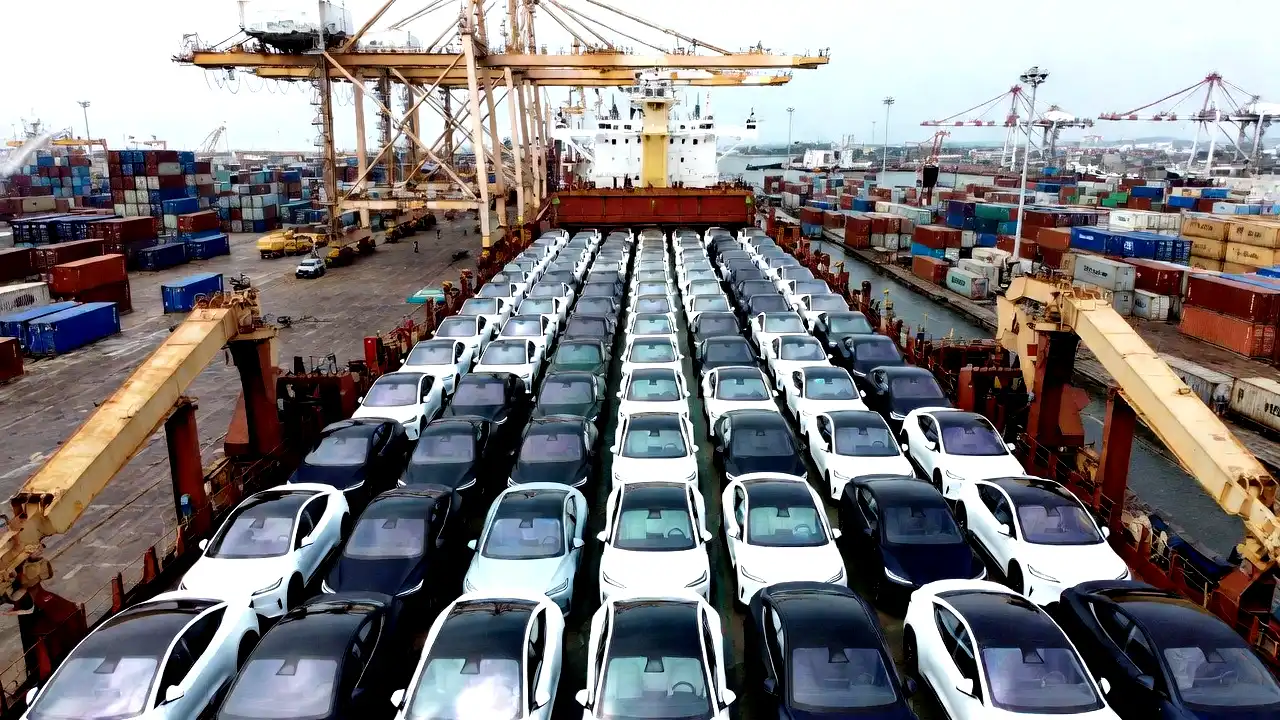
The global automotive landscape is undergoing a massive transformation. Chinese automakers are aggressively expanding beyond their domestic borders, seeking new markets for their rapidly advancing electric vehicle lineups. Dongfeng Motor Corporation, a massive state-owned enterprise and one of the largest vehicle manufacturers in China, is now preparing a major push into North America. The company has set its sights on Canada, viewing the country as a crucial entry point into a highly lucrative region.
Dongfeng wants to sell its electric vehicles directly to Canadian consumers. The company plans to bring affordable, tech-heavy models to a market that desperately needs lower-priced electric options. Consumers across North America frequently cite high purchase prices as the primary barrier to electric vehicle adoption. Dongfeng intends to solve this problem by introducing models that significantly undercut the prices of legacy domestic automakers.
The automaker has already partnered with North World Industry to serve as its official distributor. The distributor team is working through the complex certification process to ensure the vehicles meet strict Canadian safety and environmental standards. Executives at the distribution firm anticipate having the first models ready for showroom floors within the next year. To build excitement, Dongfeng plans to showcase its introductory lineup at high-profile promotional events in Montreal, giving Canadian drivers their first physical look at the new hardware.
Navigating the Complex Tariff Landscape
Entering the North American market requires careful navigation of a highly volatile geopolitical environment. Until recently, Chinese automakers faced an insurmountable barrier in Canada. The Canadian government had previously imposed a massive 100 percent surtax on Chinese-made electric vehicles. This penalty sat on top of the existing 6.1 percent import tariff, effectively doubling the cost of any Chinese car and destroying its price competitiveness. The move forced major companies to hastily reroute their global supply chains to avoid the crushing fees.
A recent diplomatic breakthrough fundamentally changed the rules of the game. The Canadian government negotiated a new trade agreement with Chinese leadership, creating a unique pathway for automakers. Under the new terms, Canada agreed to remove the 100 percent surtax on a specific quota of up to 49,000 Chinese-made electric vehicles for an initial one-year trial period. In exchange, China dropped its own retaliatory duties on several key Canadian agricultural exports.
This 49,000-vehicle quota represents a golden opportunity for companies like Dongfeng. While 49,000 units make up less than 3 percent of the total annual vehicle sales in Canada, the quota provides a crucial testing ground. Automakers can gauge consumer interest, test their distribution networks, and establish brand recognition without suffering the financial penalty of a massive tax. If the initial rollout proves successful, the Canadian government plans to gradually increase the number of Chinese cars allowed under the low-tariff rate in future years.
The Dongfeng Product Strategy
Dongfeng recognizes that Canadian consumers have distinct driving needs. The climate features harsh winters that severely degrade battery performance, while the geography demands vehicles capable of long-distance highway travel. The automaker is carefully selecting which models to introduce first to ensure they meet these specific demands.
The Nammi Box 01 and Vigo Models
The initial launch will likely focus on urban commuters and budget-conscious buyers. The Nammi Box 01 is an ultra-compact electric vehicle designed specifically for dense city driving. It offers a practical range for daily commutes and features a shockingly low price point compared to North American alternatives. The vehicle strips away unnecessary luxury features in favor of pure utility and affordability.
The Vigo represents a slightly larger, more versatile option. Dongfeng designed this model to appeal to small families who need more cargo space but still want to avoid the high cost of a massive electric SUV. Both vehicles feature advanced battery management systems that the company claims will hold up reasonably well in freezing temperatures. By focusing on the lower end of the pricing spectrum, Dongfeng avoids direct competition with high-end luxury brands, choosing instead to target buyers who have been completely priced out of the electric transition.
Ambitions for Local Manufacturing
Importing cars across the Pacific Ocean is expensive and logistically complicated. Dongfeng views the current import strategy as a short-term stepping stone. The company harbors much larger ambitions for its North American presence. Executives have openly discussed the possibility of establishing local manufacturing facilities in Canada if consumer demand justifies the massive financial investment.
Building cars directly in Canada solves multiple problems. It eliminates the reliance on temporary tariff quotas, drastically reduces shipping costs, and creates local jobs. Canadian politicians strongly favor local manufacturing. The government wants to secure its position in the global electric vehicle supply chain and frequently offers massive financial subsidies to companies willing to build battery plants and assembly lines on Canadian soil. Dongfeng already operates successful joint ventures with companies like Stellantis and Nissan in other global markets, proving it has the institutional knowledge required to run complex, multinational assembly operations.
The Nissan Joint Venture Connection
The push into Canada involves more than just Dongfeng’s independent brand. The Chinese automaker maintains a highly productive joint venture with Japanese automotive giant Nissan. This partnership develops and manufactures vehicles specifically for the Chinese market. Now, Nissan wants to leverage this relationship to solve its own electric vehicle struggles in North America.
Nissan executives are seriously considering exporting vehicles produced by the Dongfeng joint venture directly to Canada. The Japanese brand recognizes that it has fallen behind in the global electric vehicle race. Developing new, affordable electric platforms from scratch takes years and costs billions of dollars. By exporting cars already developed and built in China, Nissan can instantly refresh its aging North American lineup.
Benefiting from Chinese Supply Chain Dominance
The logic behind this strategy is simple. Chinese factories currently operate with unmatched efficiency. China controls the vast majority of the global battery supply chain, from raw material refinement to final cell assembly. This dominance gives Chinese factories incredible pricing power. They can secure components faster and cheaper than any facility located in the United States or Europe.
Chinese development cycles are incredibly fast. A Chinese engineering team can design, test, and manufacture a brand-new electric vehicle model in roughly half the time it takes a legacy Japanese or American automaker. Nissan wants to tap into this speed. By utilizing the Dongfeng joint venture, Nissan gains access to cutting-edge software, highly efficient battery packs, and a streamlined manufacturing process.
Aggressive Pricing for the N-Series Lineup
The first vehicles to cross the ocean under this joint venture will likely belong to the new electrified N-series lineup. The pure electric N7 sedan and the flagship NX8 sport utility vehicle represent the pinnacle of current engineering efforts. These vehicles caused a massive stir when they debuted in China due to their aggressive pricing strategies.
The NX8 SUV, which offers an extended-range electric powertrain, secured over 8,400 orders within 30 minutes of its launch. The vehicle hit the market with a starting price equivalent to roughly $22,000 after local incentives. A comparable electric SUV built in North America easily costs double that amount. If Nissan can export these vehicles to Canada under the low-tariff quota and maintain a similar price point, it will absolutely disrupt the local market. Consumers looking for a spacious, high-tech family vehicle will find the pricing nearly impossible to ignore.
Economic and Geopolitical Repercussions
The arrival of Dongfeng and its associated joint ventures places immense pressure on legacy automakers operating in North America. Companies like General Motors and Ford have enjoyed a relatively protected market for years. The massive tariffs kept cheap competitors at bay, allowing domestic brands to maintain high profit margins on premium electric trucks and luxury SUVs.
That protective wall is starting to crack. Canada’s decision to open a 49,000-vehicle quota introduces real, highly disruptive competition. Domestic automakers suddenly face rivals who can build comparable vehicles for thousands of dollars less. This reality forces legacy brands into an uncomfortable corner. They must either find a way to drastically reduce their own manufacturing costs or risk losing massive market share to the incoming wave of affordable imports.
The United States Stands Firm
While Canada experiments with open trade, the United States refuses to budge. The US government views the Chinese electric vehicle industry as a direct threat to national security and domestic manufacturing. The current administration maintains a rigid 100 percent tariff on Chinese electric vehicles, effectively banning them from the country.
The situation in Canada creates a unique point of friction between the two allied nations. US lawmakers worry that Chinese companies will use Canada as a backdoor to flood the North American market. Some politicians in Washington have even proposed legislation that would explicitly prevent any Chinese-made electric vehicle from driving on US roads, regardless of whether the owner bought the car legally in Canada. This creates a bizarre scenario where a Canadian citizen driving a Dongfeng vehicle might be stopped at the border and denied entry simply because of the badge on the hood of their car.
The Push for a Zero-Emission Future
Despite the geopolitical tension, Canada has a very practical reason for letting Dongfeng into the country. The Canadian government passed aggressive environmental mandates that require 100 percent of all new passenger vehicles sold in the country to be zero-emission by the year 2035. Achieving this goal requires massive consumer participation.
Right now, everyday consumers cannot afford to make the switch. The average price of a new electric vehicle sits far above the budget of a typical working-class family. If the government wants to hit its climate targets, it must flood the market with affordable options. Chinese automakers like Dongfeng provide the exact product required to make mass adoption a reality. The government is willing to trade a small amount of protectionism for a massive leap forward in environmental progress.
The Long Road Ahead for Consumer Trust
Selling cars requires more than just low prices; it requires deep consumer trust. North American buyers tend to show intense loyalty to established brands. A new player entering the market faces a steep uphill battle to convince buyers that their vehicles are safe, reliable, and worth the investment.
Dongfeng must build a comprehensive support network from scratch. Buyers need to know that if their car breaks down, they can easily find a service center with trained technicians and available spare parts. The distributor bears the heavy burden of establishing a robust dealer network across the vast Canadian geography. Setting up showrooms, training mechanics, and stocking warehouses requires millions of dollars in upfront capital and years of patient brand building.
Overcoming Cold Weather Anxiety
One of the biggest hurdles Dongfeng faces is the infamous Canadian winter. Electric vehicle batteries notoriously struggle in sub-zero temperatures. Cold weather drastically reduces driving range and slows down charging speeds. Canadian consumers remain highly skeptical of electric cars for this exact reason.
Dongfeng must prove that vehicles like the Nammi Box 01 and the Vigo can survive brutal freezes in places like Alberta and Quebec. The company will likely need to conduct highly publicized cold-weather testing and highlight advanced thermal management systems to ease consumer fears. If a buyer worries that their car will not start after sitting outside in a snowstorm, no amount of discount pricing will convince them to finalize the purchase.
The Impact of Software and Data Privacy
Modern electric vehicles act as rolling computers. They constantly collect data on driving habits, location, and user preferences. This intense connectivity raises significant privacy concerns, especially when the manufacturer operates under the jurisdiction of a foreign government.
Western consumers and regulatory agencies pay close attention to data security. Dongfeng will need to ensure strict compliance with Canadian privacy laws and transparently communicate how user data is stored and protected. Building a localized software ecosystem with servers based in North America will go a long way toward alleviating these concerns and building long-term trust with tech-savvy buyers.
The experiment currently unfolding in Canada will serve as a bellwether for the rest of the global automotive industry. Dongfeng’s push into the market tests the viability of tariff quotas and the willingness of Western consumers to embrace foreign automotive engineering. If Dongfeng successfully establishes a foothold, it will open the floodgates. Other major players will closely monitor the situation, waiting for the right moment to launch their own Canadian operations. Legacy automakers can no longer rely on government tariffs to protect their profit margins forever, and the fight for the North American driveway has officially begun.